




Description
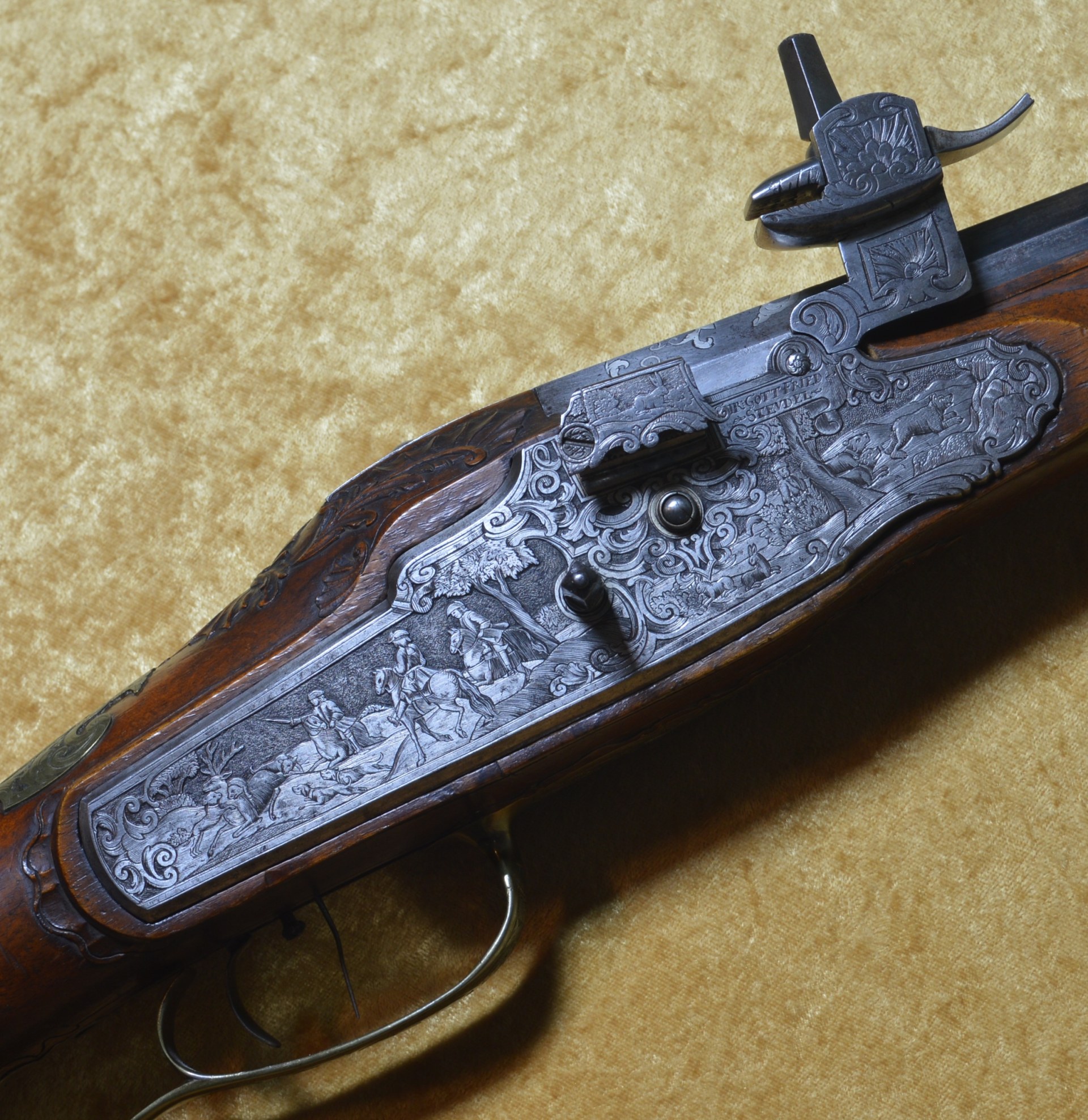
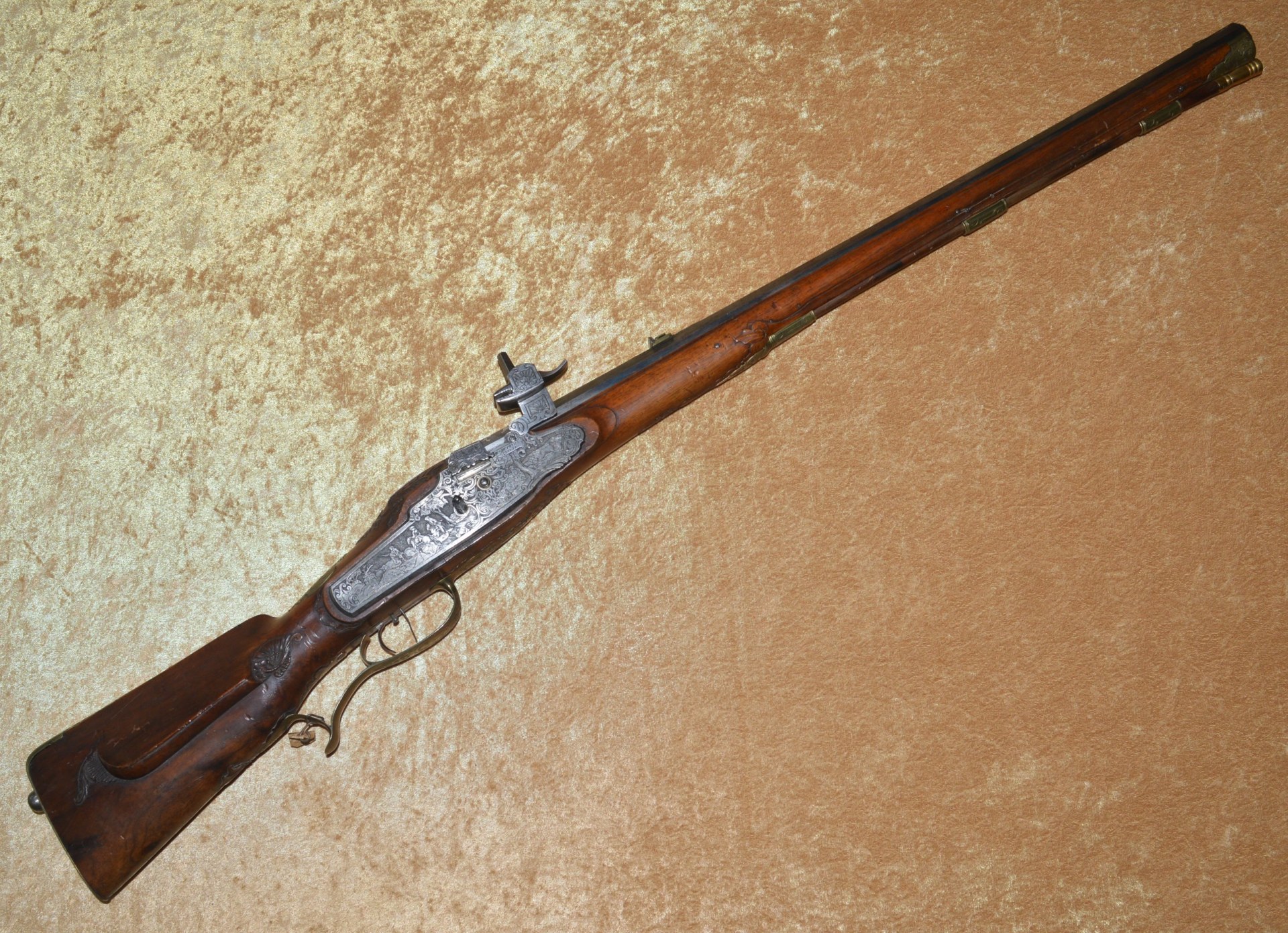
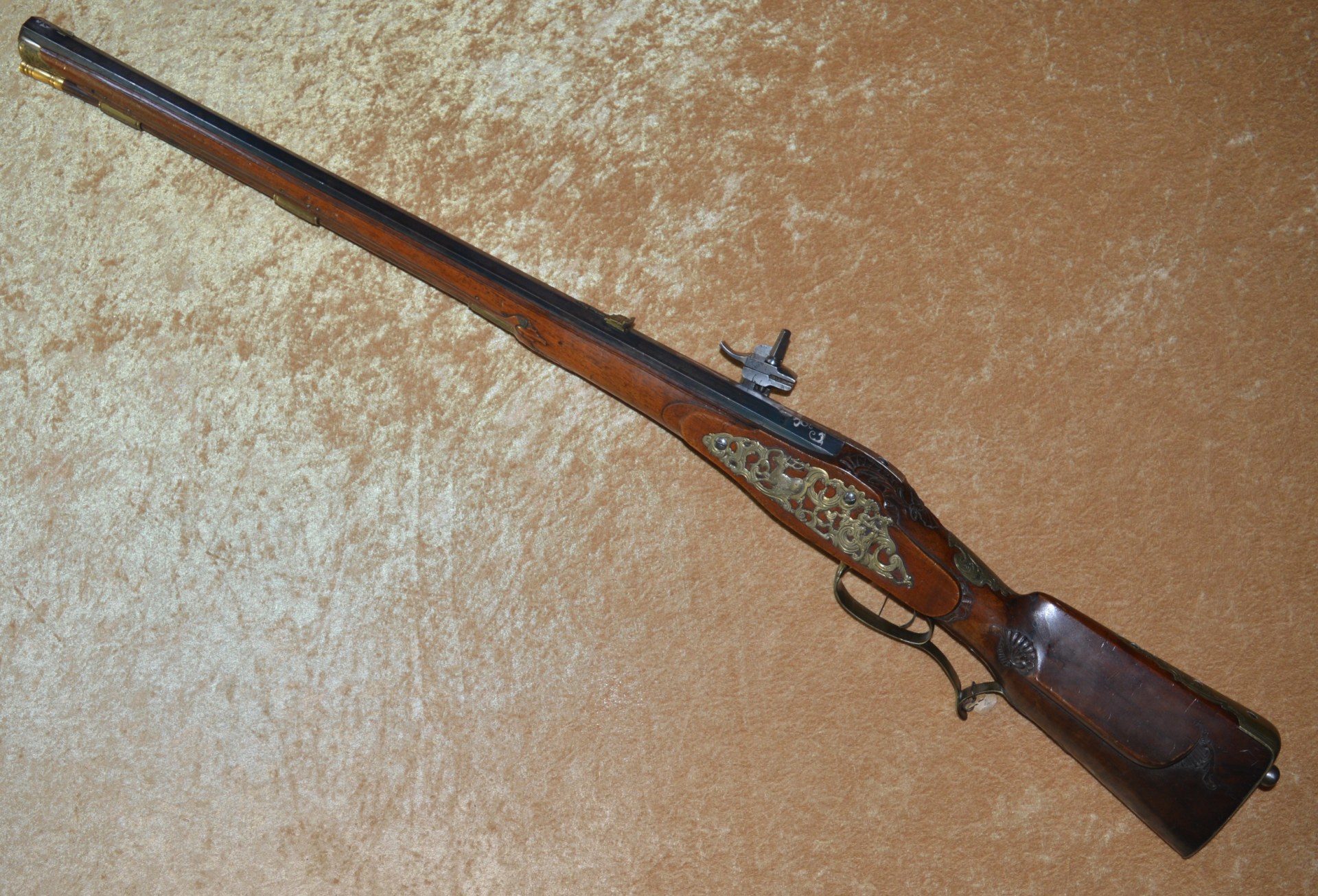
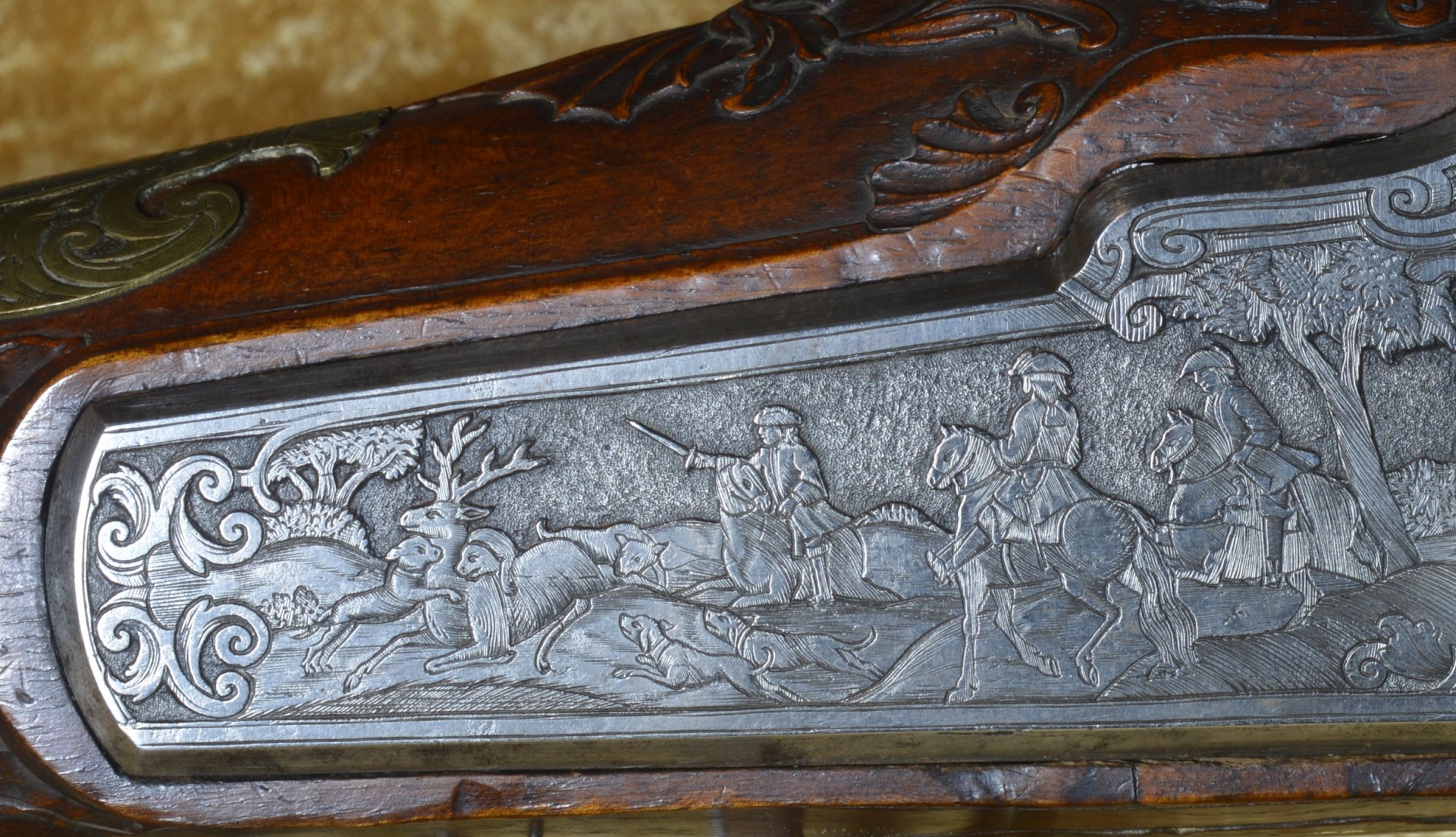
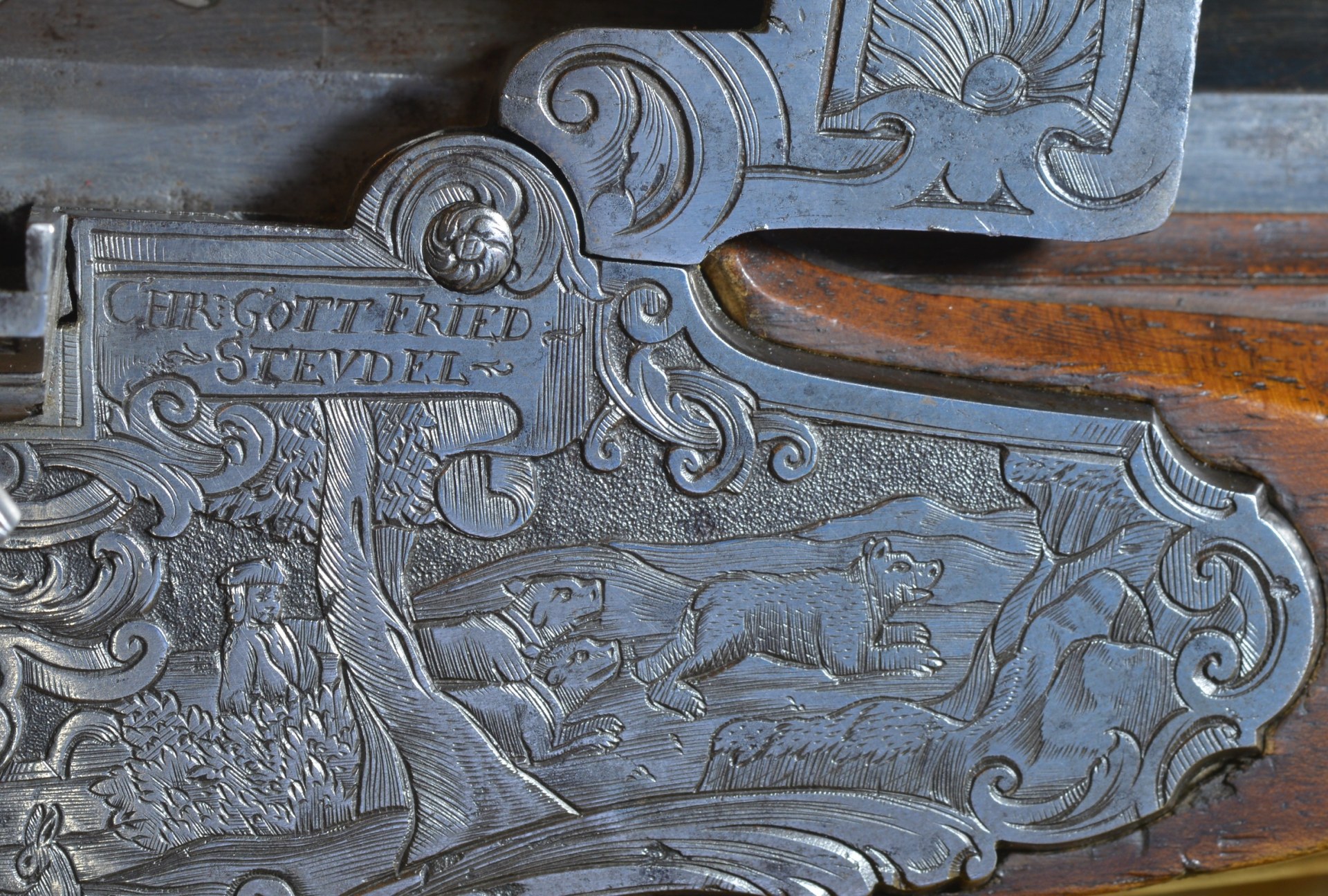
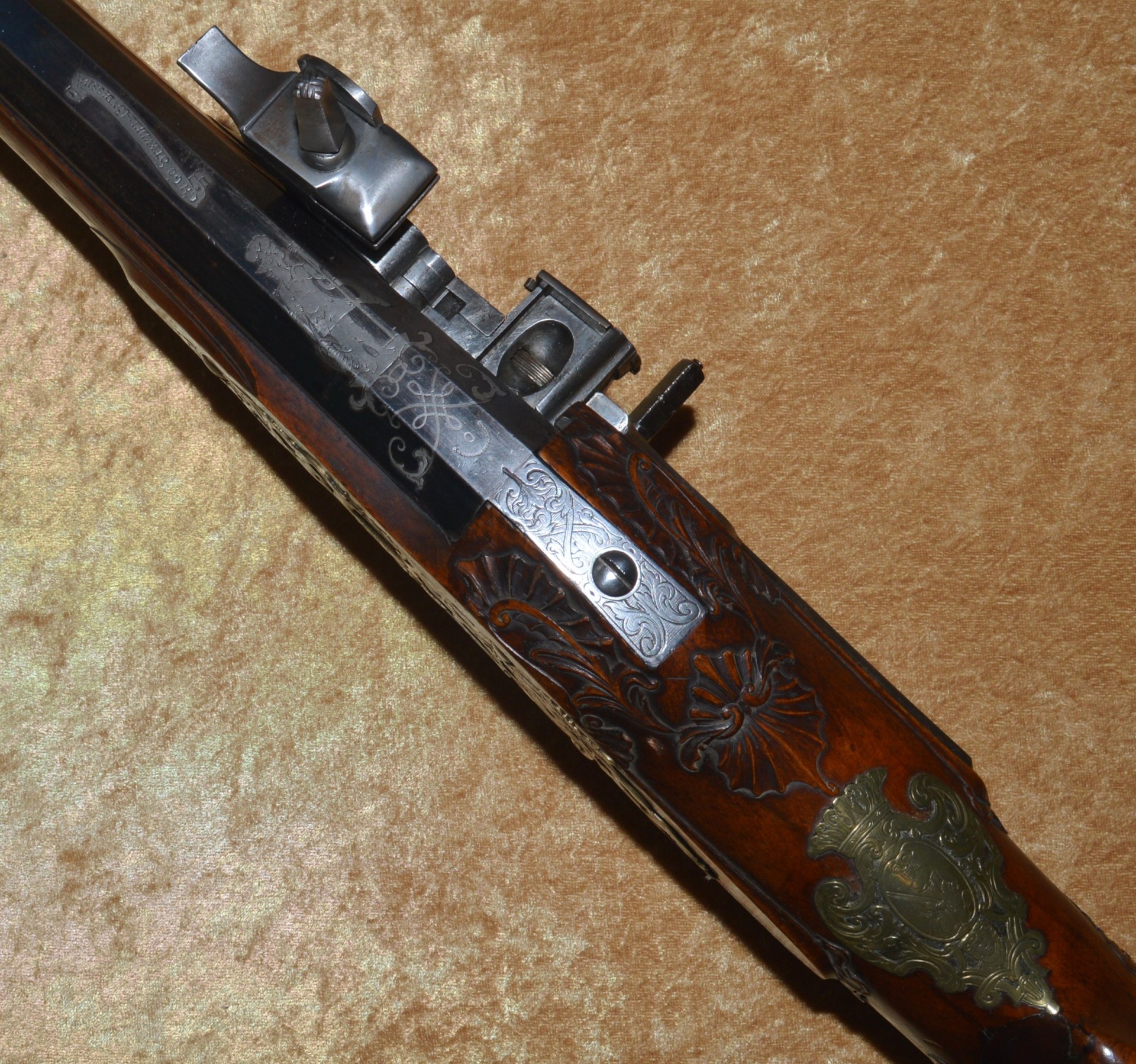
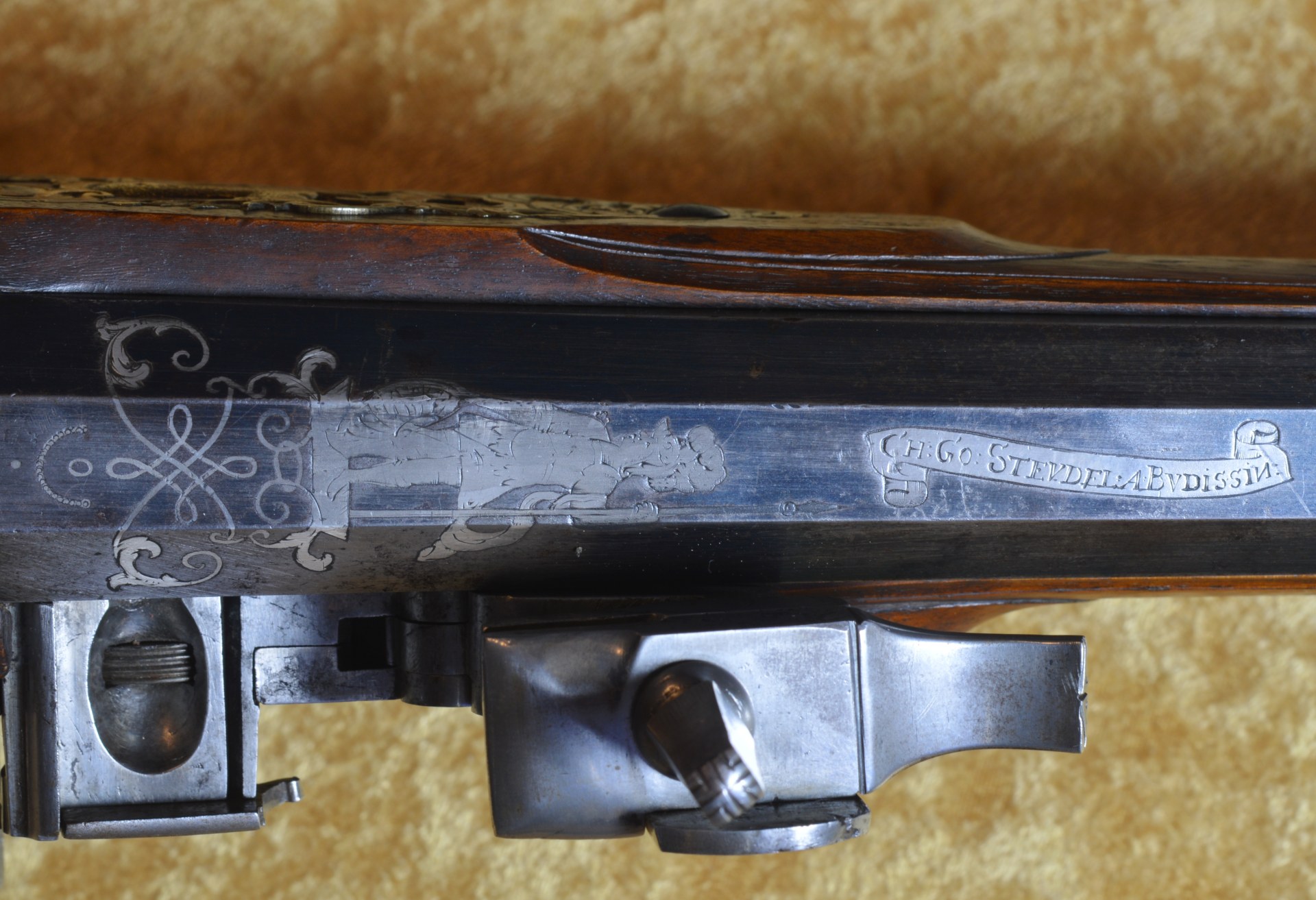
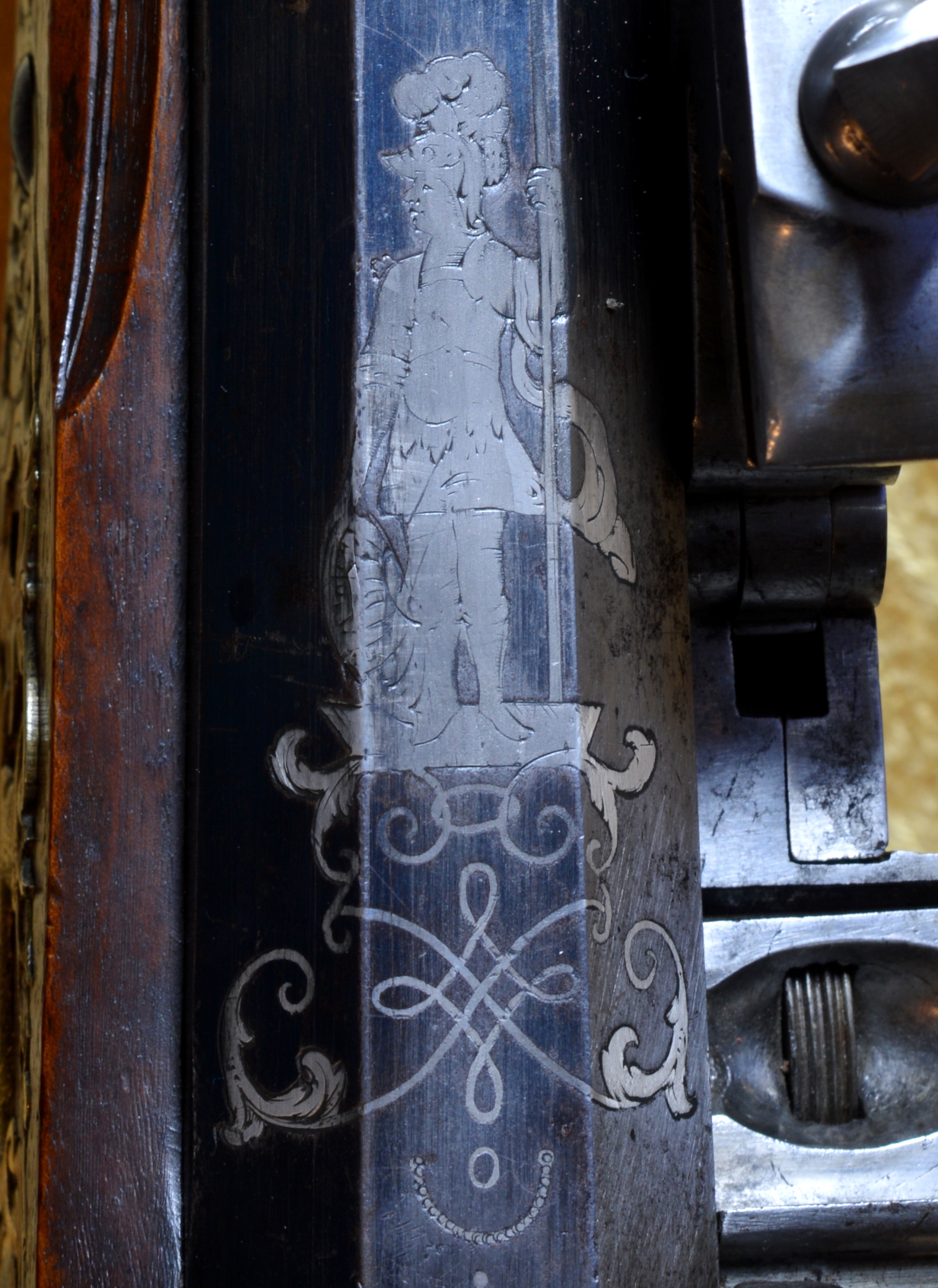
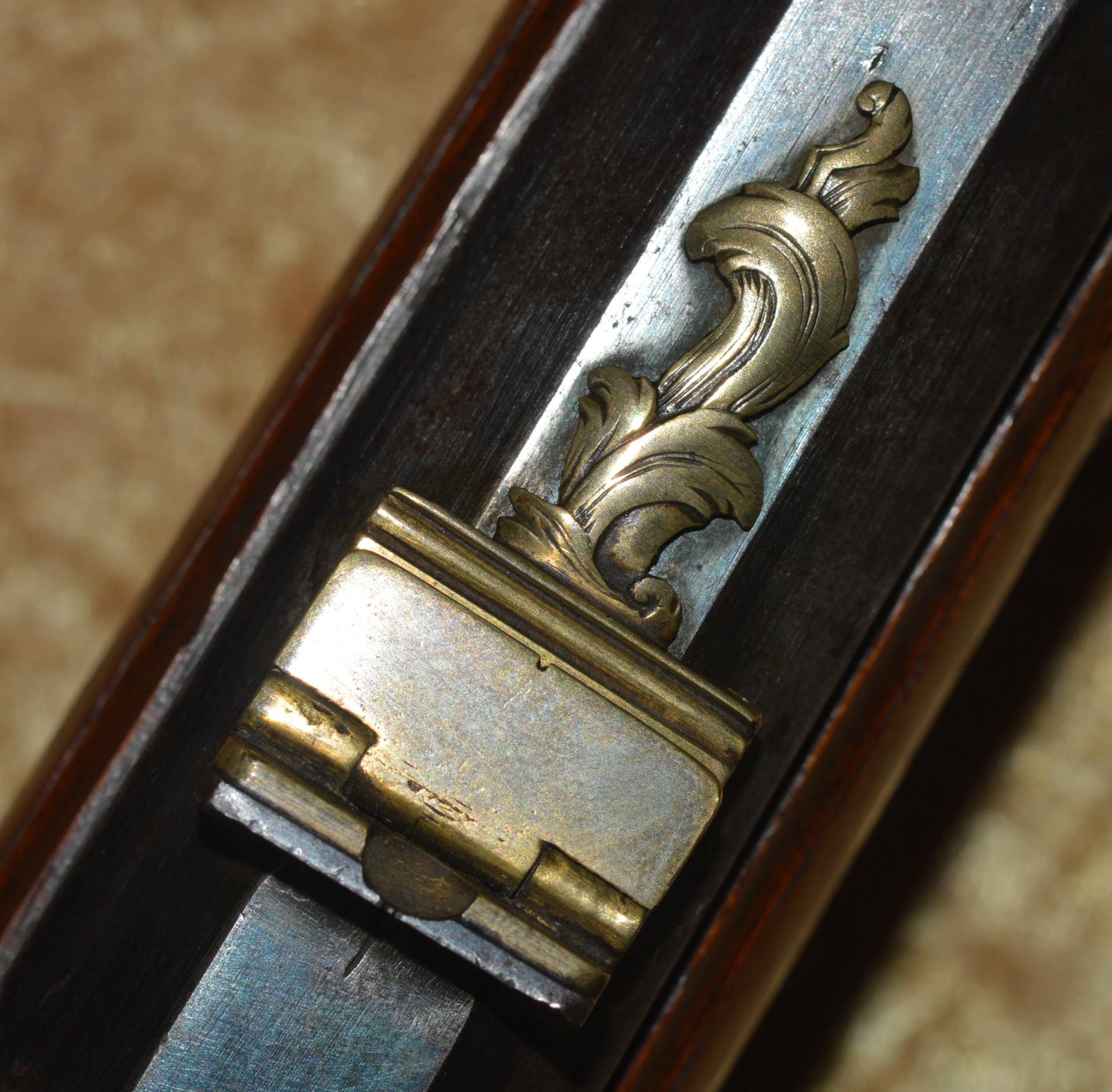
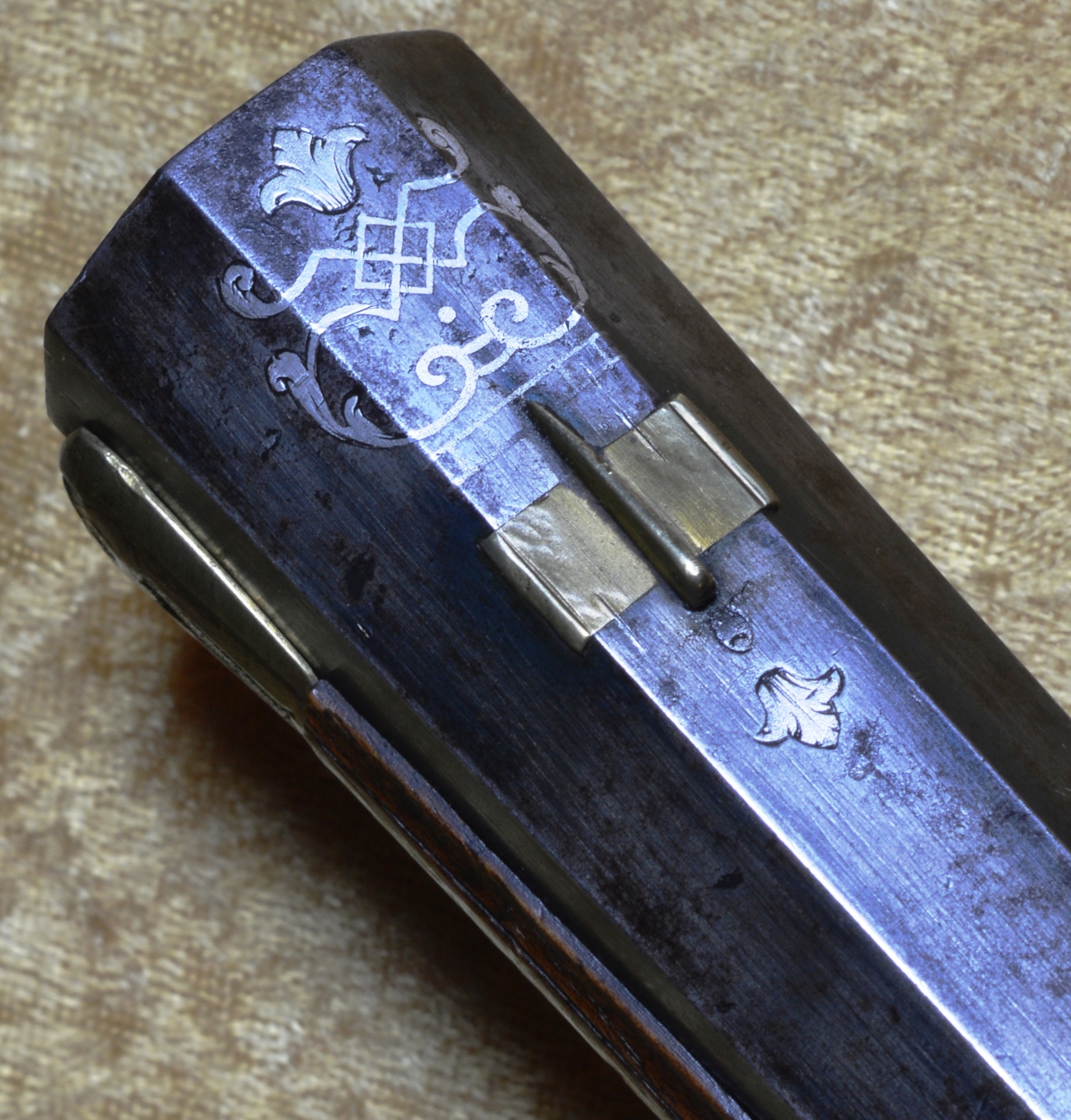
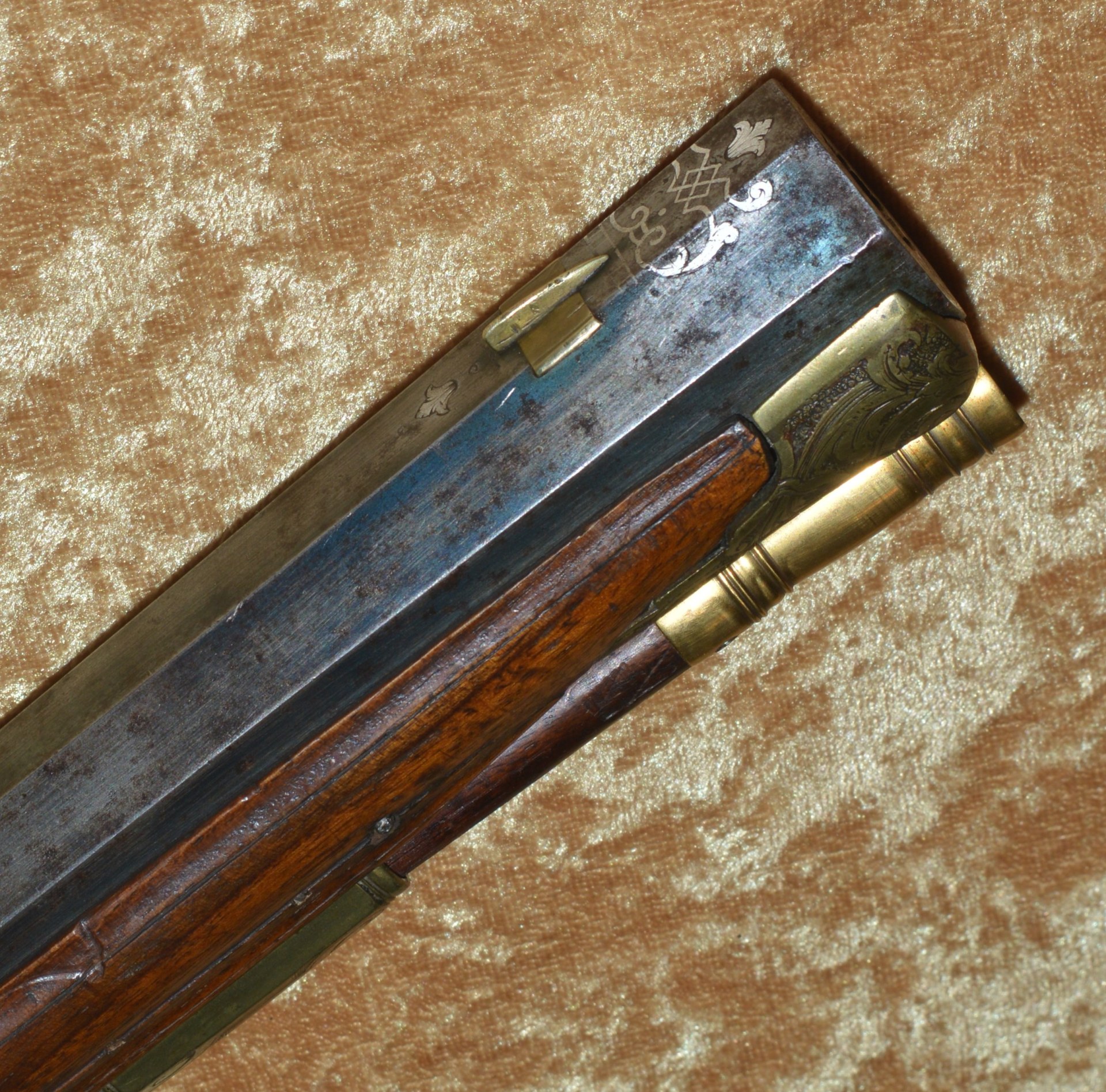
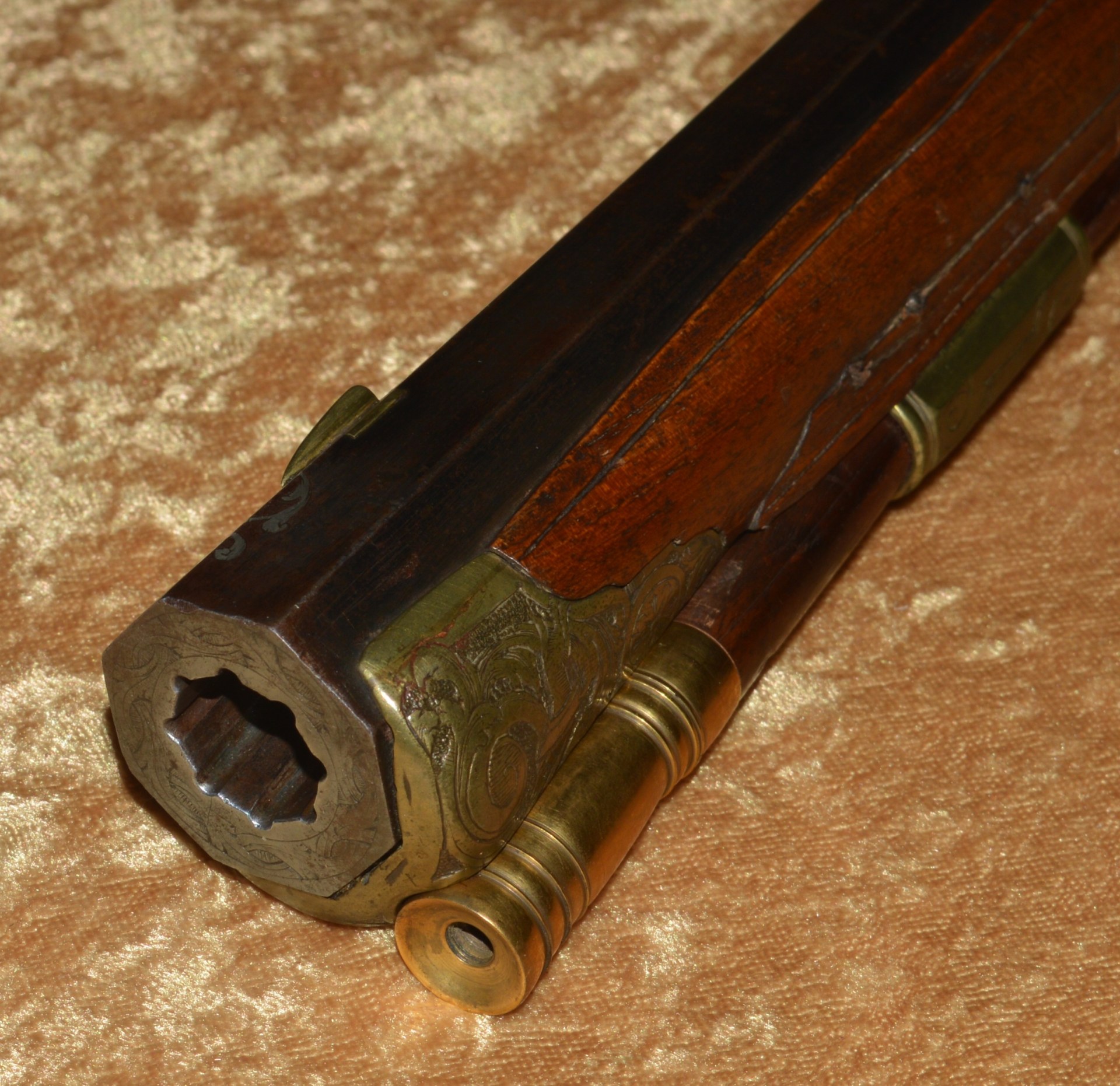
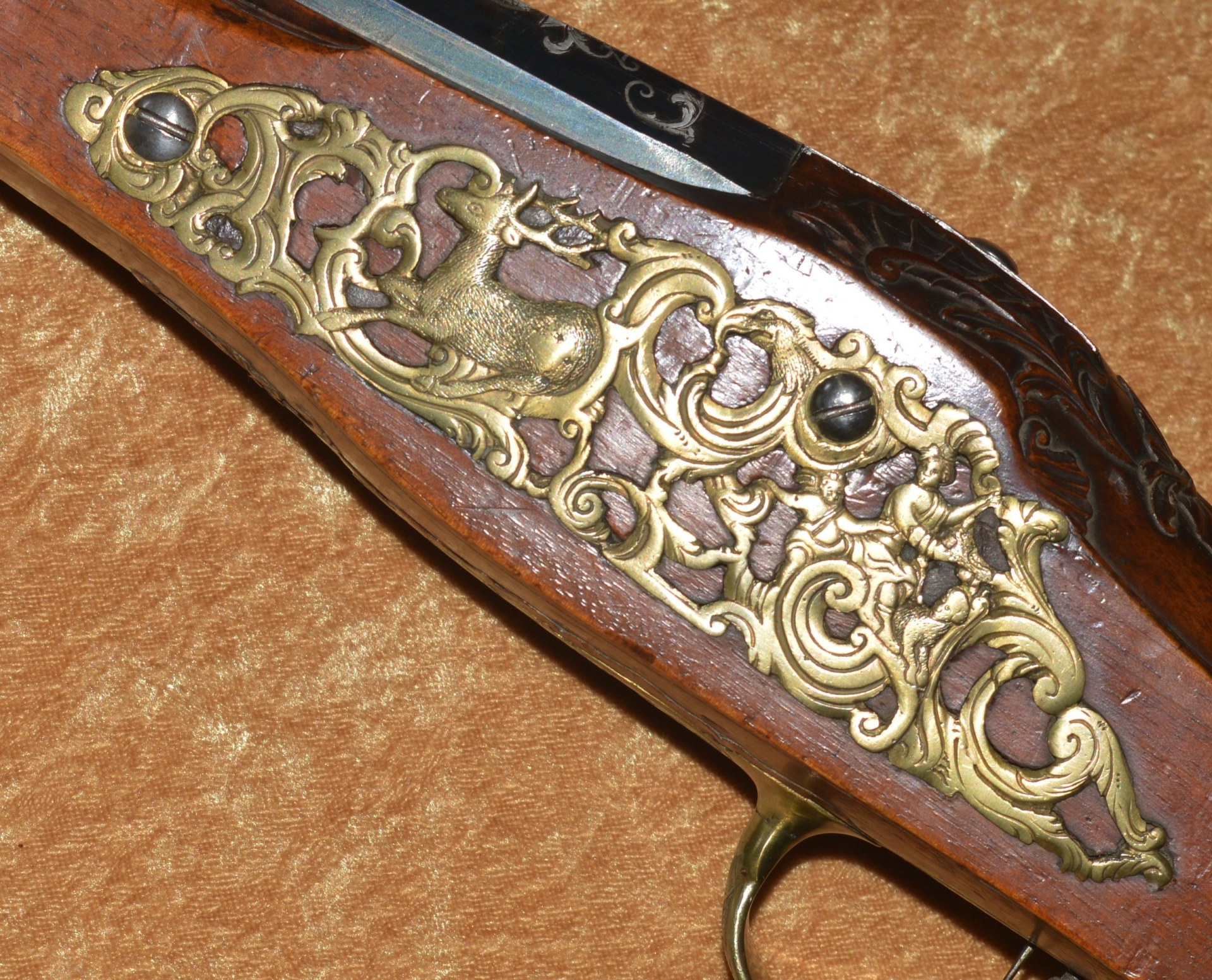
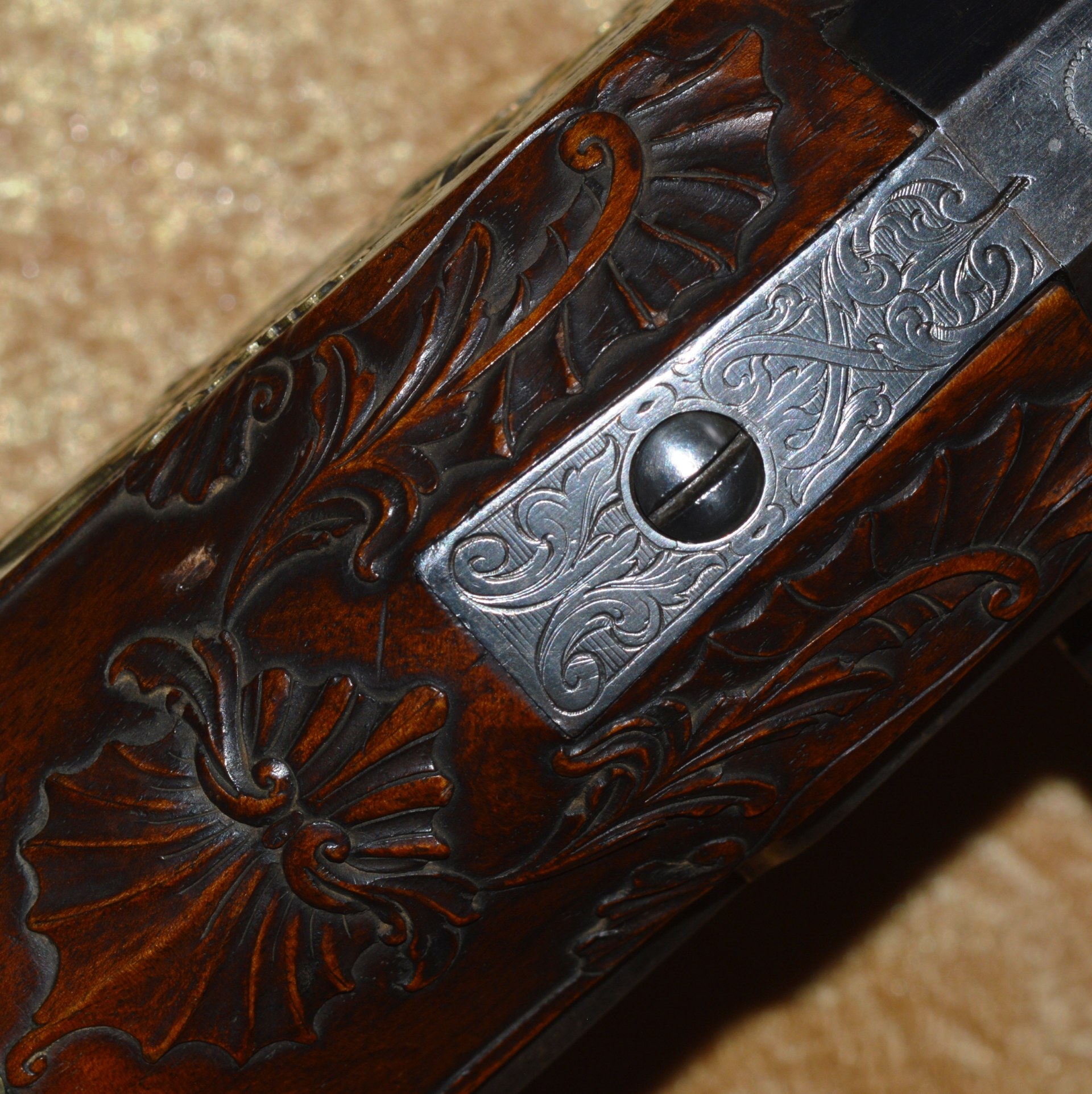
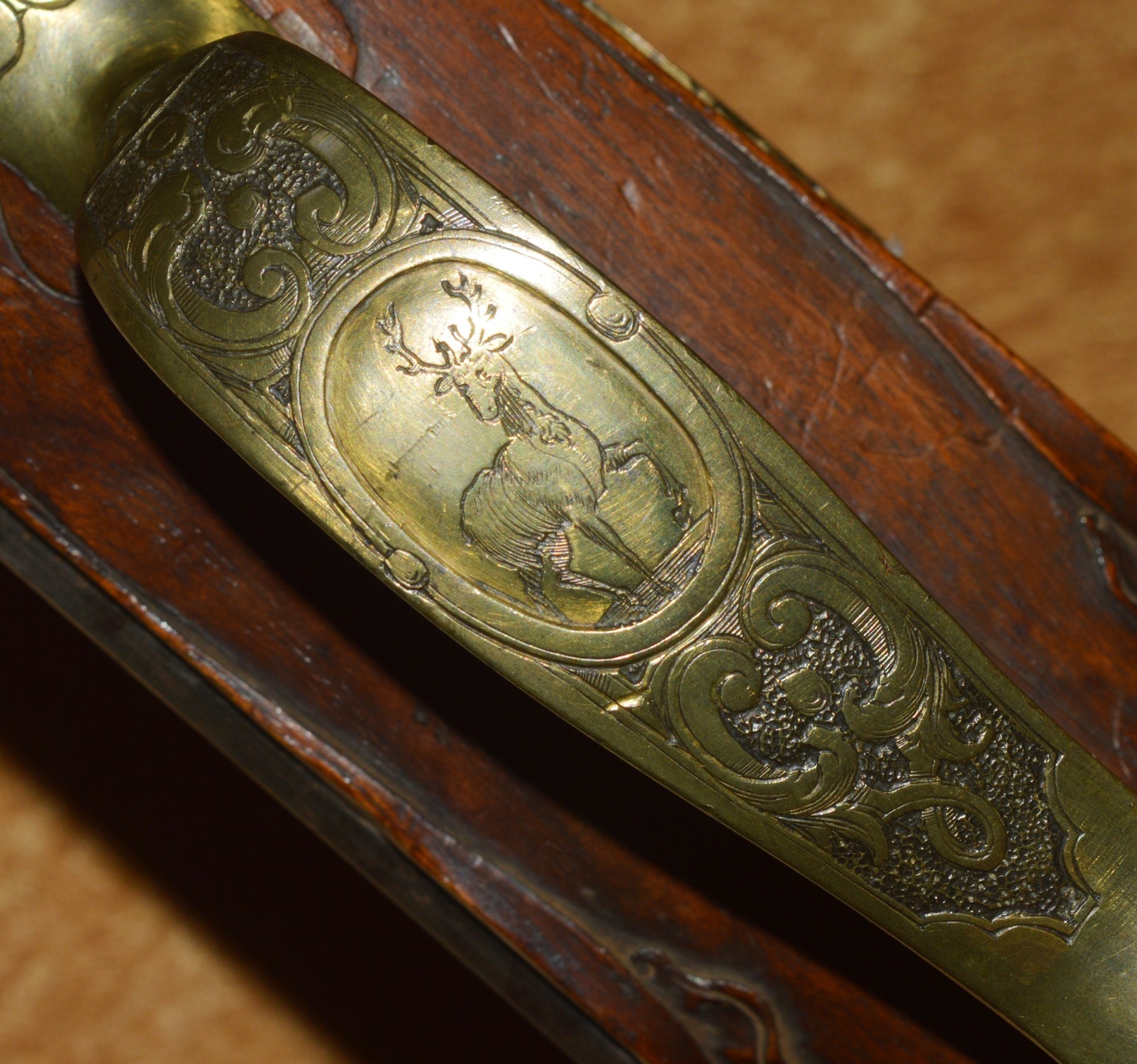
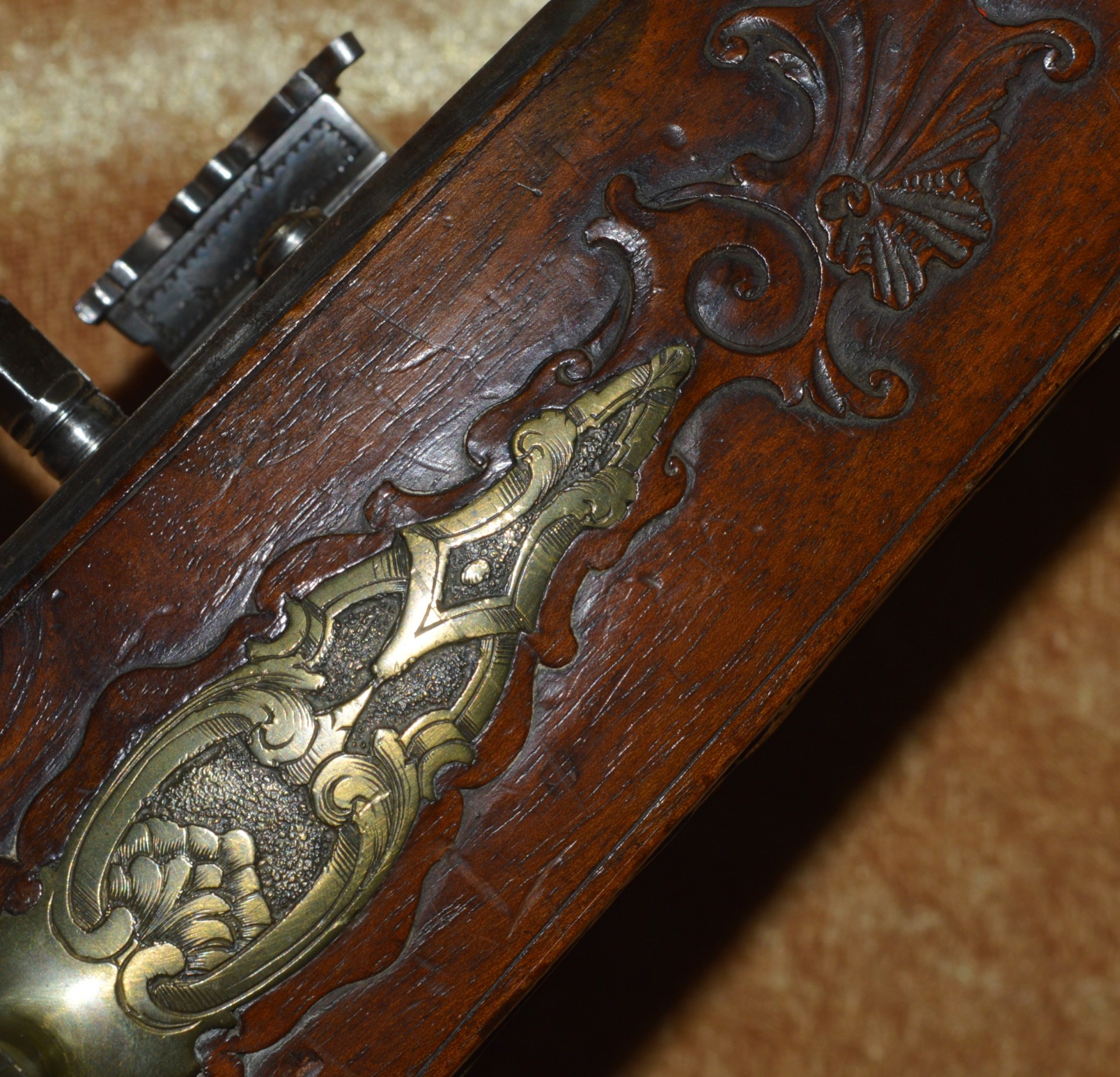
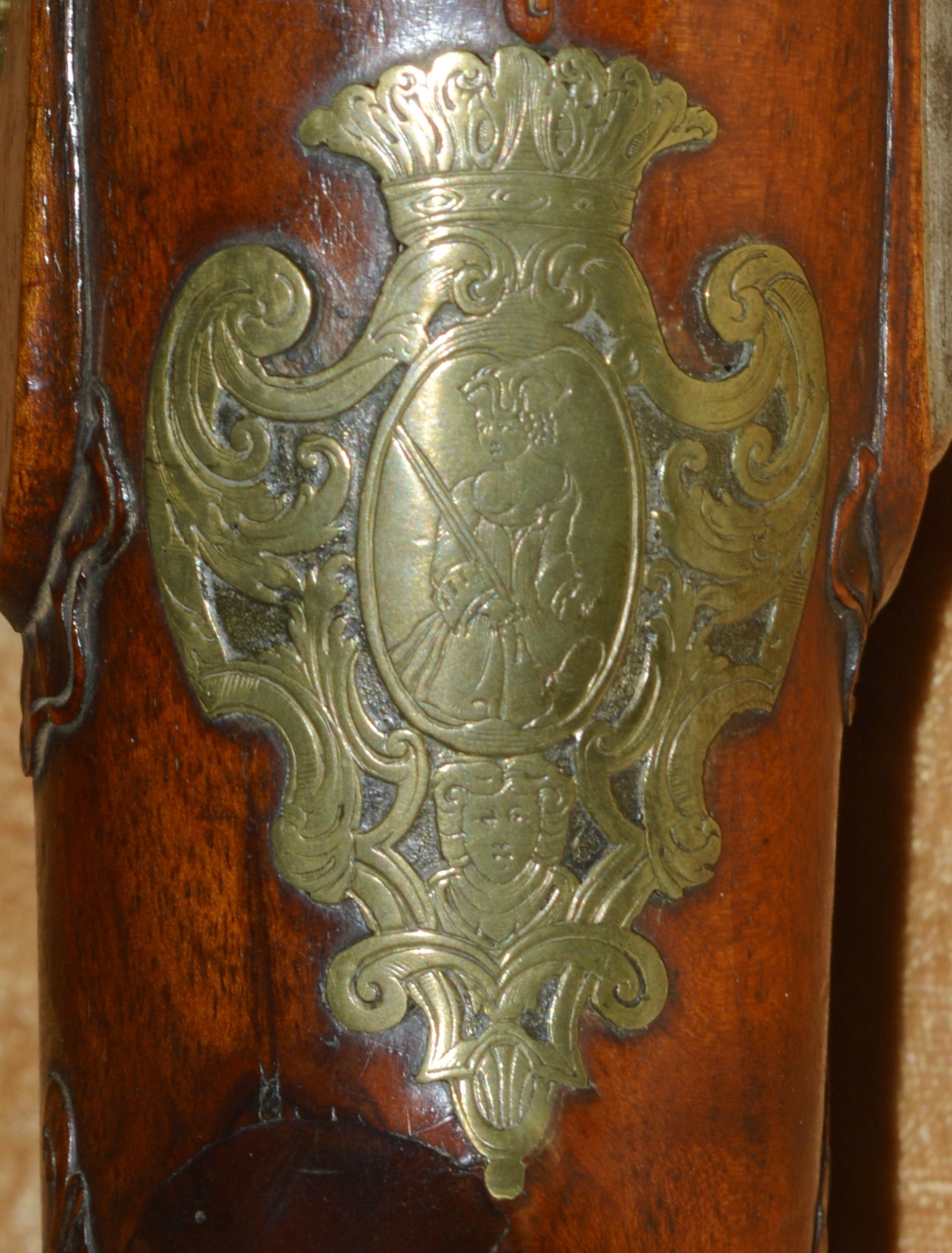
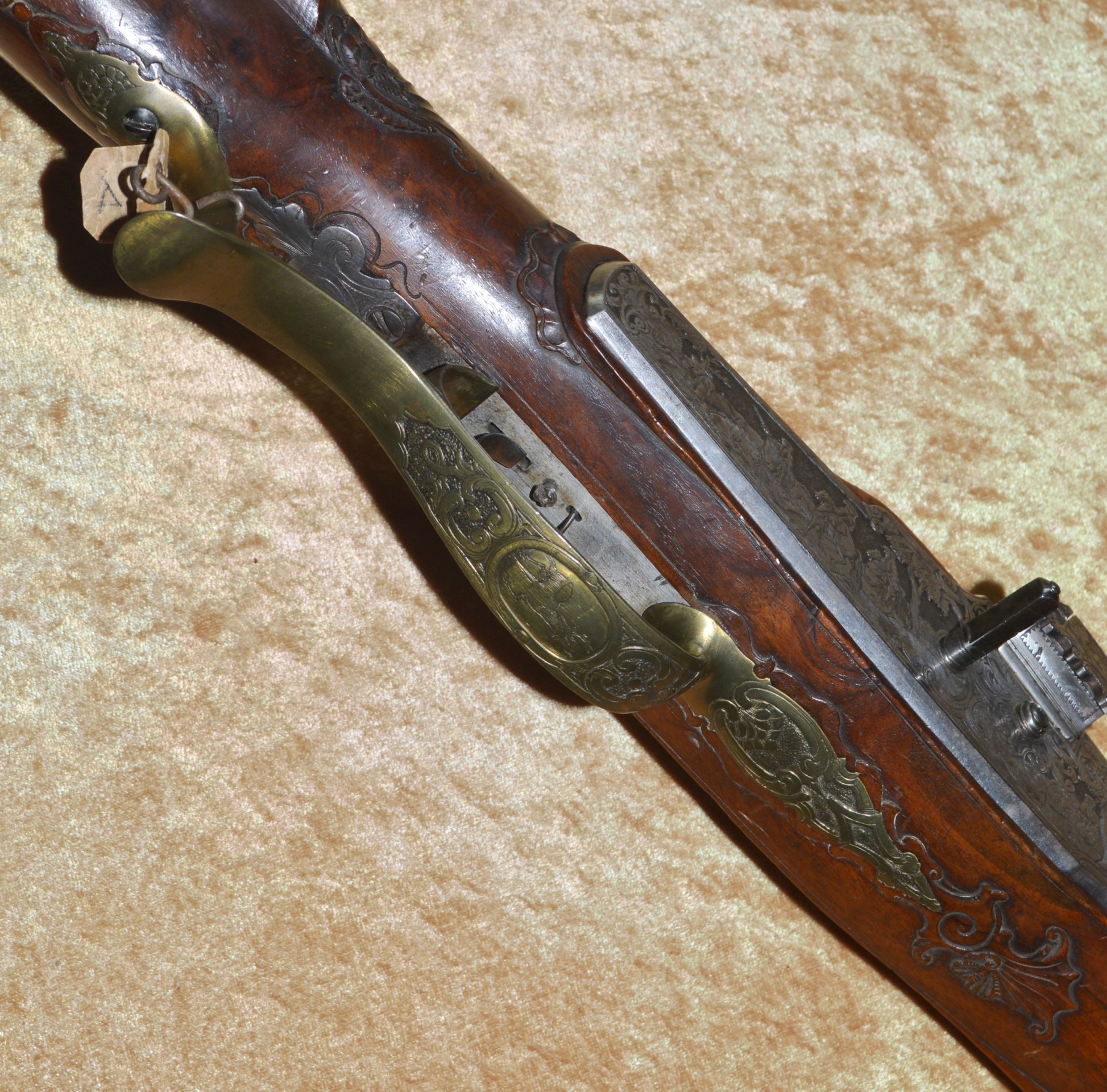
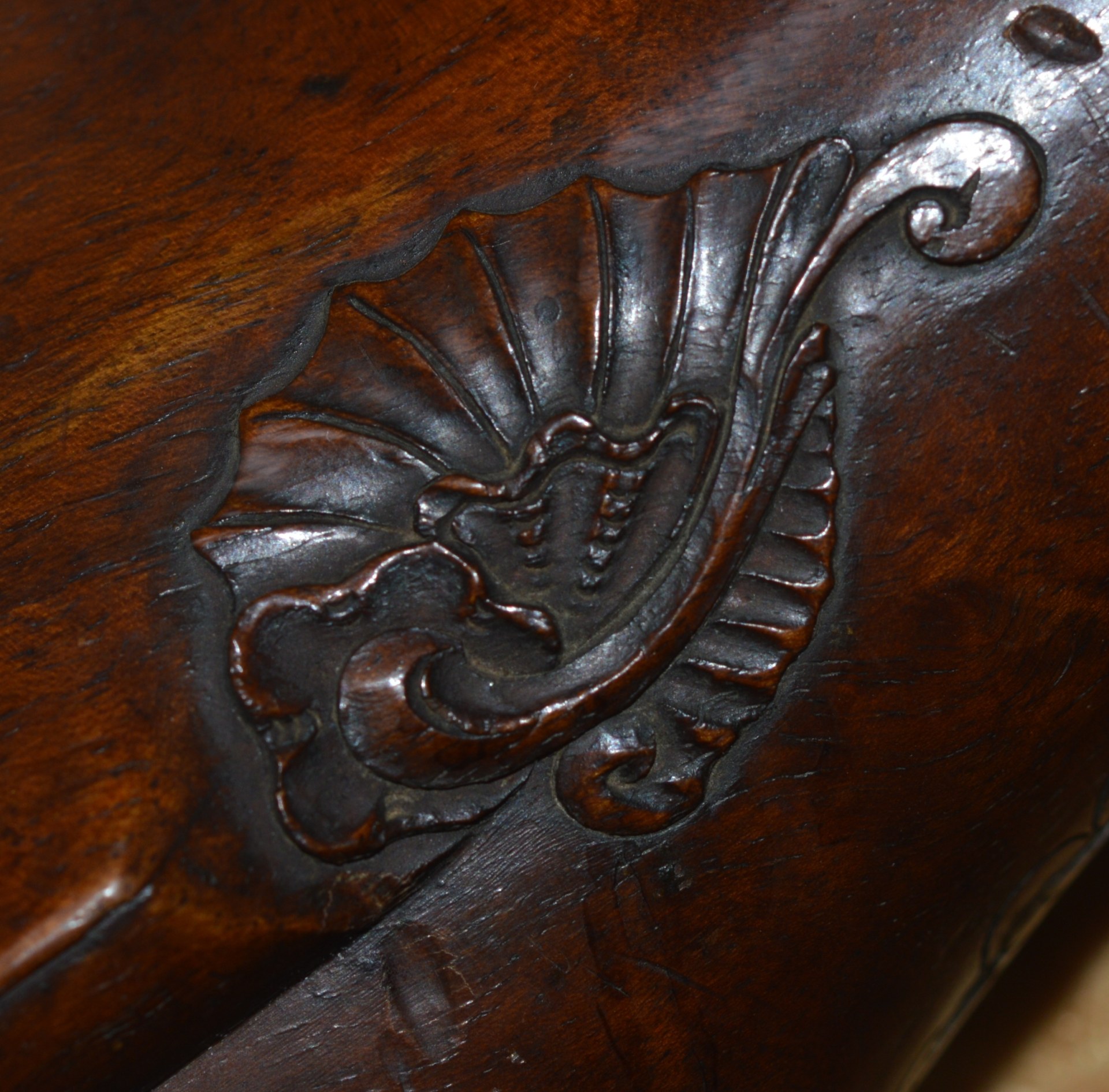
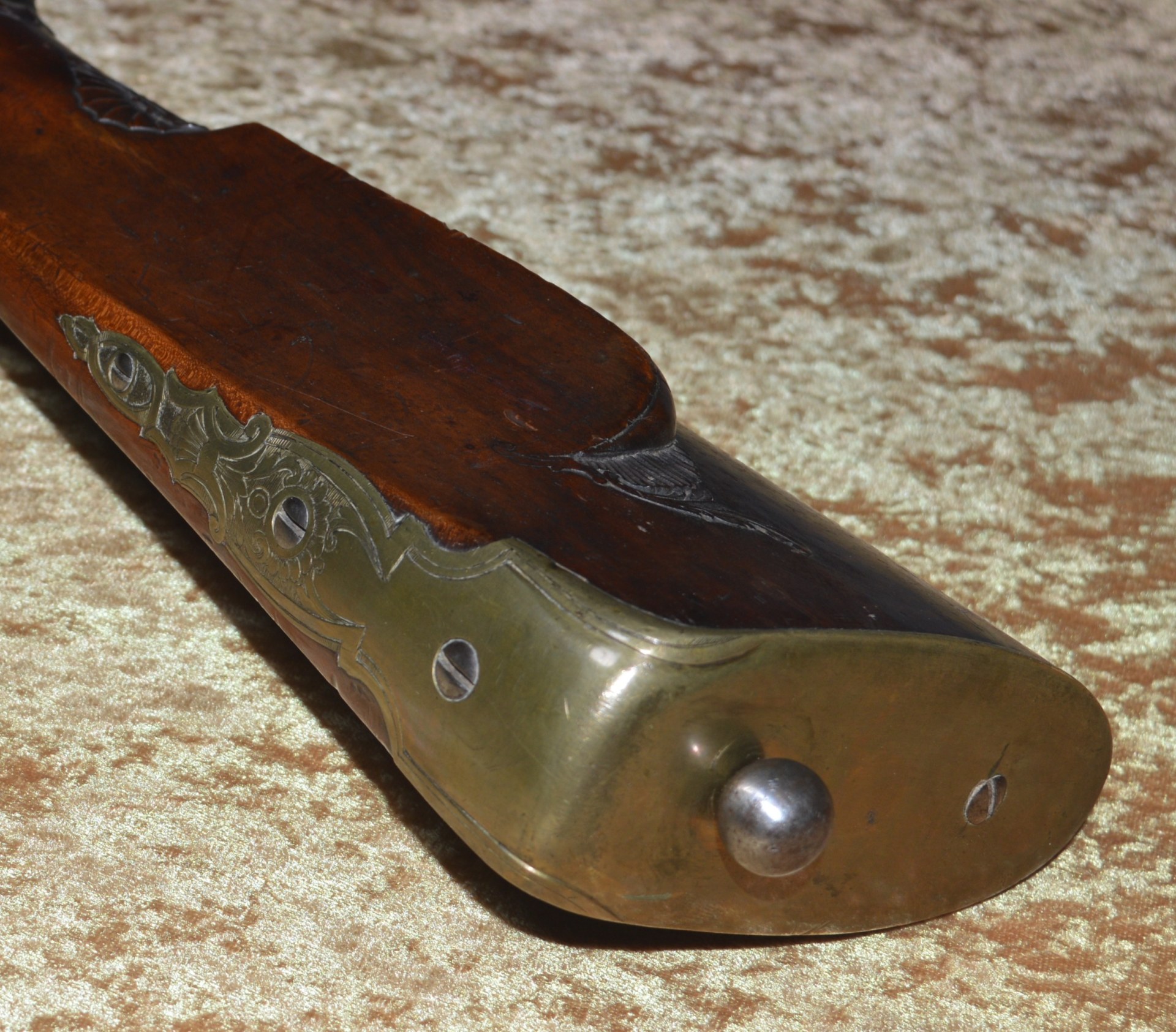
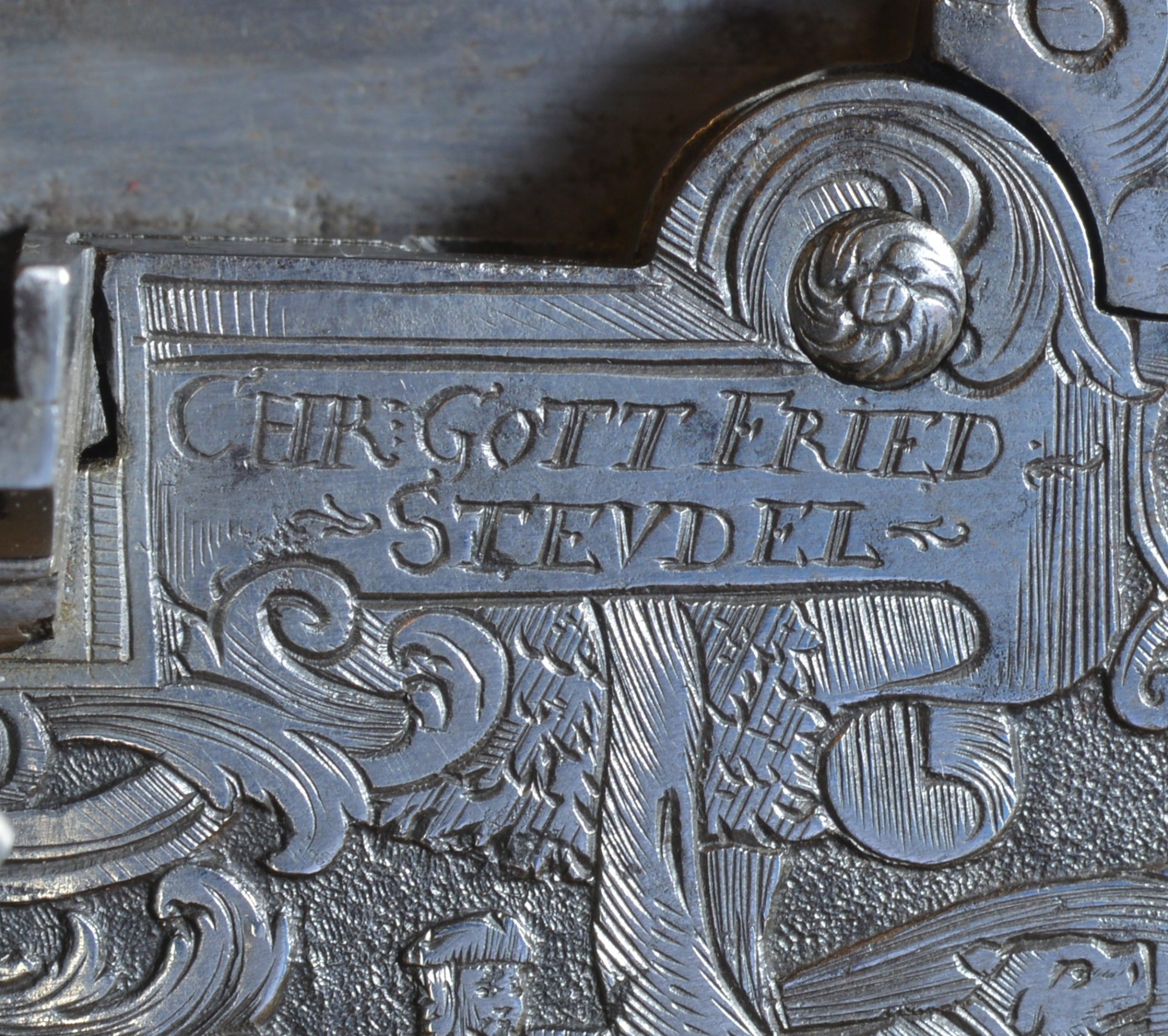
Featuring heavy 30” blued octagonal barrel of 15mm caliber with swamped muzzle and 8-groove rifling; silver inlaid figure of a standing hunter above scrollwork and maker’s name “CH:GO: STEVDEL:A BVDISSIN” (Christian Gottfried Steudel, Baudissin, Saxony, ca. 1730-1750) in a scroll at the breech; decorative brass two-leaf rear notch sight and inlaid brass front blade sight surrounded by inlaid silver foliate decoration. Lock with internal wheel and flat lockplate with beveled edges, finely engraved with hunting scene featuring mounted hunters, hounds, and game; with maker’s name “CHR:GOTTFRIED/STEVDEL” below the cock; double set trigger. Walnut full stock with finely carved shell and foliate decoration in relief; brass mounts, including pierced side plate, trigger guard, fore end cap, butt plate, ramrod thimbles, and wrist escutcheon, all finely engraved in hunt-related theme. Original wood ramrod with decorative brass tip. Overall length 45 1/4” (115 cm). Excellent provenance, having been acquired by well-known author and collector W. Keith Neal from Schloss Kranichstein. During his lifetime, Neal (1905-1990) amassed one of the finest collections of antique firearms ever assembled, and was considered the leading authority on antique firearms. The rifle was sold in 1959 to Norman Blank, who also amassed a fine collection. Included is a Certificate of Weapon Authenticity from F. Theodore Dexter, curator of the Academic Arms Center of America Museum, to Norman Blank. The certificate erroneously shows the date as “1640” and shows an appraised value of $1,000 (1959), which is over $11,000 in its 2026 equivalent. Trigger guard with old attached tag reading “1852”, probably an inventory number. Very fine complete and original condition, retaining approximately 60% of its original bluing on the barrel, with excellent rifling; metal smooth, with no pitting; only minor handling marks to the stock . While the flintlock had largely replaced the wheellock by the time this rifle was made (mostly due to its lower cost of production), the wheellock mechanism provided a much smoother ignition without the striking of cock and flint against the frizzen of the flintlock.
Schloss Kranichstein was a palace/hunting lodge north of Darmstadt, Hesse originally built in 1578 as a hunting lodge and summer residence for George I, Landgrave of Hesse-Darmstadt. In 1917 it became a museum of the hunt. It now serves as a hunting museum, restaurant, and hotel.
ON HOLD
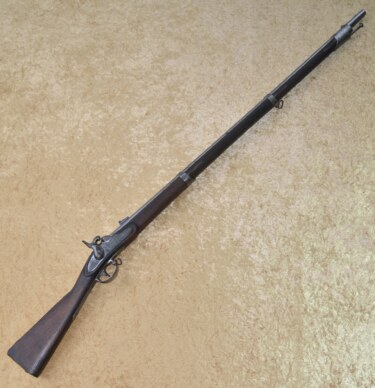 US M1816 Nathan Starr Contract Civil War Conversion Musket
 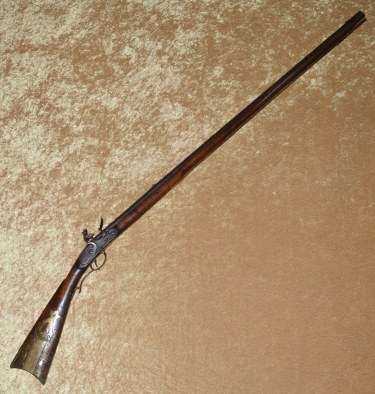 Flintlock Kentucky Long Rifle, ca. 1830
 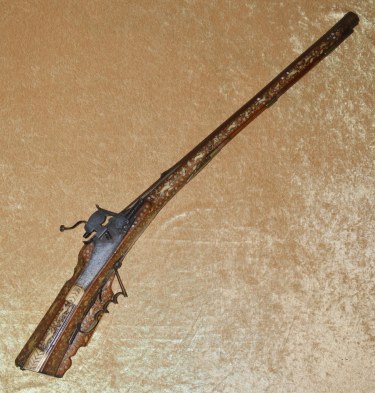 Fine Quality Wheellock Rifle, ca. 1700
 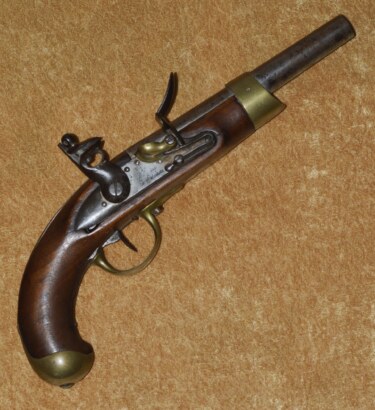 French AN XIII Flintlock Pistol