
Description
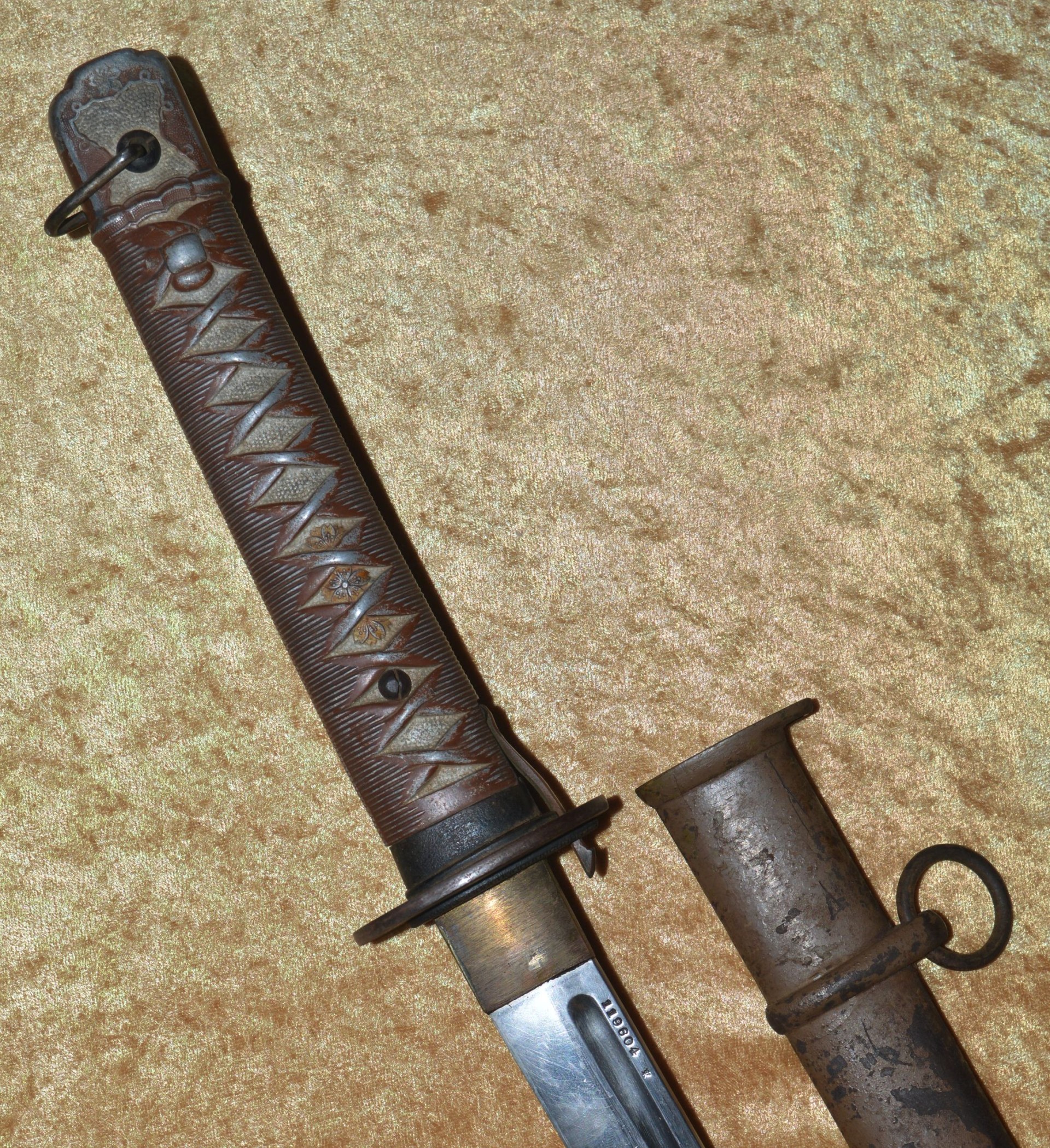
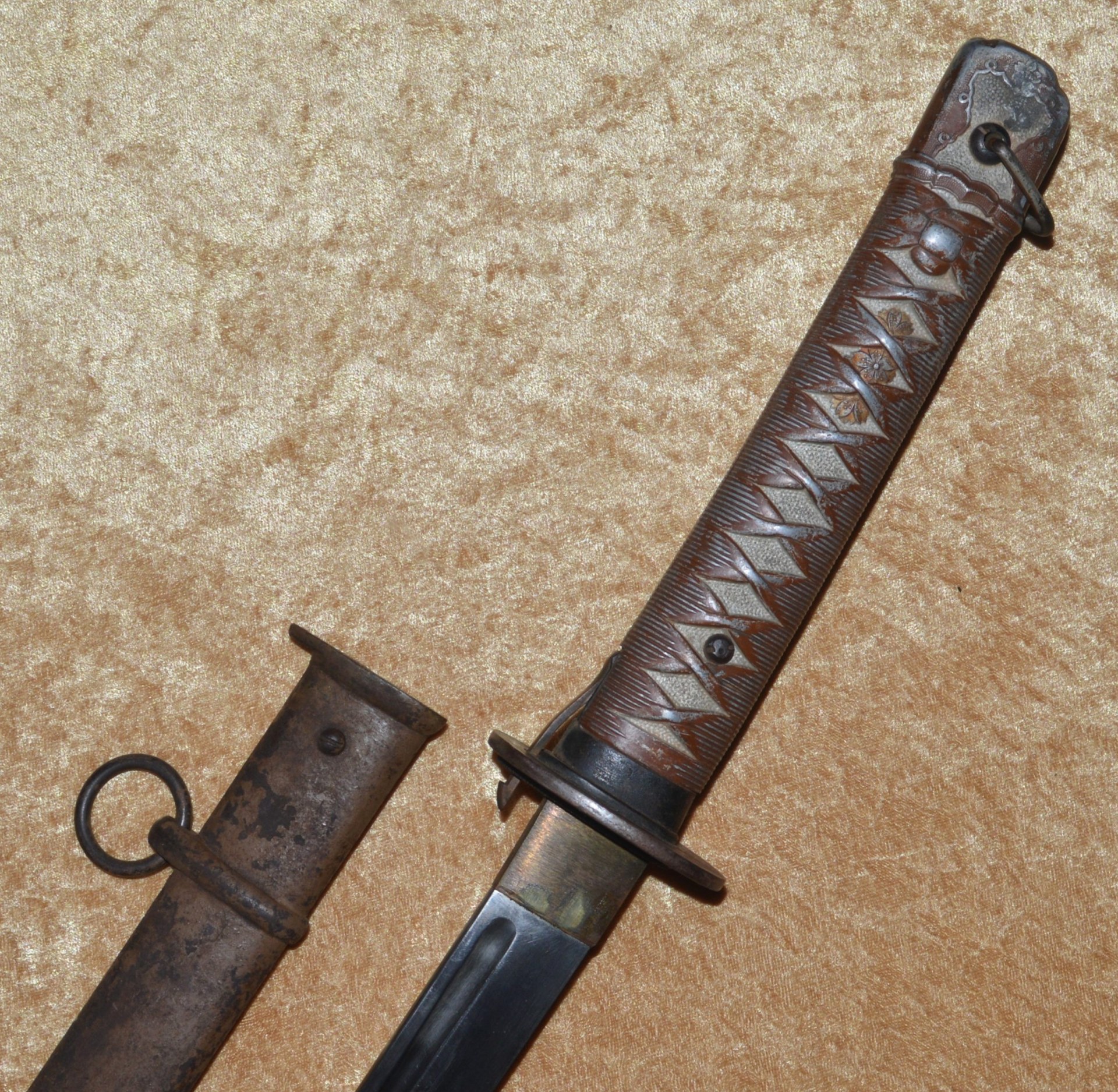
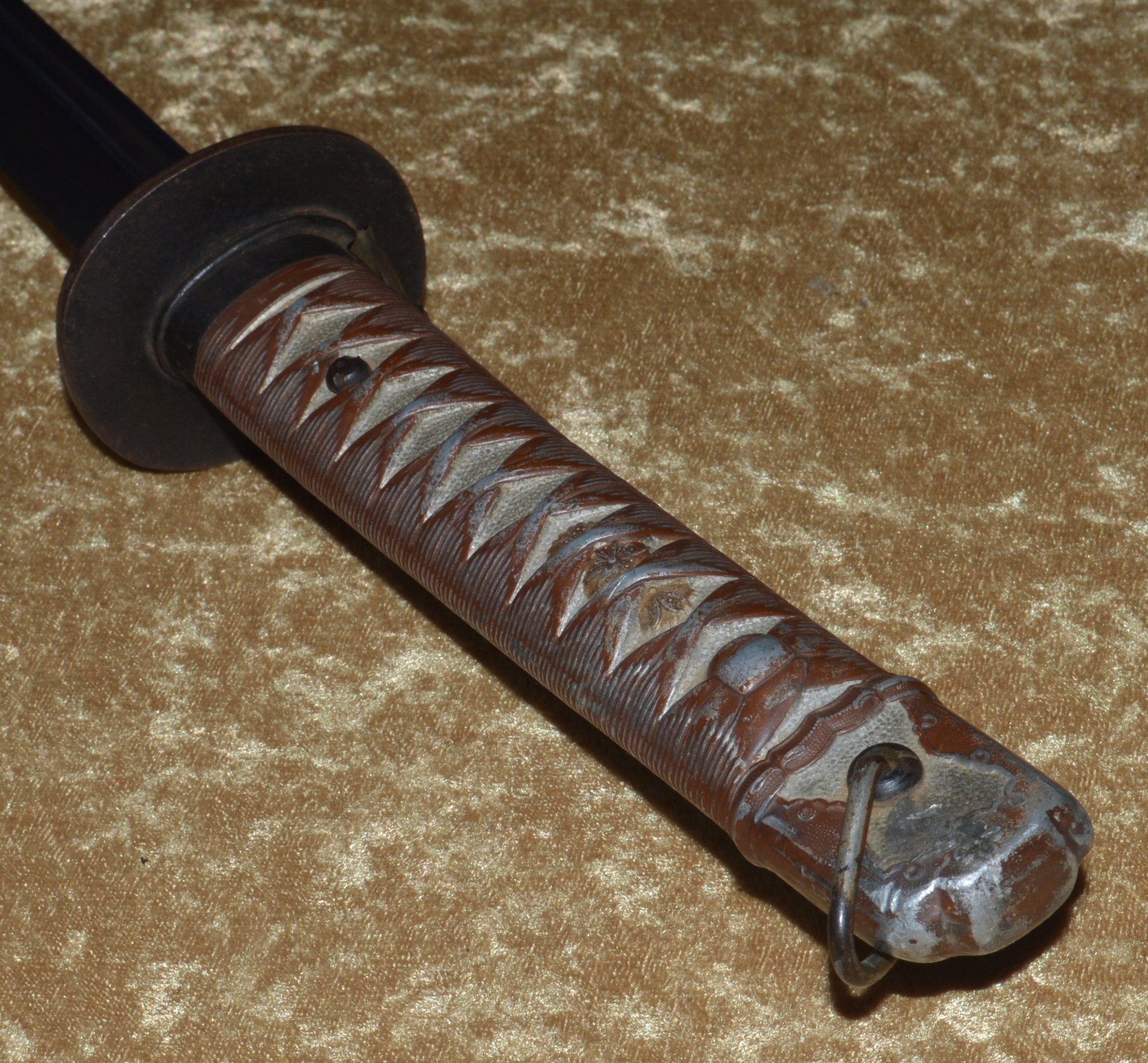
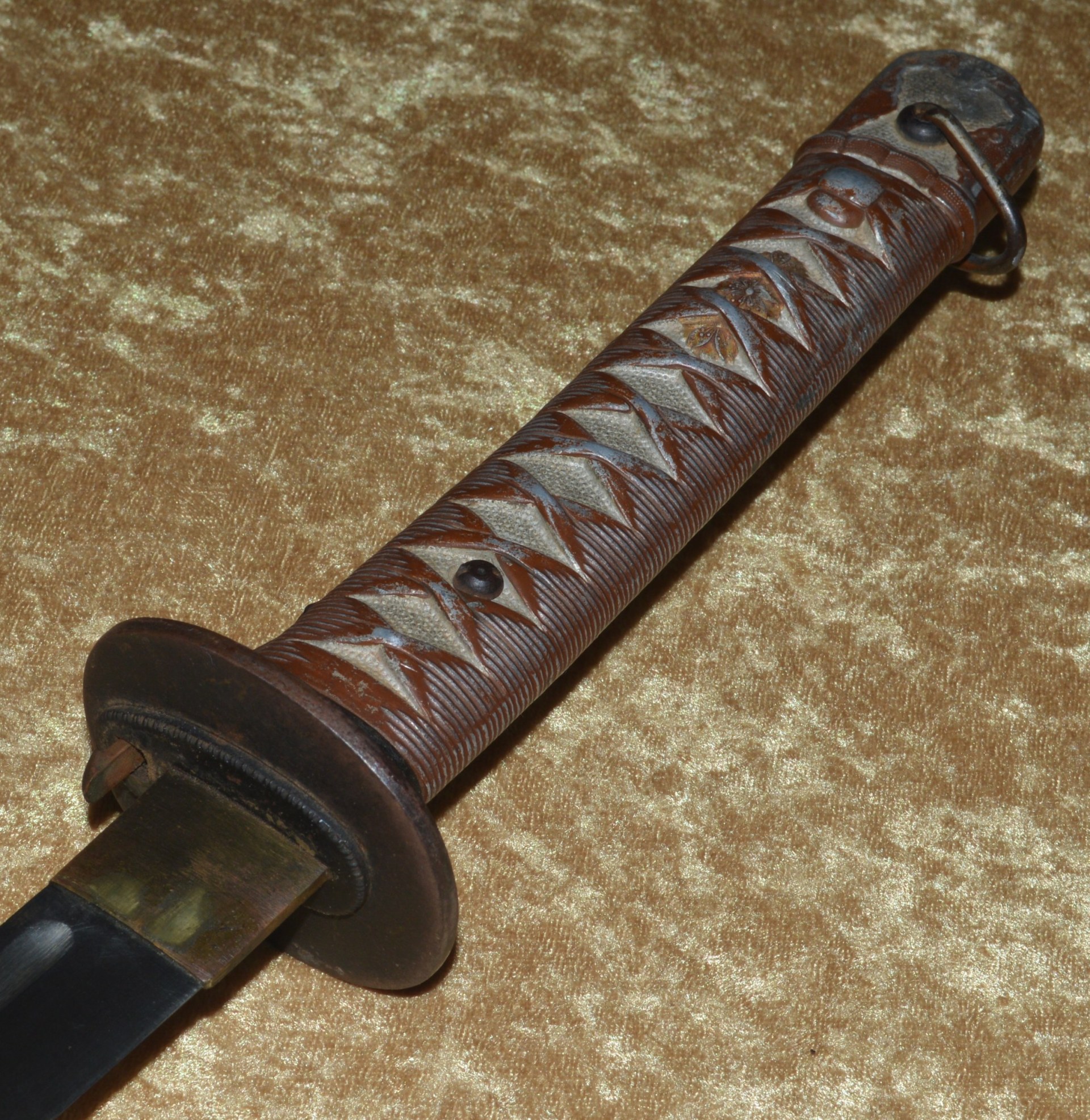
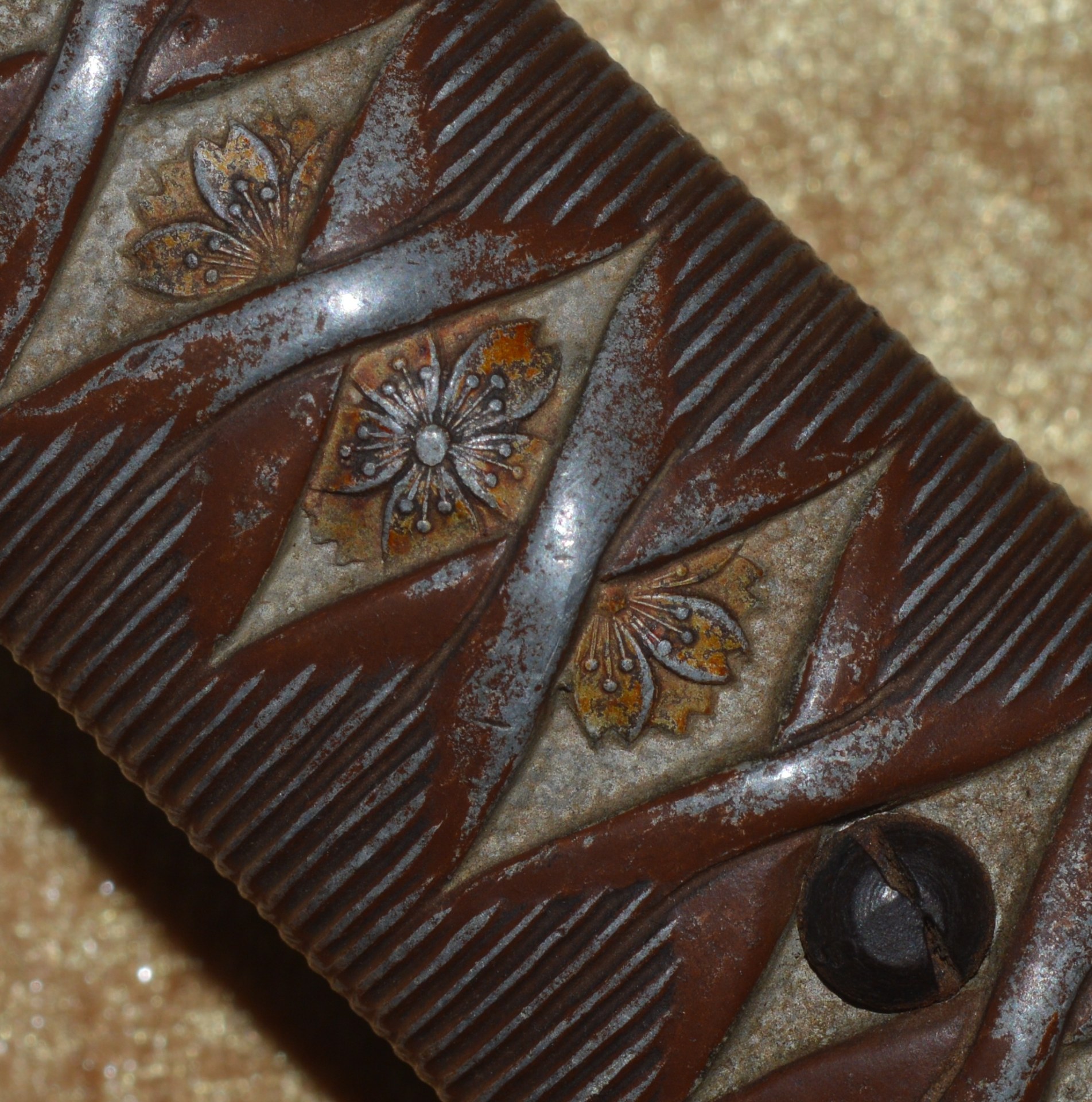
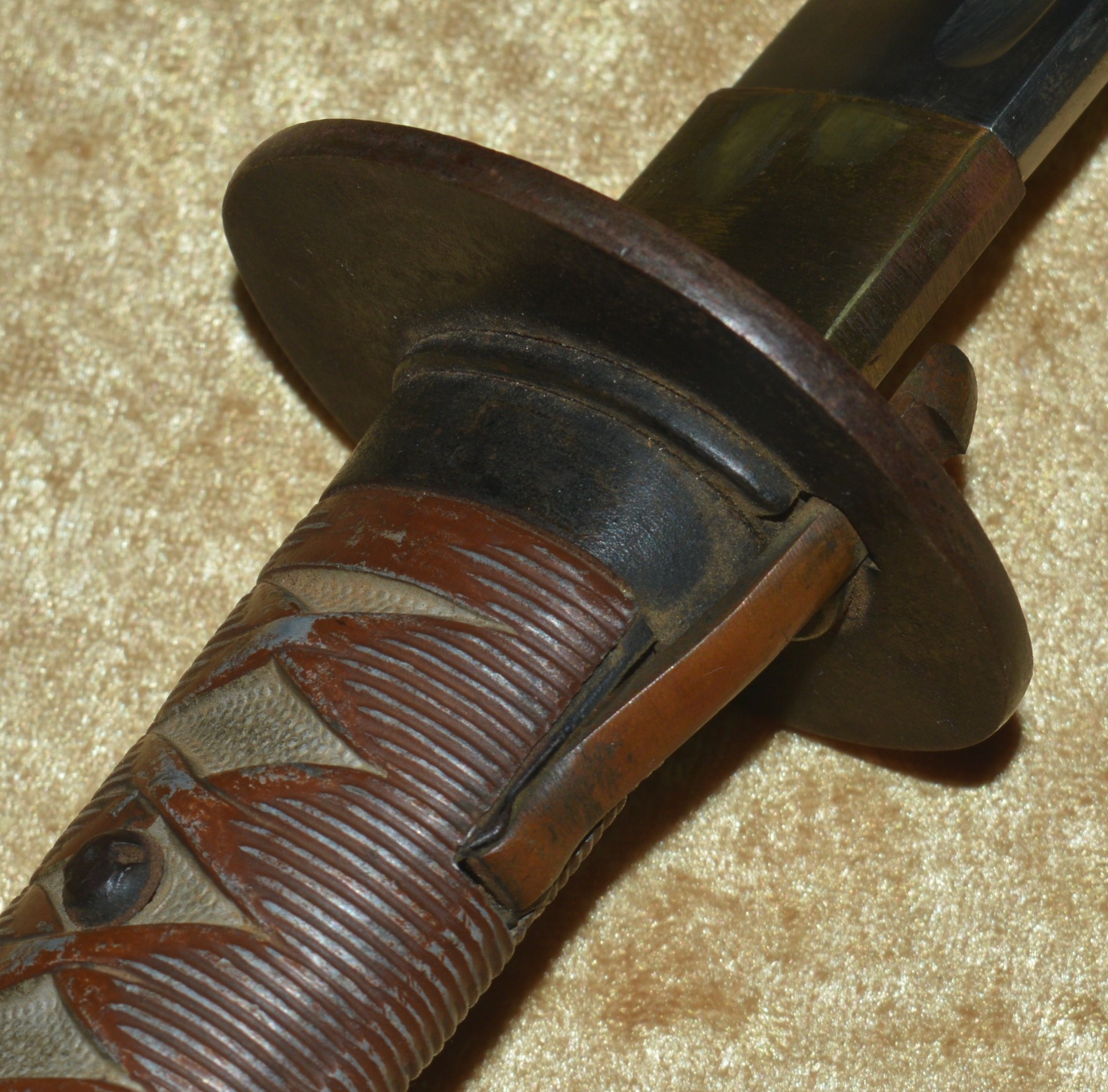
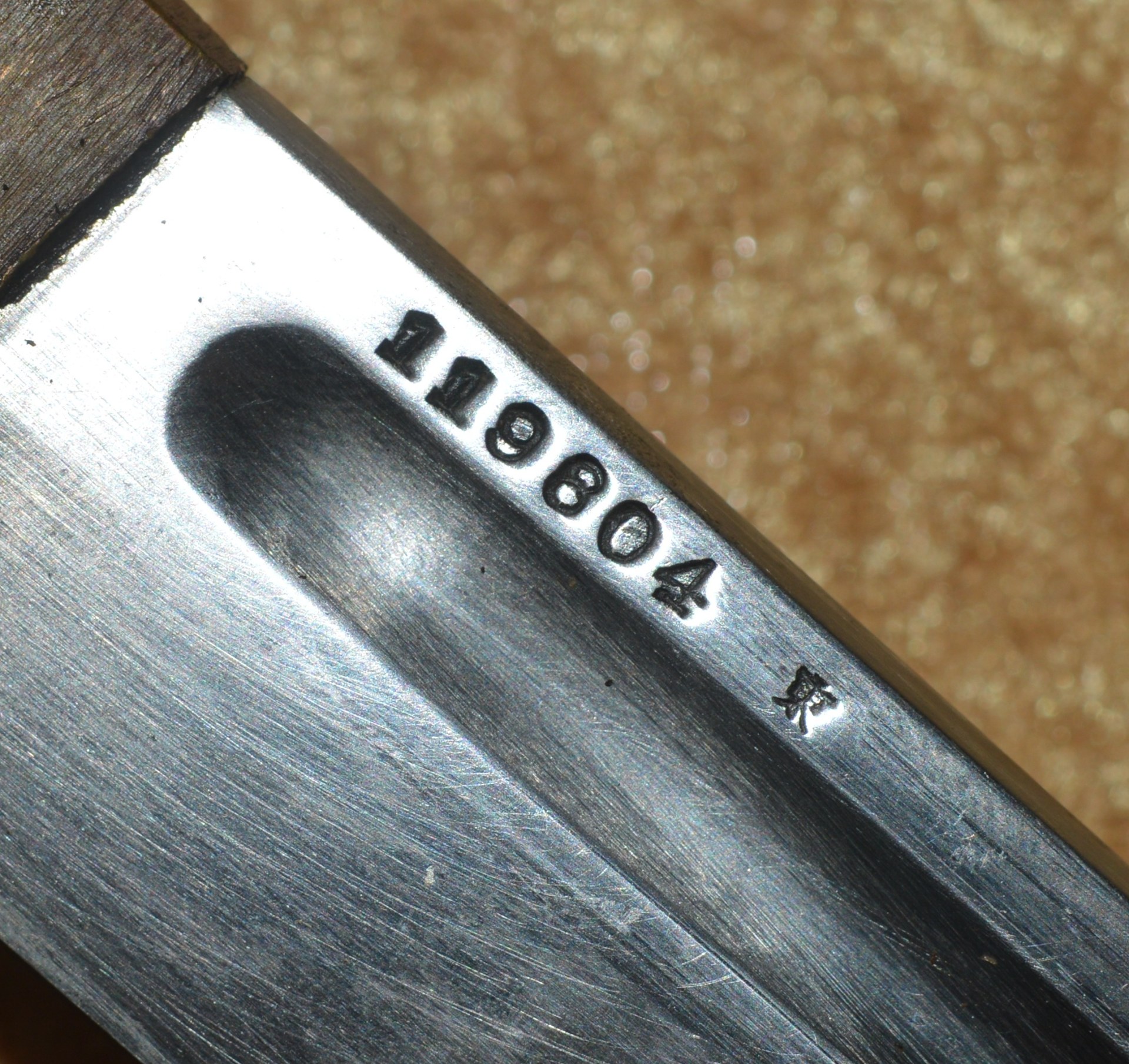
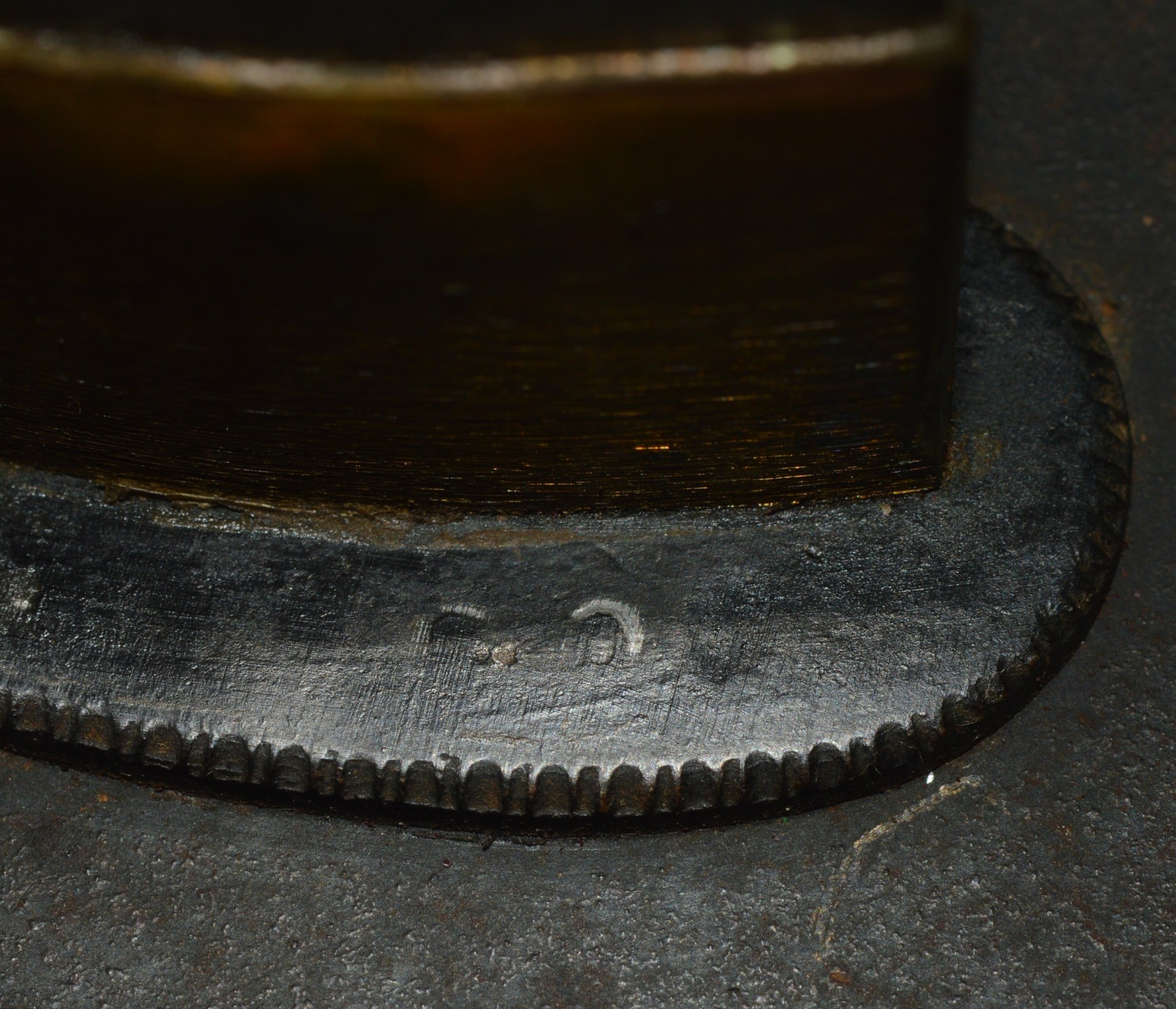
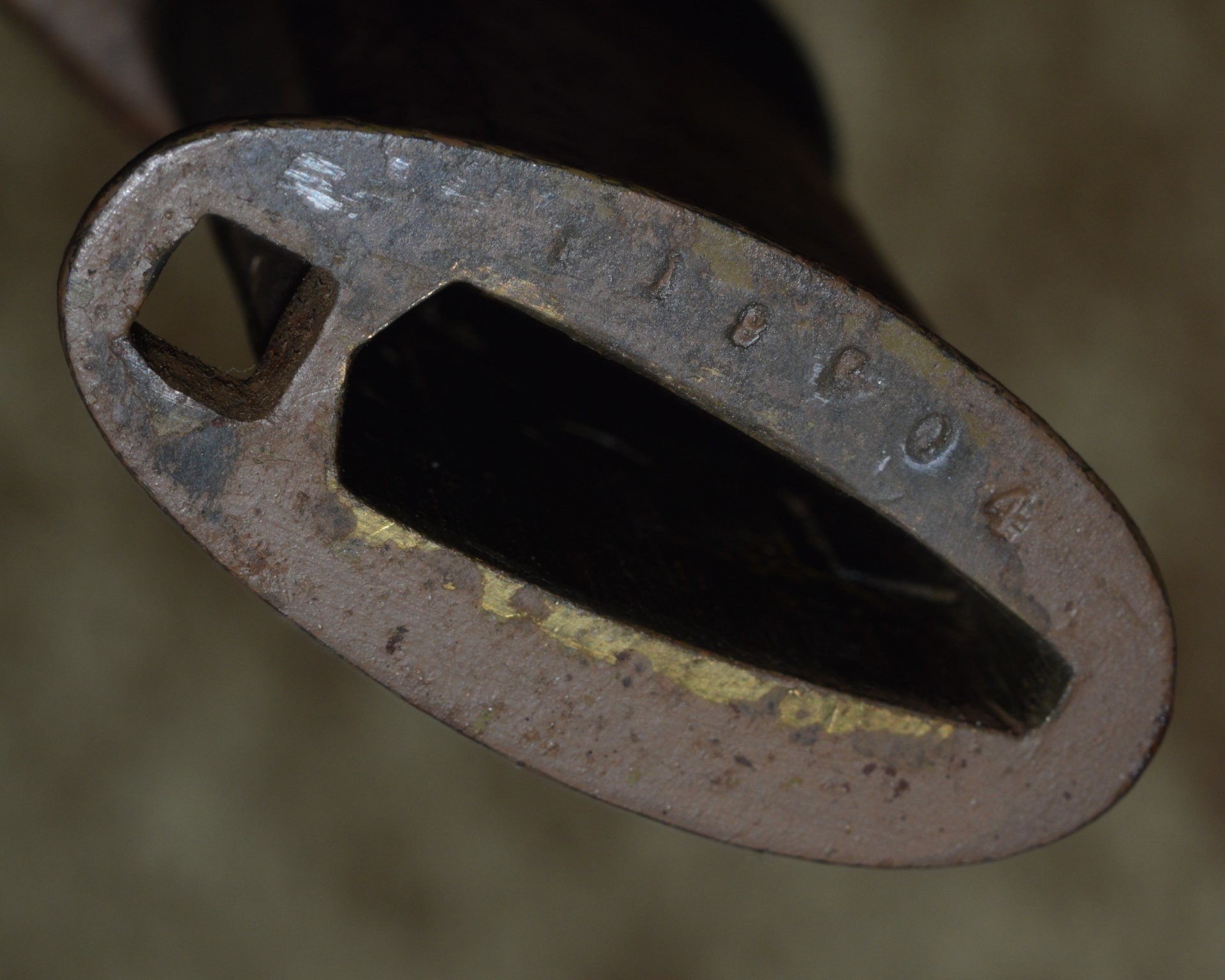
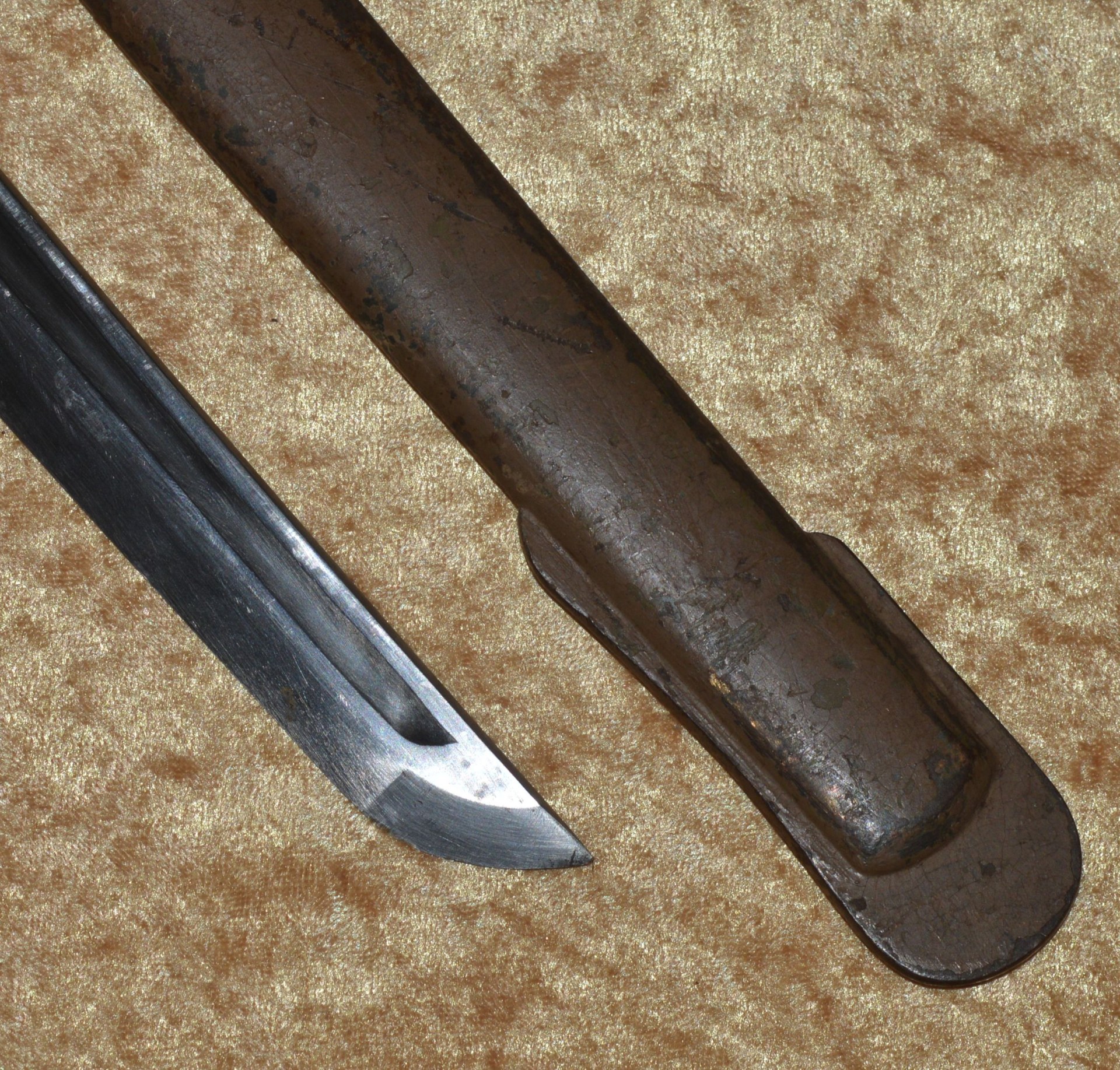
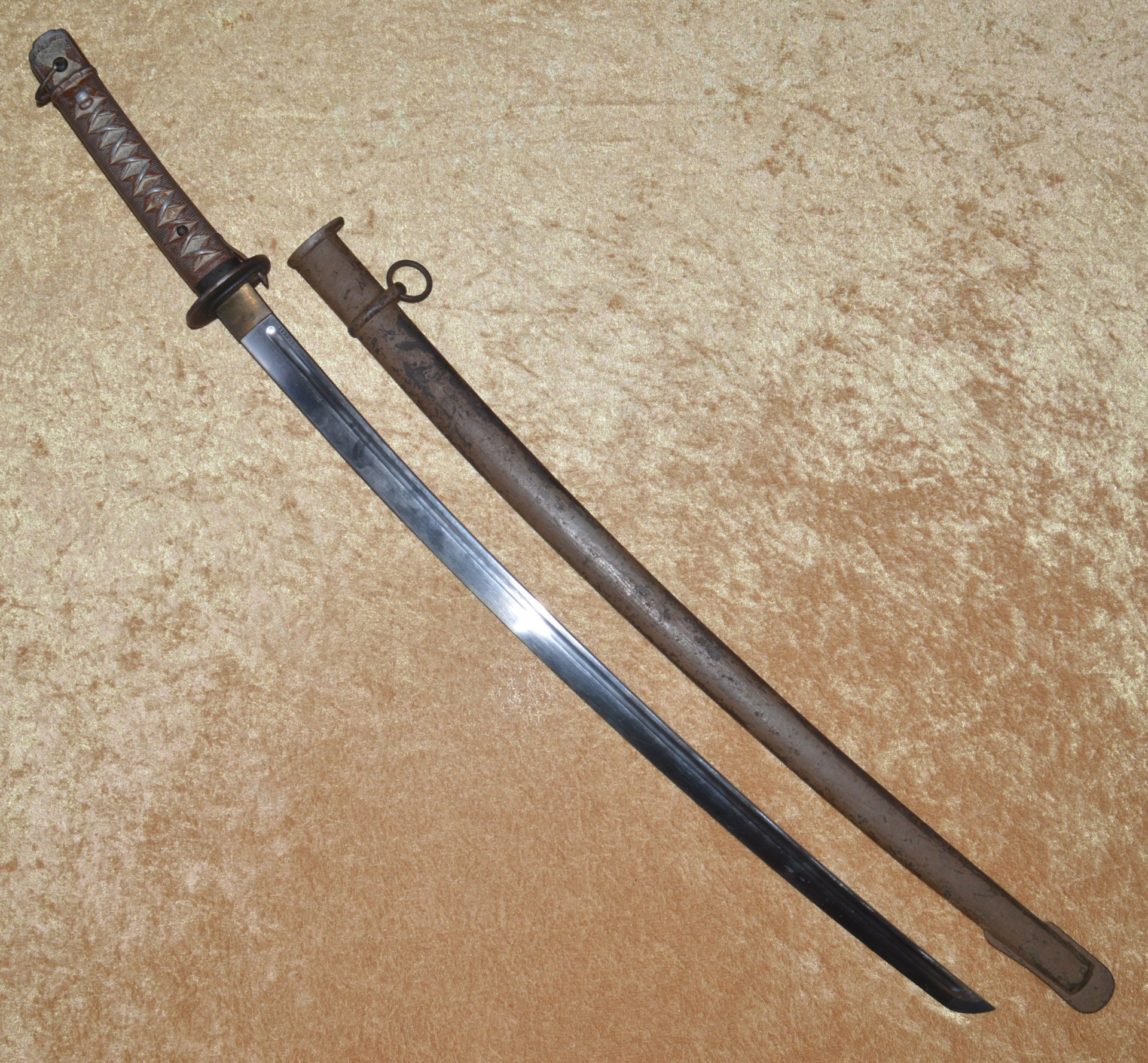
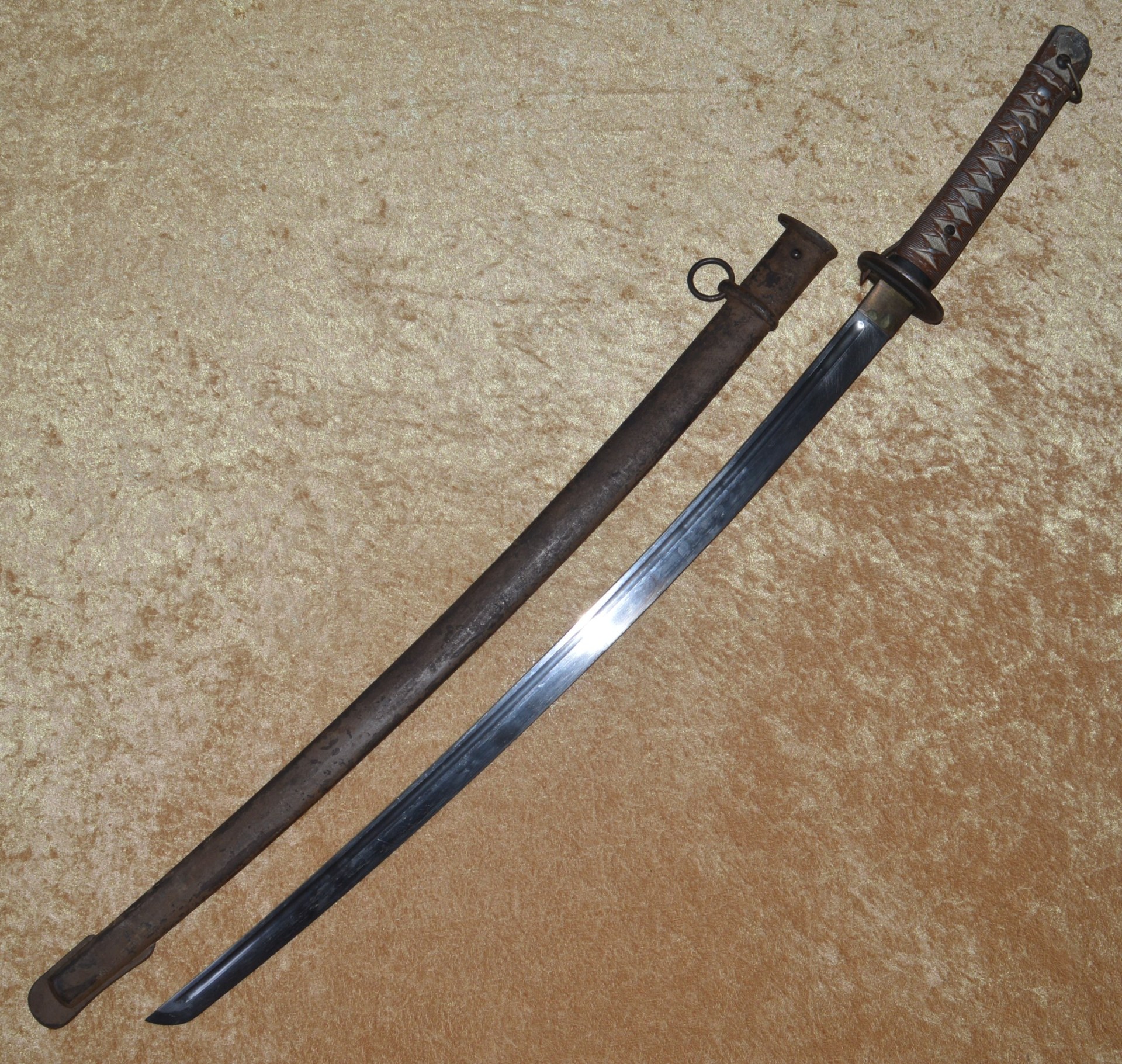
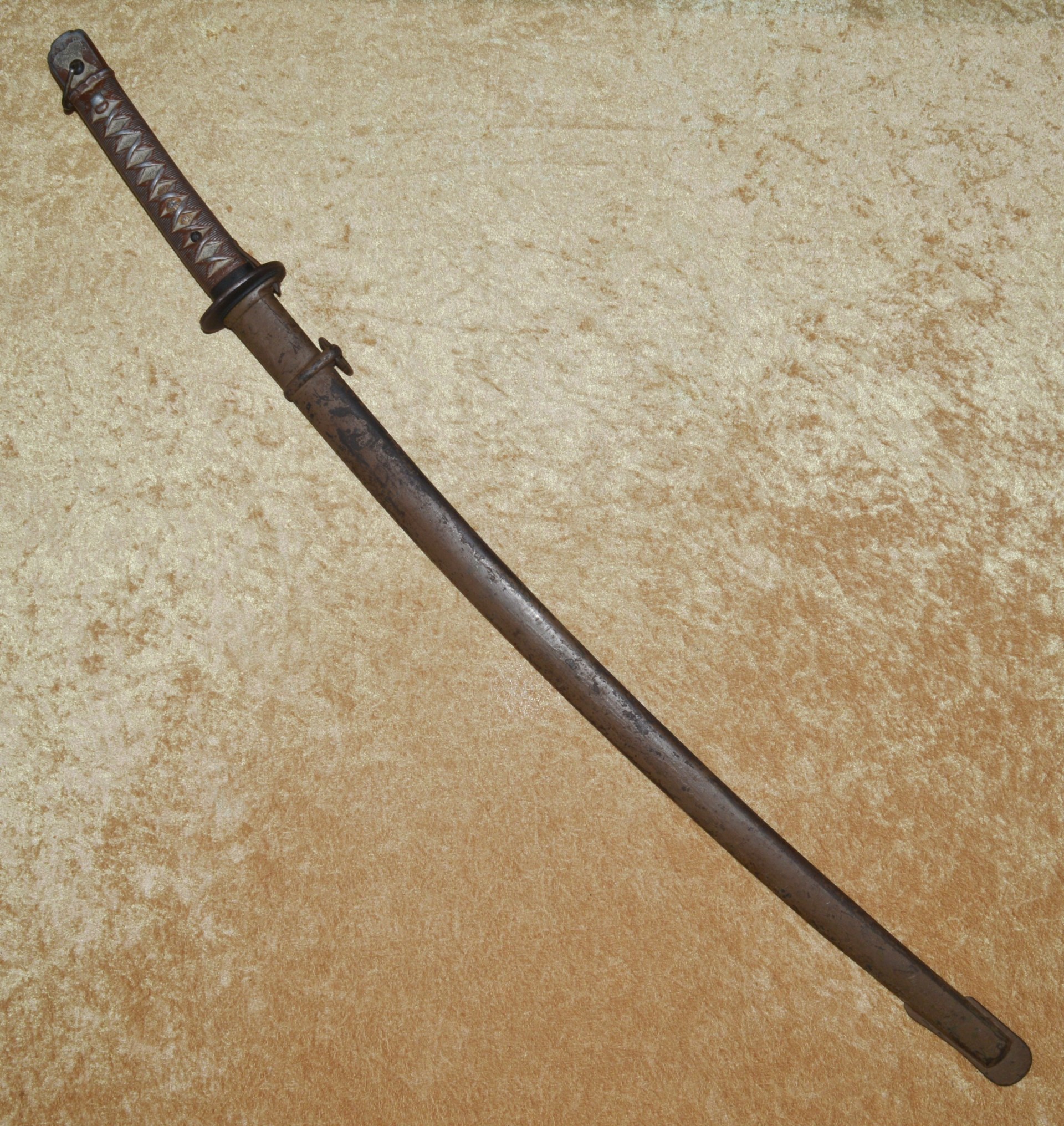
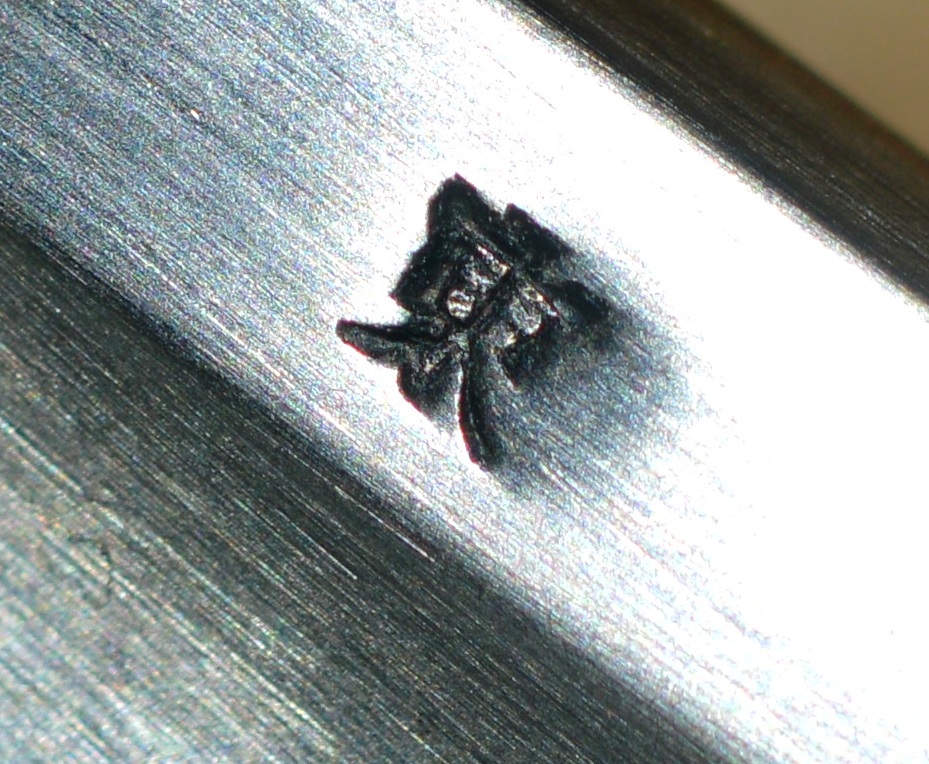
The Japanese NCO (non-commissioned officer) swords were introduced on September 16, 1935. They were machine made and came in six different variations, however, two of the variations were not officially recognized by the Japanese Imperial Army. All swords were marked with a serial number on the blade and the scabbard. These swords were also issued to officer candidates on September 17, 1940. While their overall shape and appearance is similar to traditional Japanese katanas, they featured a cast tsuka (grip), which was painted to simulate traditional tsuka with rayskin cover, menuki and silk wrap. This made them easier and cheaper to produce and also offered more durability. Early models had cast copper tsukas, most later examples of aluminum, and late war examples even made of wood. Tsubas (guards) were a plain iron oval, Unlike traditional Japanese swords, they were not intended to be disassembled and mounts were not interchangeable. This example with 27 1/2” (69.9 cm) gently curved blade with full-length single fuller near the back edge, stamped with serial number 119604 and Tokyo inspection stamp. Plain oval iron tsuba (guard) with integral seppa (spacer) stamped with faint arsenal markings. Aluminum tsuka (grip) with brown painted simulated ito (silk wrap) and simulated gold menuki (grip ornaments); welded saya (scabbard) spring lock. Original brown painted steel saya, the throat stamped with matching number 119604. Overall length 36 1/4” (92 cm), not including saya. Very good condition; tsuka with wear to the brown paint; blade bright and near excellent; saya retains about 70% of its original brown paint, the balance with dark rust patina. The Japanese were the last army to carry and use swords on the battlefield. Despite them being obsolete in modern warfare, they were often used in last ditch bonzai attacks or ritual suicide.
 Japanese WWII Officer’s Shin Gunto Katana Sword
  US M1832 Foot Artillery Sword by Ames
 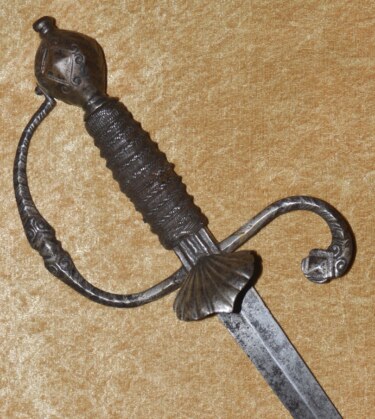 Italian Town Sword, Rapier, Mid-17th C
 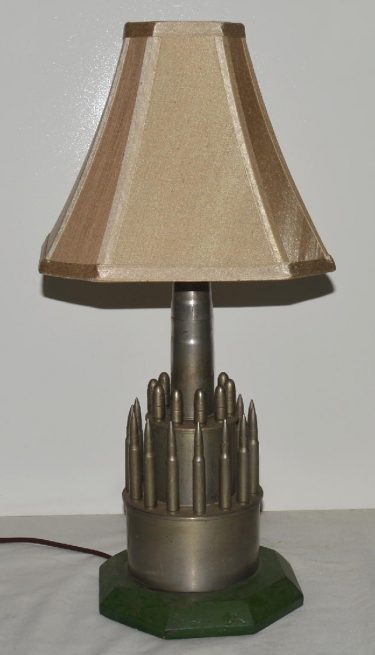 WWII Trench Art Lamp