
Description
Many of the so-called executioner axes that come on the market from time to time were
actually made for hewing timber in timber frame construction, the standard method of house
construction in Europe during the Middle Ages and Renaissance Period. In fact, the
famous Tower of London executioner axe probably began its life in the same way. One can
easily differentiate between a hewing axe and one made for other purposes, because the
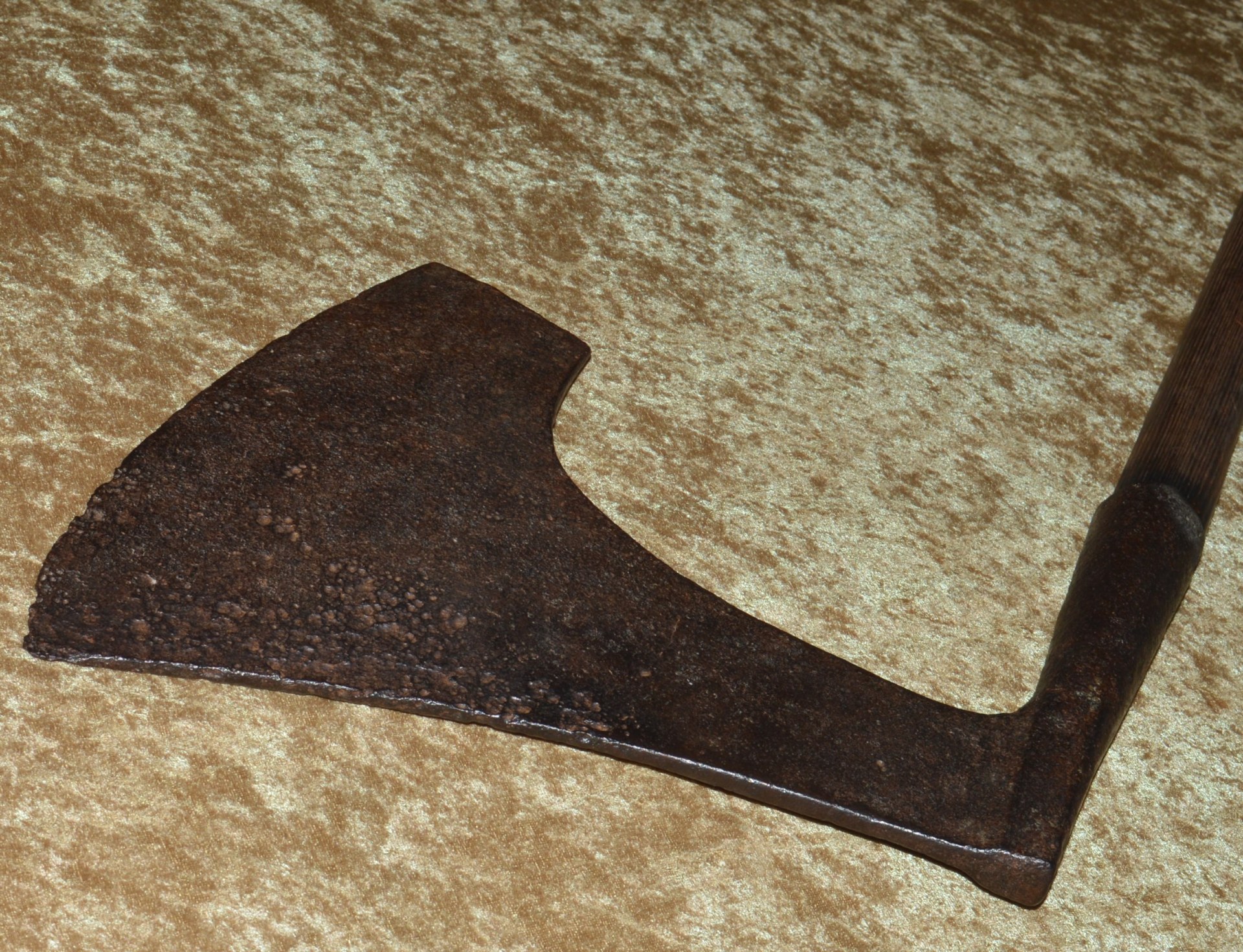
blade of a hewing axe is completely flat on one side, with any offset with the ferrule and the
cutting edge bevel being on the opposite side. This is because hewing axes were made to
chop with the grain of the wood in a straight line. A blade centered on the ferrule would
deflect the blade away from that line. So when hewing timbers, the offset and bevel would
need to be kept on the waist side of the log, while the flat side would allow the axe to follow
a straighth line. If you ever tried to hew a timber (we have), you would immediately see how
that works. While a hewing axe would probably work well for severing heads, such axes
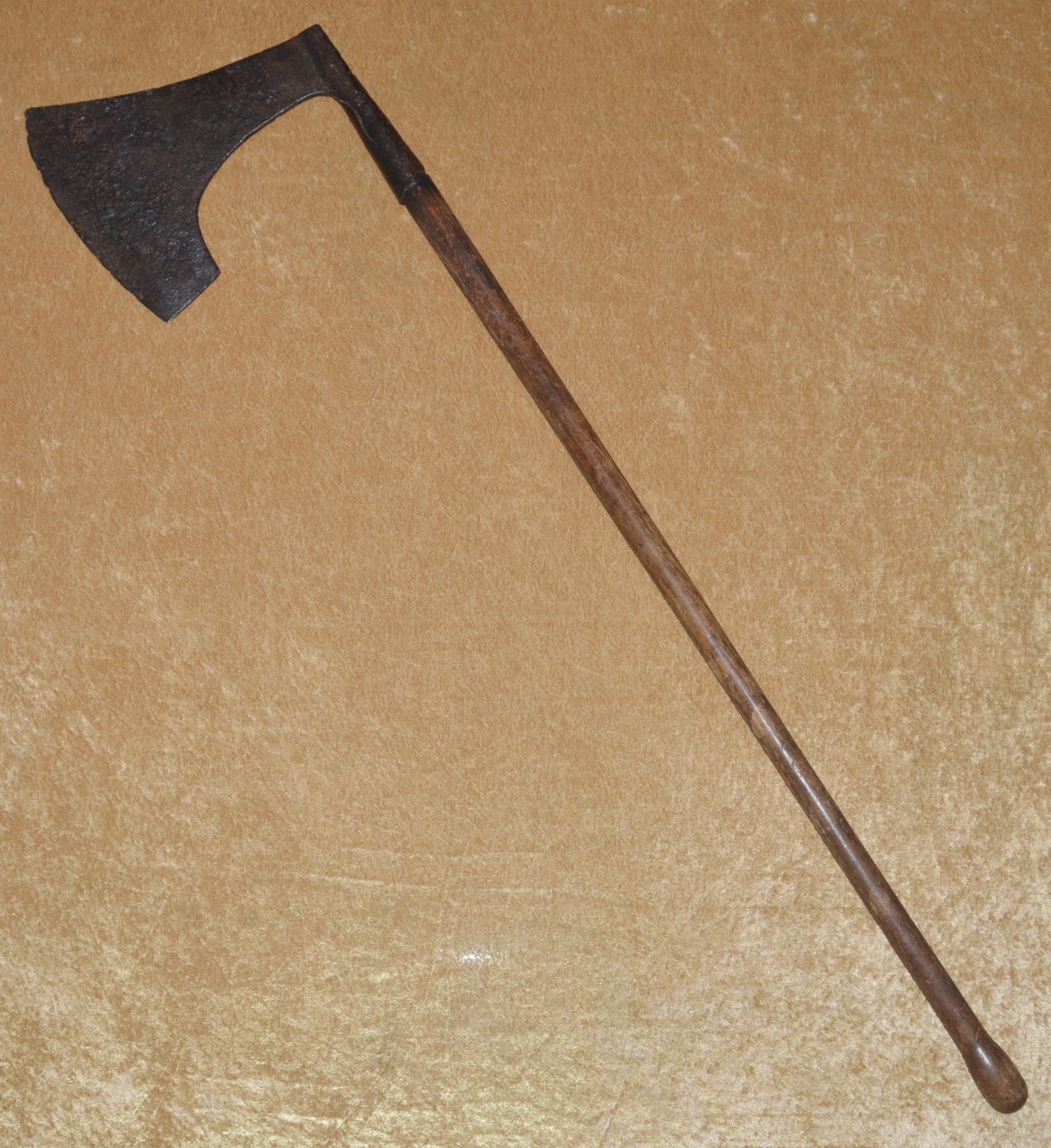
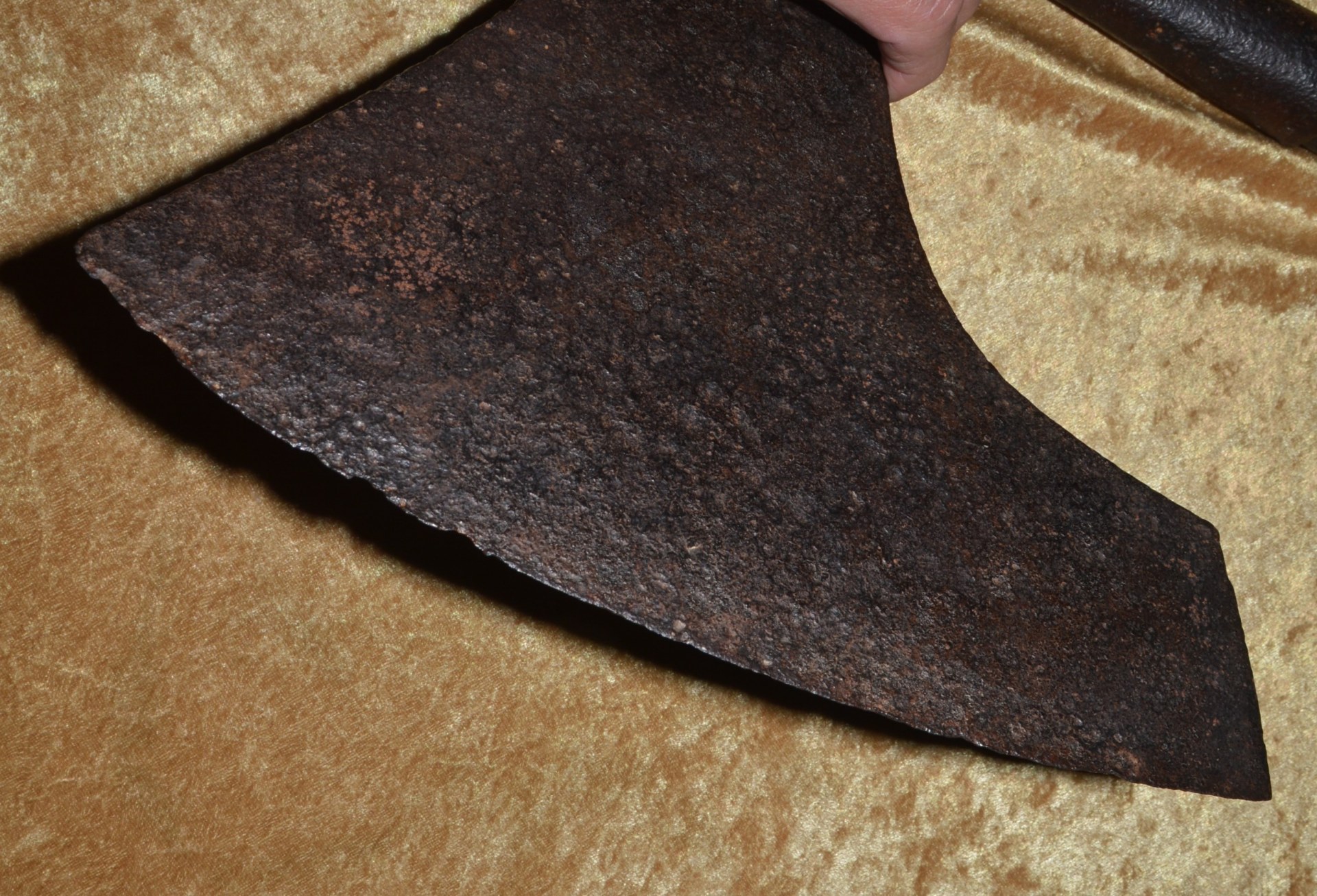
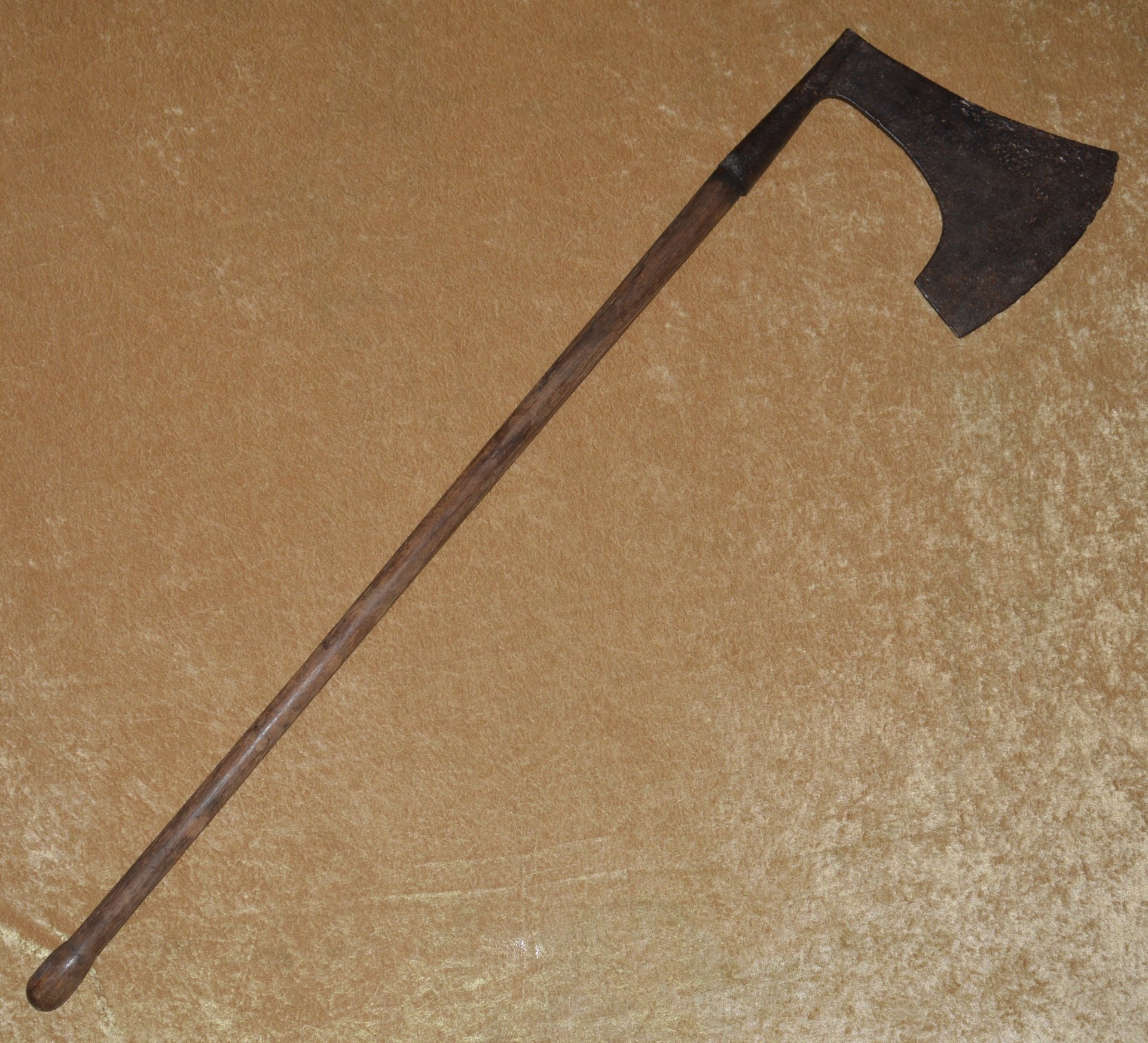
would be far more common than those few actually made for execution. This axe is a real
beast, and we honestly can’t see any other practical use for it, other than for severing
heads. In that capacity, it would be very effective. At nearly 7 pounds, it is far too heavy to
use for chopping trees or firewood, especially with its over 4 feet of total length. The axe
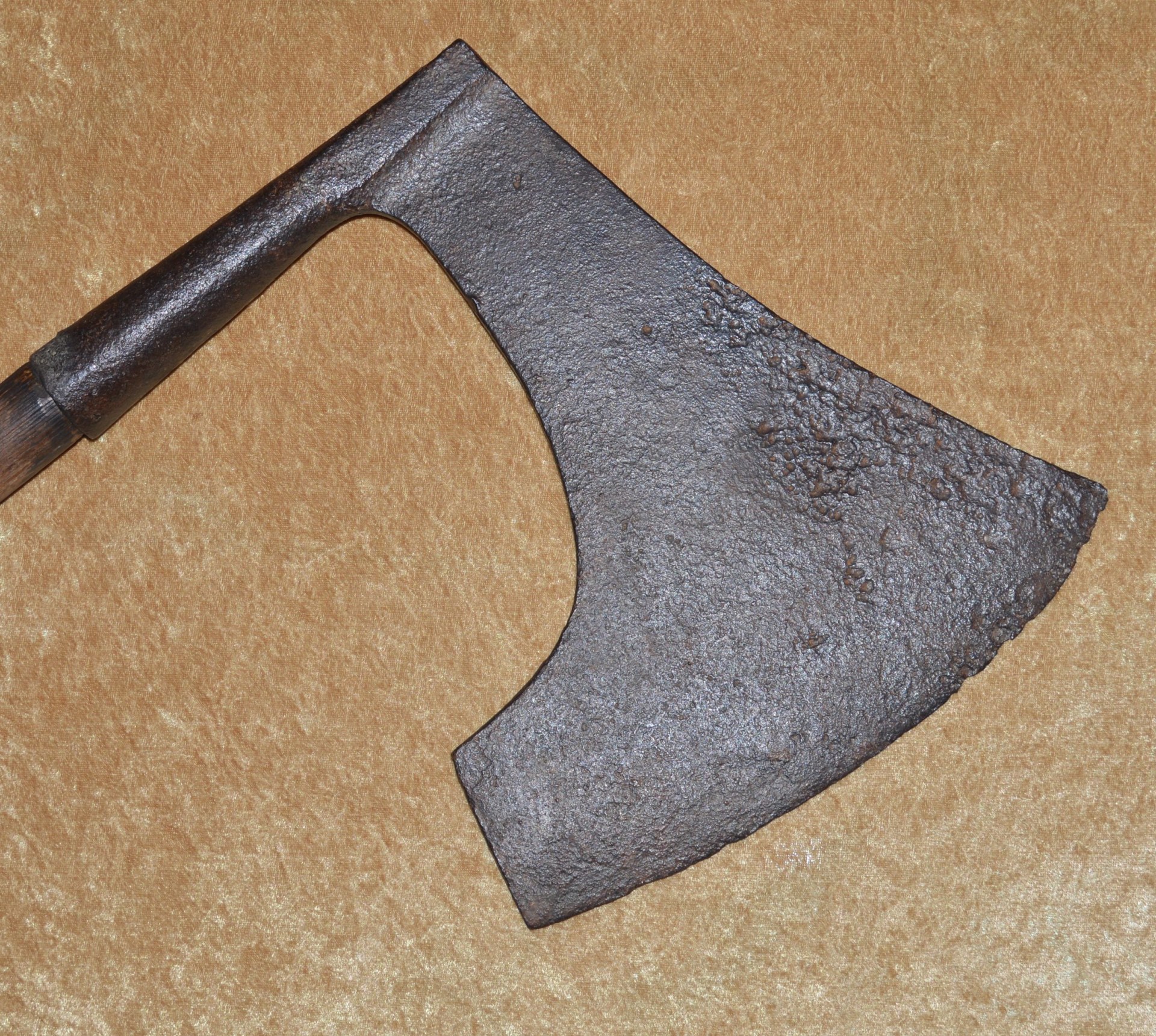
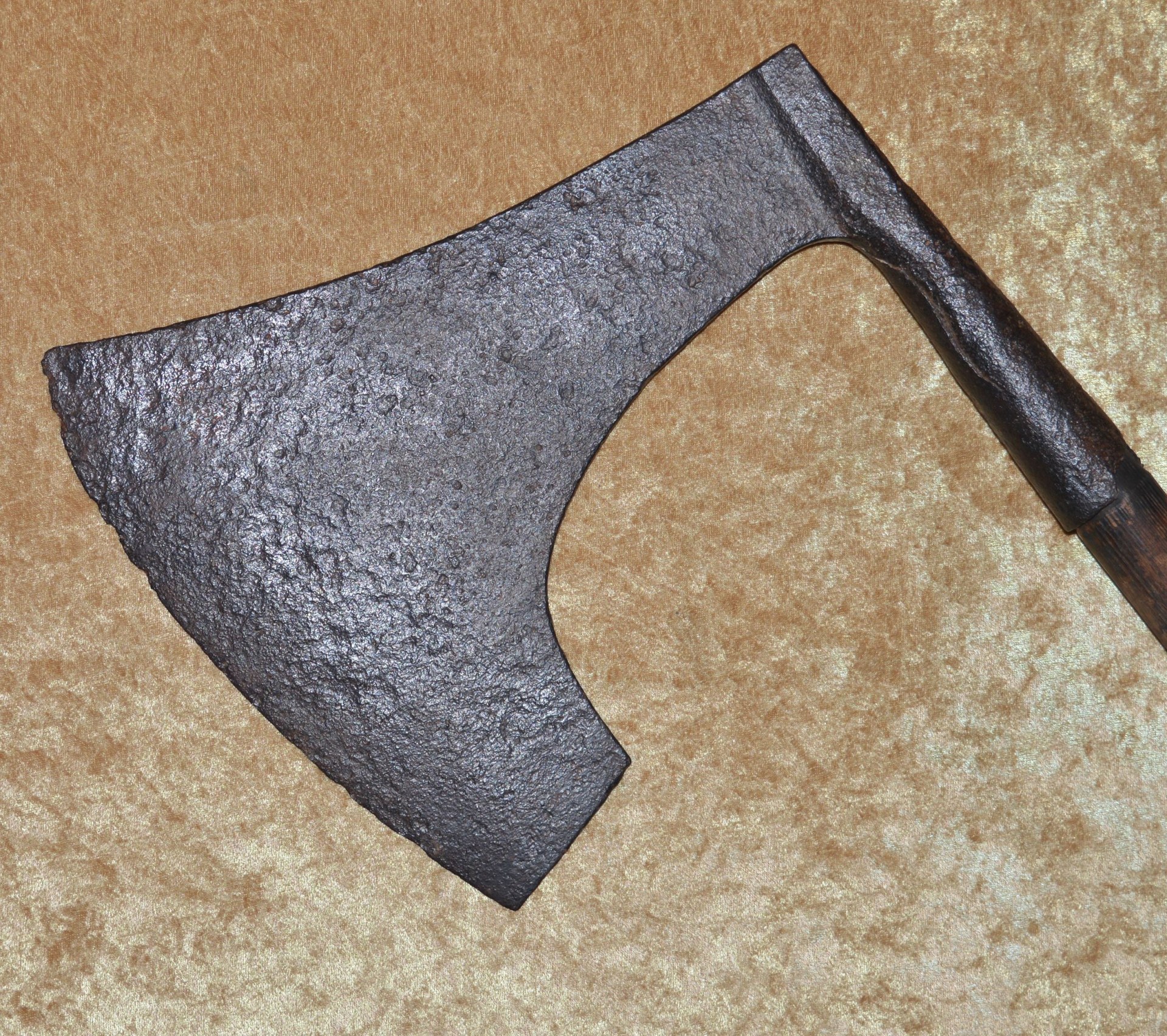
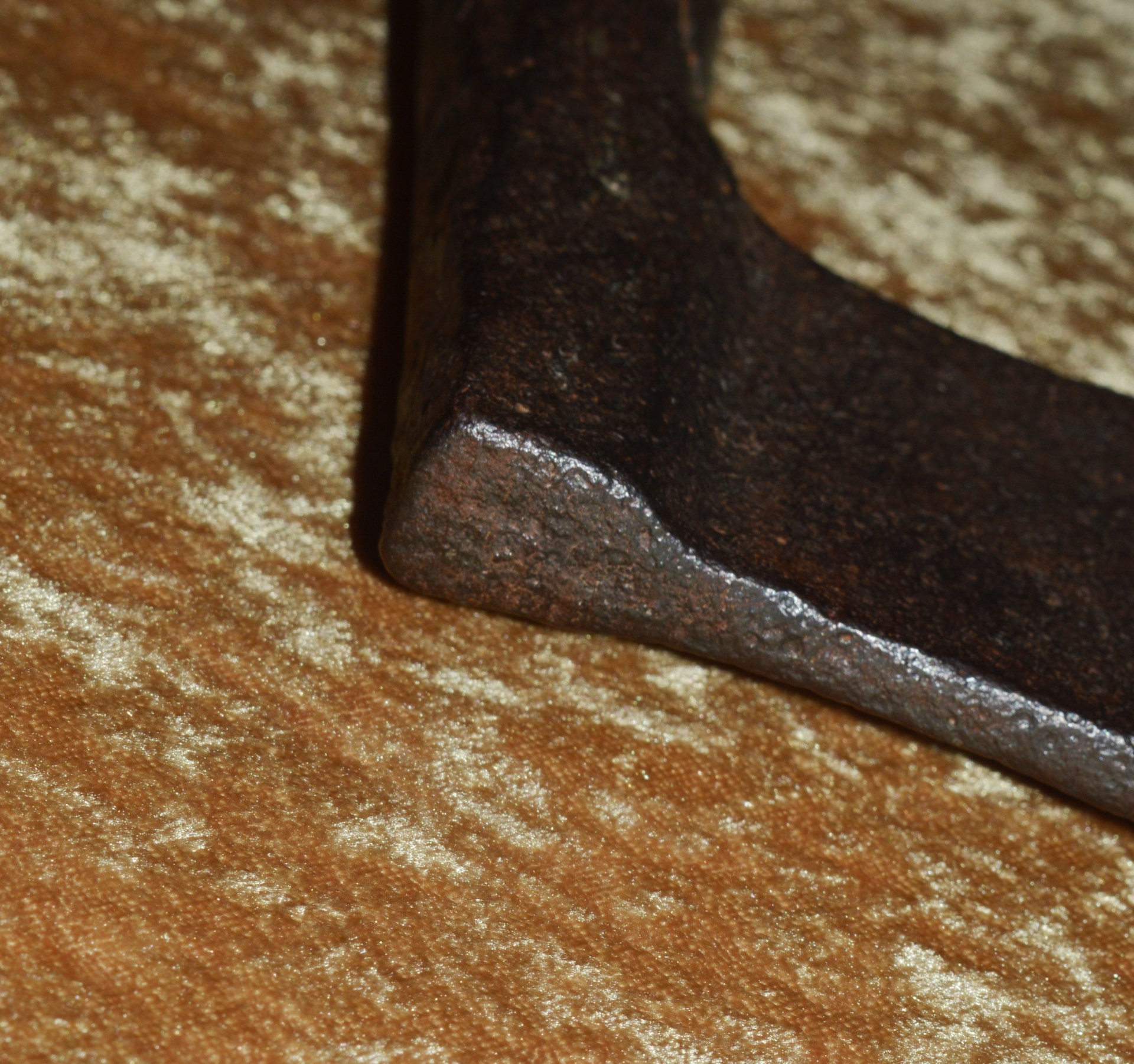
blade is center-hung, of hand-forged iron, with a 10 1/8″ (25.7 cm) convex cutting edge,
beveled on both sides. Length from cutting edge to the back of the 8 1/4″ (21 cm) long
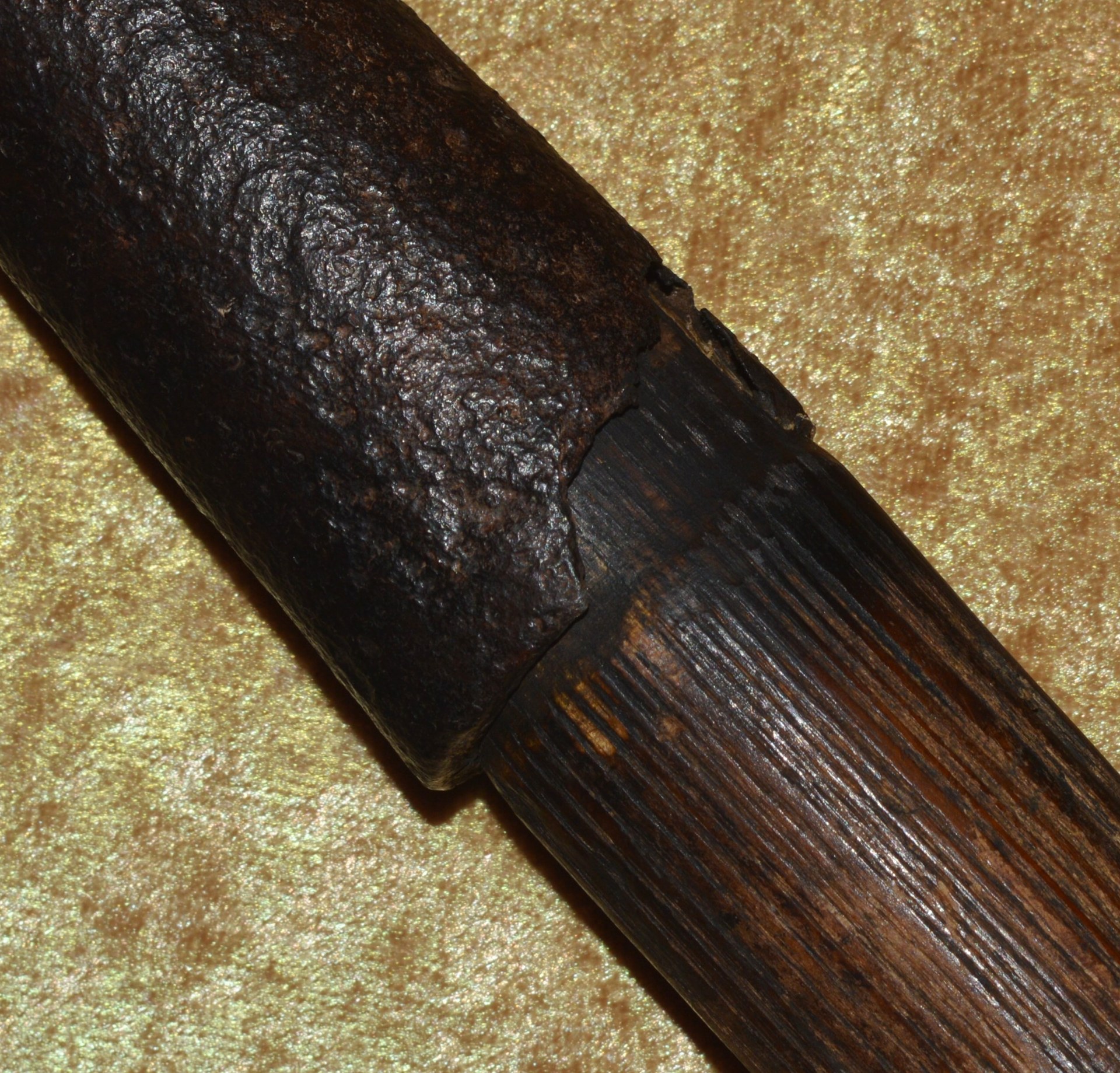
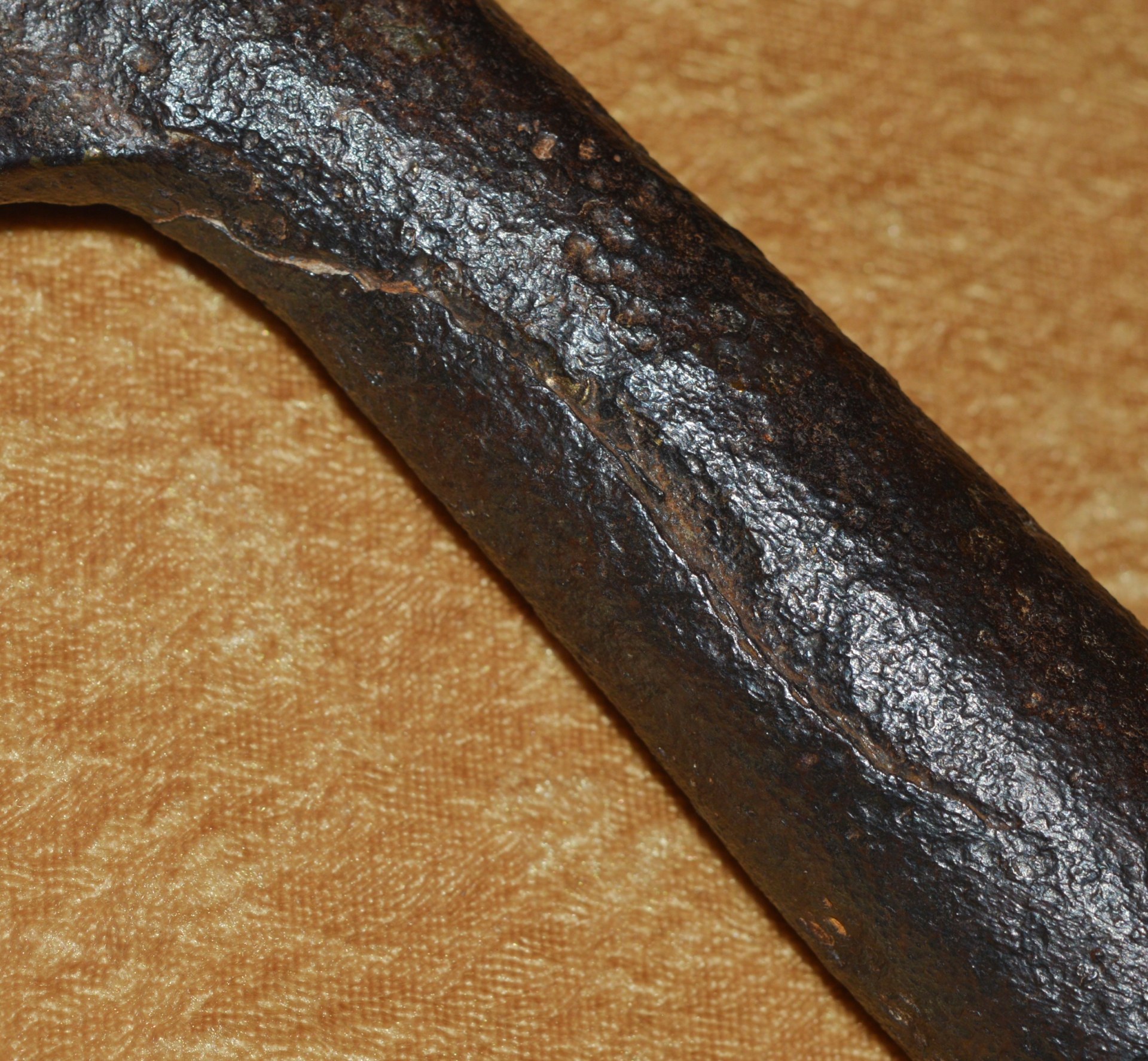
ferrule is 12 1/4″ (31 cm). The ferrule is integrally forged with the blade and goes from
rectangular-section to round-section, widening as it connects to the tapering round-section
ash shaft. Length from the end of the ferrule to the end of the shaft is 48″ (122 cm), and
overall length (blade top point to end of shaft) is 52 1/4″ (132.7 cm). Actual weight,
including shaft, is 6 pounds 13.45 ounces (3.1 kg). Iron shows great age, with old stabilized
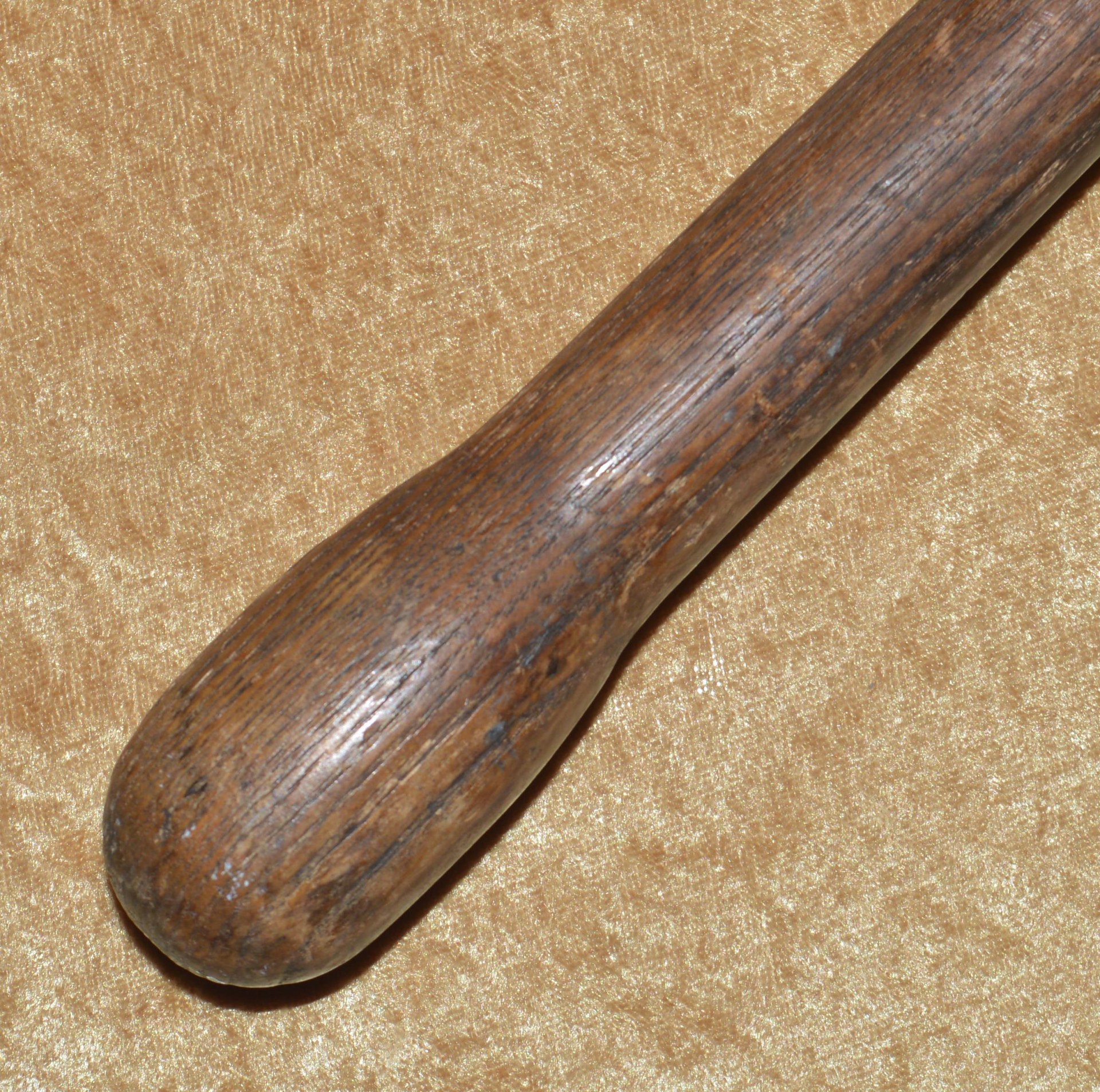
corrosion and lamination, and a defect at the end of the ferrule. Shaft is old and may be
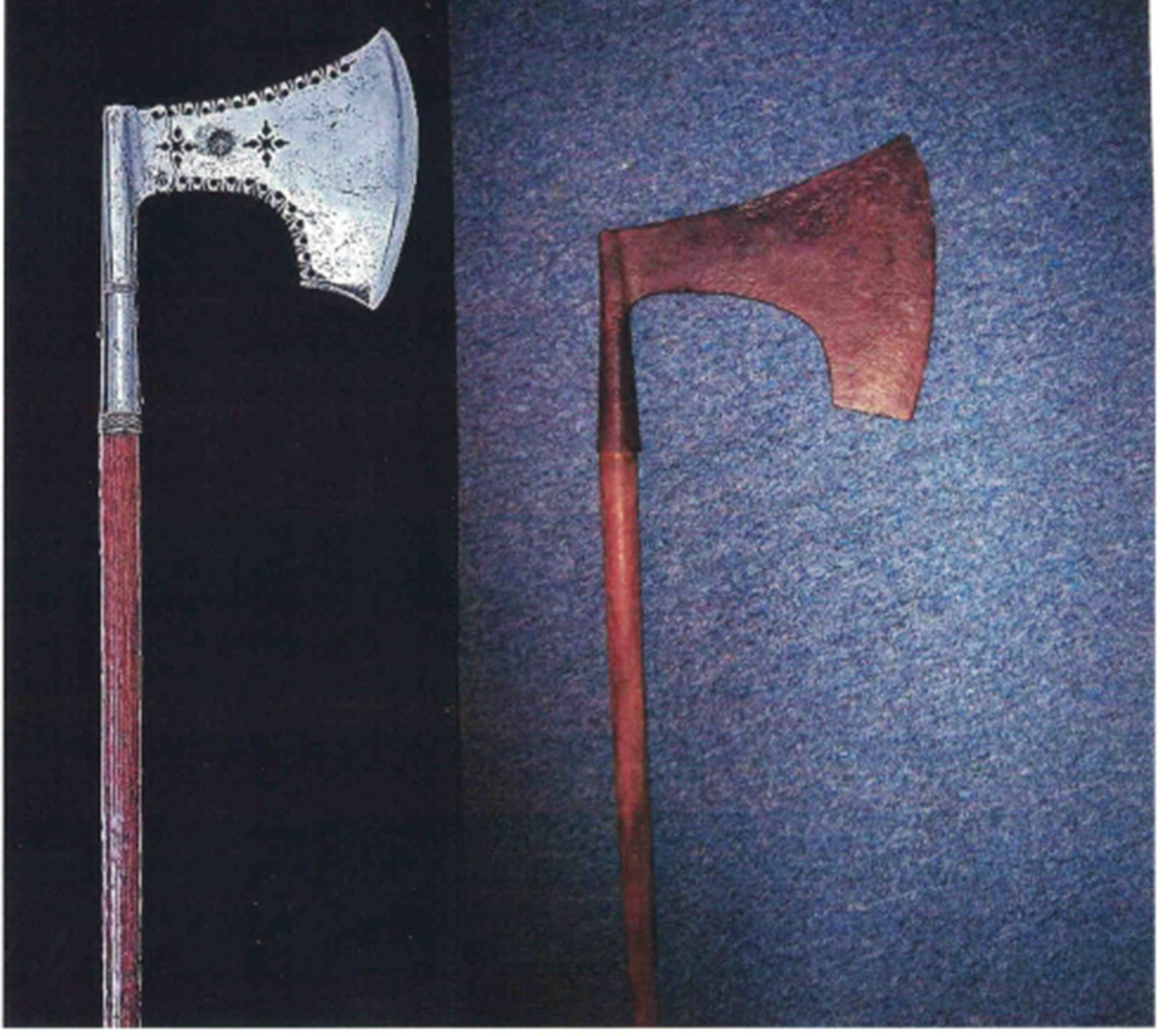
the original. A known executioner axe from Warwick Castle has a nearly identical shape,
though it has a later nickel plating (see photo for comparison).
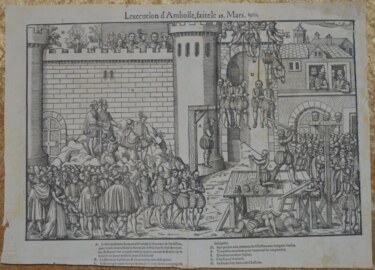 Rare French Woodcut Engraving “L execution d’Amboise faite le 15 Mars 1560″
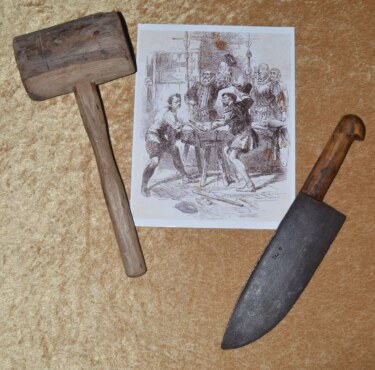 European Punishment Cleaver and Mallet, 16th/17th C
 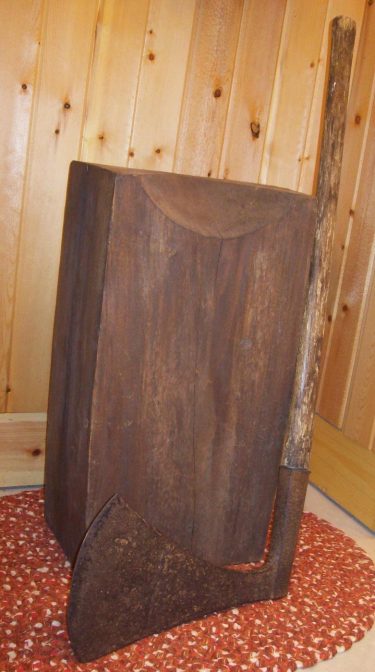 English Executioner’s Axe, 16th/17th C
 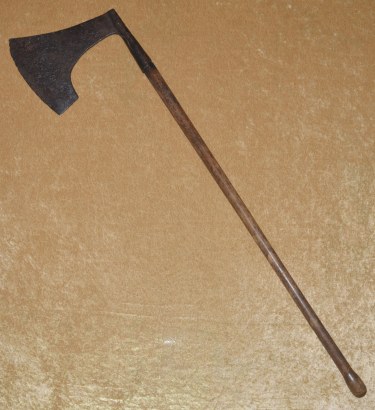 English Executioner’s Axe, 16th/17th C