
Description
The Japanese NCO (non-commissioned officer) swords were introduced on September 16,
1935. They were machine made and came in six different variations, however, two of the
variations were not officially recognized by the Japanese Imperial Army. These swords were
also issued to officer candidates on September 17, 1940. While their overall shape and
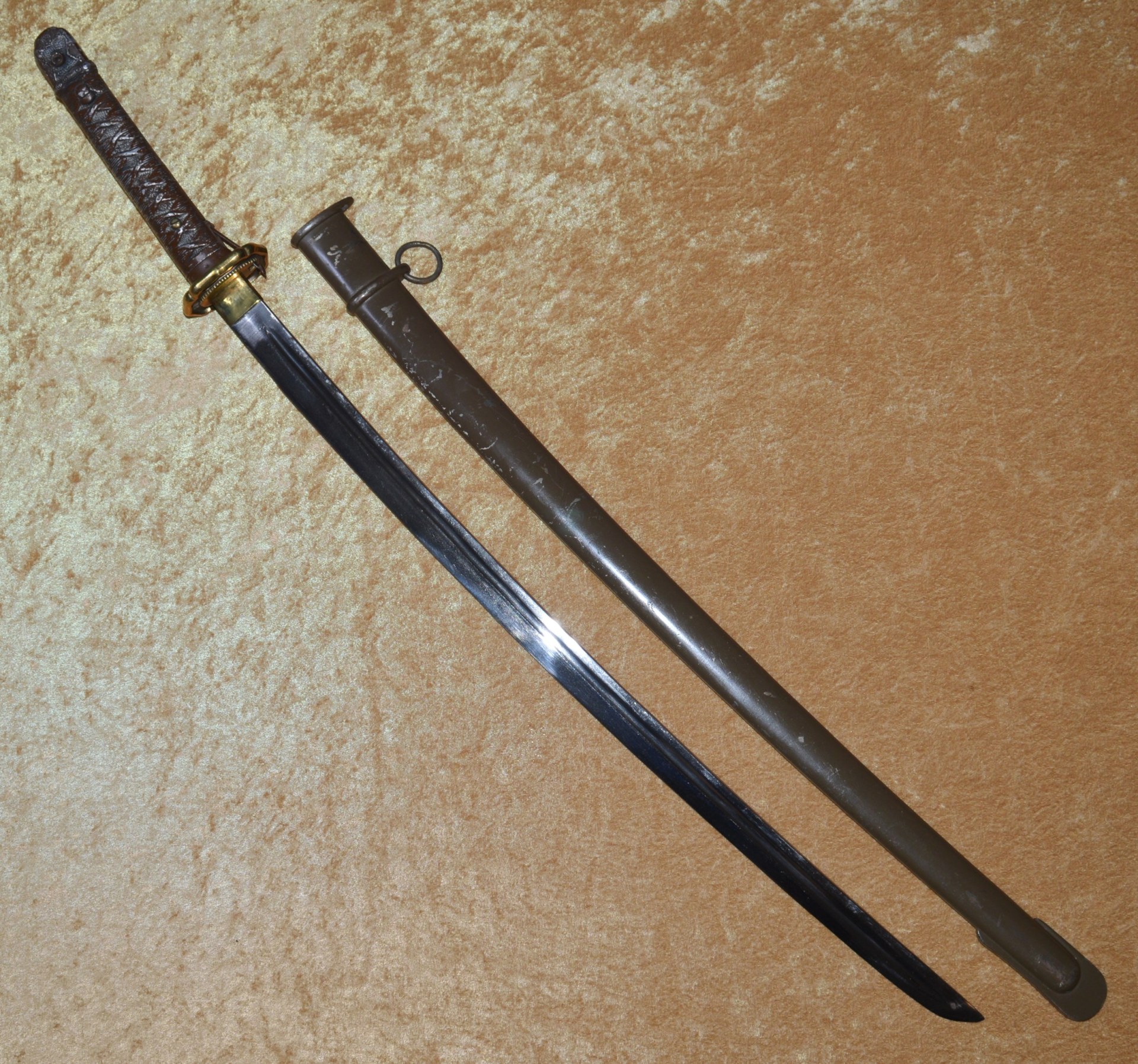
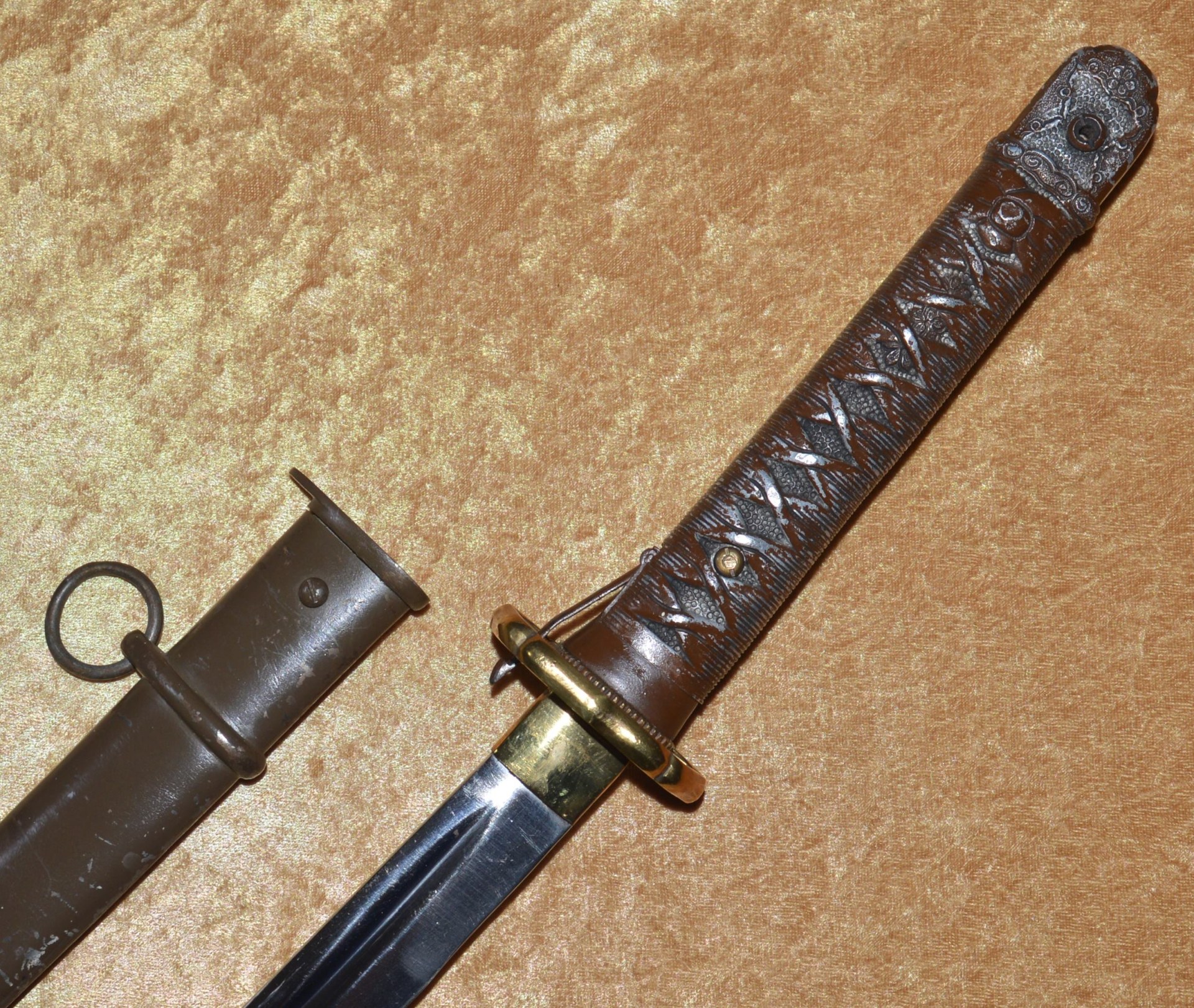
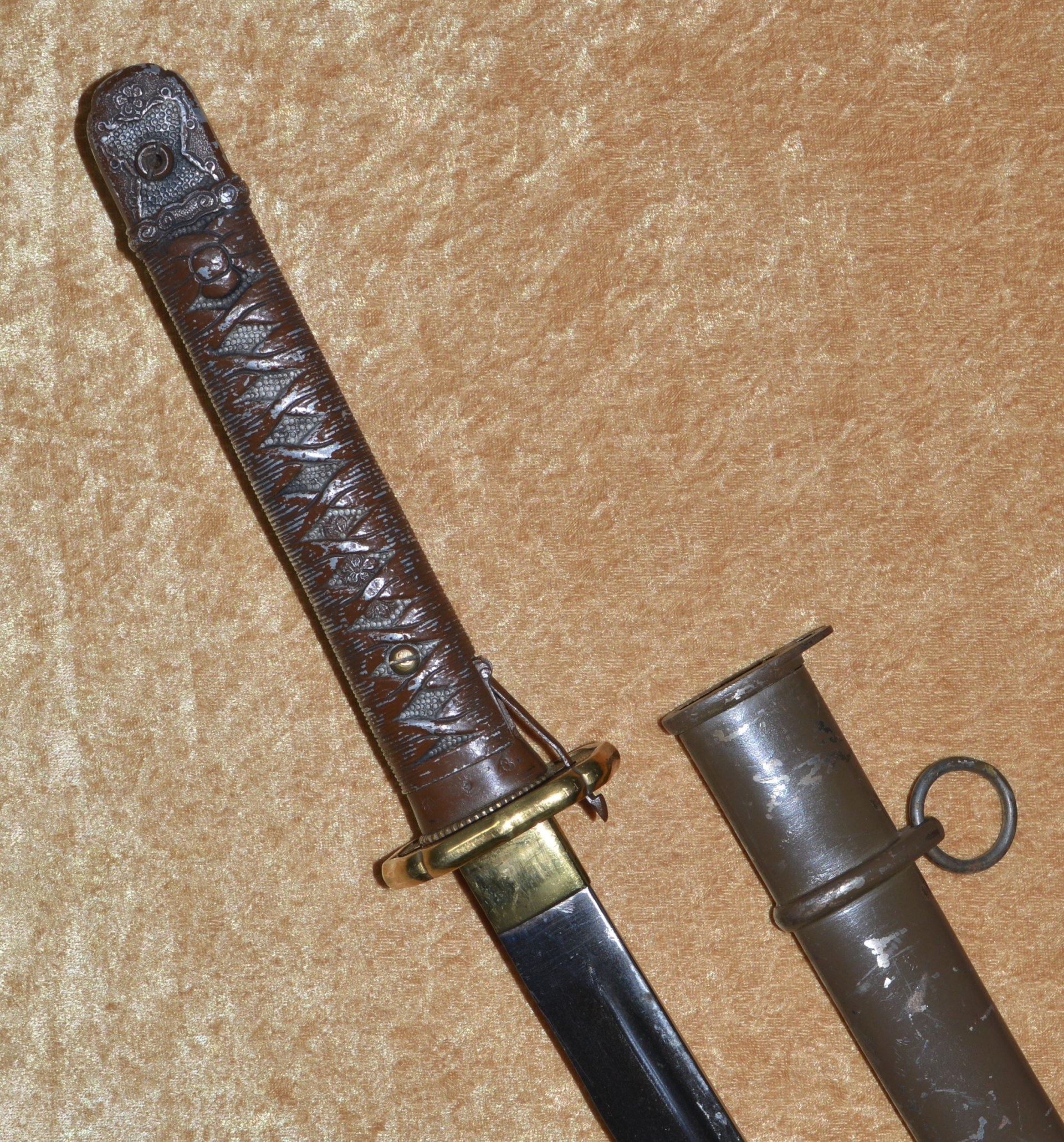
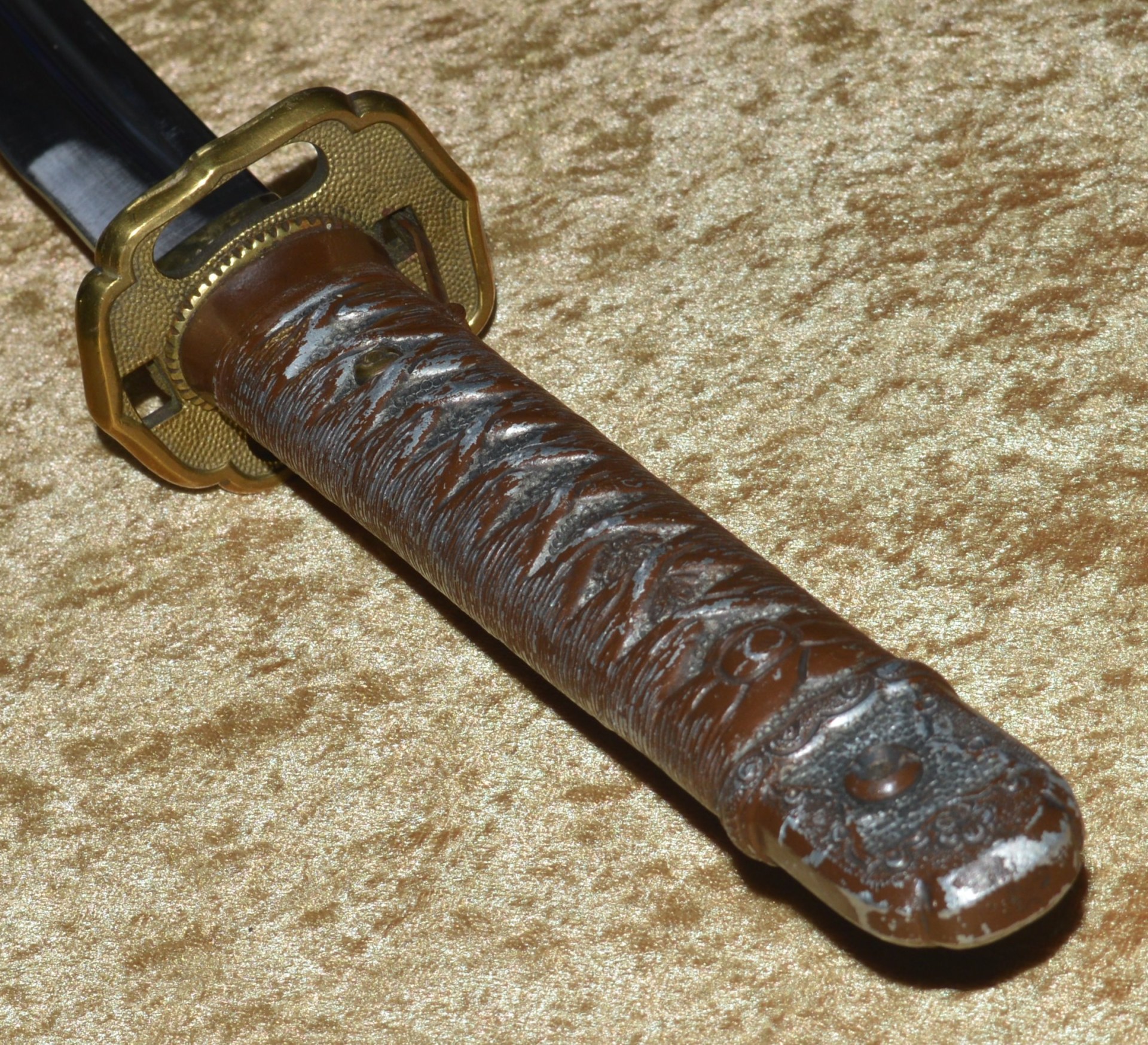
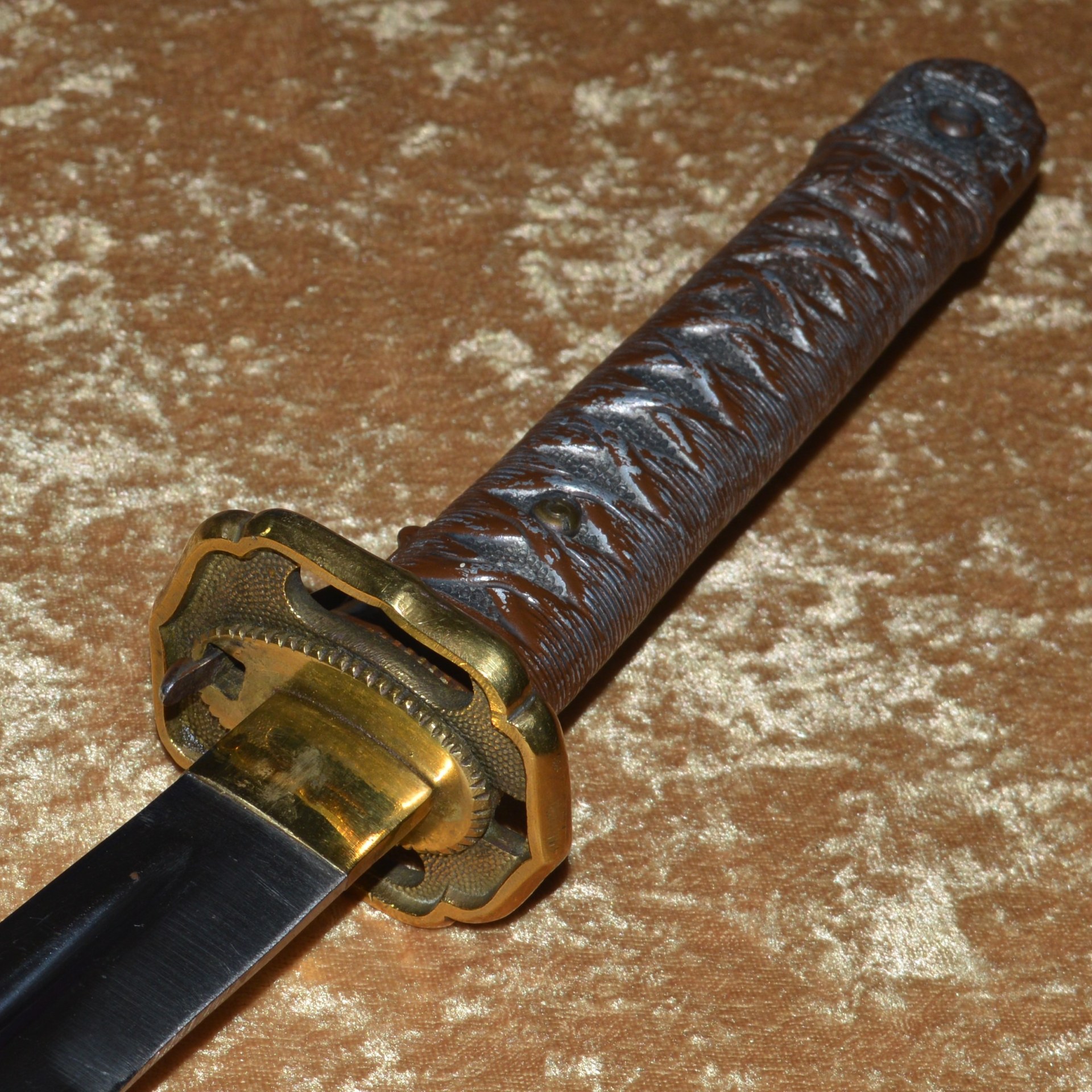
appearance is similar to traditional Japanese katanas, they featured a cast tsuka (grip),
which was painted to simulate traditional tsuka with rayskin cover, menuki and silk wrap.
This made them easier and cheaper to produce and also offered more durability. Early
models had cast copper tsukas, most later examples were of aluminum, and late war
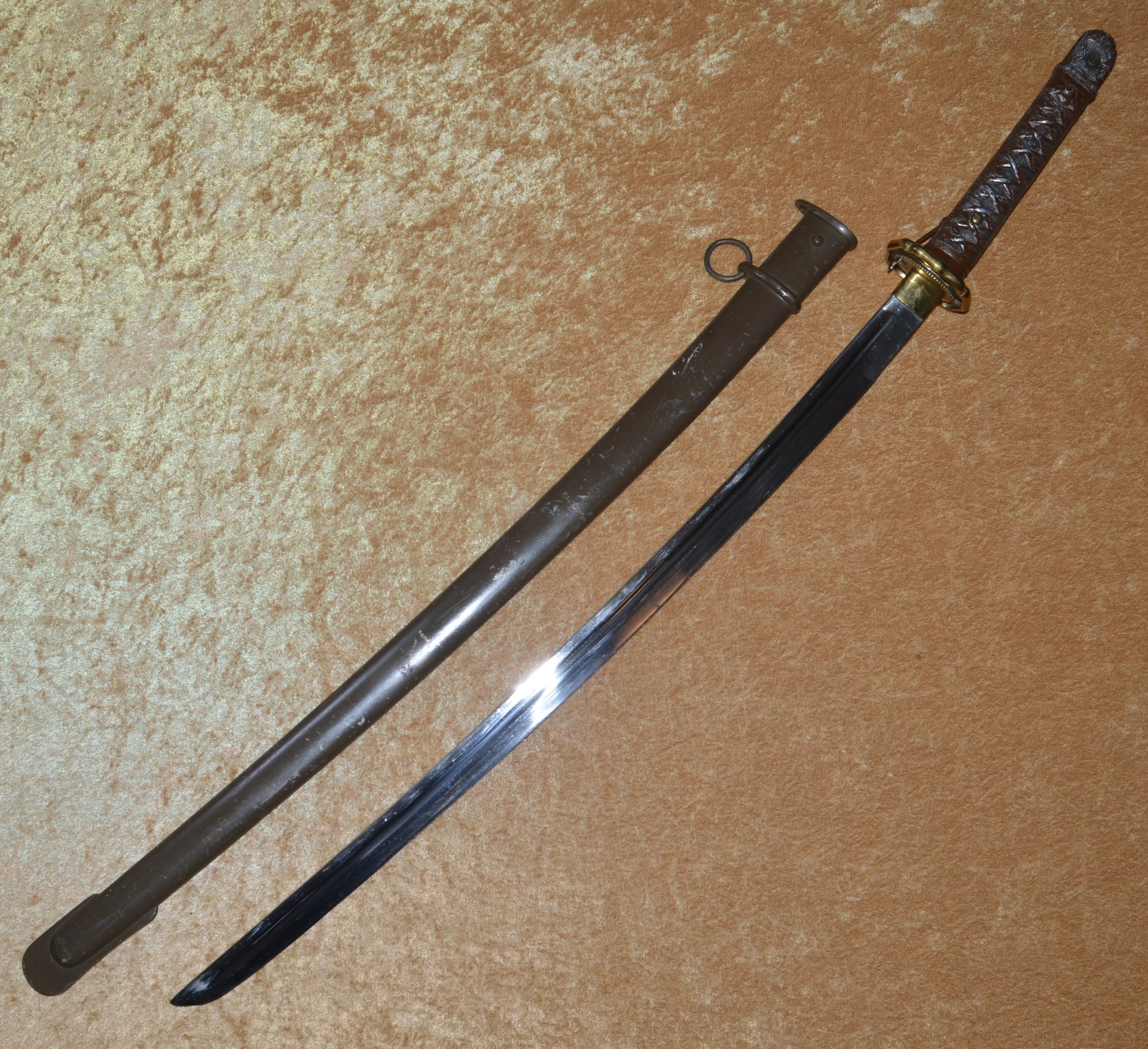
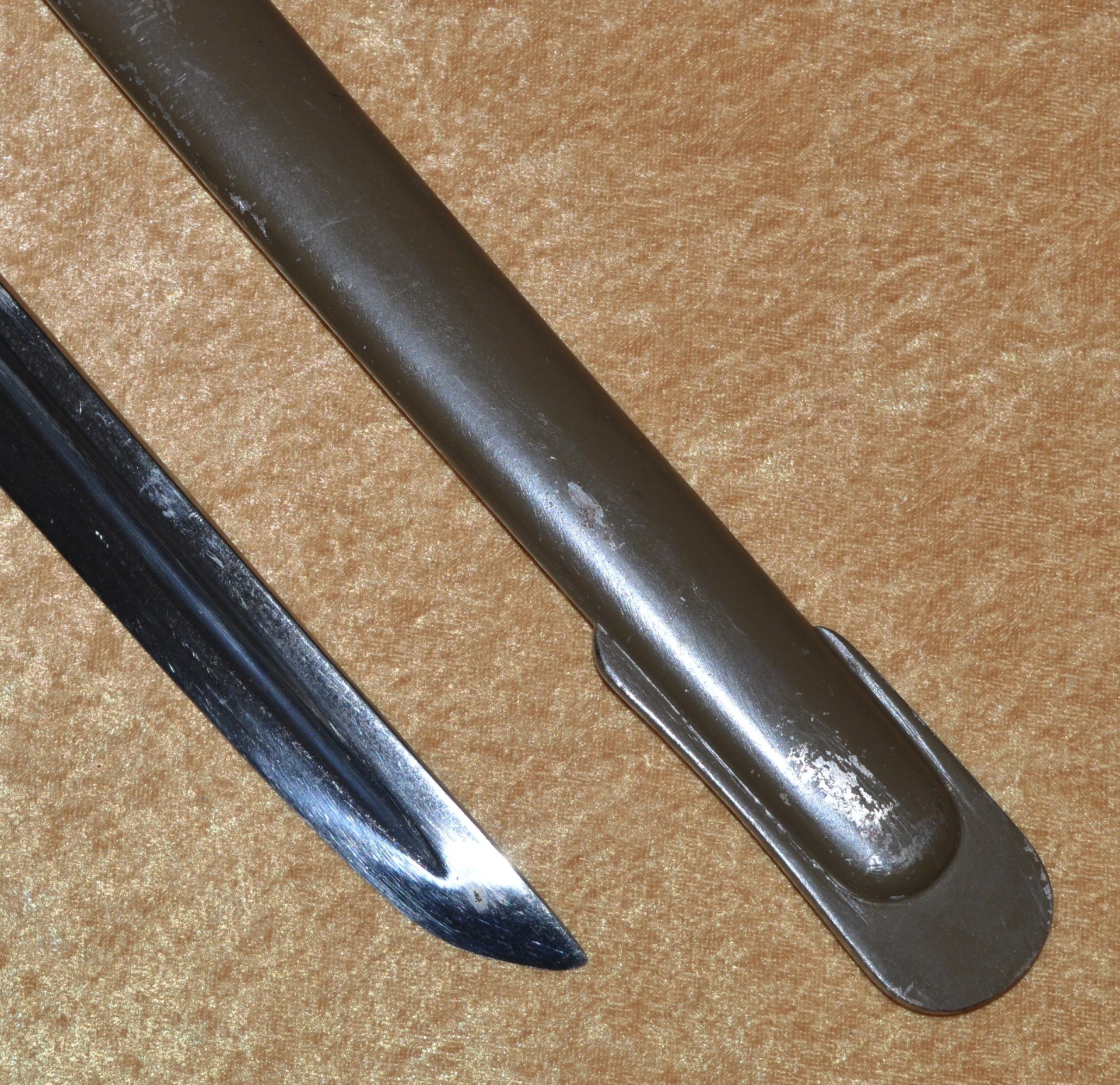
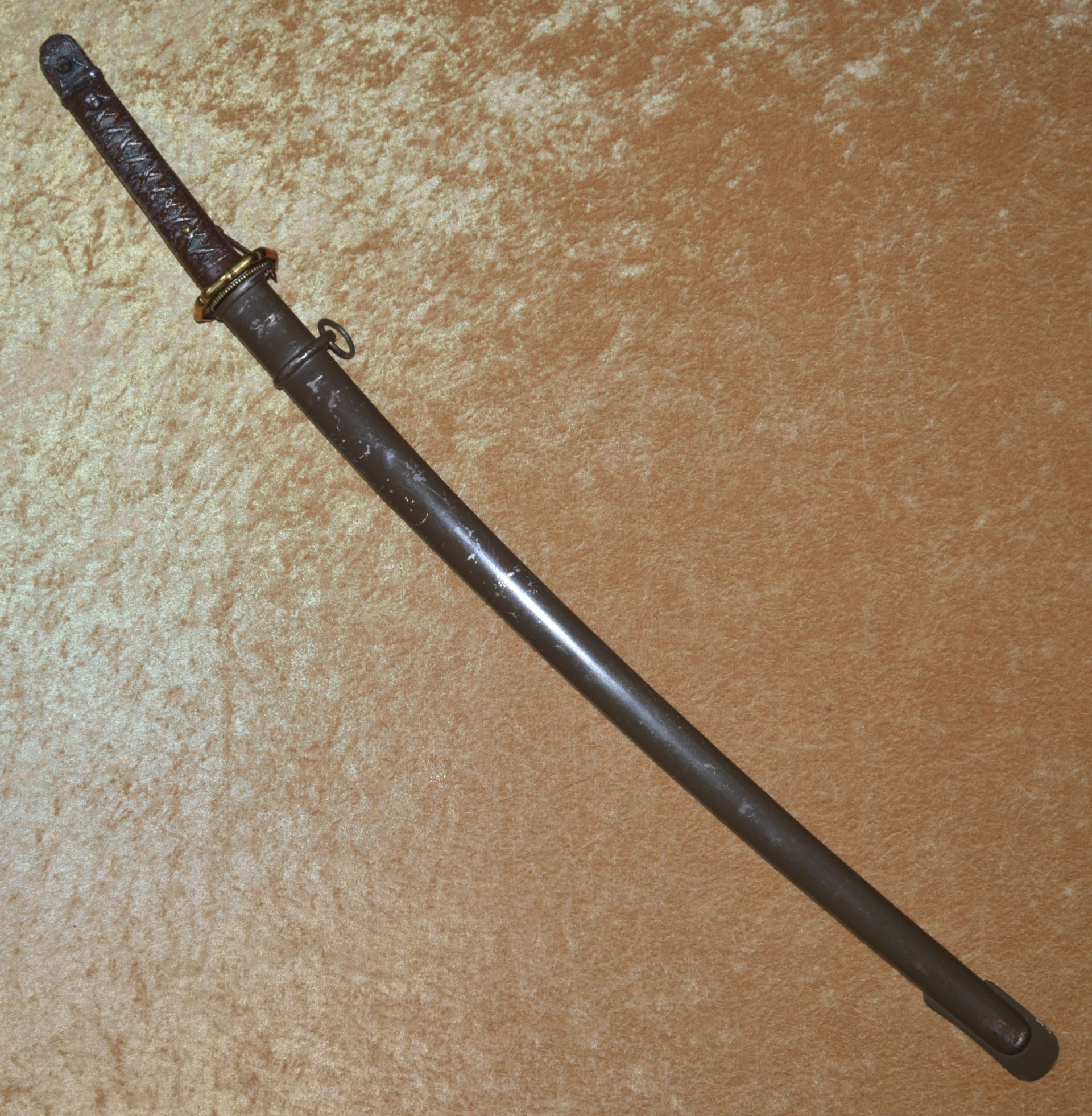
examples even made of wood. This example with bright 27 3/8″ (measured tip to guard)
slightly curved single-edged blade with single fuller running nearly its full length. One-piece
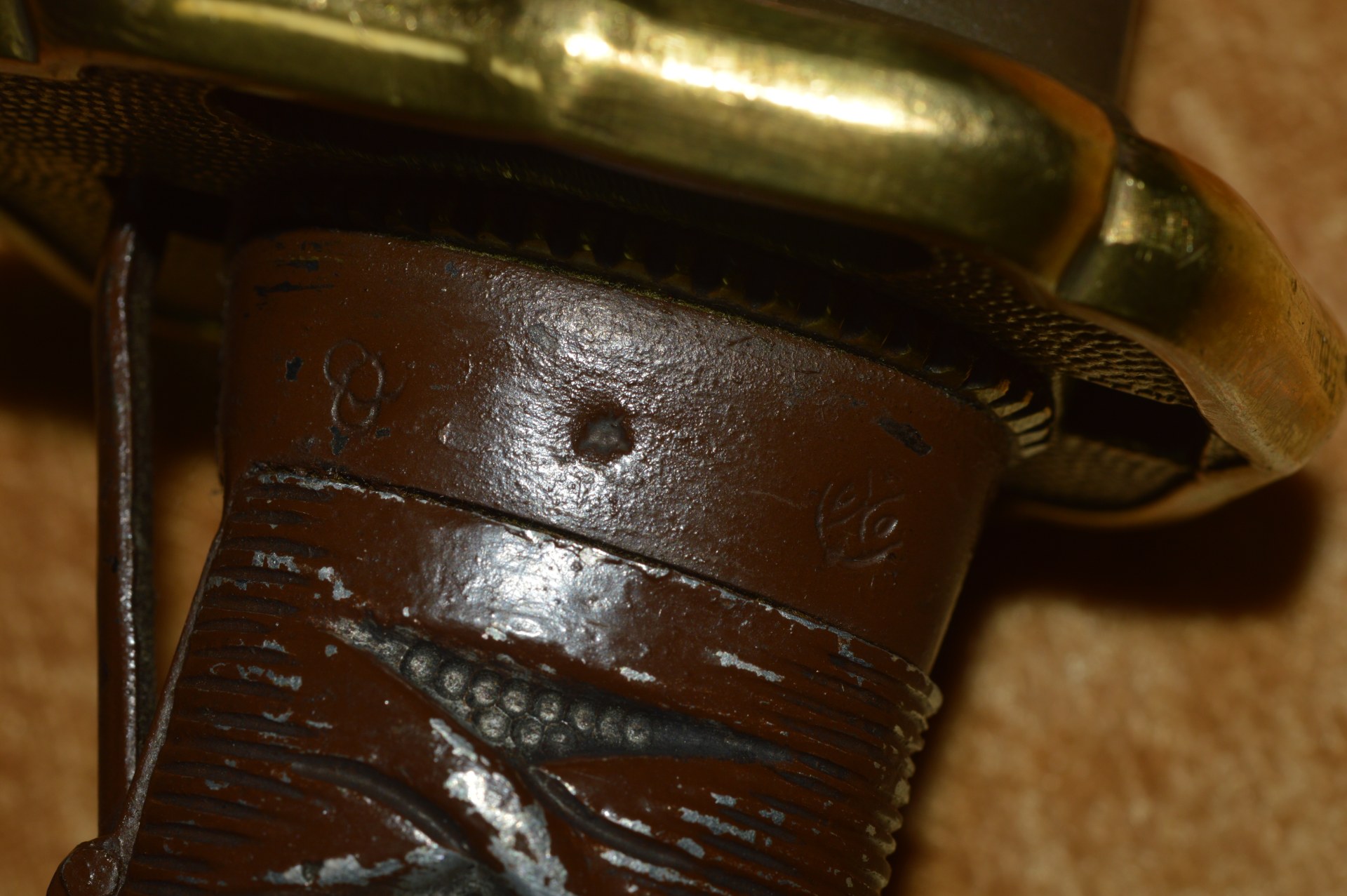
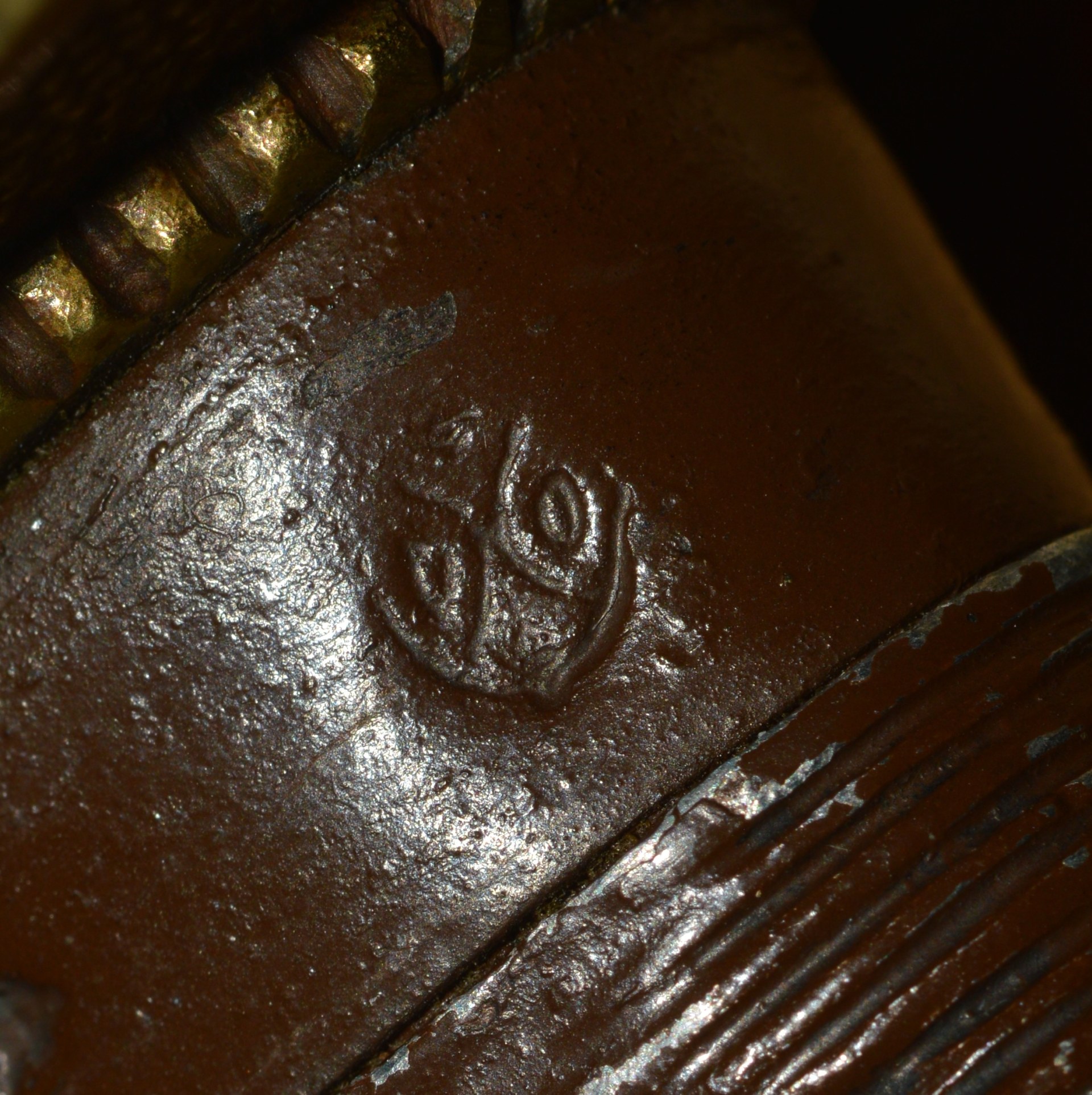
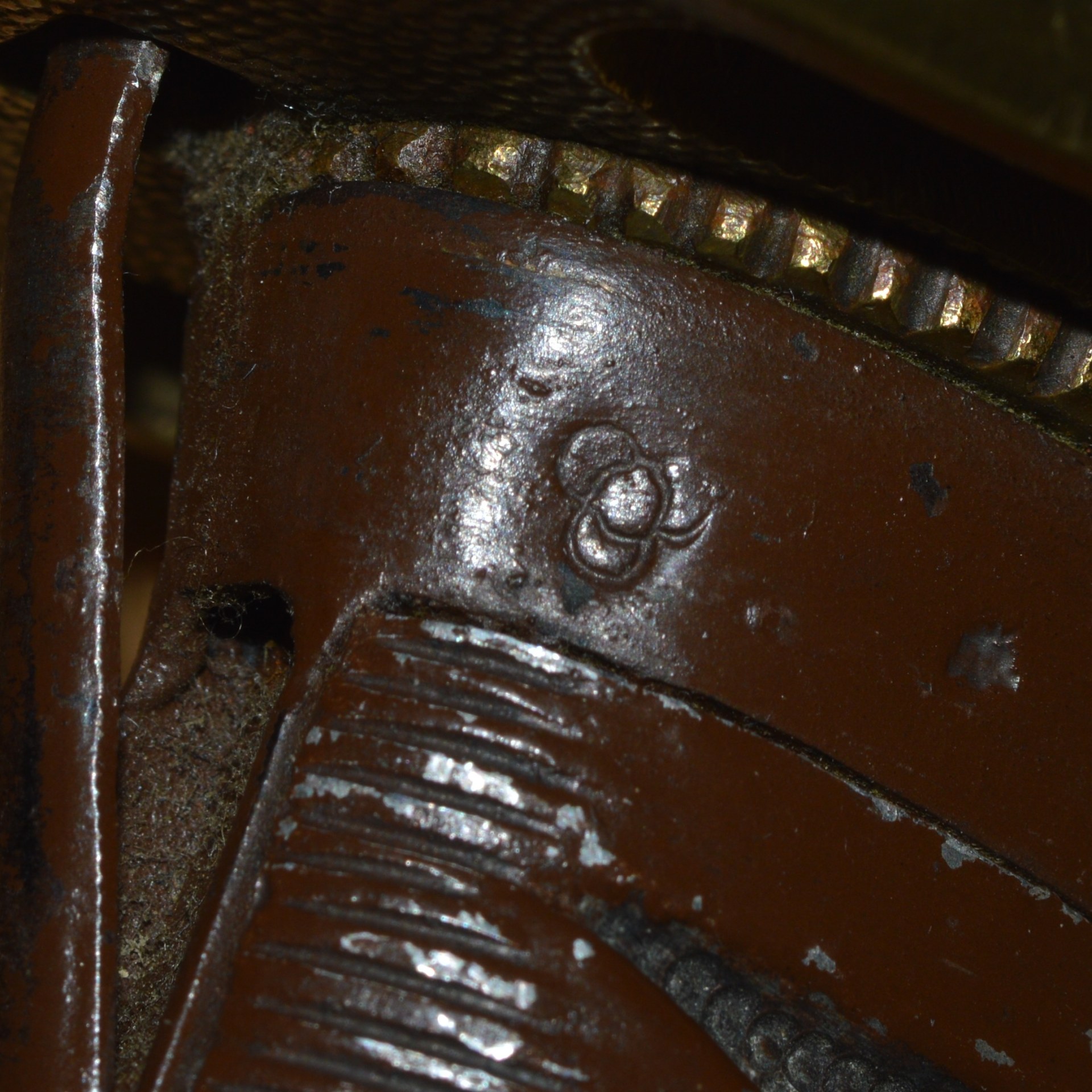
cast aluminum tsuka (hilt), painted brown, with top latch; the base ferrule stamped with
maker Ijima Token Seisakusho factory mark and Kokura Arsenal stamp. There is one other
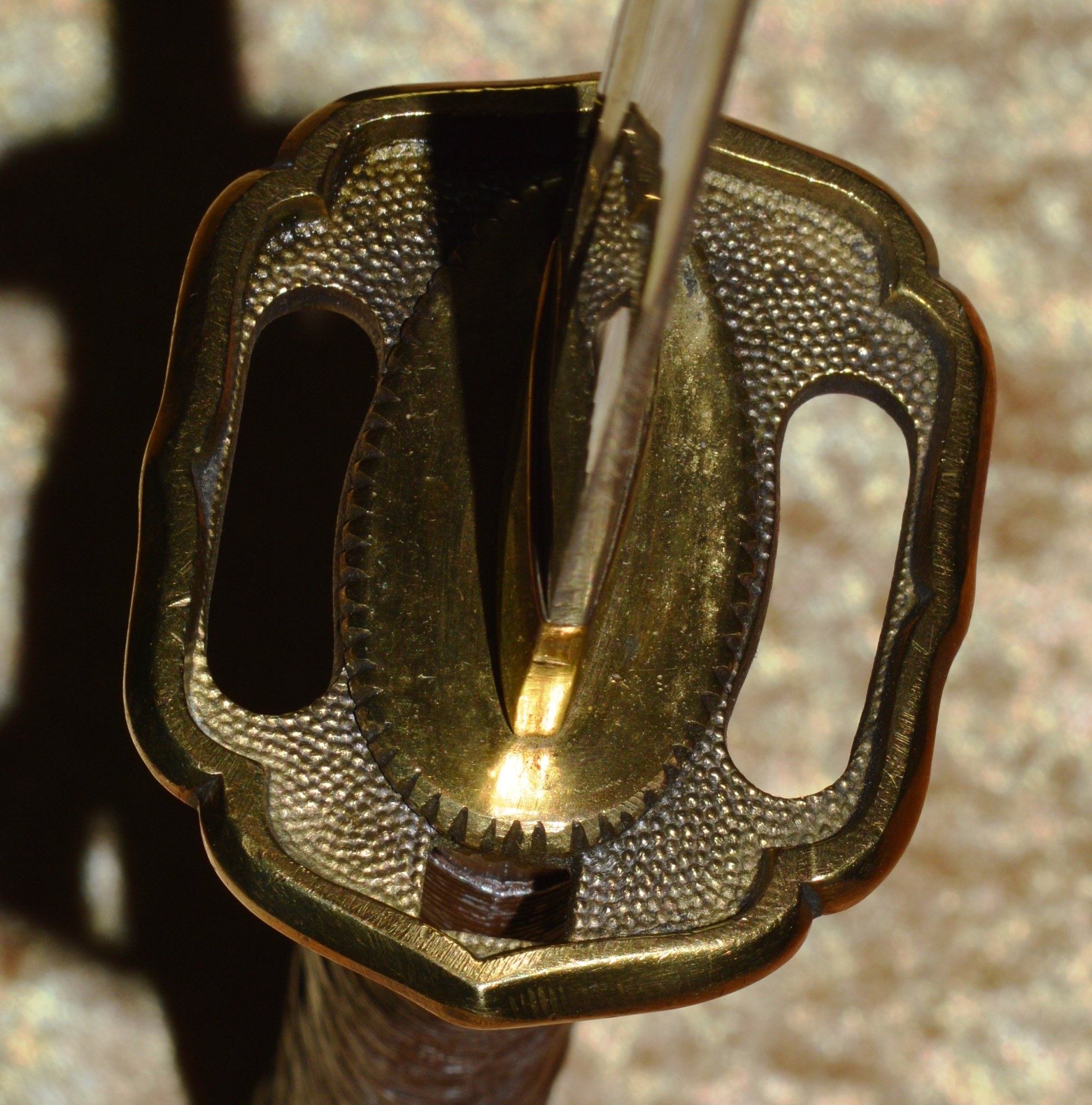
inspection stamp that we cannot make out. Cast 9mm thick brass tsuba (guard) with
pebbled surface and raised edge. Steel scabbard with single carry ring, painted olive green.
The top securing latch and thick brass tsuba indicate that this is an early production second
pattern, made for career soldiers between 1938 and mid-1941. After that time the latch was
moved to the side and tsubas were of thinner iron instead of brass. Oddly, neither the
blade nor the scabbard bear a serial number, which is found on almost all other examples.
Hilt shows wear and loss of paint on the high spots, blade smooth with a couple small spots
of light corrosion; scabbard with some chips to the paint, but no dents. Overall length 36″
(91.4 cm), not including scabbard. The Japanese were the last army to regularly use
swords in battle.
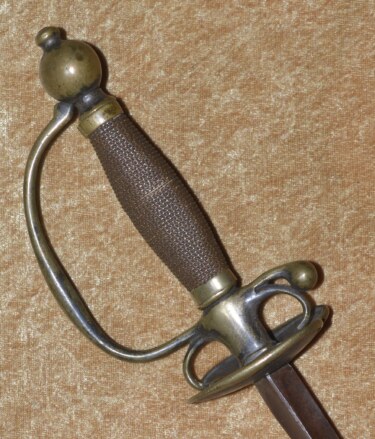 European Smallsword, 2nd Half 18th C, Probably French
 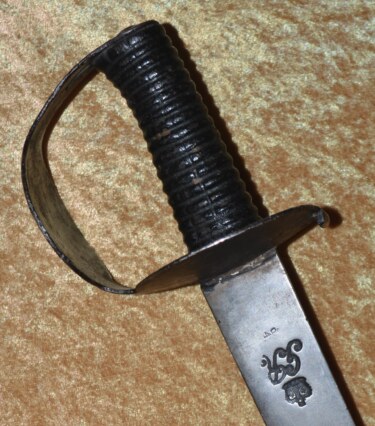 British 1804 Pattern Naval Cutlass
 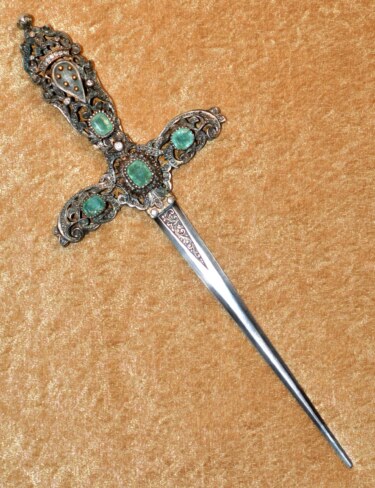 Magnificent Jeweled Medici Dagger, ca. 1840
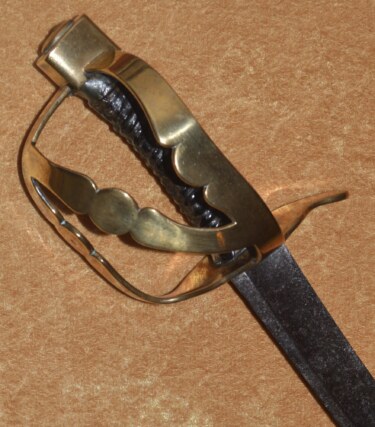 Rare French M1790 Chasseurs a’ Cheval Trooper’s Saber