
Description
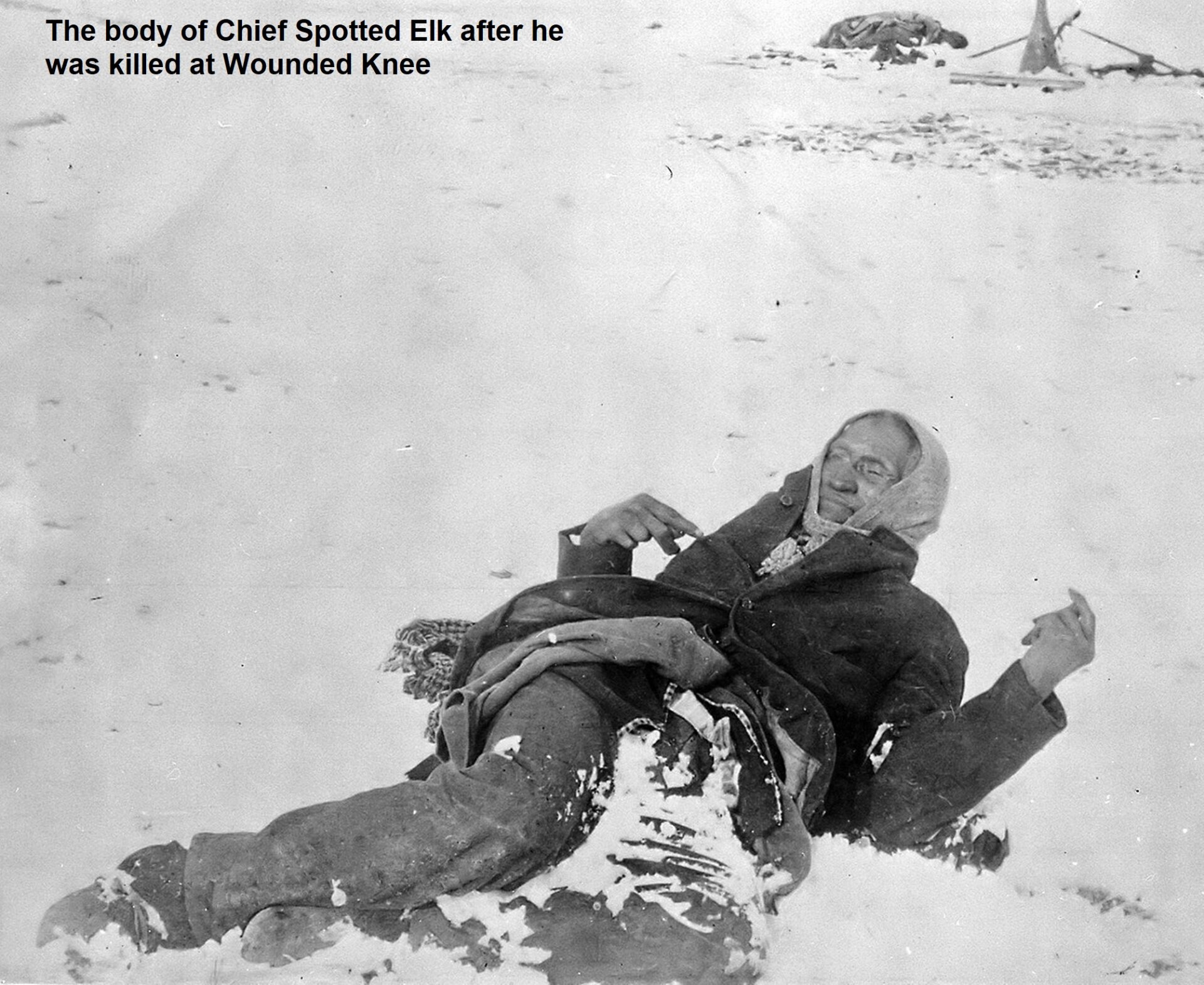
The Wounded Knee Massacre occurred on December 29, 1890 near Wounded Knee
Creek in South Dakota at the Pine Ridge Indian Reservation. It was fueled by the Ghost
Dance religion, founded by the Paiute Prophet Wovoka, who taught that the white man
would disappear from the Native American lands, the buffalo herds would reappear, and
the ghosts of their ancestors would return to earth. Fearing this religious revival would
lead to an attack on white settlers, the US Indian agent at the Standing Rock Agency,
where Chief Sitting Bull lived, asked for troops to come to the reservation. US officials
decided to take some of the chiefs into custody to quell what they saw as the “Messiah
craze”, and sent 40 Native American police on Dec. 15, 1890 to arrest Sitting Bull. When
Sitting Bull and others resisted, Sitting Bull was shot and killed in the scuffle. Fearing
reprisals, 200 of his band fled to join Chief Spotted Elk at the Cheyenne River Indian
Reservation. On Dec. 23, this band left for the Pine Ridge Indian Reservation to seek
shelter with Red Cloud. Spotted Elk and 350 of his followers were making the trip to Pine
Ridge when they were encountered by a detachment of the 7th Cavalry. The following
morning, after their ranks had swelled to about 500, Colonel James Forsythe of the 7th
ordered the surrender of weapons and the removal of the Lakota from the area. During
this operation, a scuffle ensued and shots rang out, causing both sides to fire
indiscriminately. While the exact cause is unknown, the ensuing battle resulted in the
deaths of over 150 Lakota men, women, and children, and 25 soldiers. A blizzard
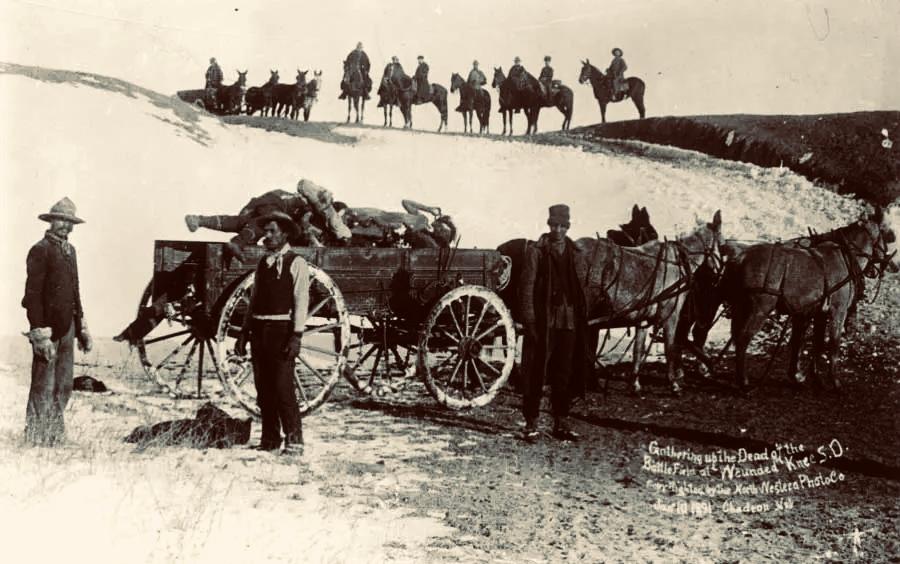
prevented immediate search efforts following the massacre and lasted for 3 days, after
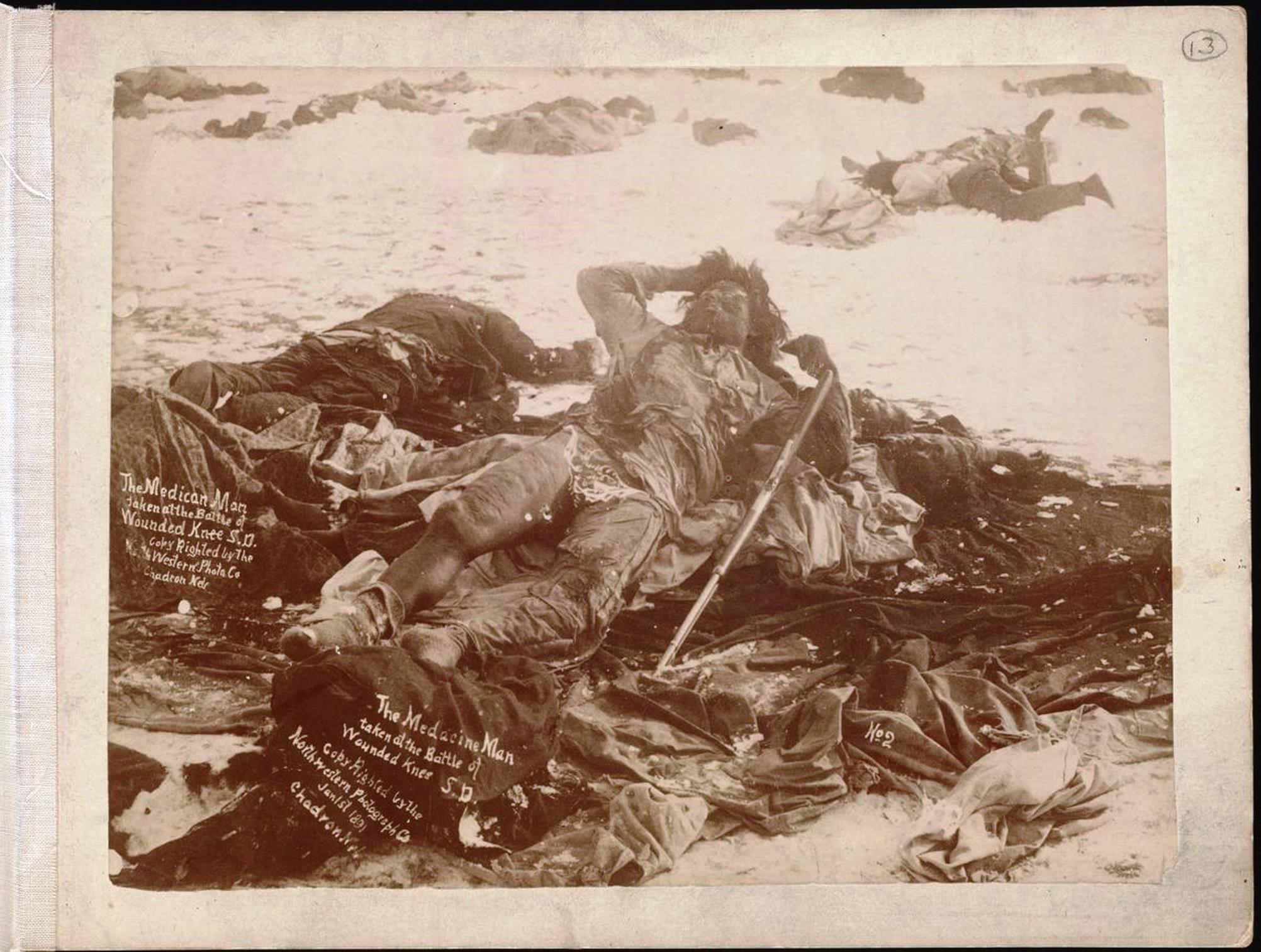
which civilian crews were called in to bury the dead in a mass grave. Photos of the bodies
taken at the time show that most had no shoes (only socks), indicating that their moccasins
had been removed. By this time, the bodies were bloated and frozen, so the moccasins
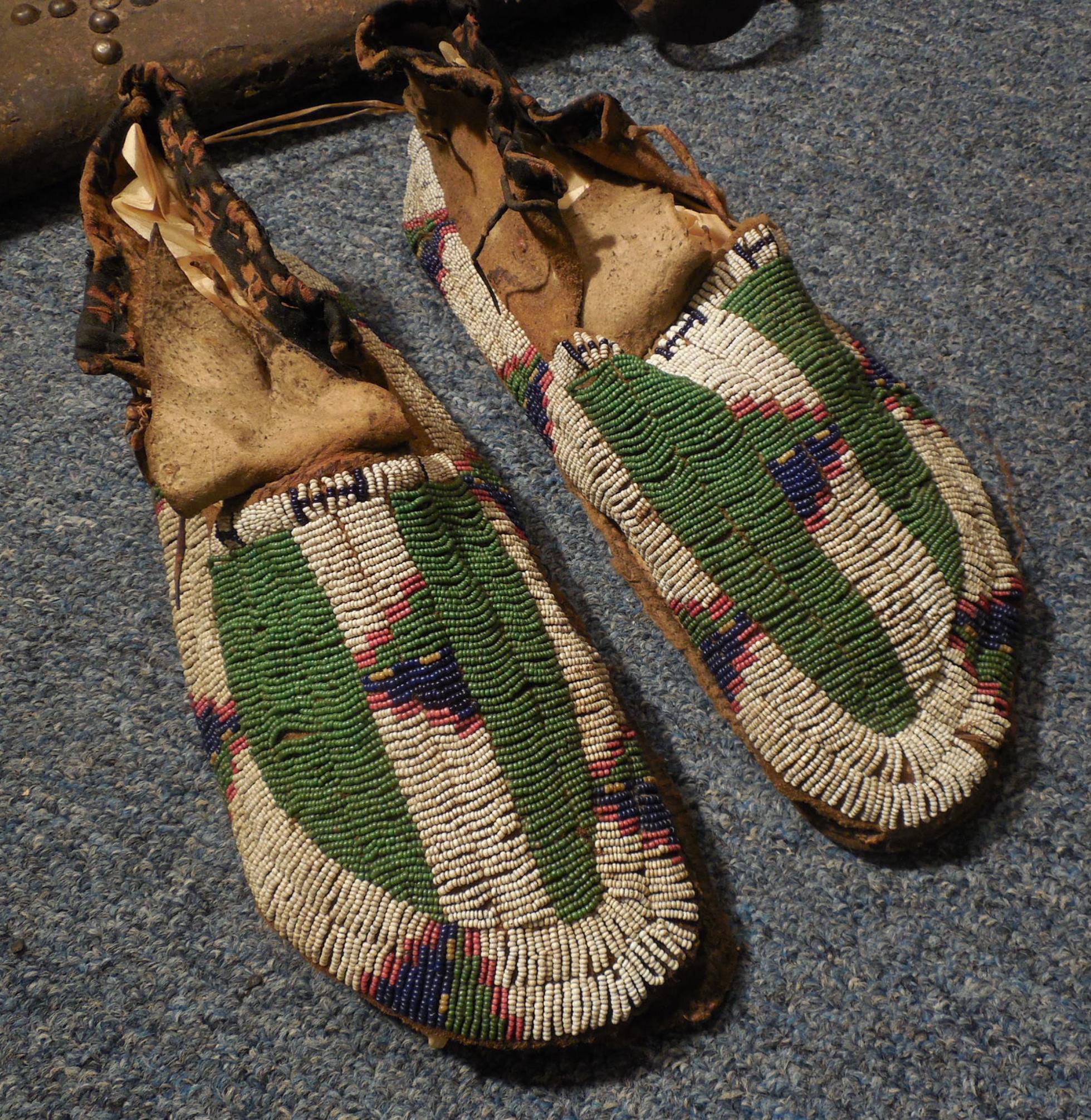
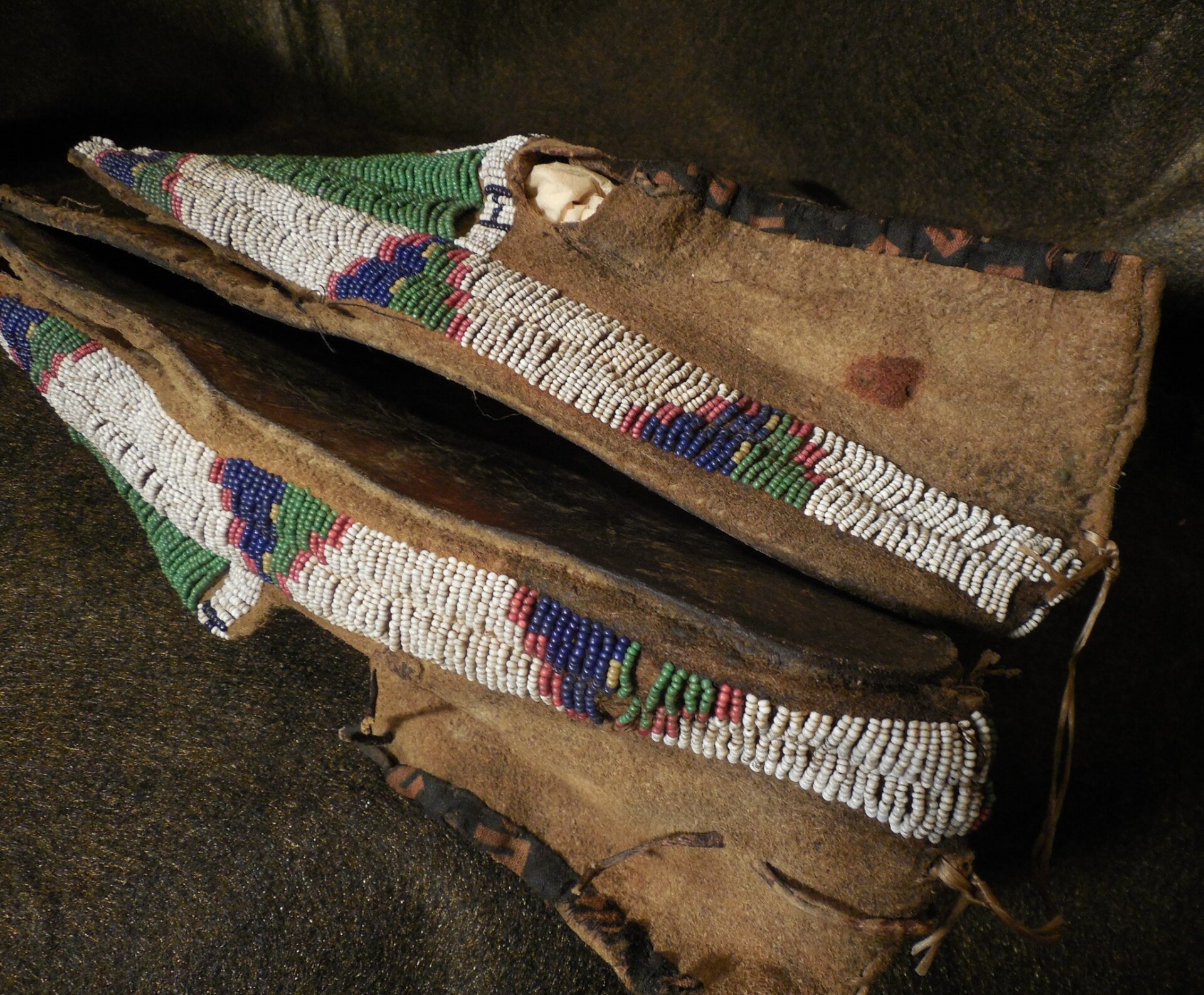
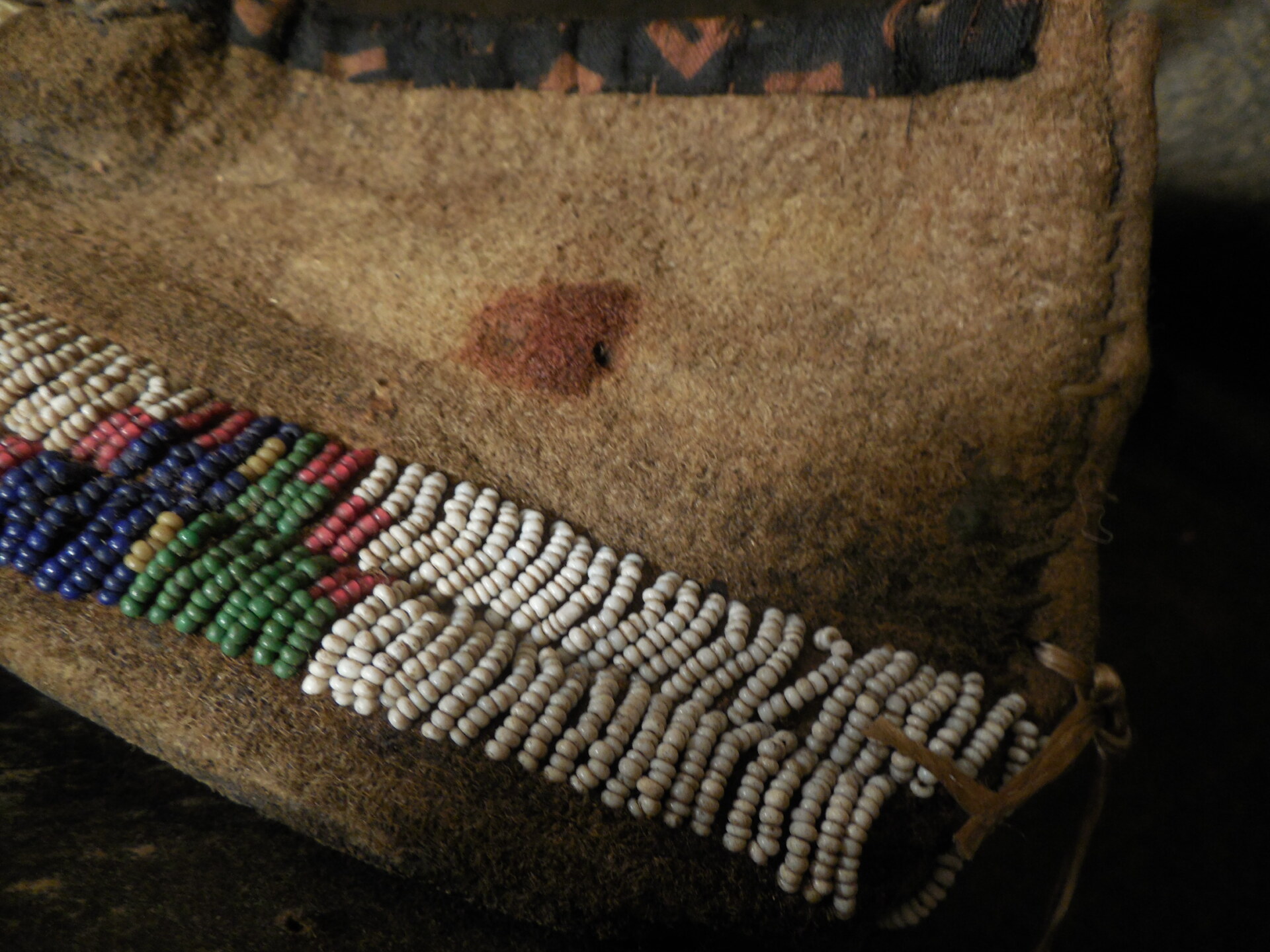
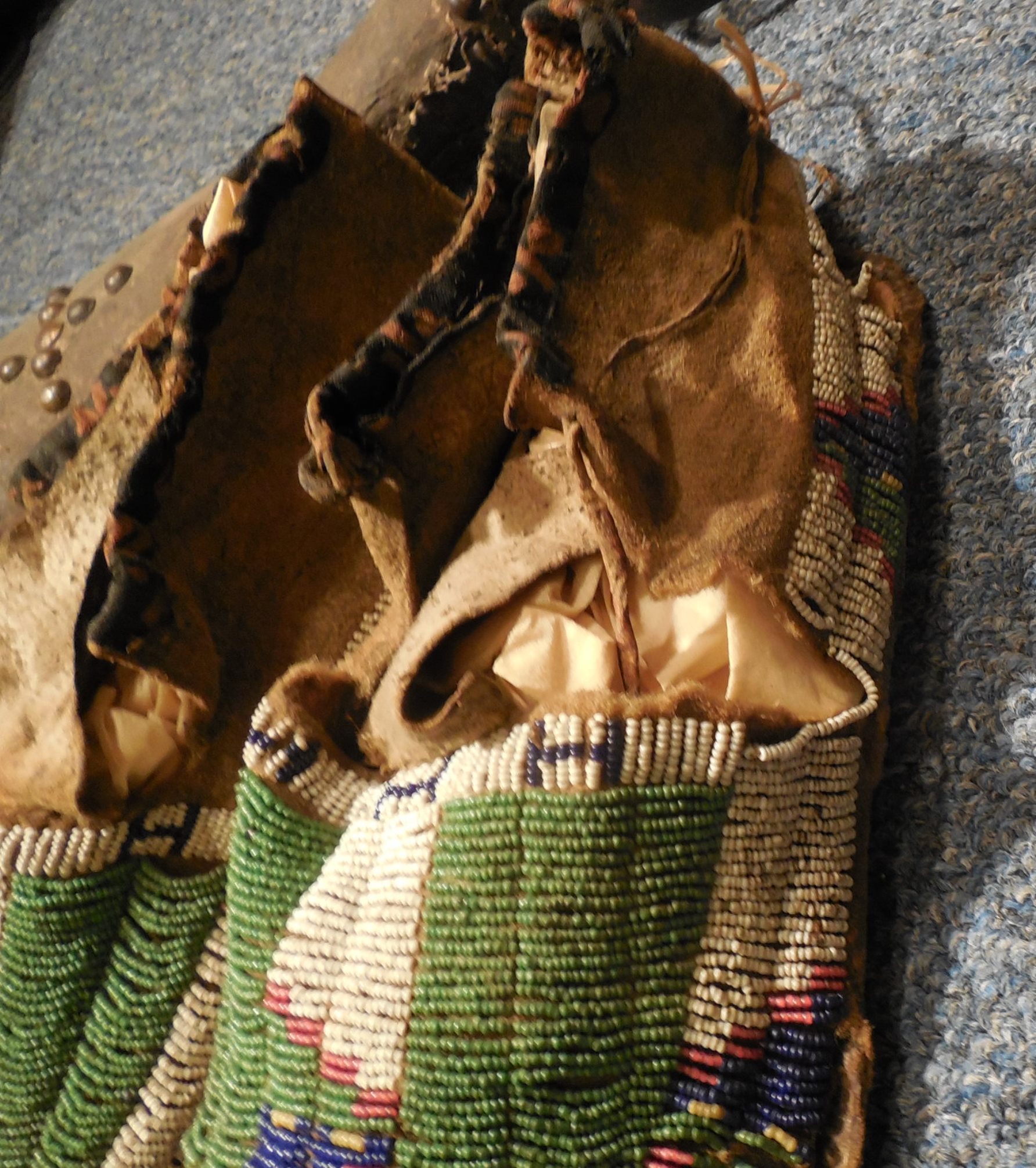
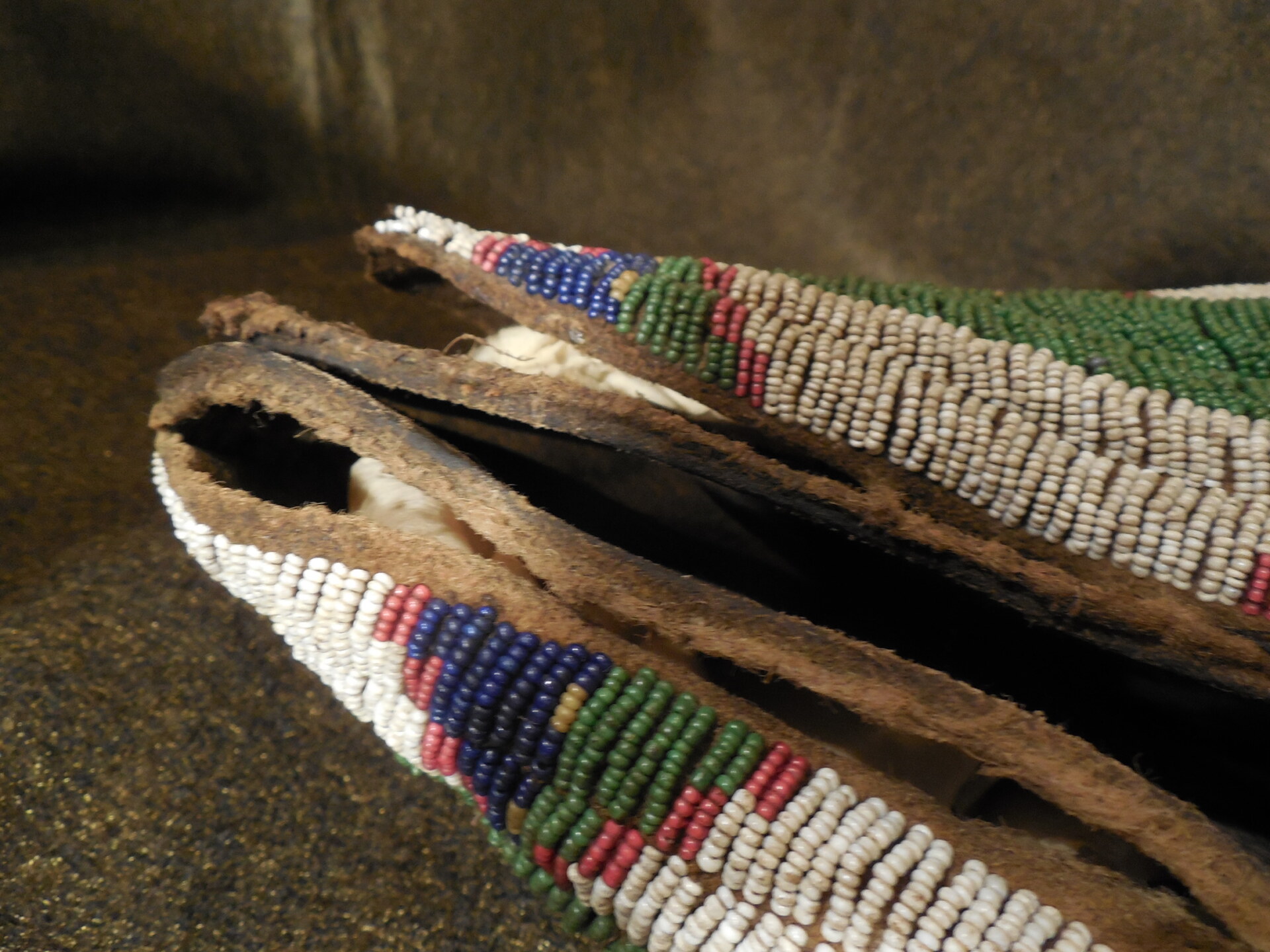
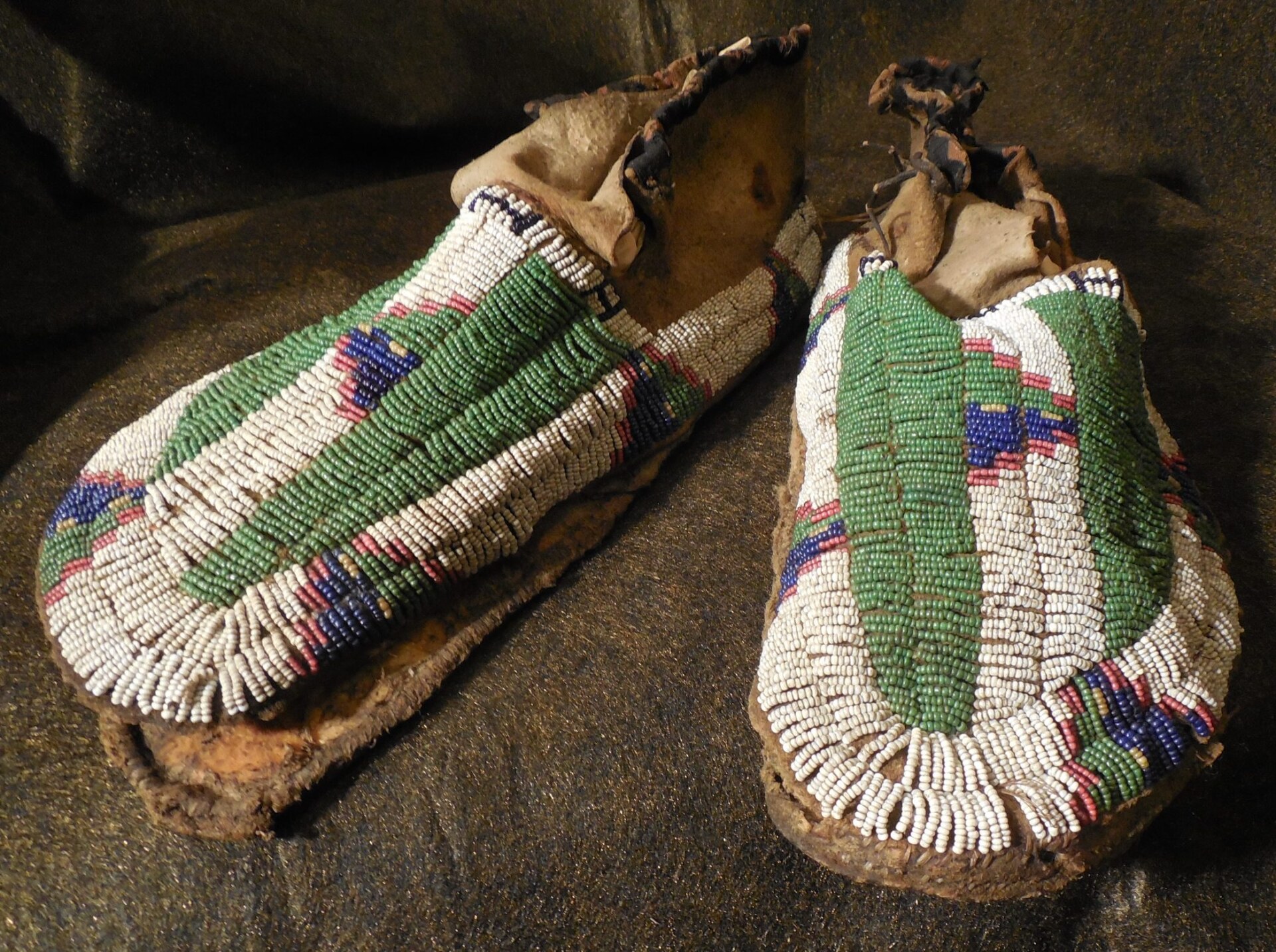
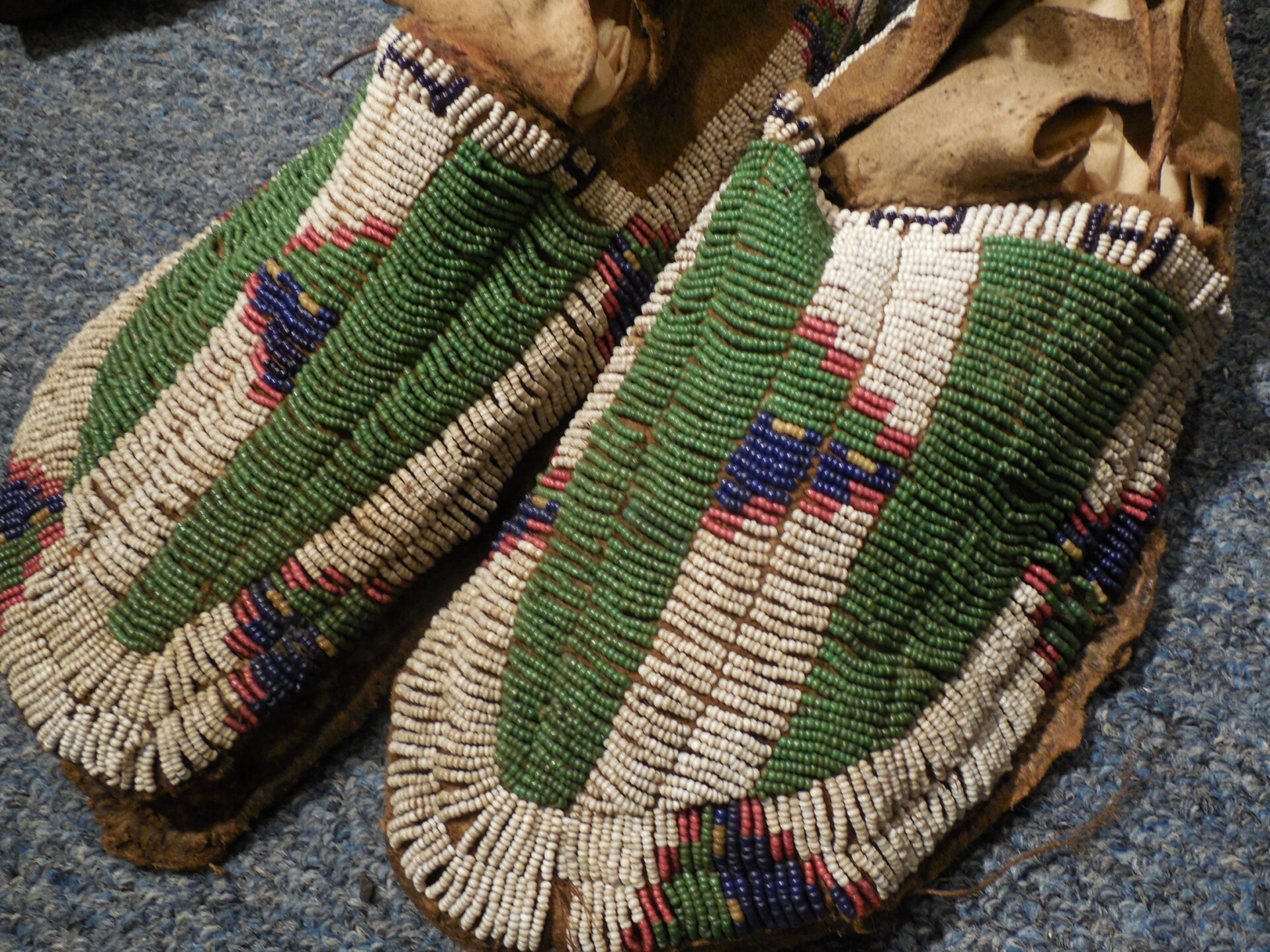
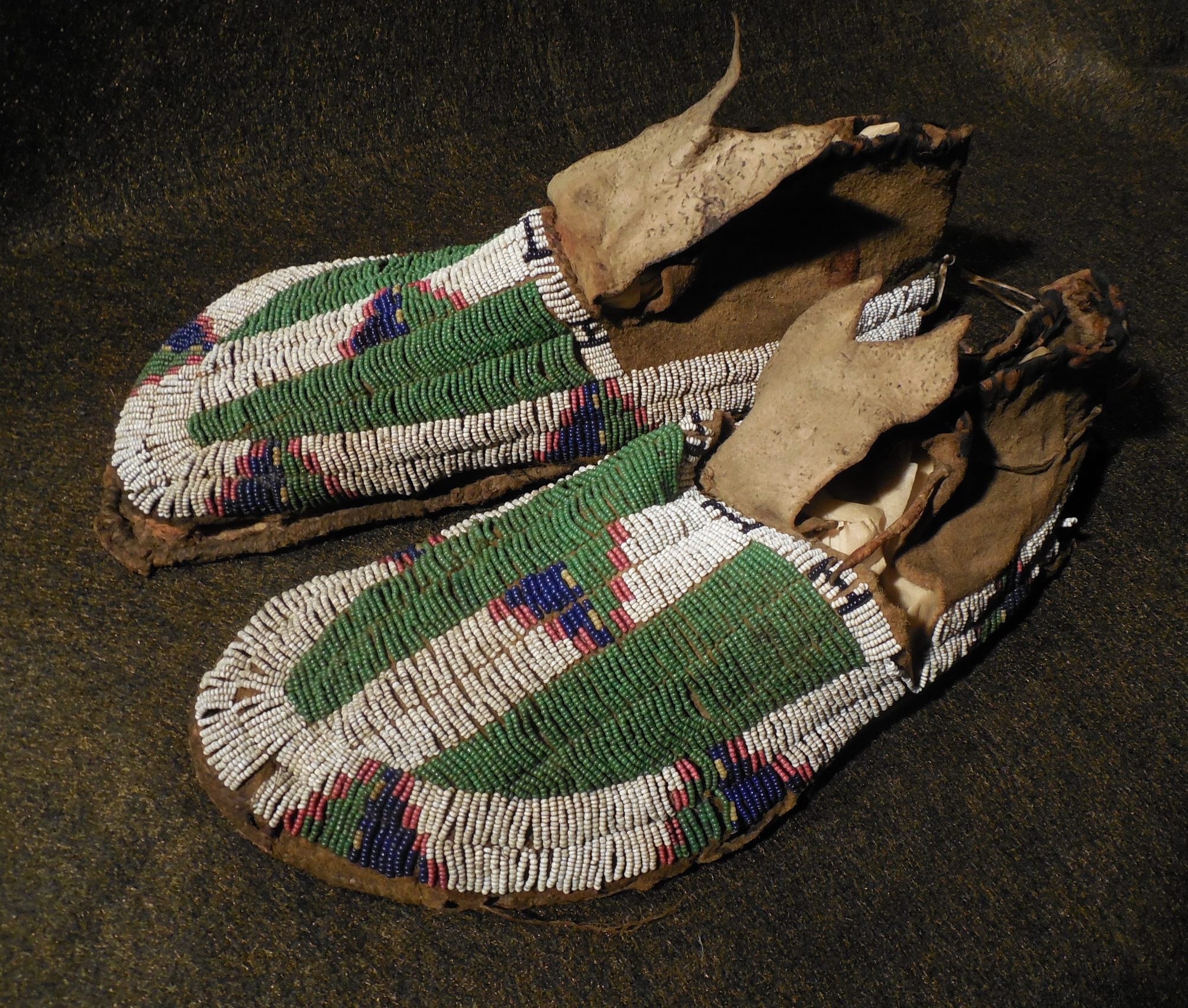
had to be cut to be removed. The moccasins offered here are reputedly a pair recovered
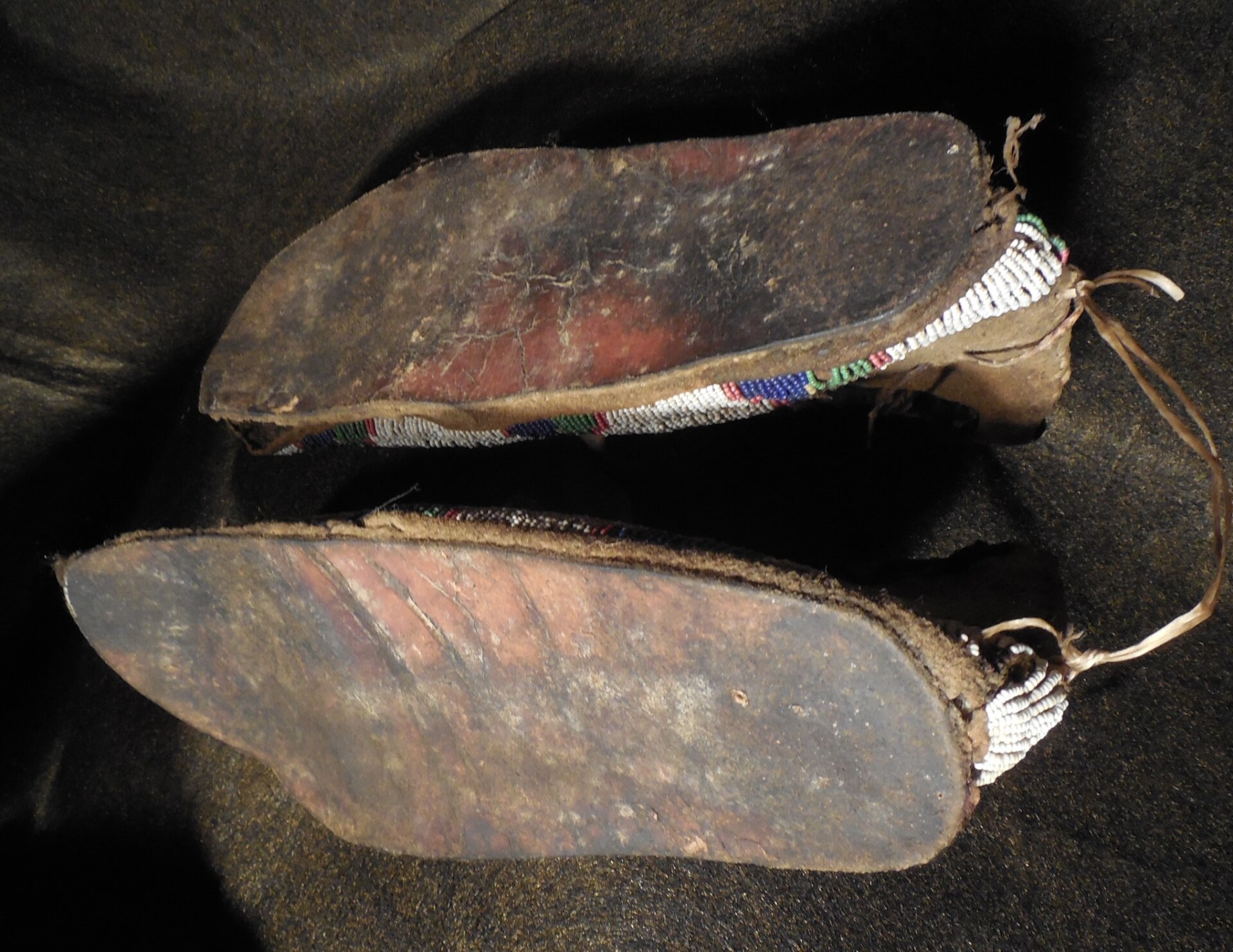
from the battlefield and have been cut to remove them from a frozen body. Made from
thick leather and featuring green, white, red, and blue beadwork, they show wear and
loosened soles. They were acquired by Dr. Victor Nue, who visited the Pine Ridge
Reservation in the 1970’s and provided medical services to the tribes. These Moccasins
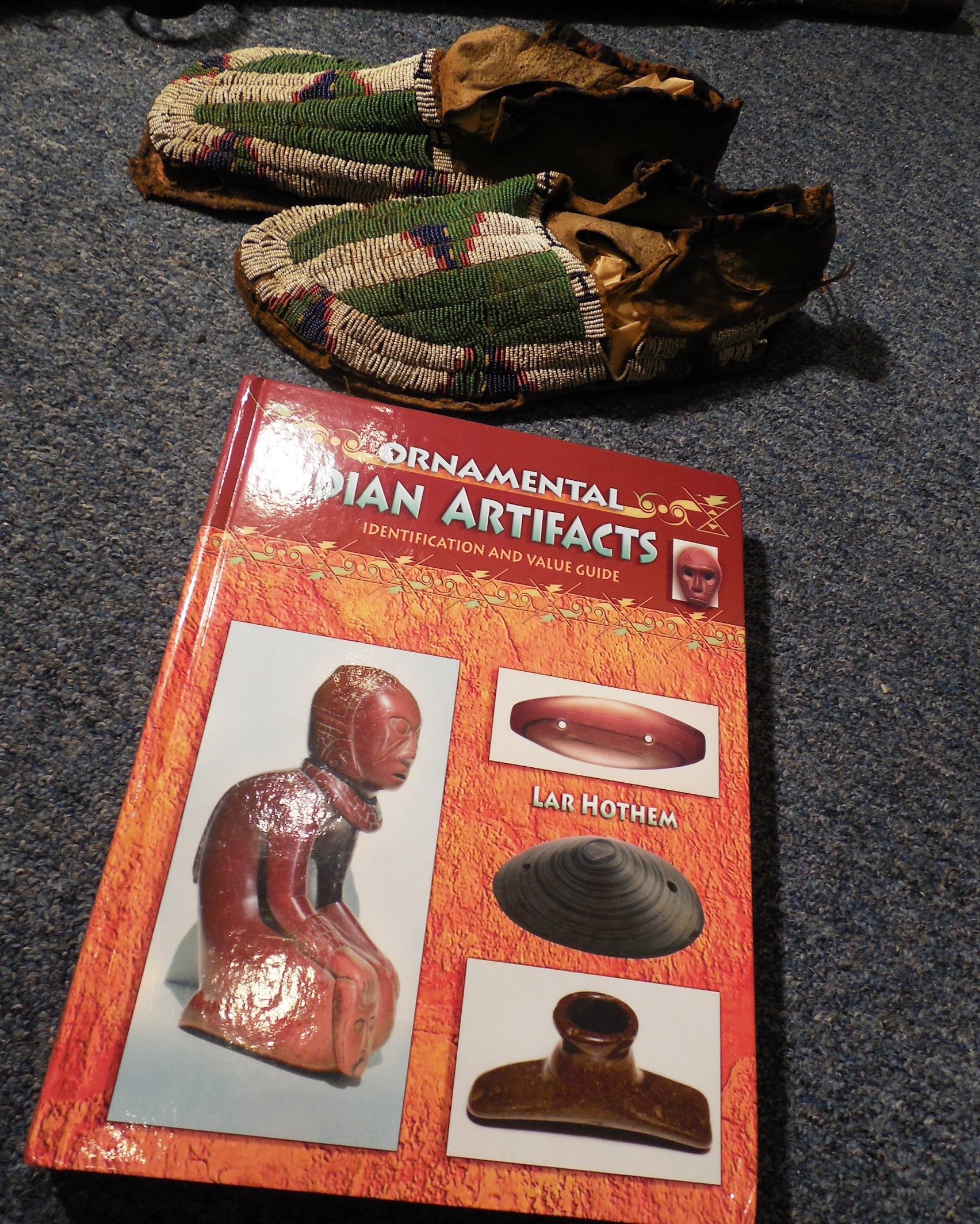
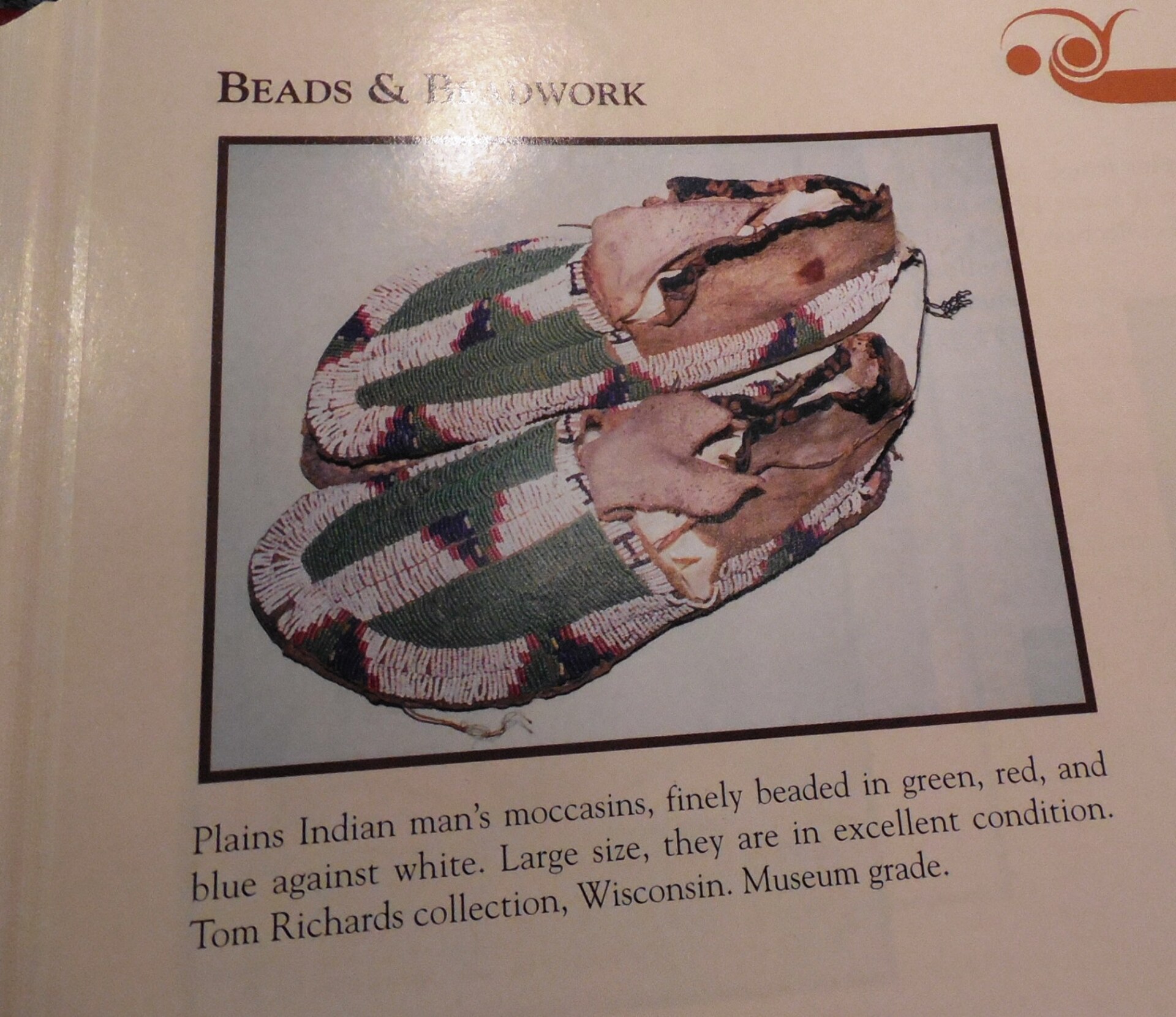
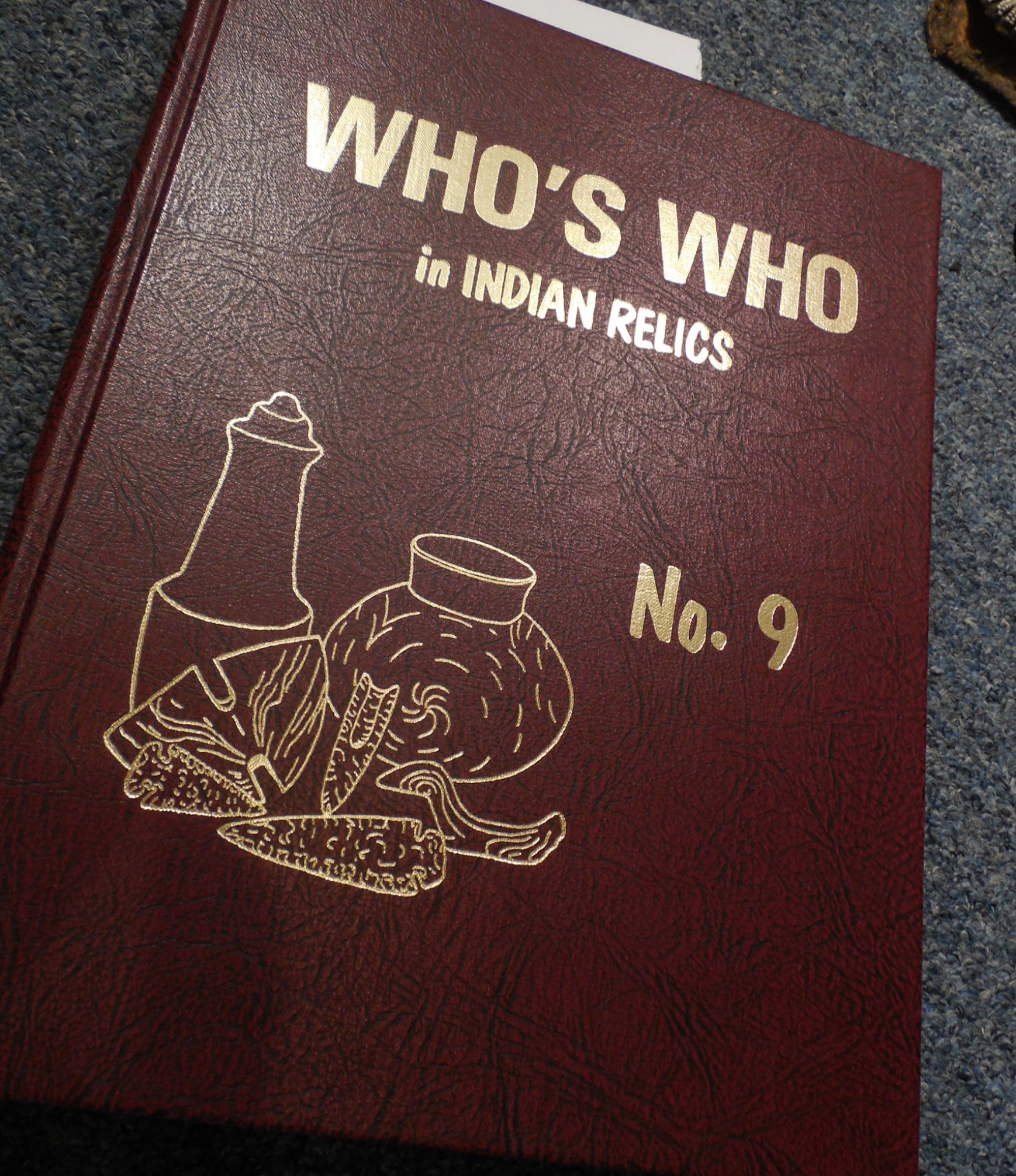
are pictured in “Who’s Who in Indian Artifacts, vol. 9″., p. 293 and Lar Hothem’s
“Ornamental Indian Artifacts”, p. 320.
 European Shell Guard Rapier, First Half 17th C
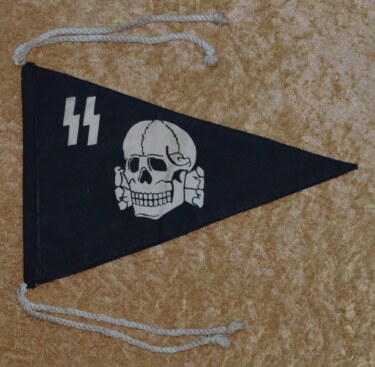 Nazi SS Death Head Vehicle Pennant
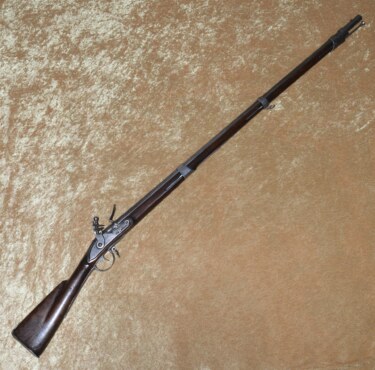 US Commonwealth of Pennsylvania 1797 Contract Flintlock Musket
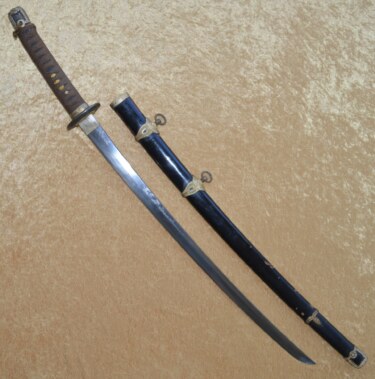 Signed and Dated Japanese WWII Naval Officer’s Kai Gunto Katana