
Description
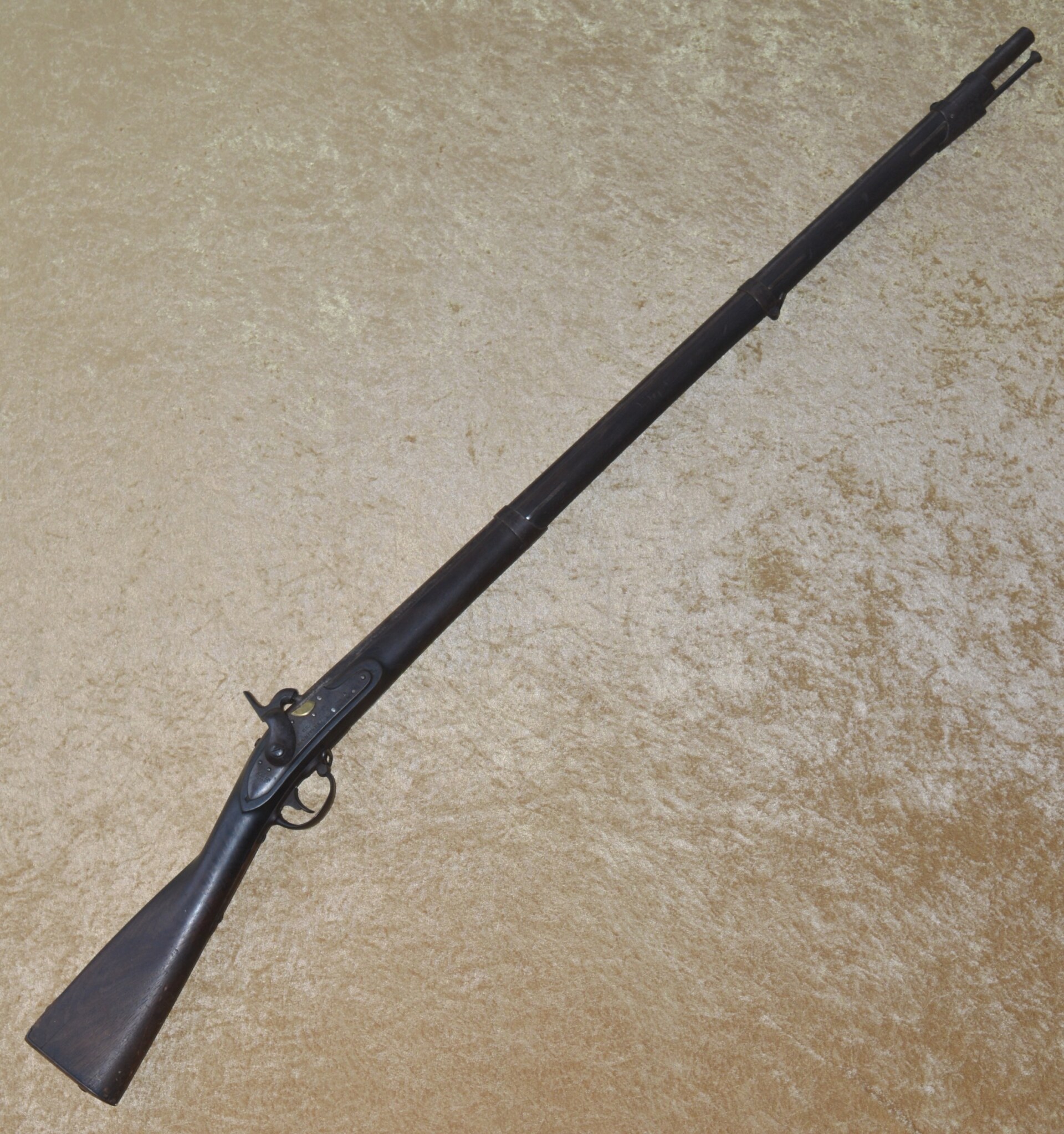
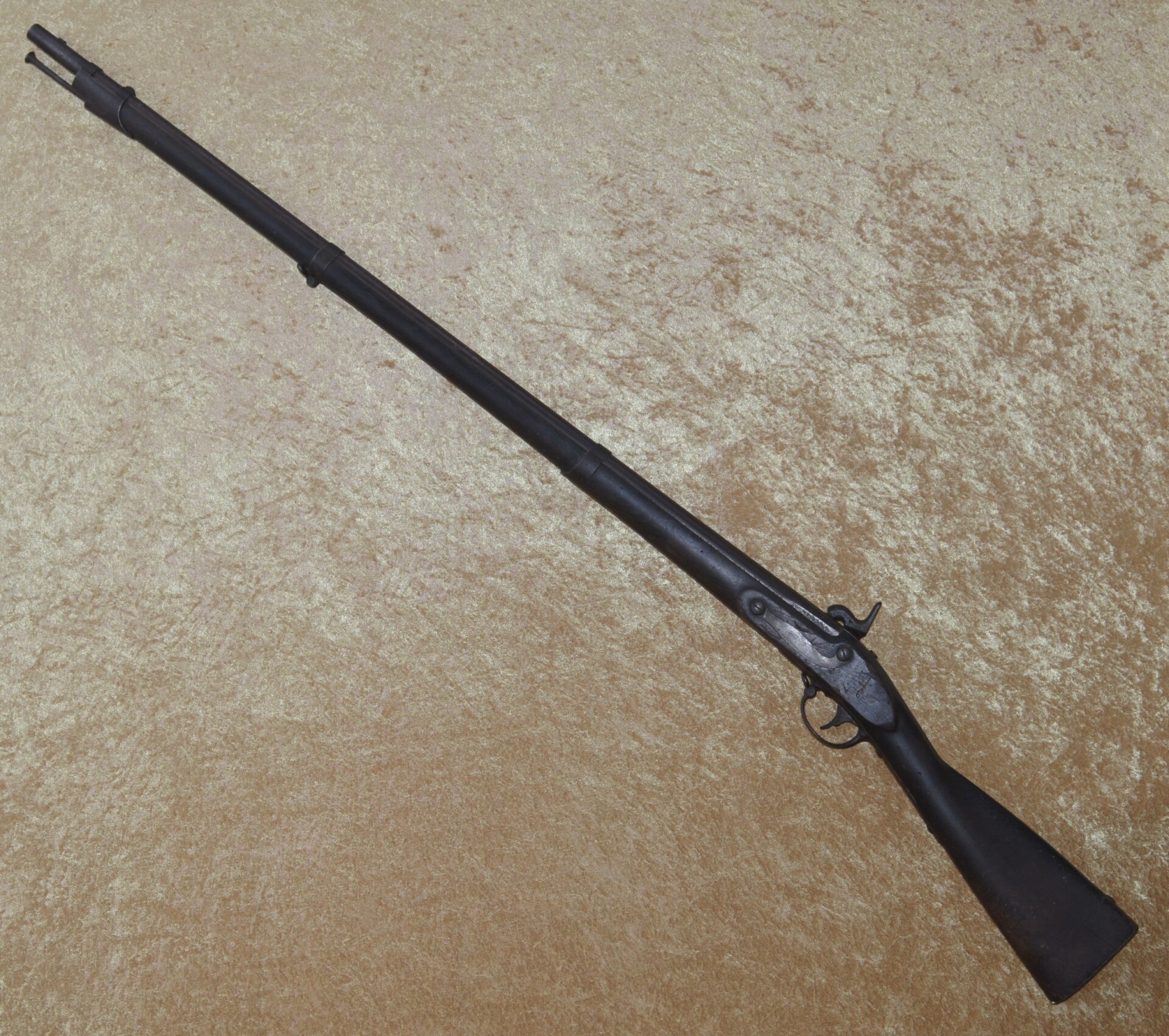
The Whitney 1822 Contract Musket was a Model 1816 with some improvements, fulfilled
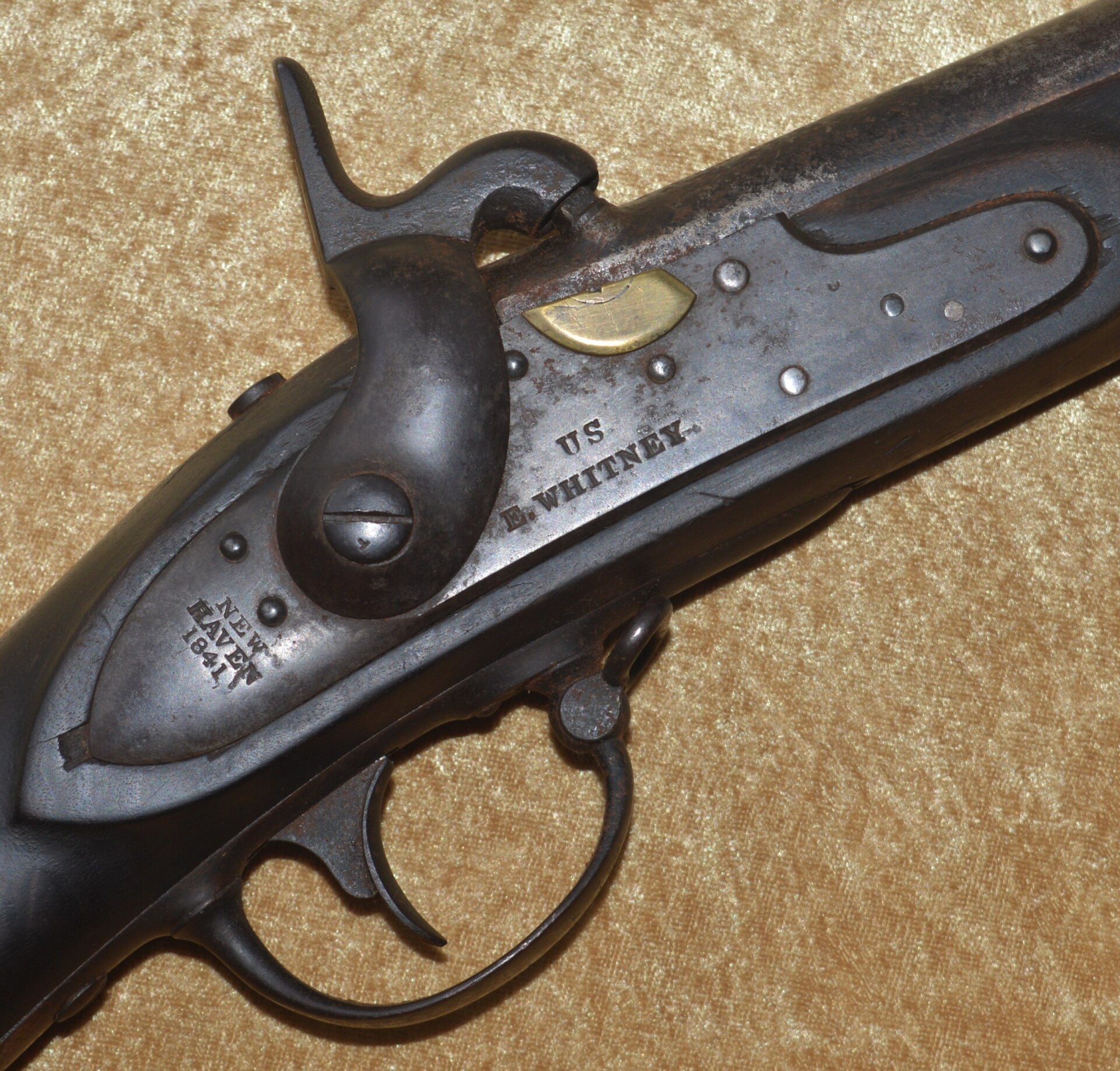
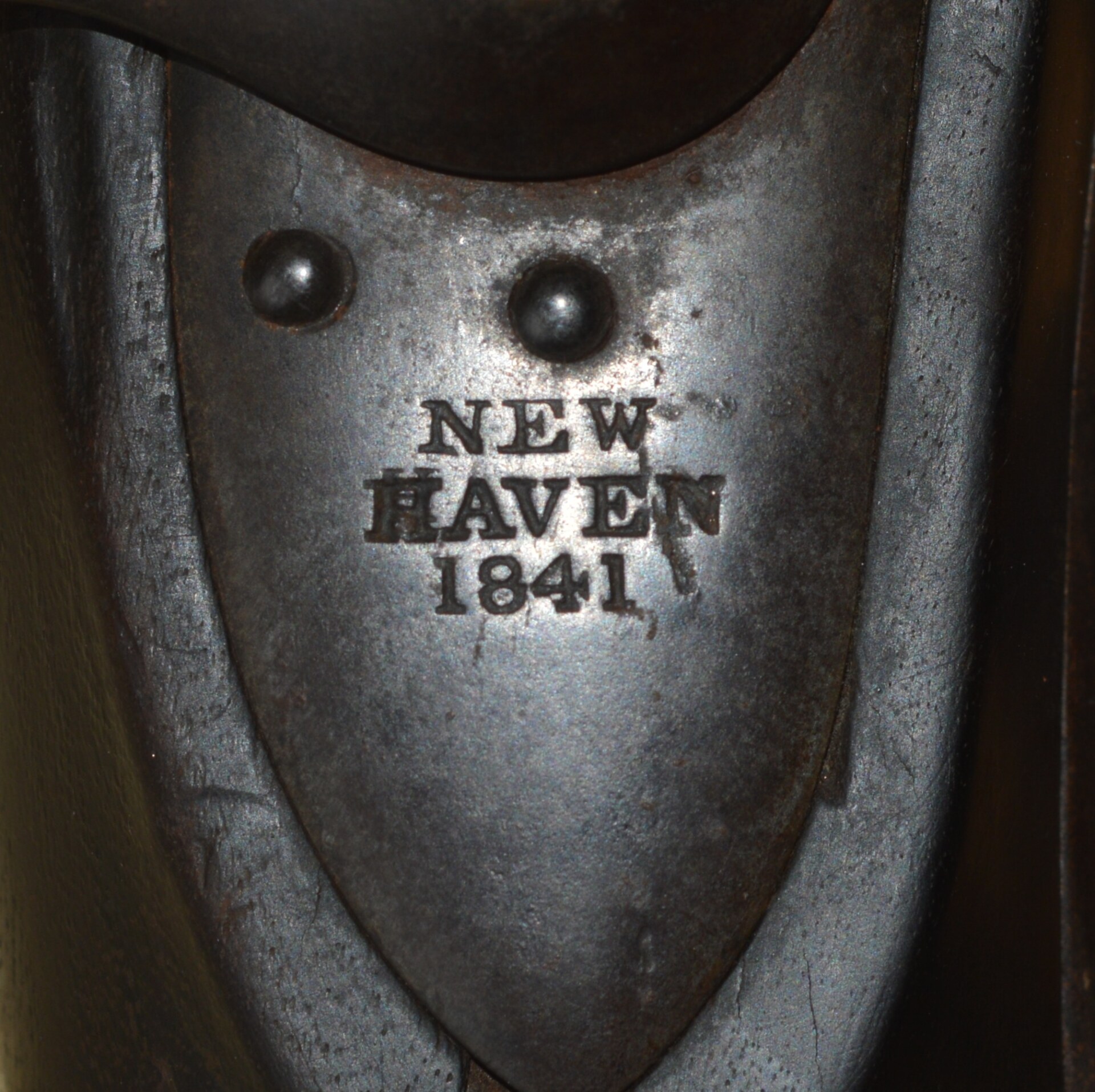
from 1826 to 1841 under two contracts. This 2nd contract example with lockplate dated
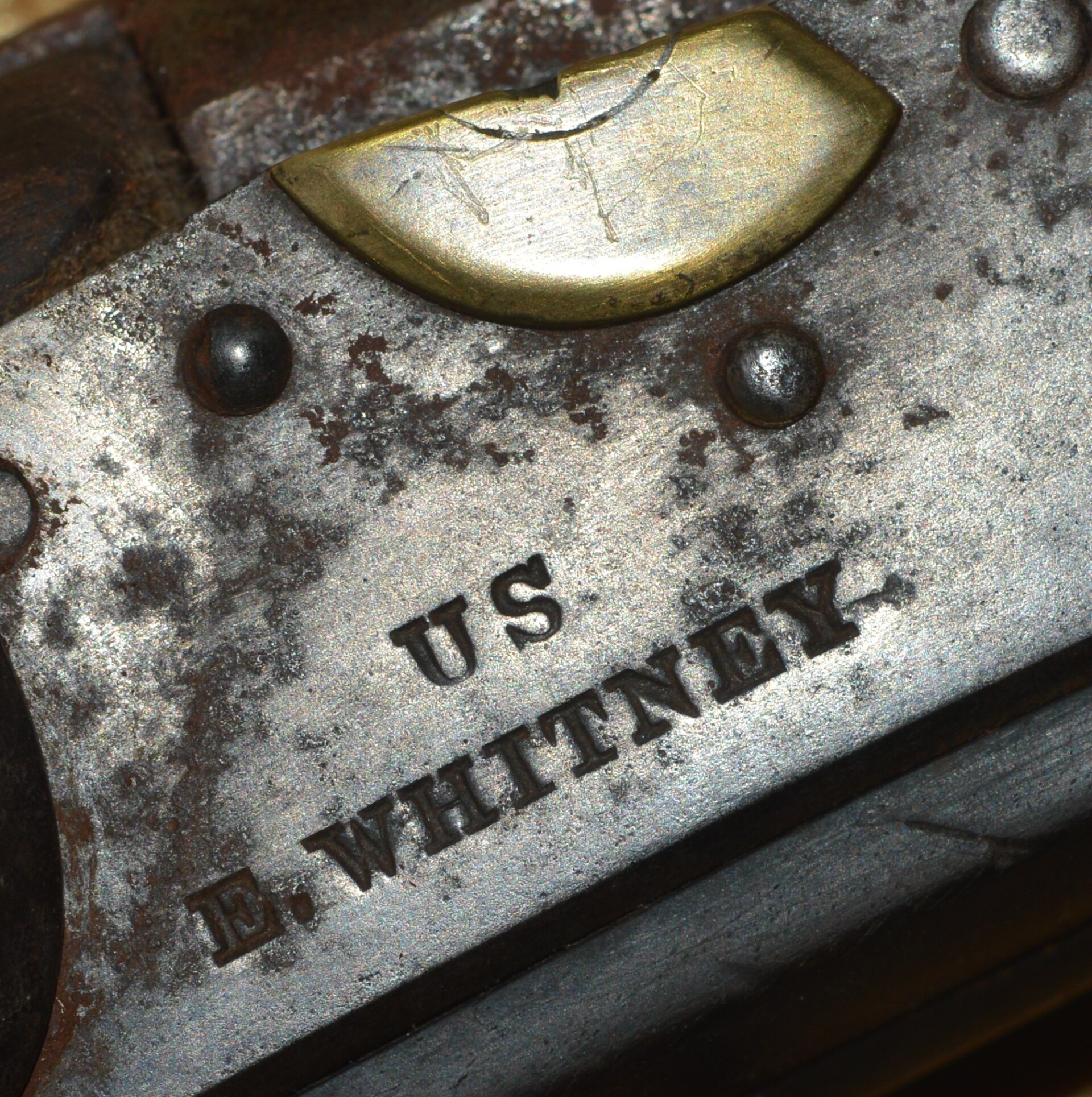
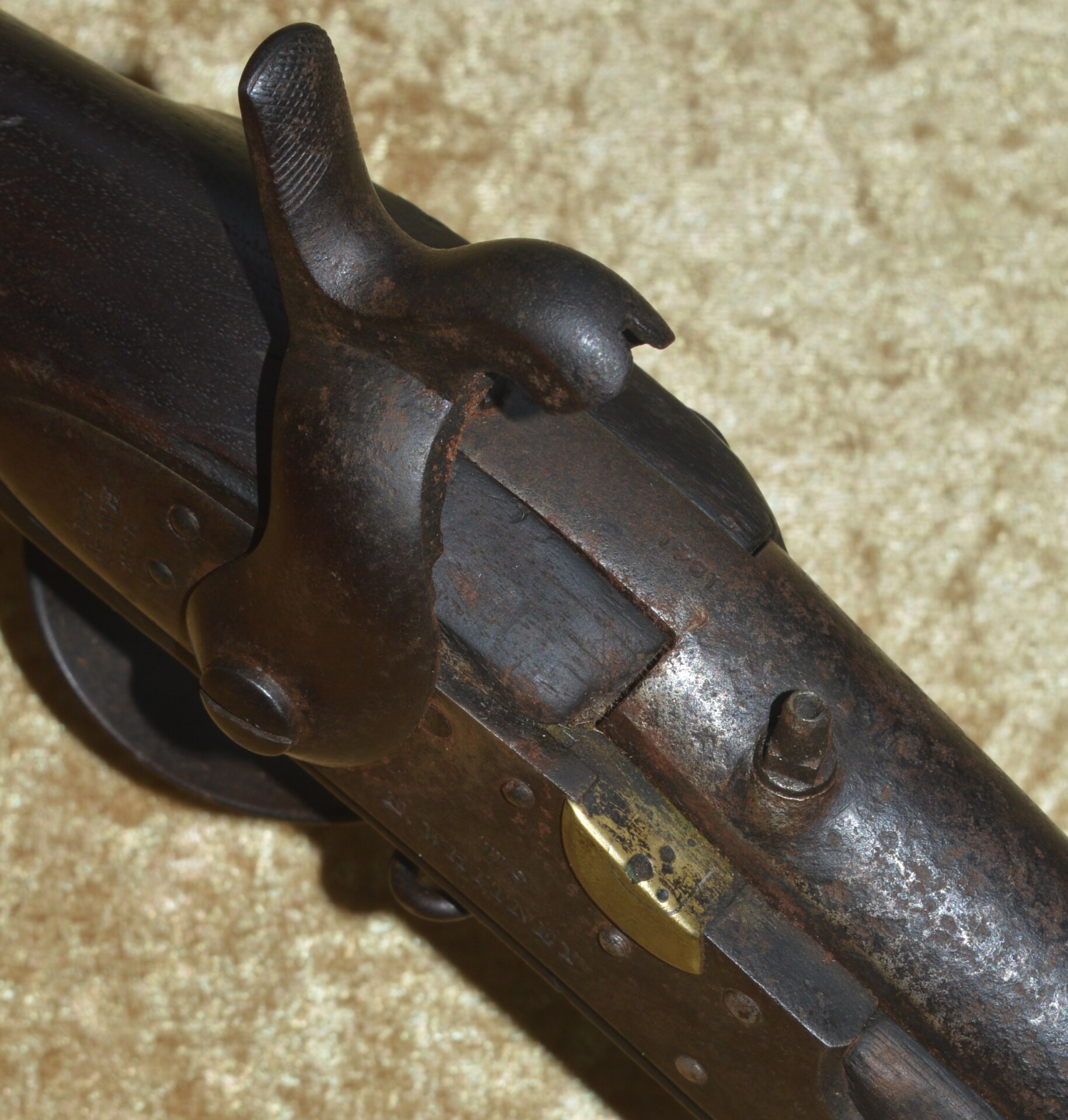
1841 vertically behind the hammer with “NEW/HAVEN” and “US/E. WHITNEY horizontally
in front of the hammer. Round 42″ smoothbore barrel of .69 caliber, the breech stamped
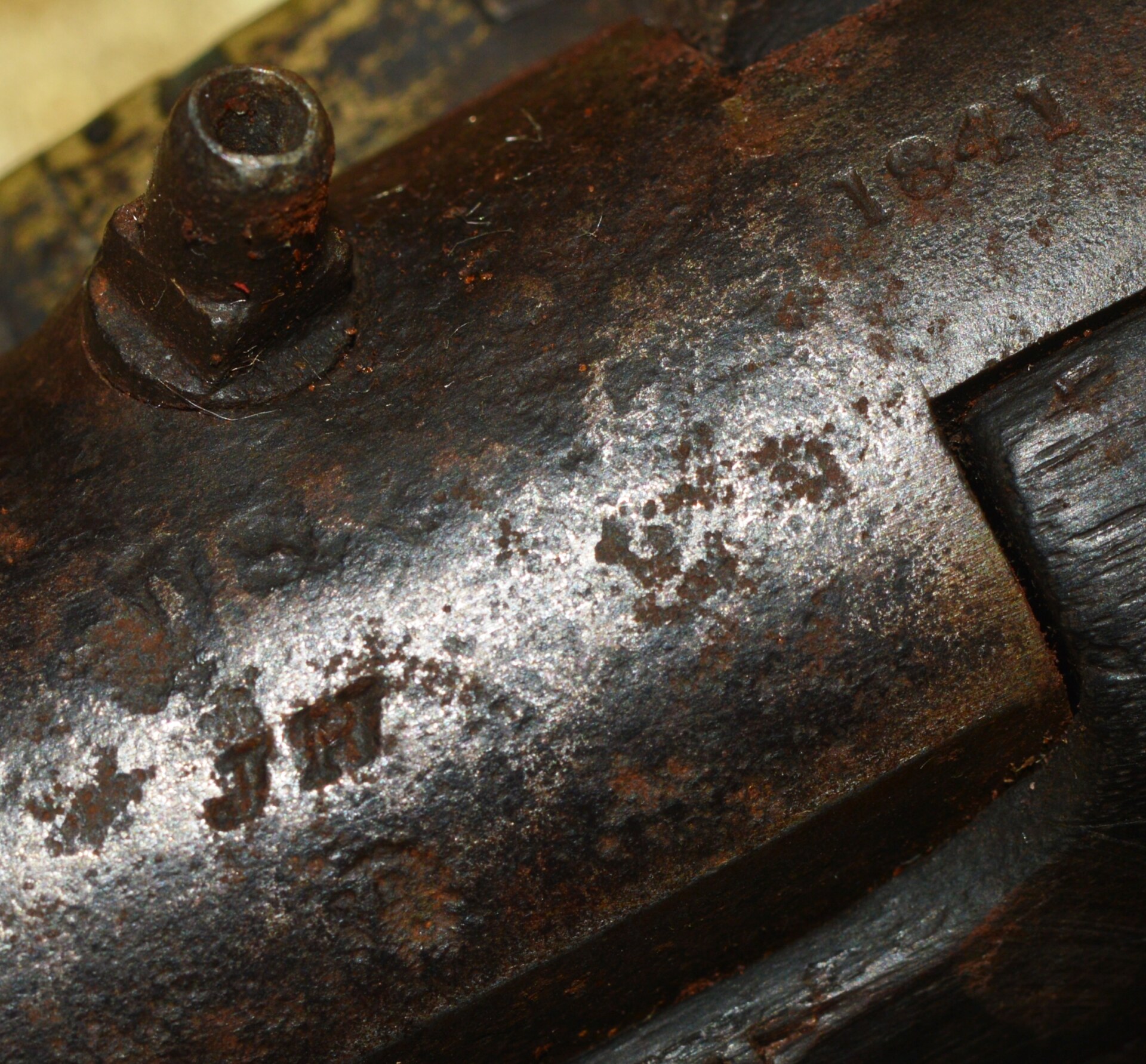
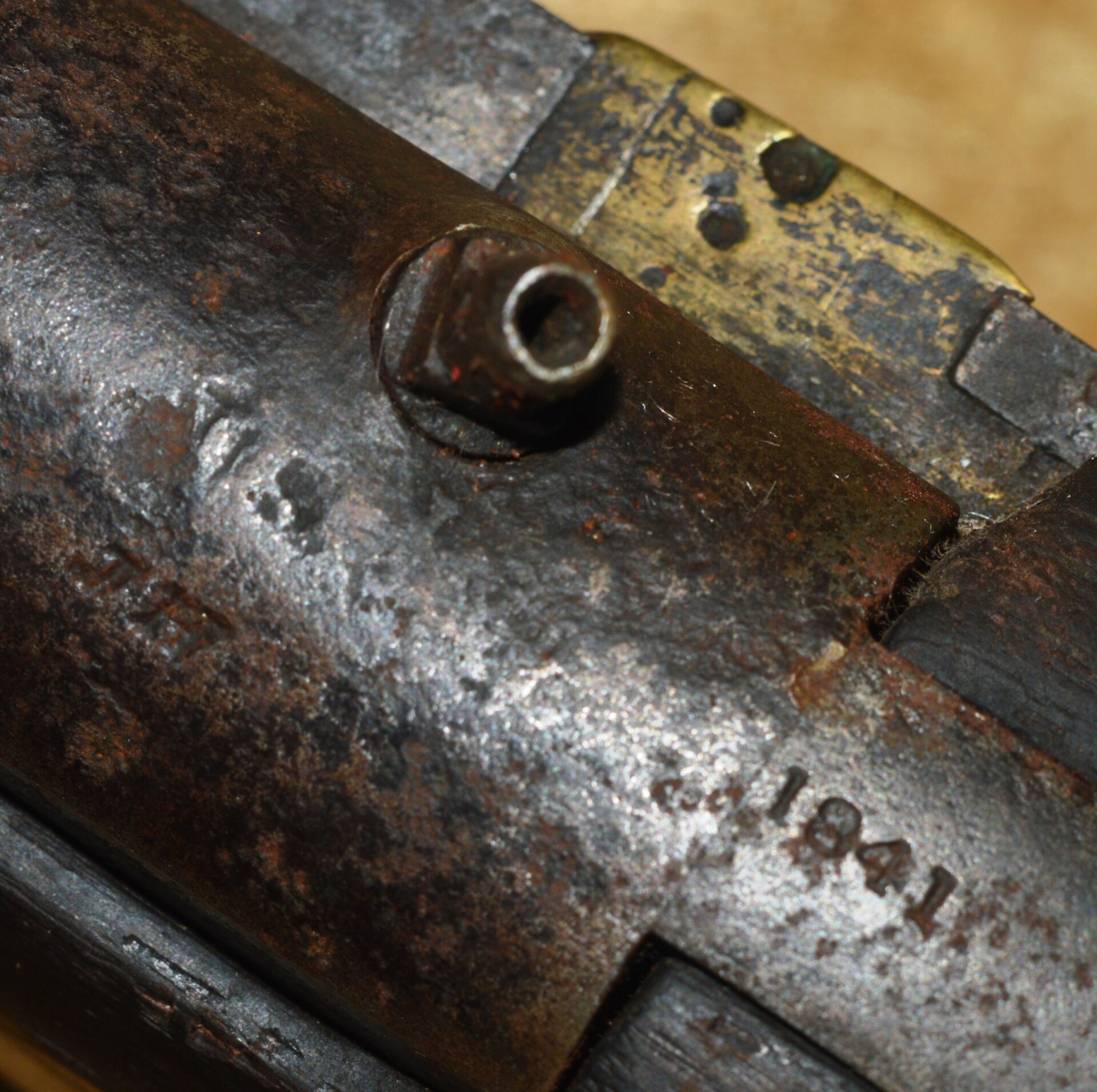
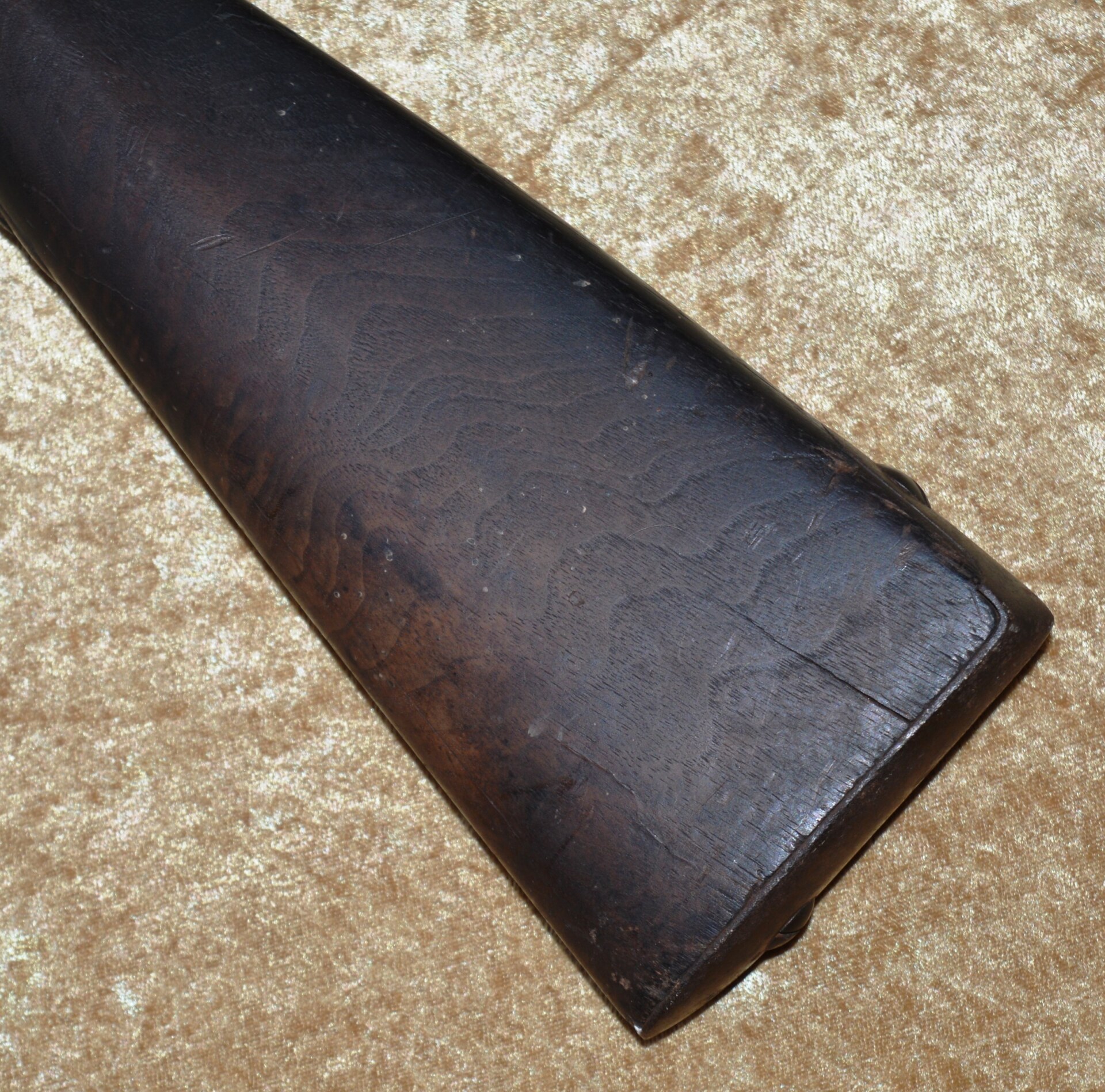
with inspector’s initials “JM” (Justin Murphy) and “US”; the tang stamped “1841″. Walnut full
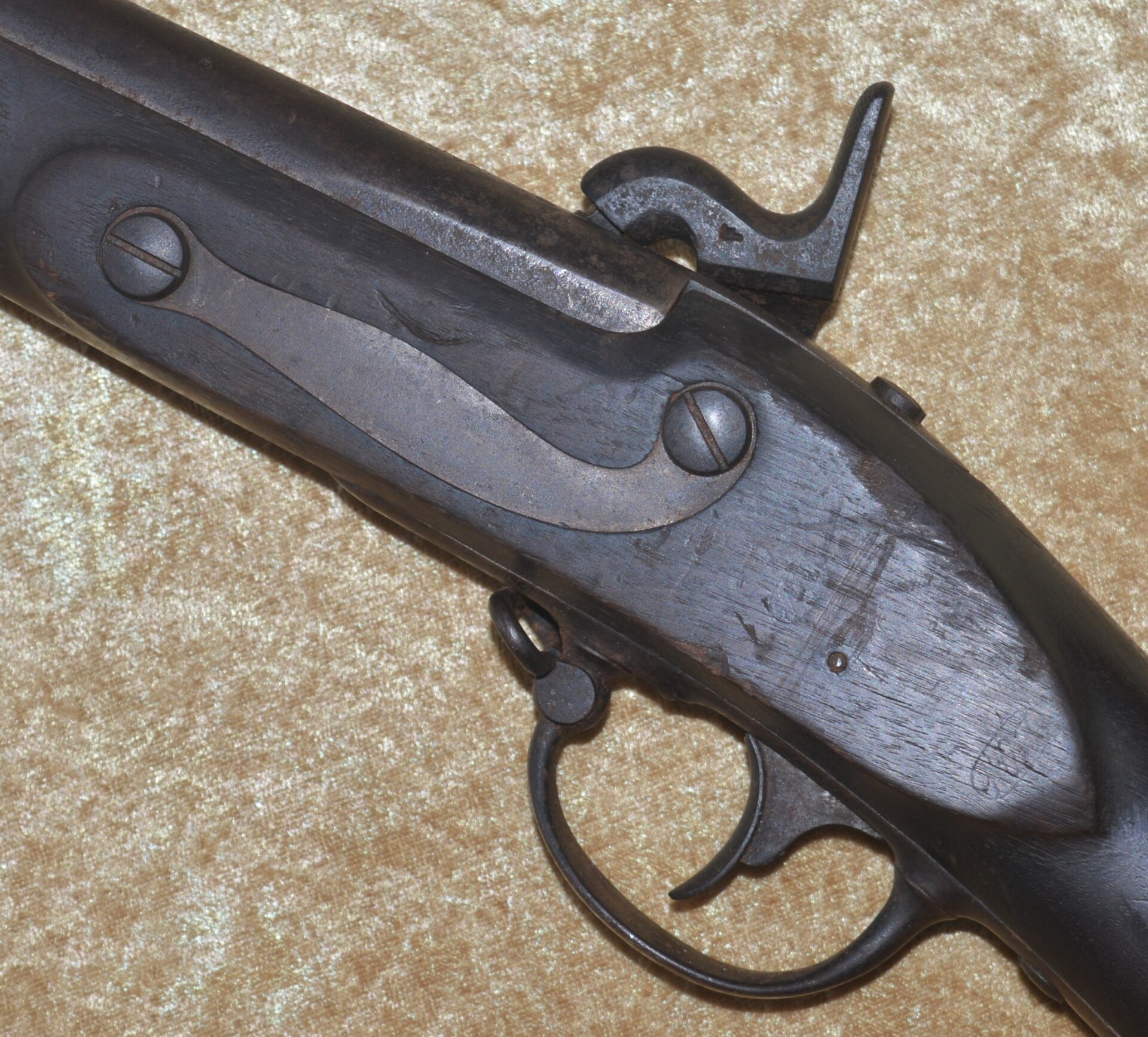
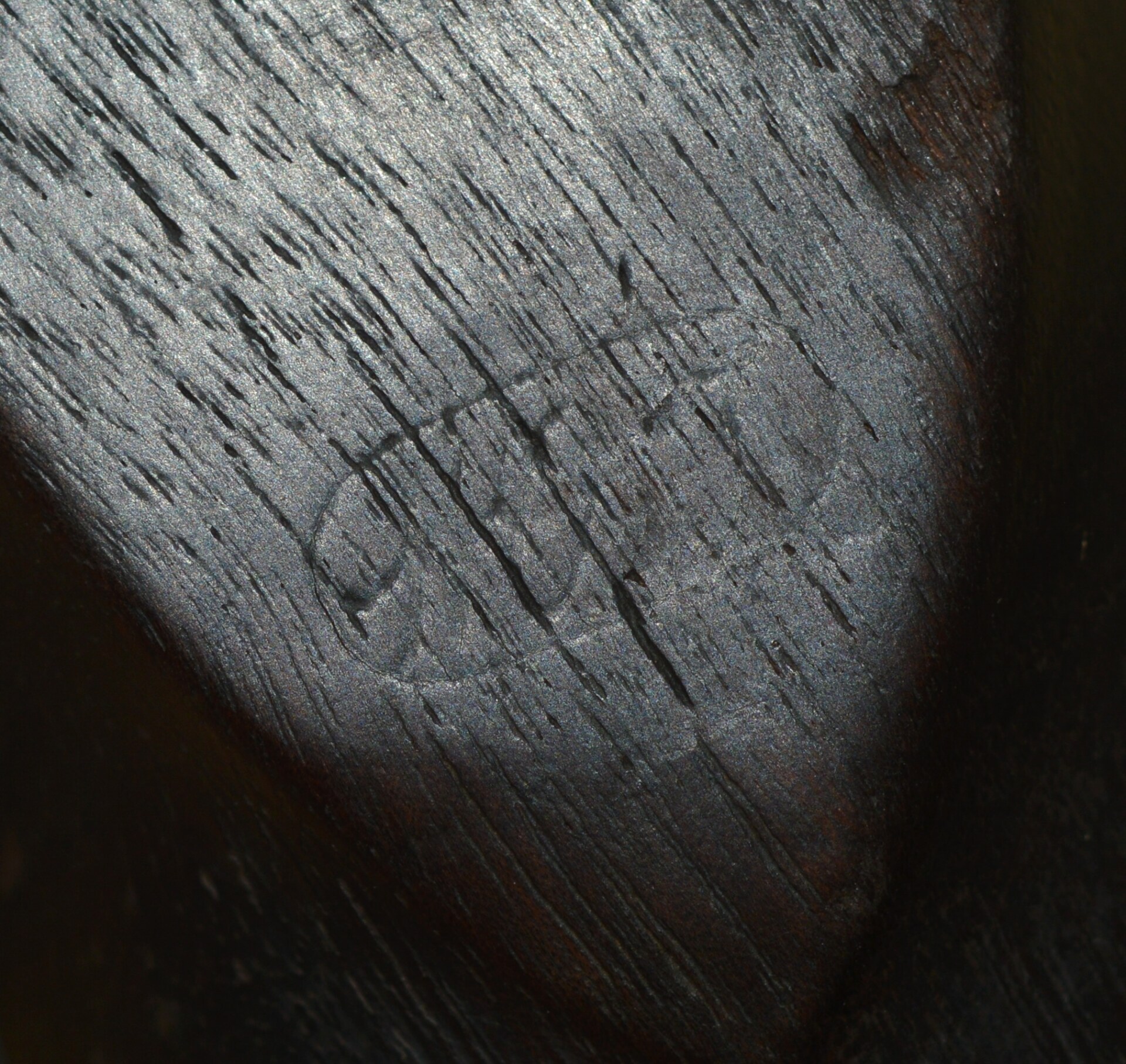
stock with faint inspector’s cartouche on left side opposite lock and iron mounts, including
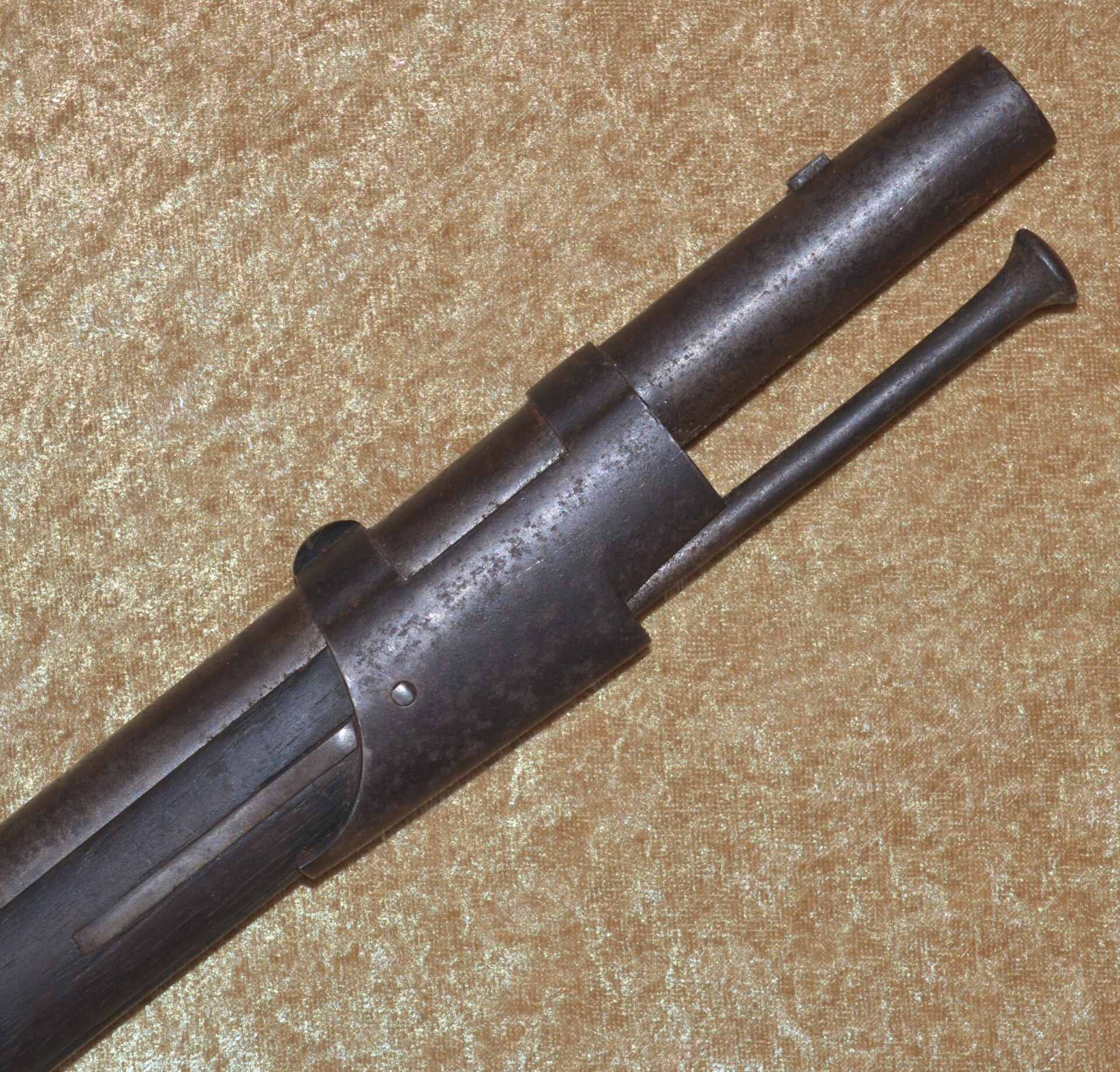
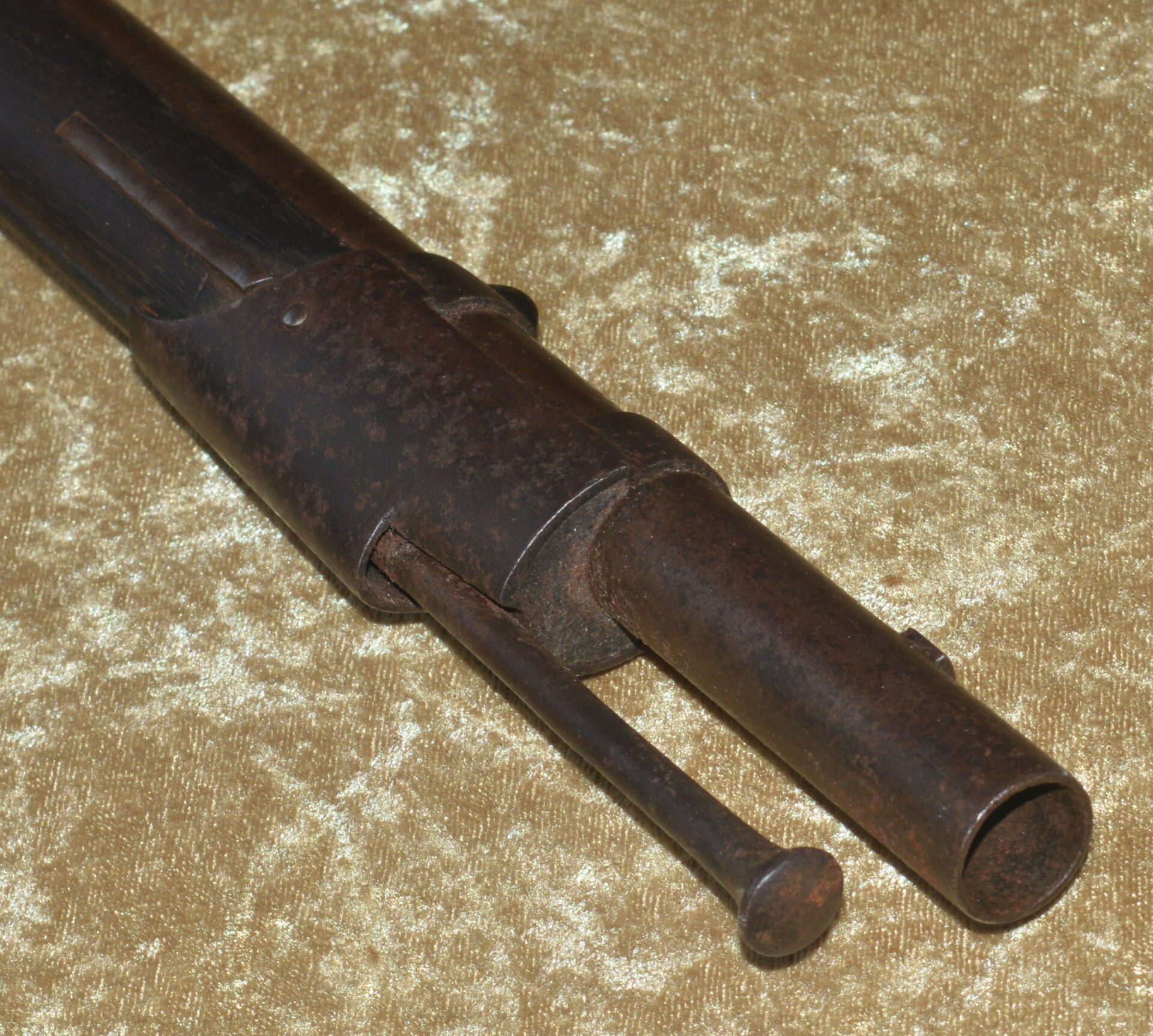
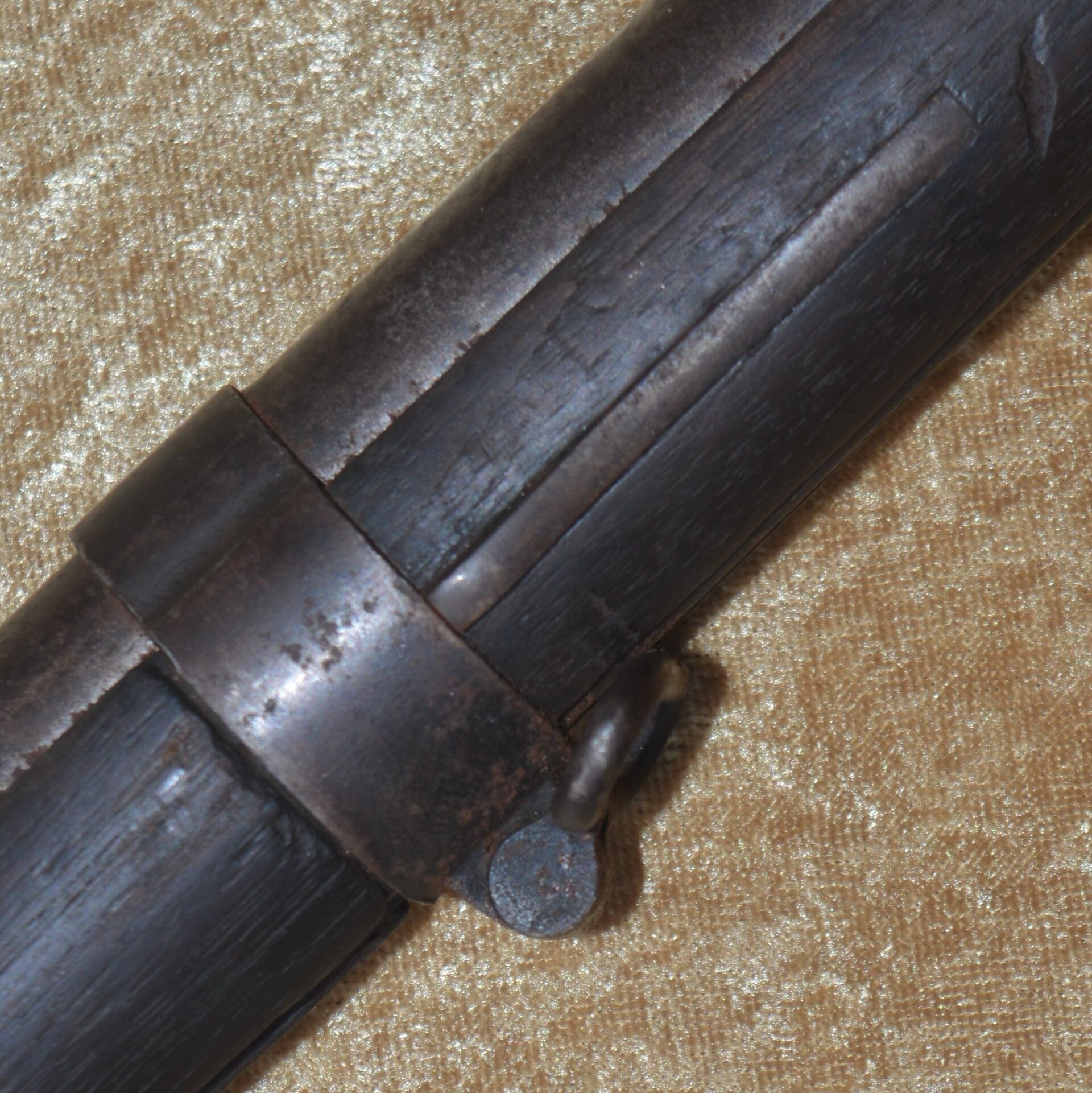
three barrel bands secured with springs (forwardmost band with integral front blade sight),
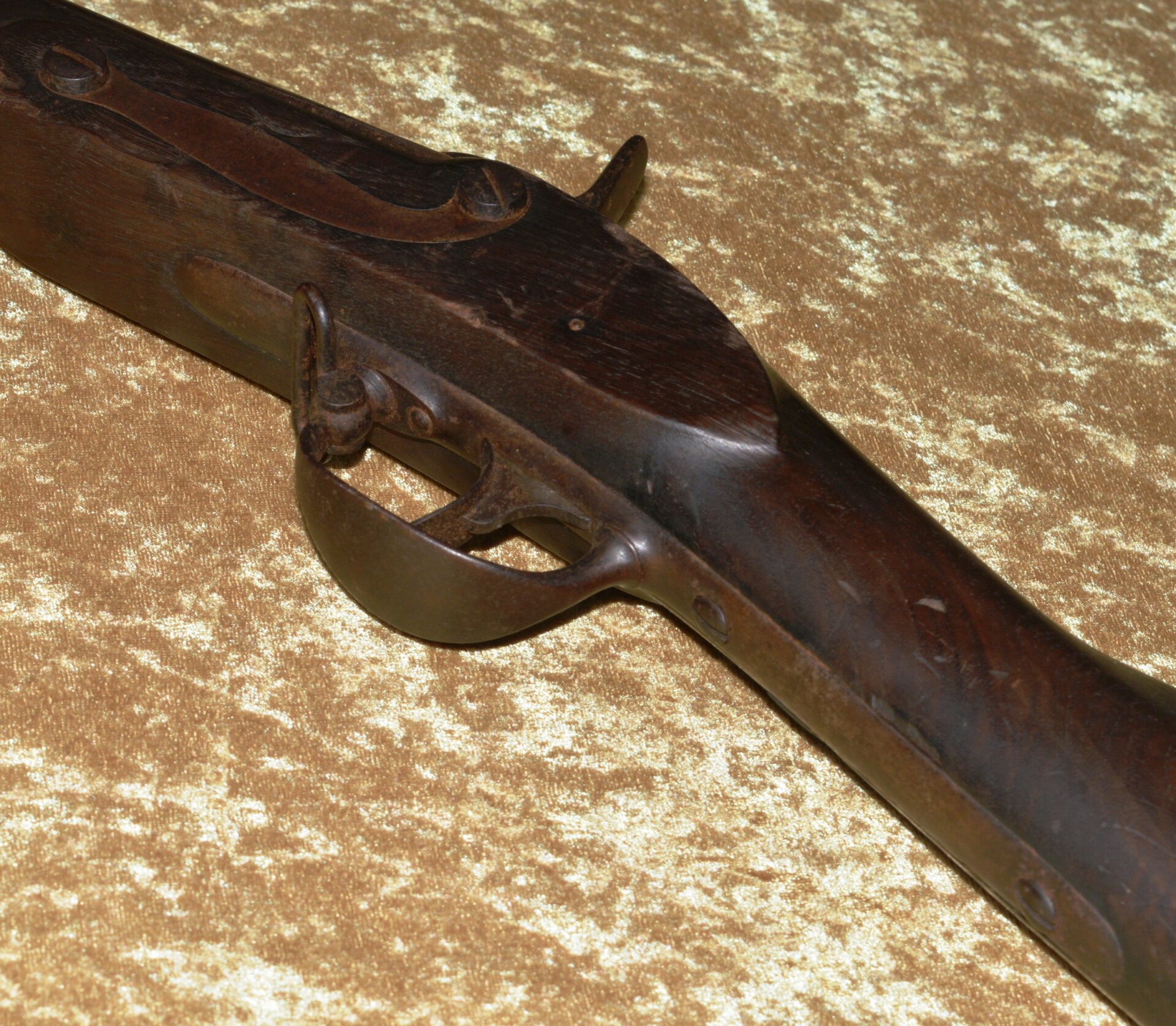
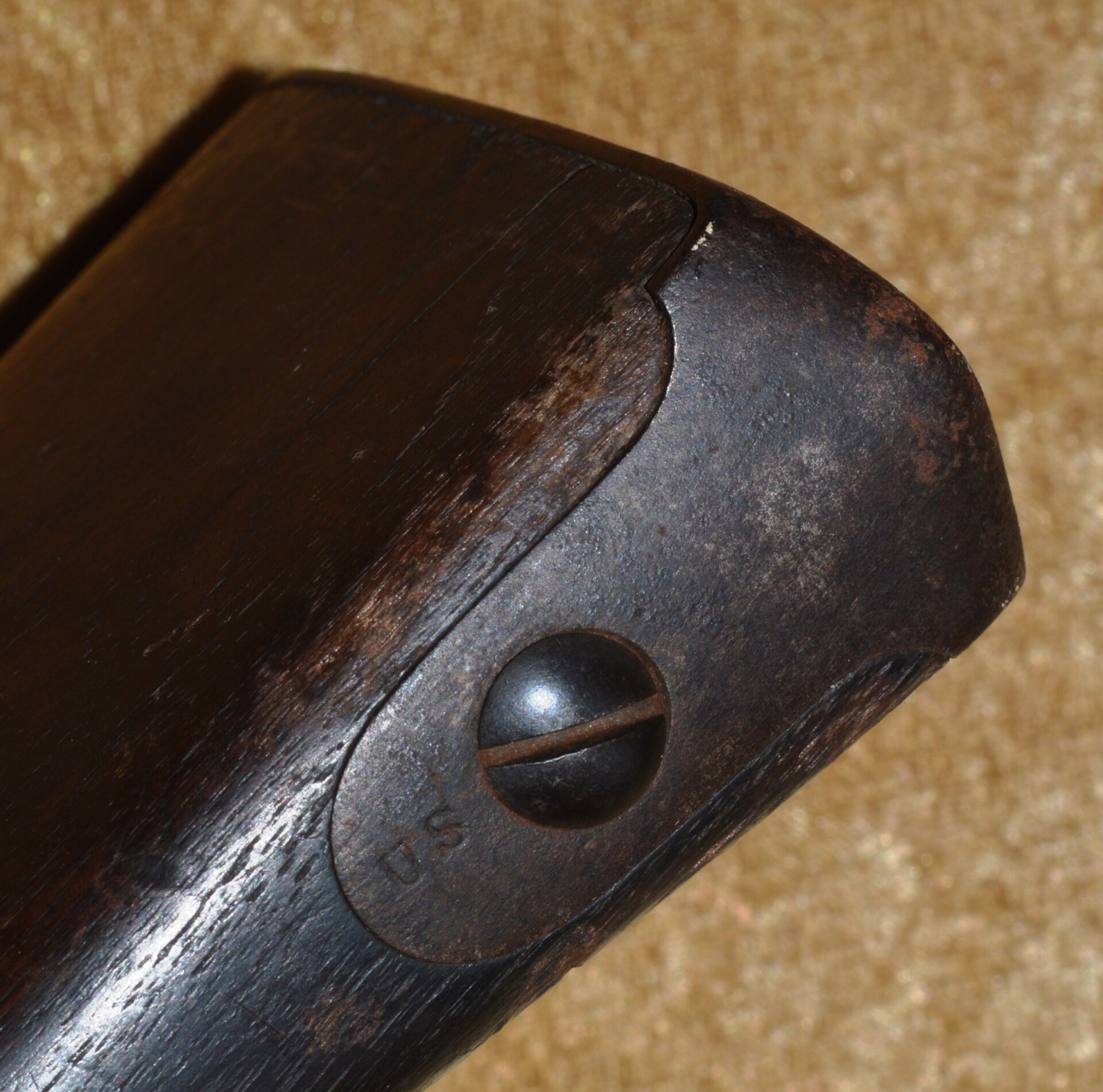
serpentine side plate, trigger guard, and butt plate with tang stamped “US”, and ramrod with
button tip; sling swivels at middle band and forward end of trigger guard (frozen in place).
While originally made as a flintlock, the 1841 contract musket had a very short service life in
that configuration, as the decision was made in 1842 that all muskets in US arsenals would
be converted to the more modern percussion system. This example was converted in the
early 1850’s using the “Belgian alteration”, sometimes known as the cone type conversion.
This method had the lock parts removed and screw holes filled, the pan ground flat, with the
remaining cavity filled with brass to make it level, and the vent hole of the barrel plugged
with nipple screwed into a threaded receptacle on top of the barrel and set off to the lock
side. The lock was then fitted with a distinctive military hammer. This conversion method
was the only one used by National armories. Many of these muskets were on hand in both
Northern and Southern arsenals at the beginning of the Civil War, and used in the war’s
early stages until more modern replacements were provided. Overall length 57 1/2″. Metal
parts with untouched dark brown patina and scattered light pitting (heavier at the breech).
Stock with dents and handling marks commensurate with field use; tight 1 1/2″ crack at the
butt. Lock functions normally, with tight mainspring.
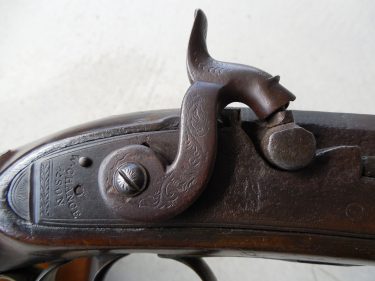 Rare Chief’s Grade Presentation Fowler Attributed to Sauk Chief Blackhawk
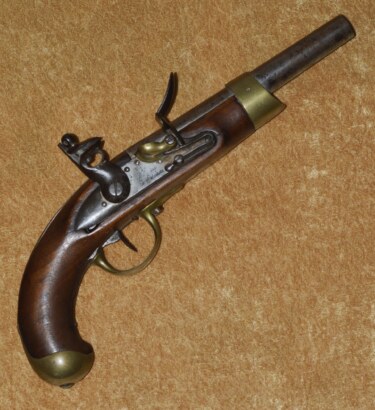 French AN XIII Flintlock Pistol
 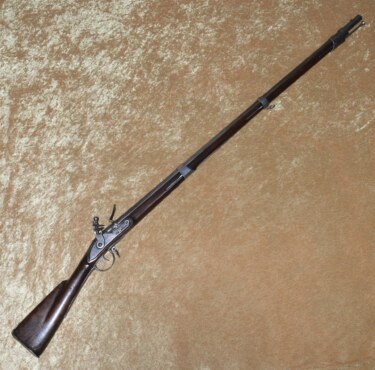 US Commonwealth of Pennsylvania 1797 Contract Flintlock Musket
 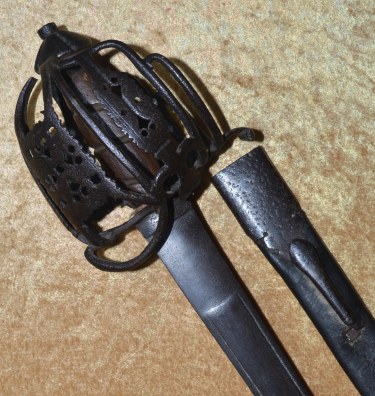 Scottish Basket-Hilted Broadsword and Scabbard, Early 18th C