
Description
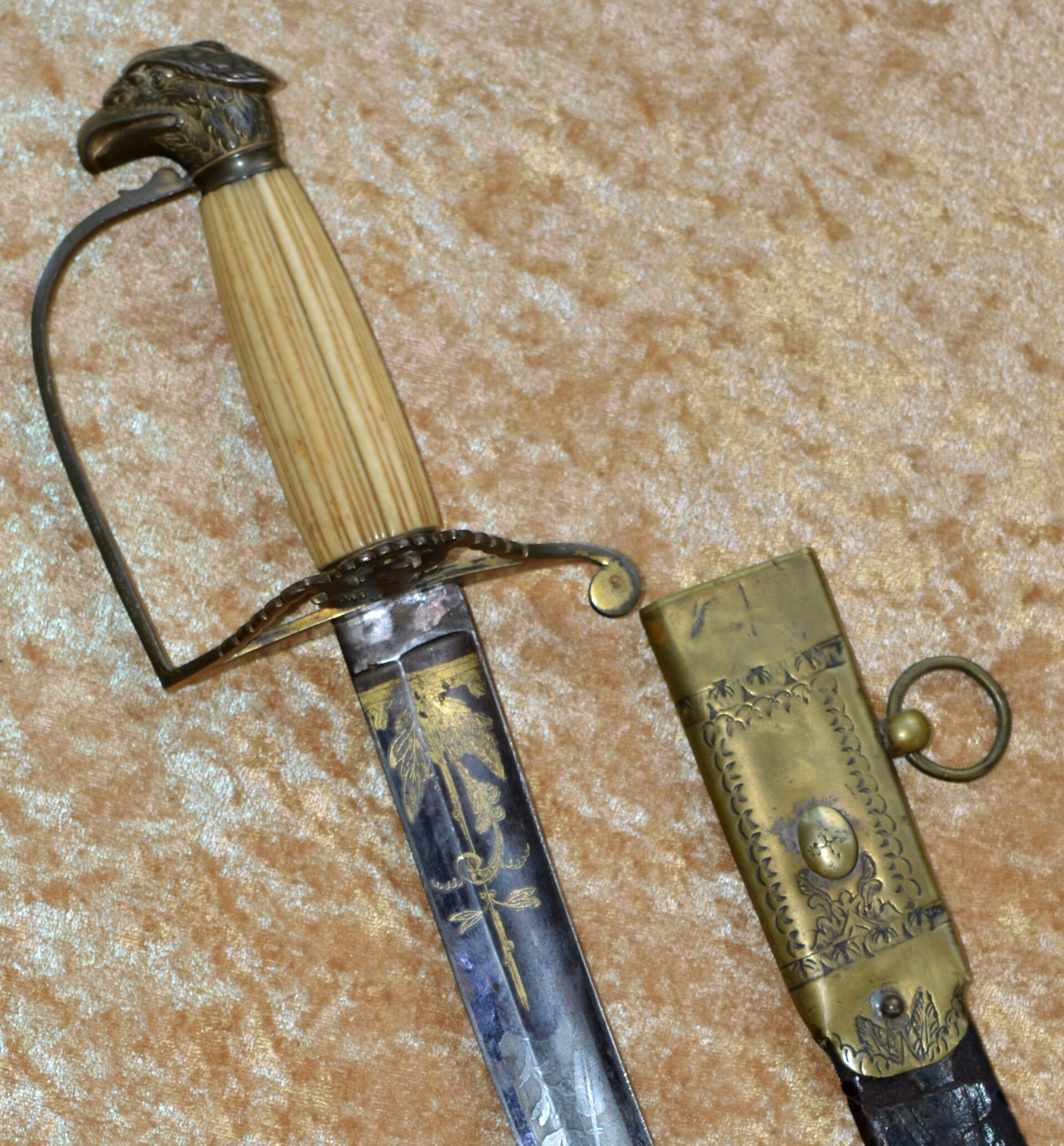
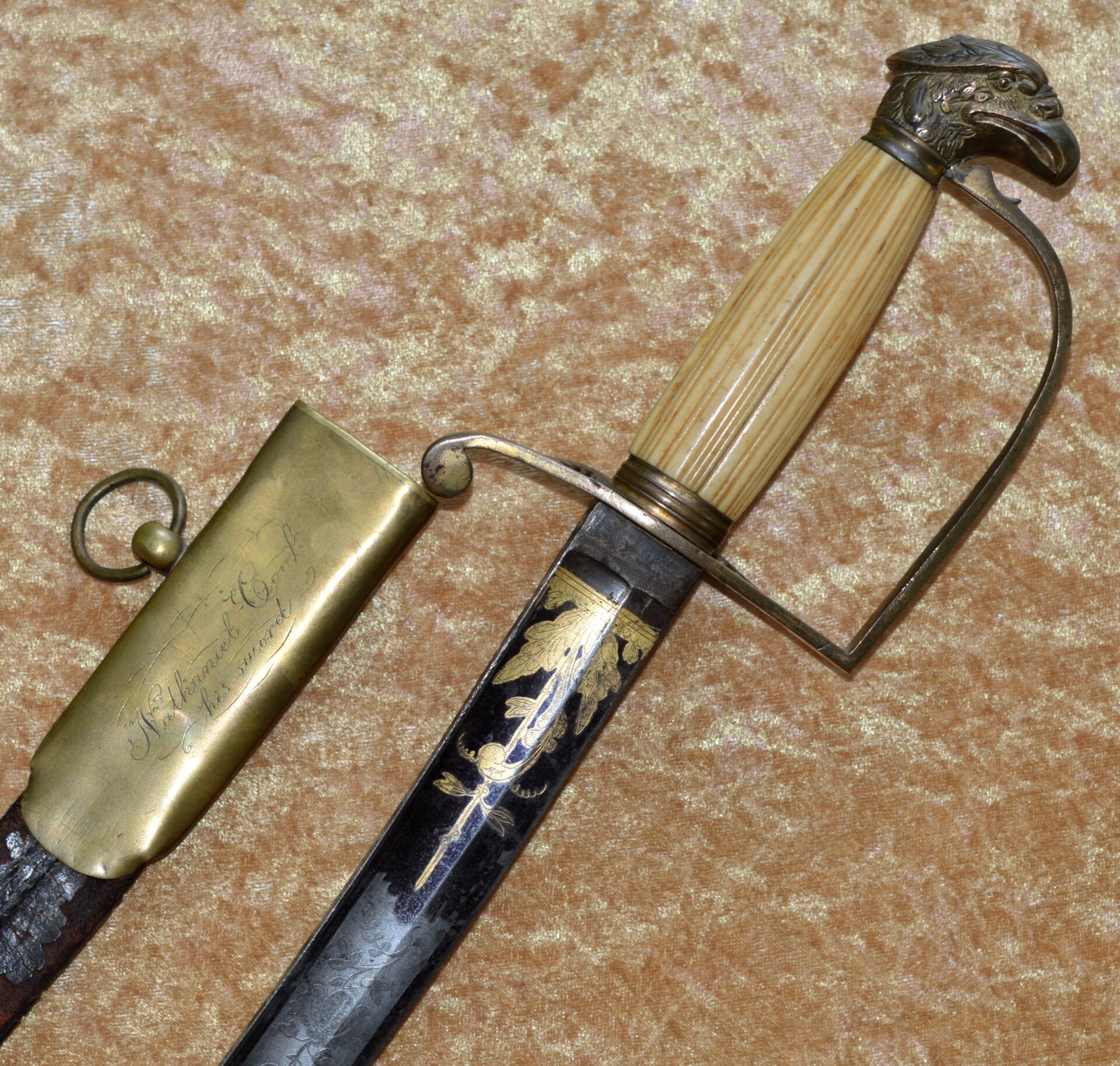
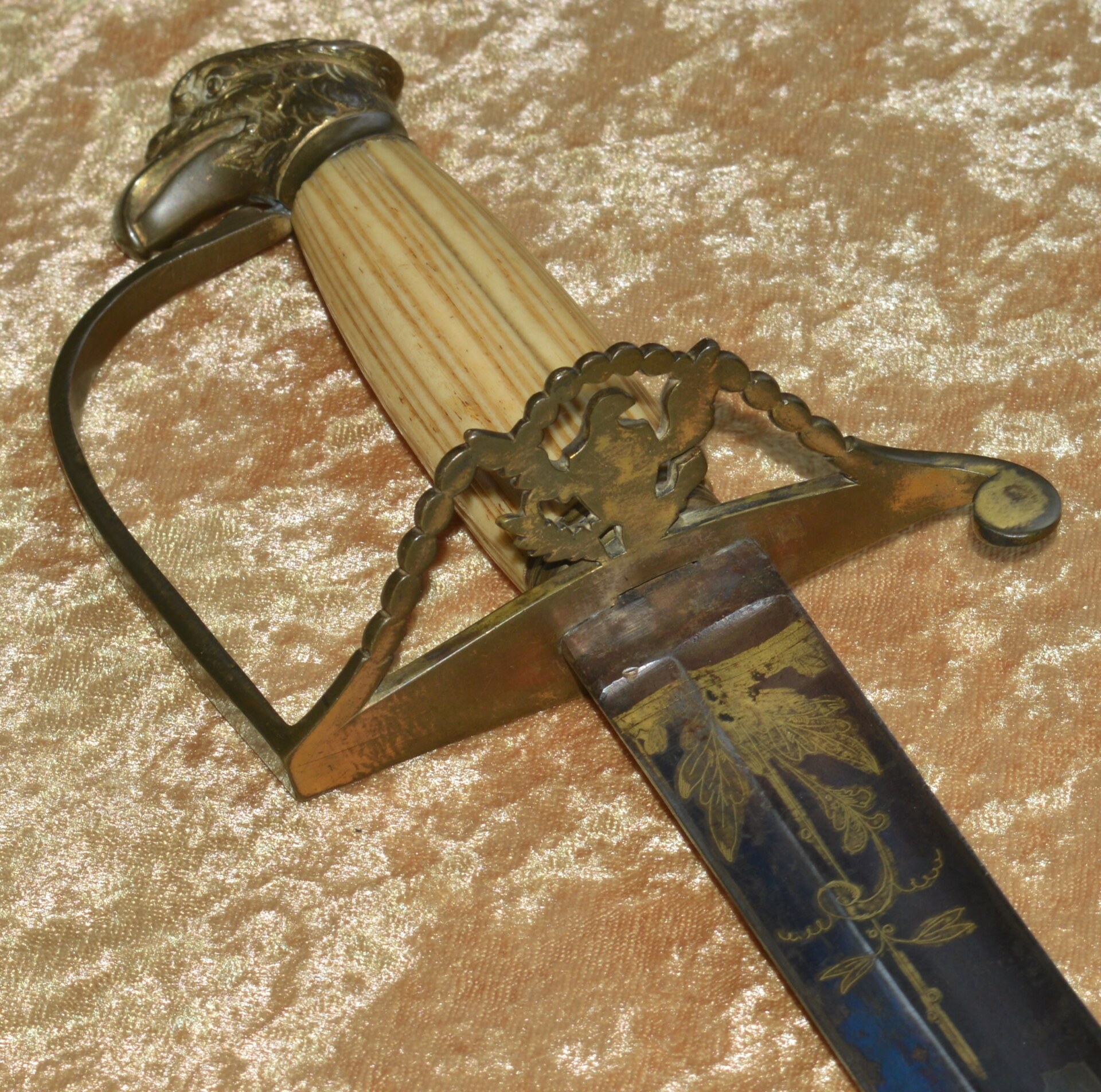
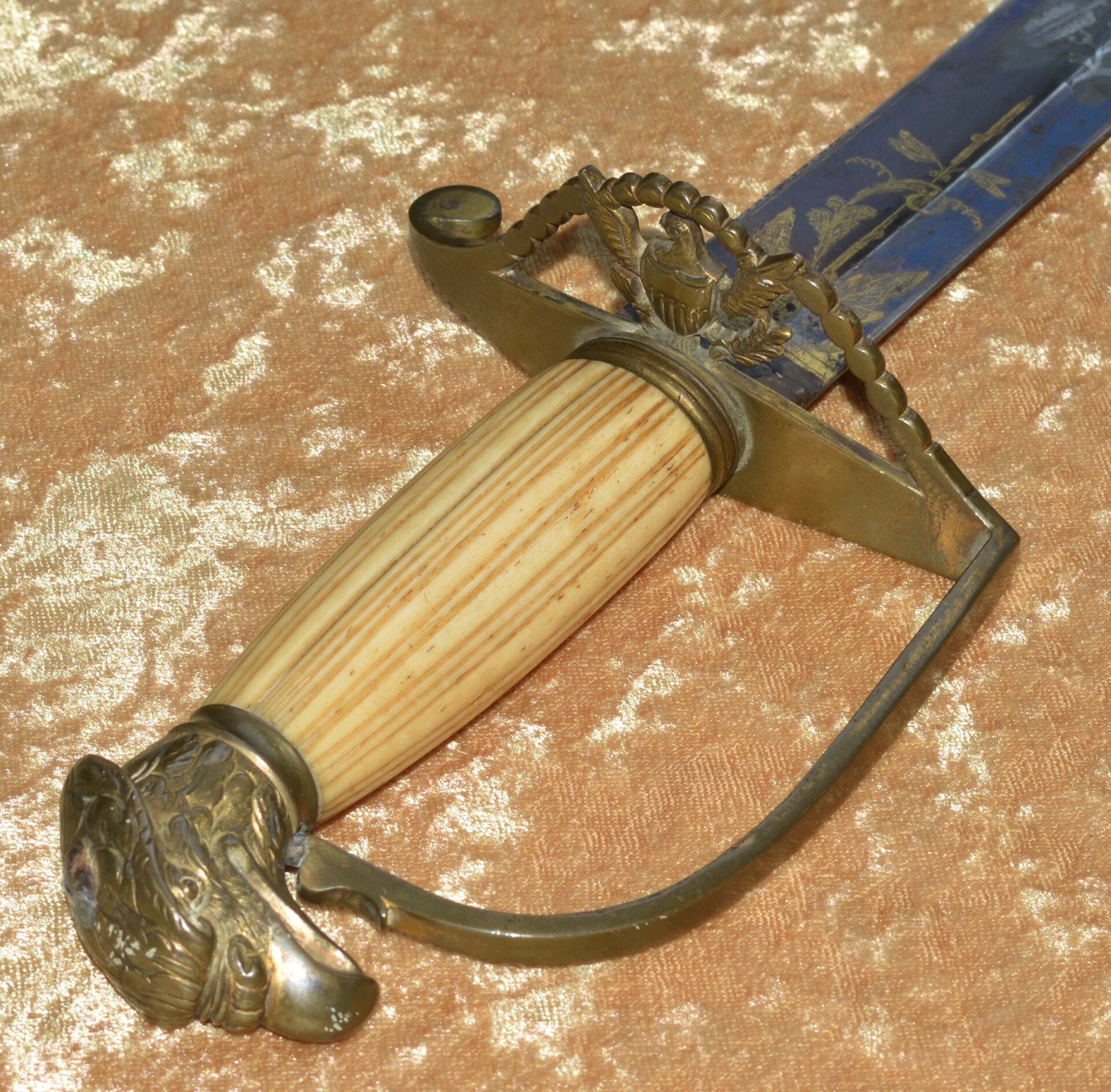
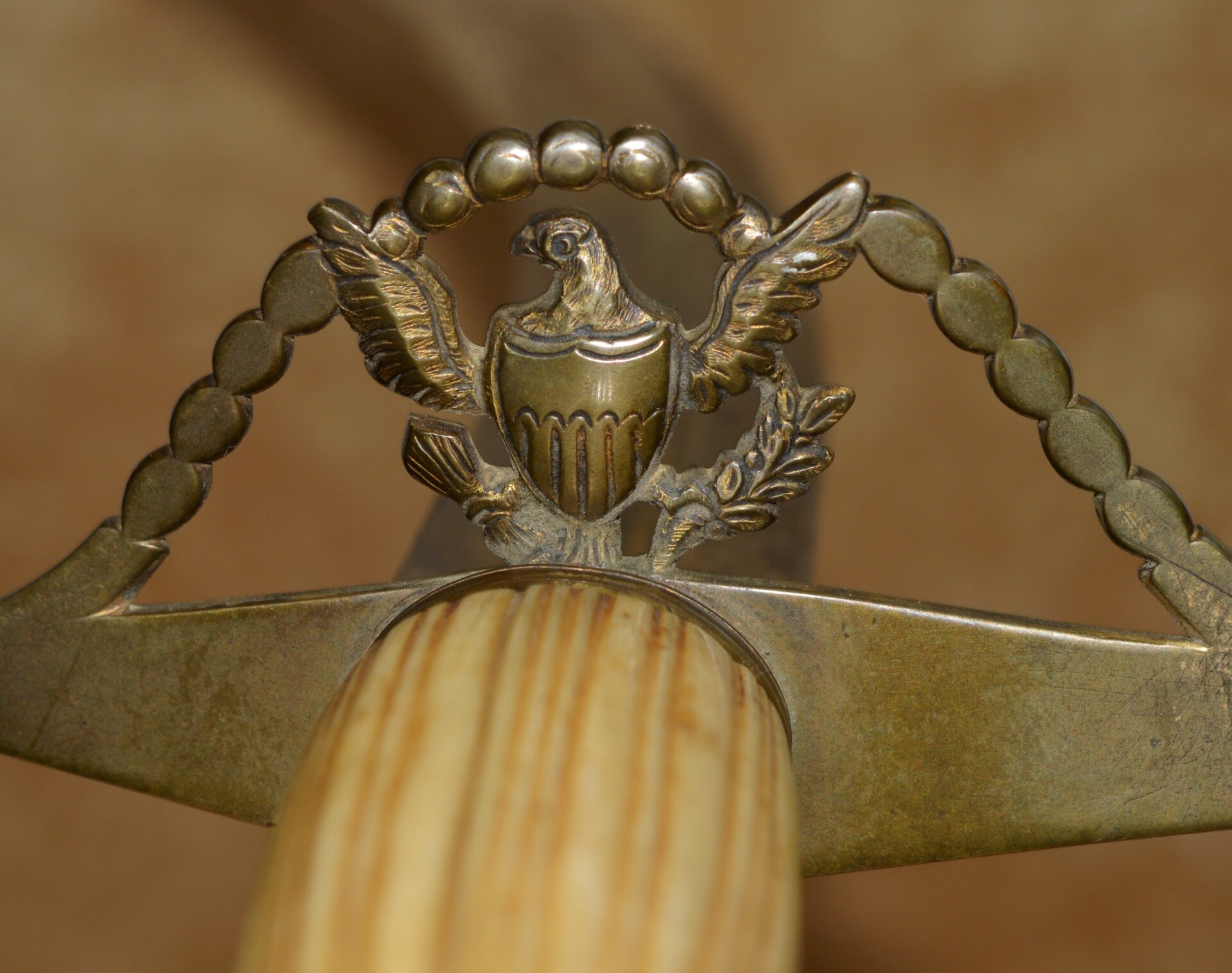
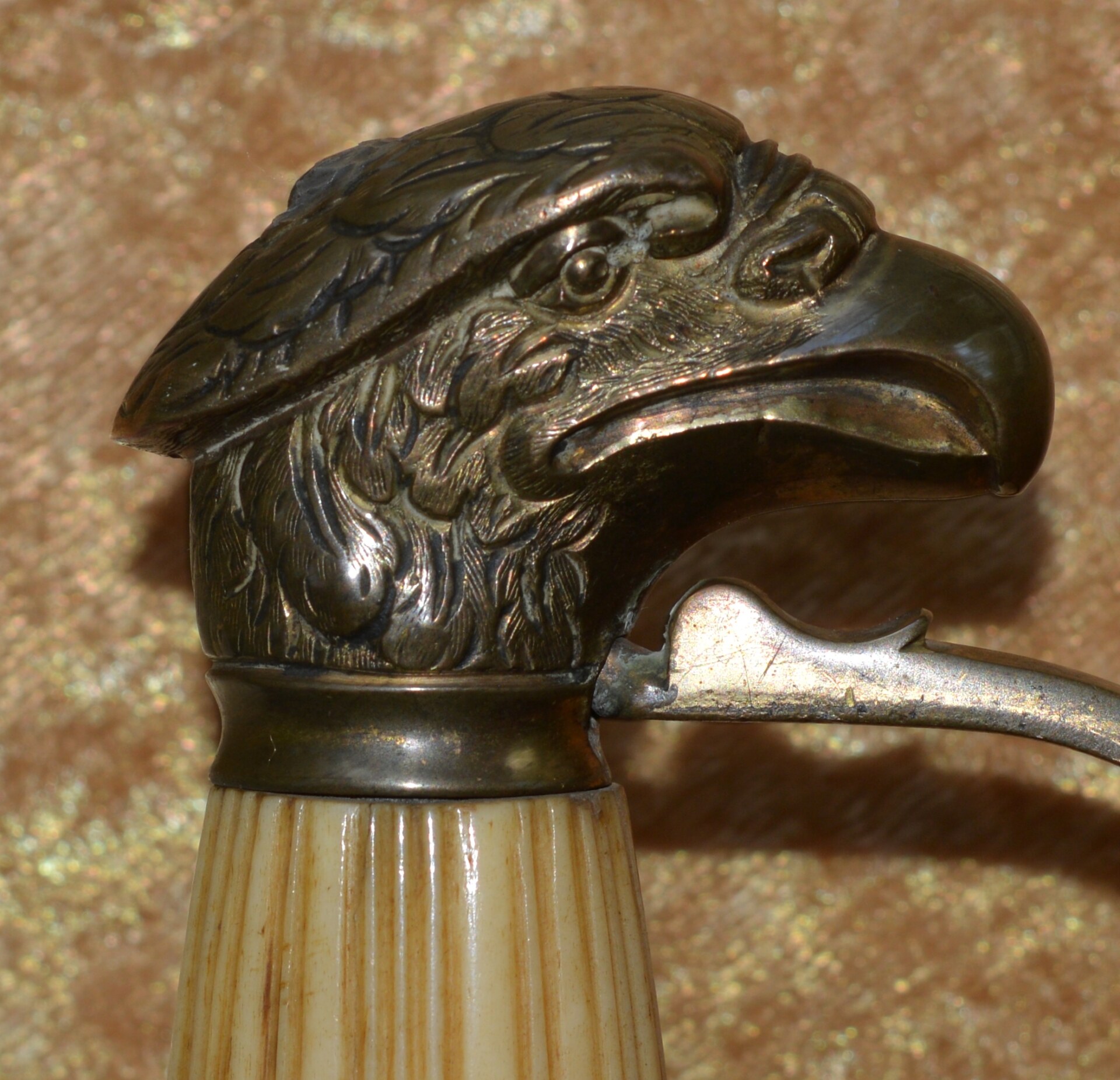
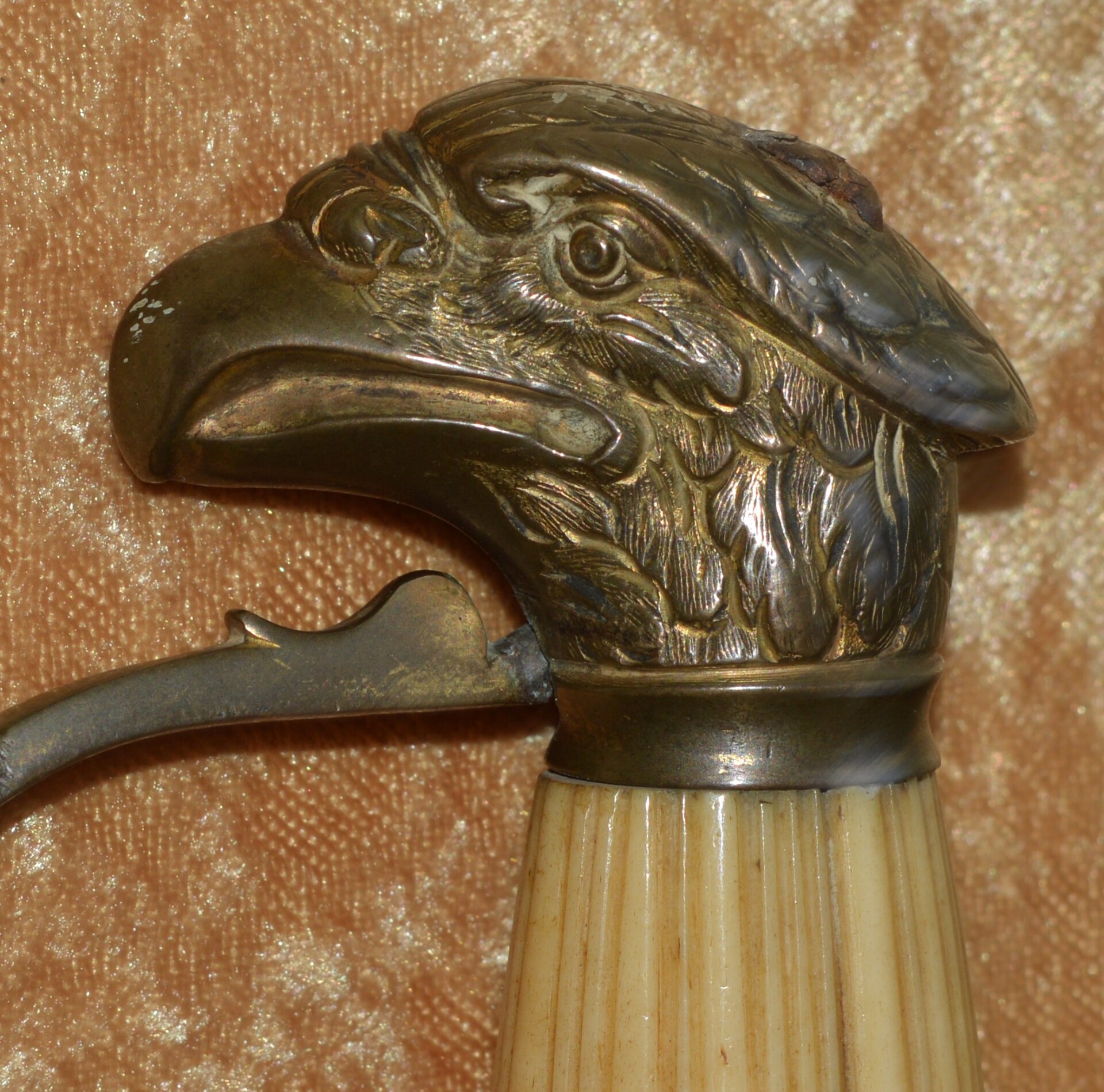
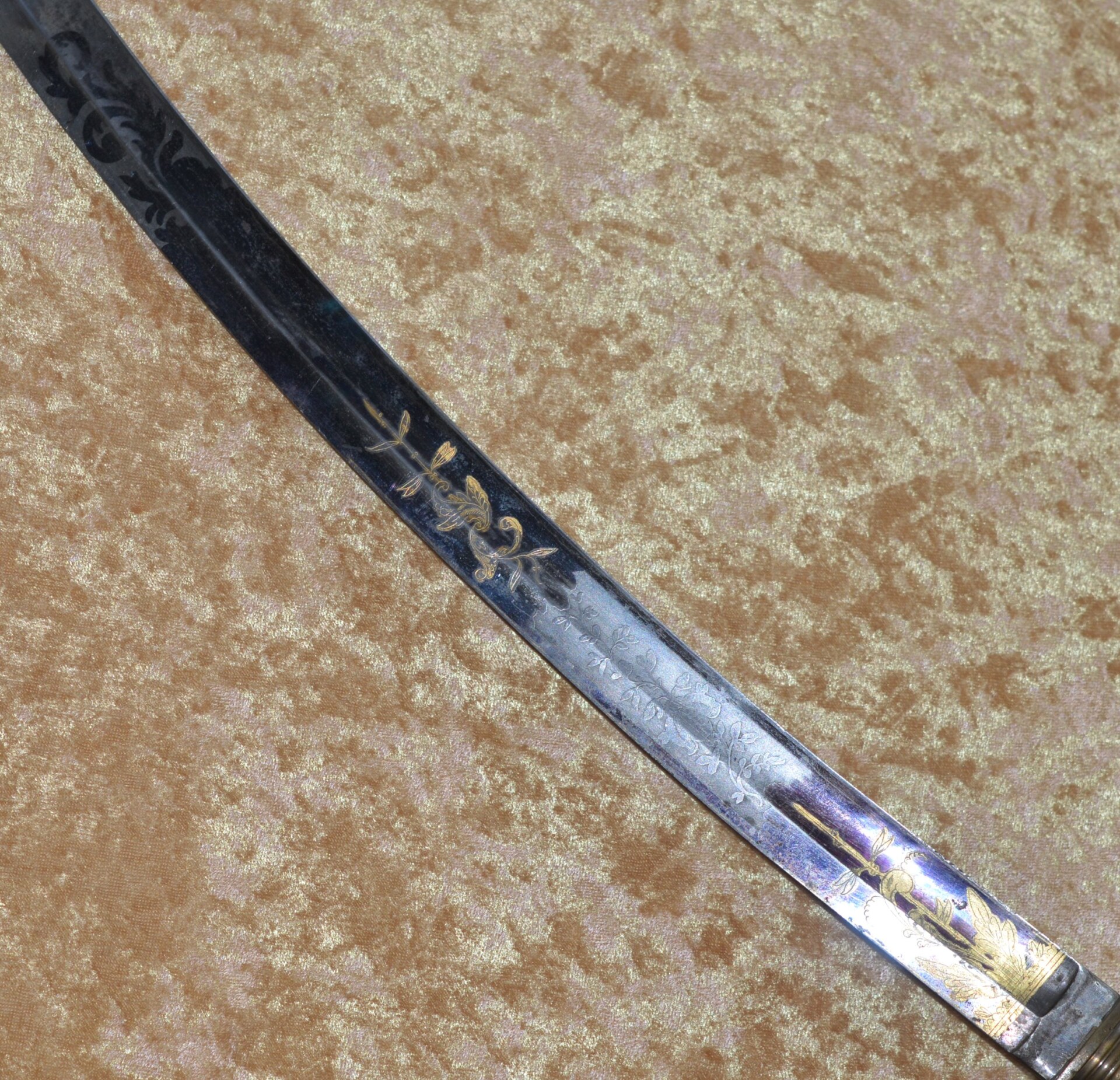
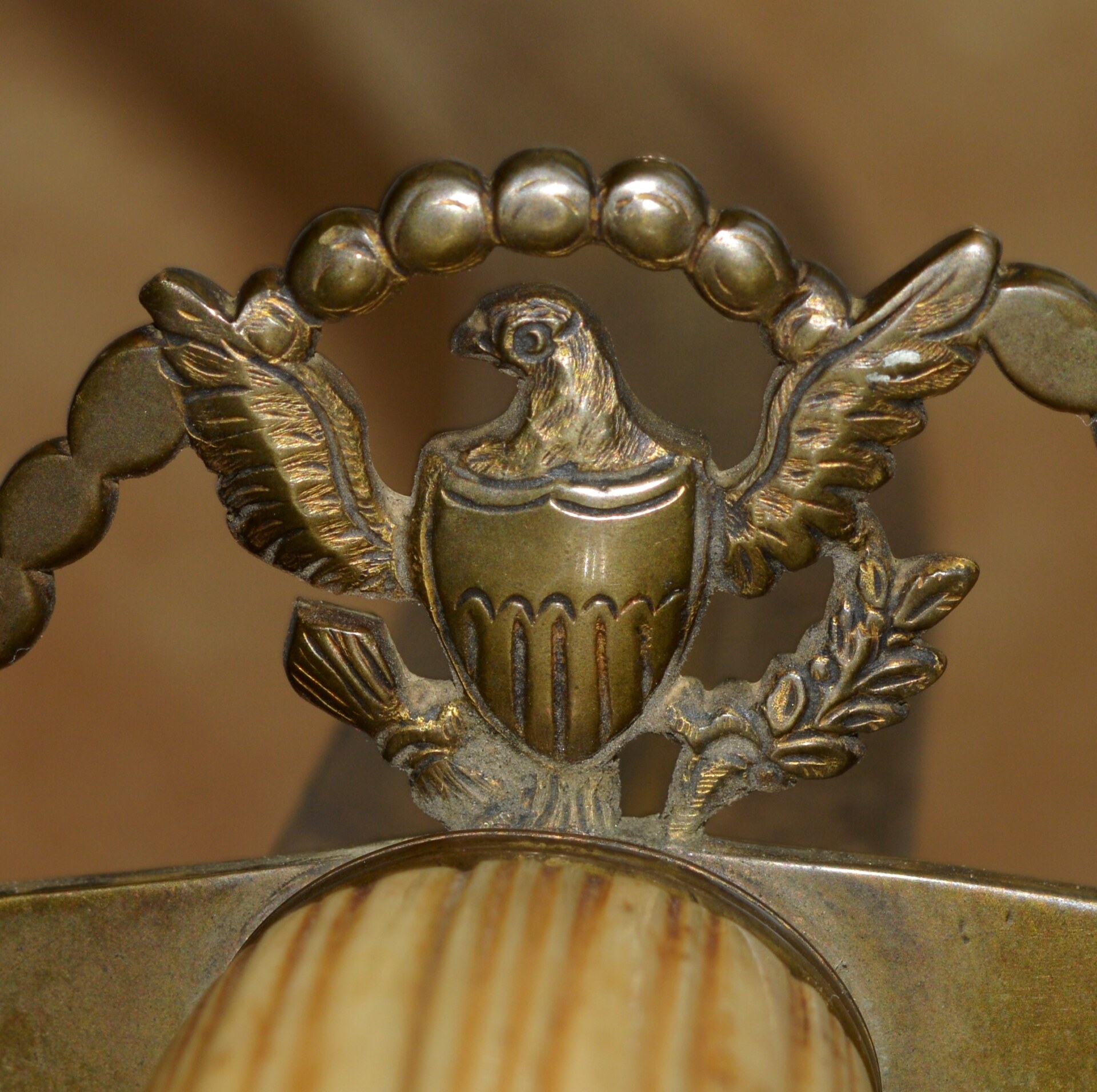
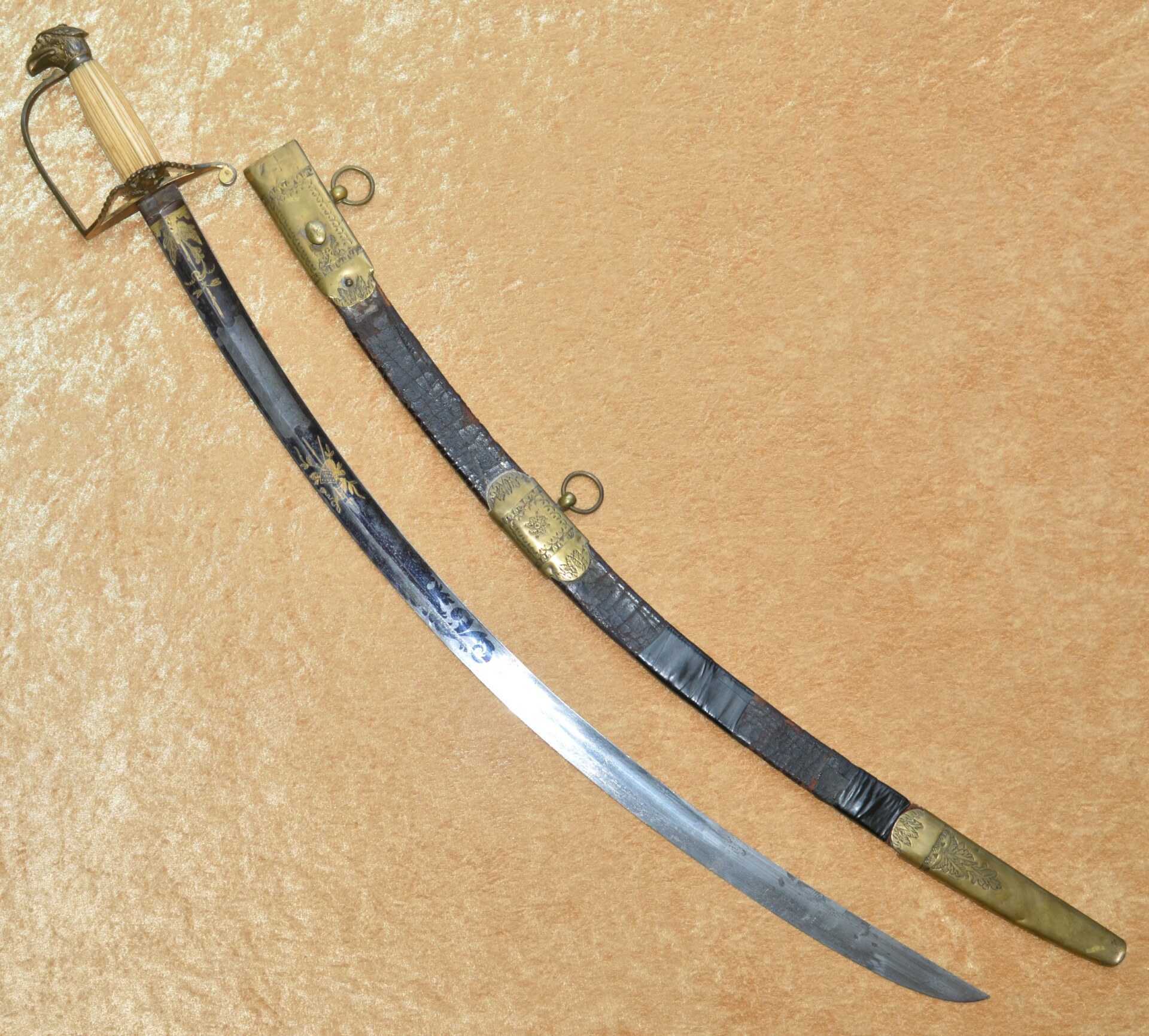
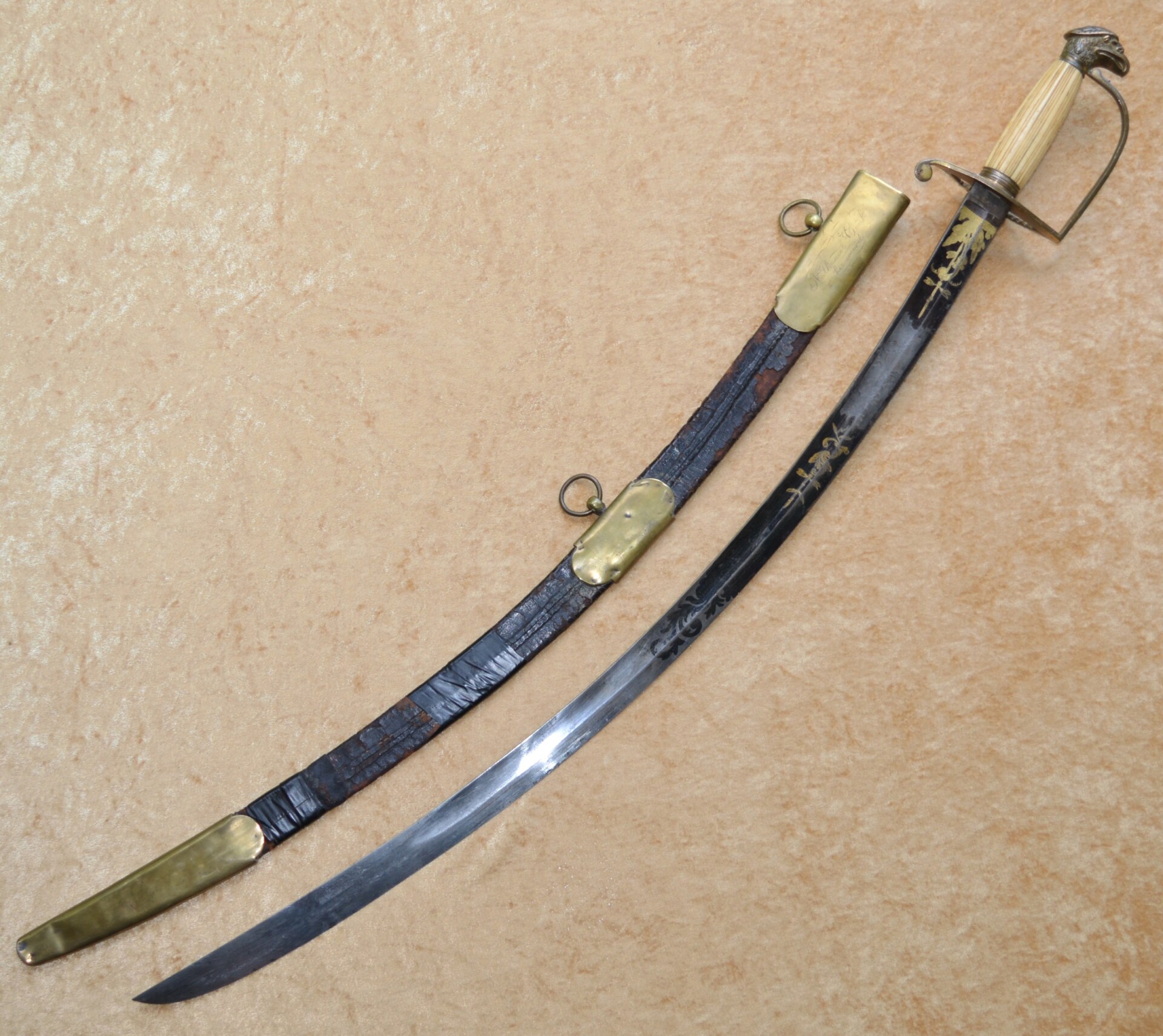
Featuring gilt brass hilt, comprising reverse scroll quillon, pierced counterguard depicting a
spread-wing eagle and shield surrounded by stars, and stirrup-shaped knuckle bow
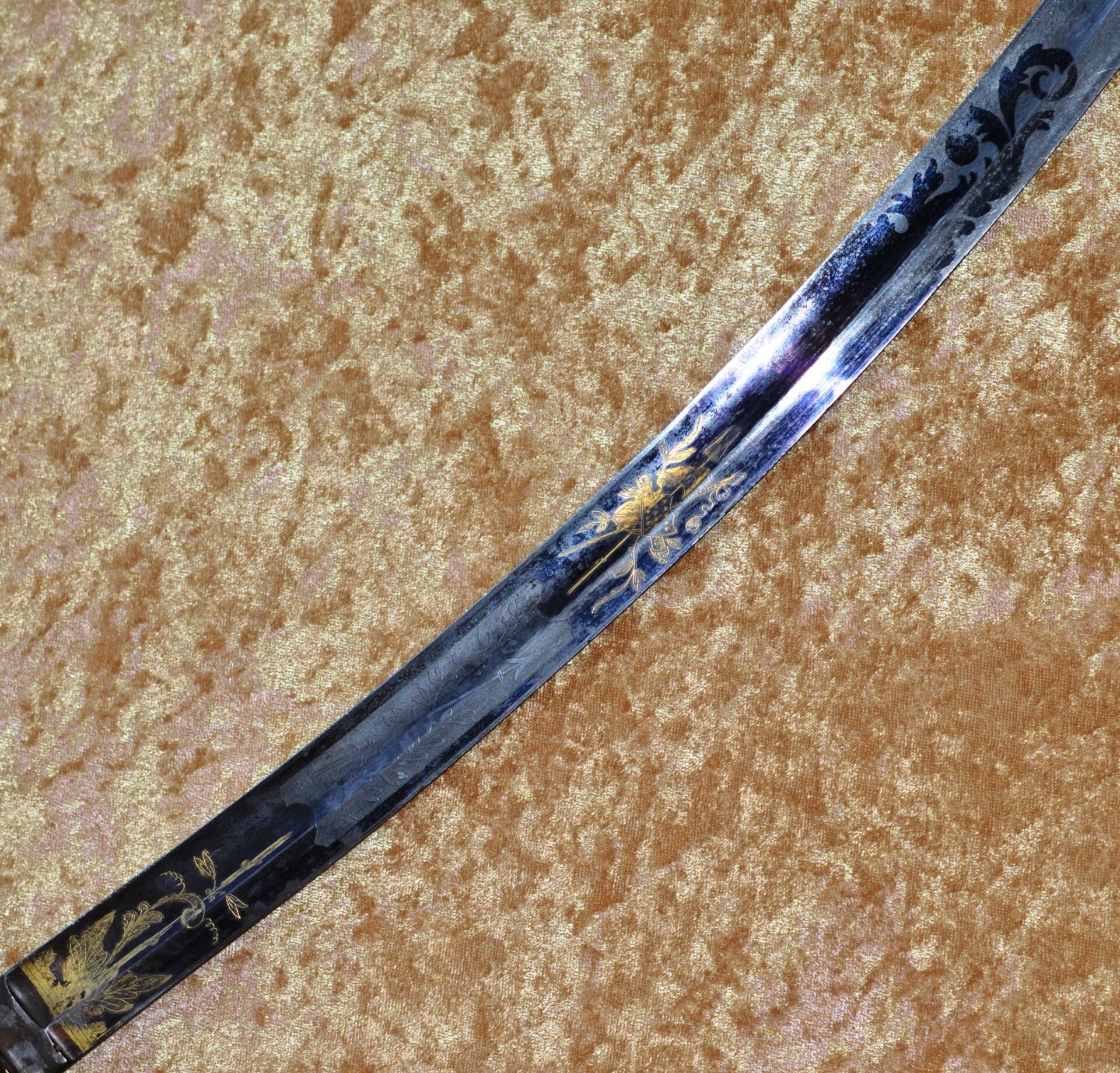
connected to the “floating” eagle-head pommel. Ribbed bone grip. Deeply curved 30″
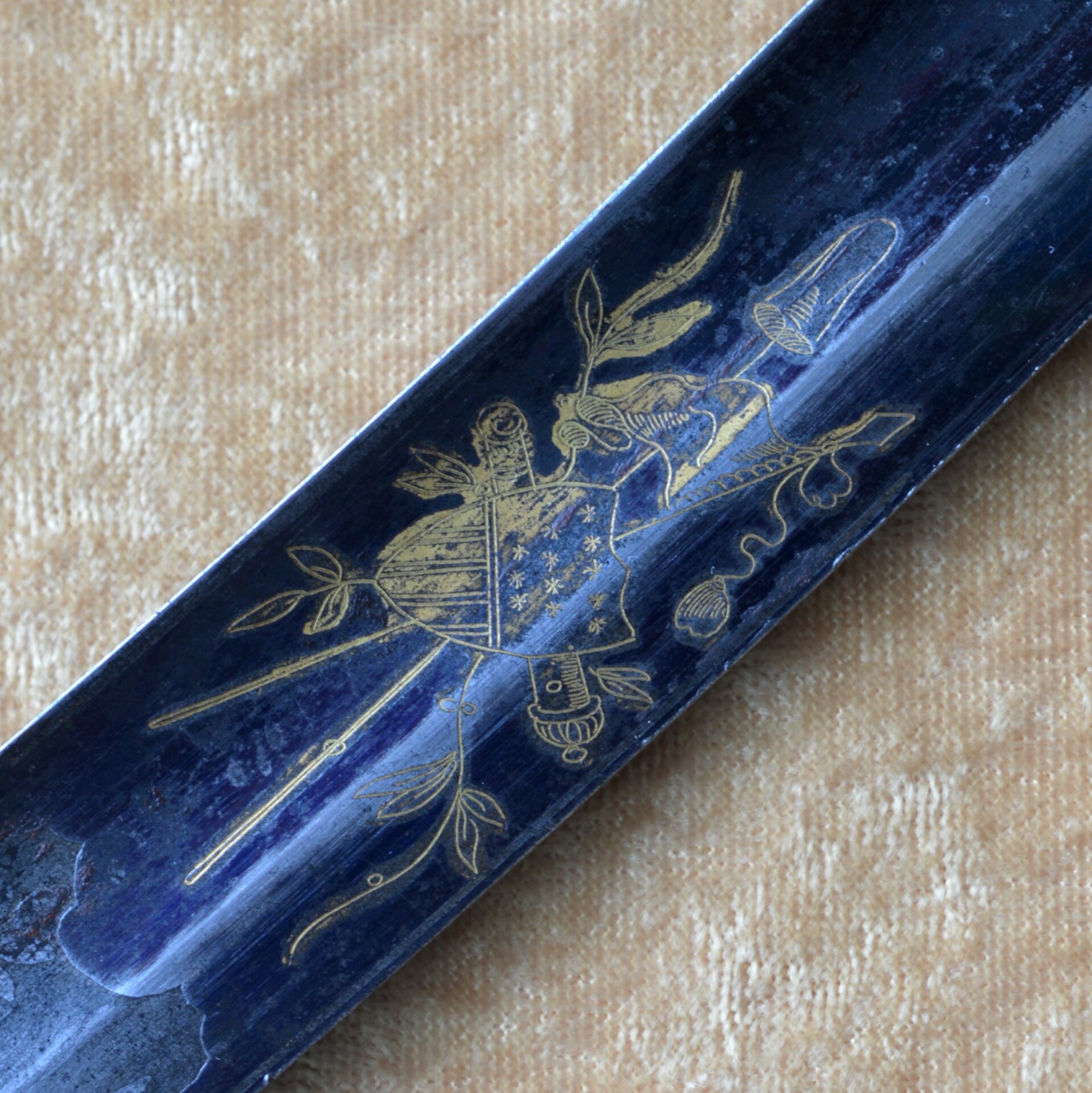
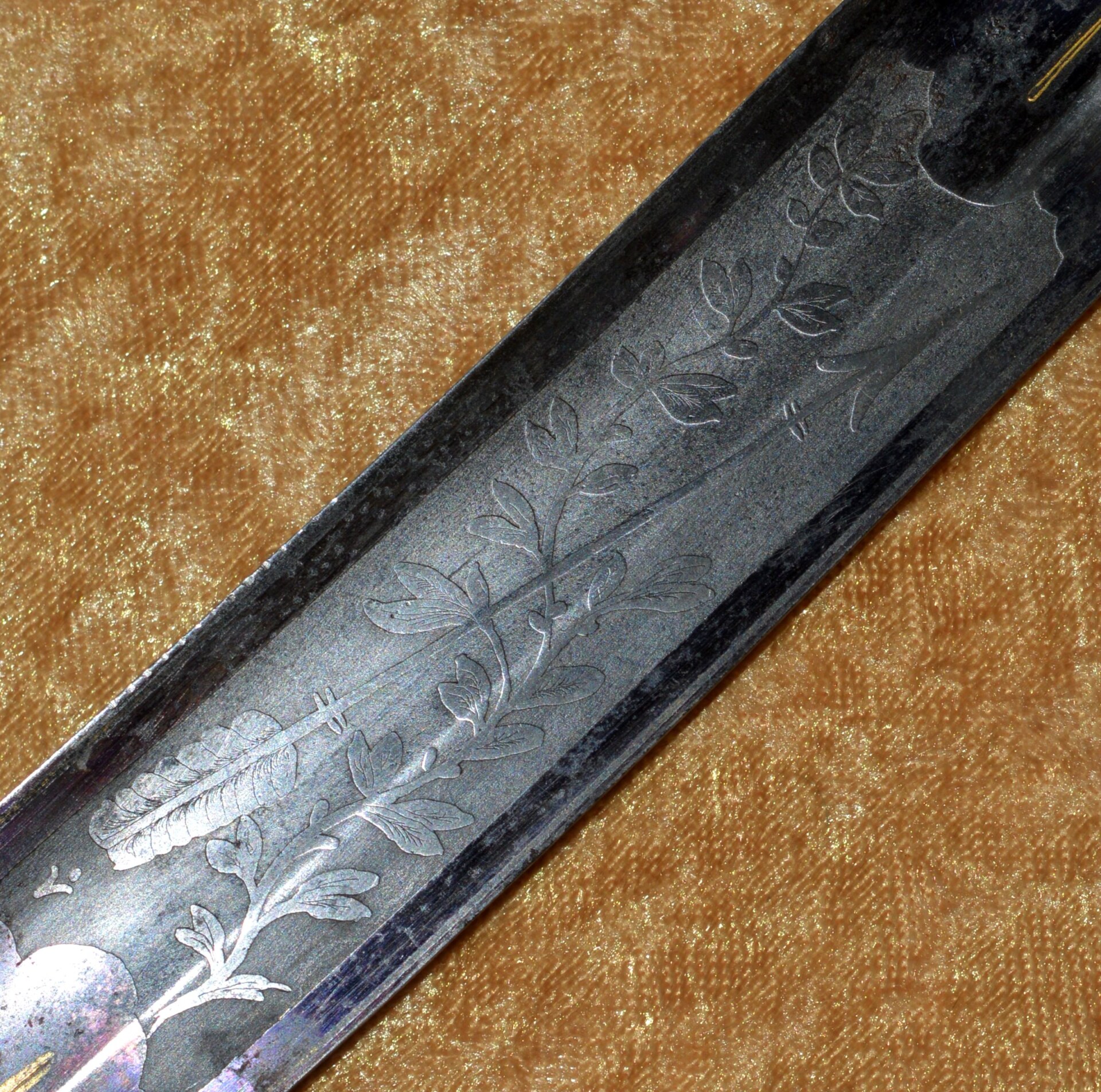
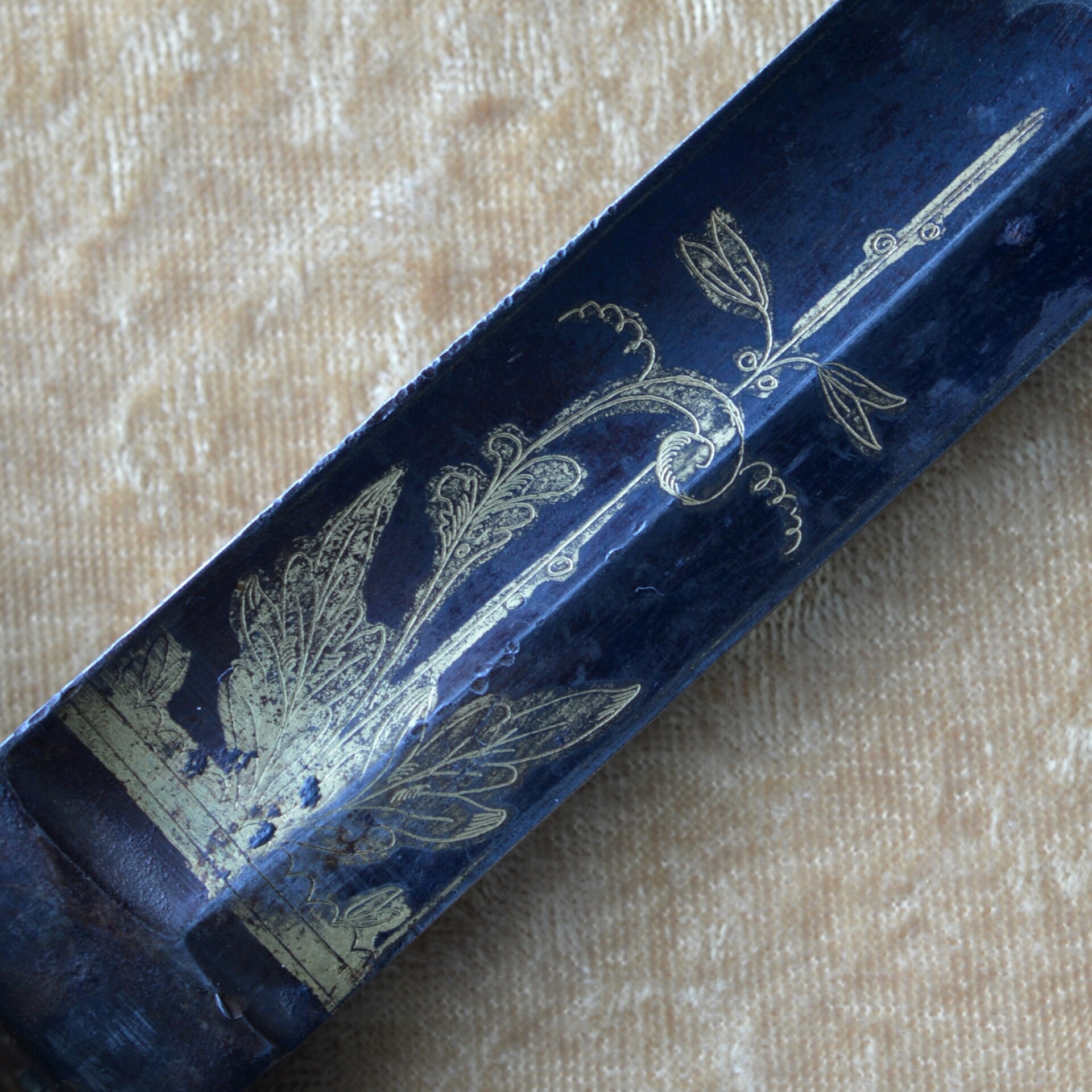
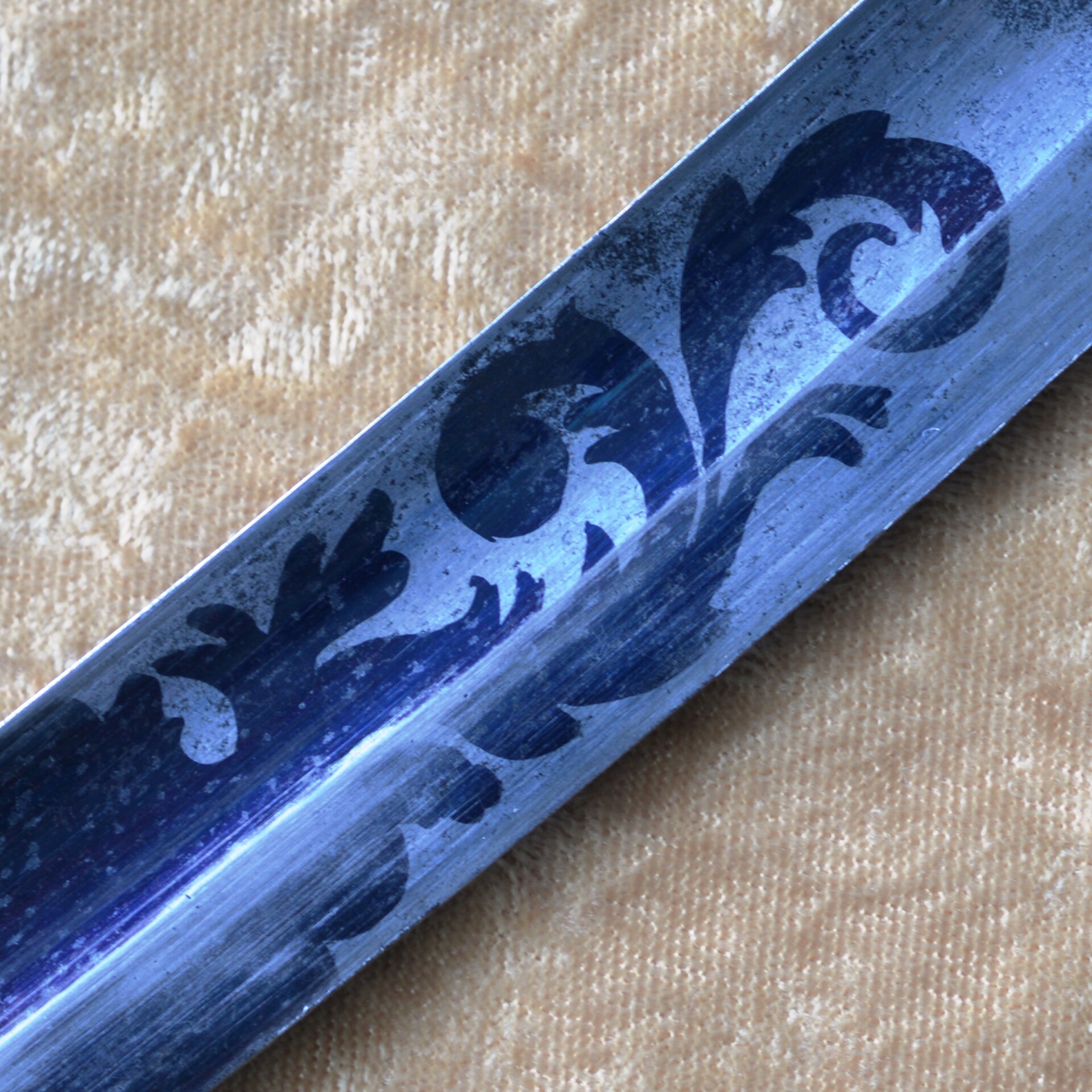
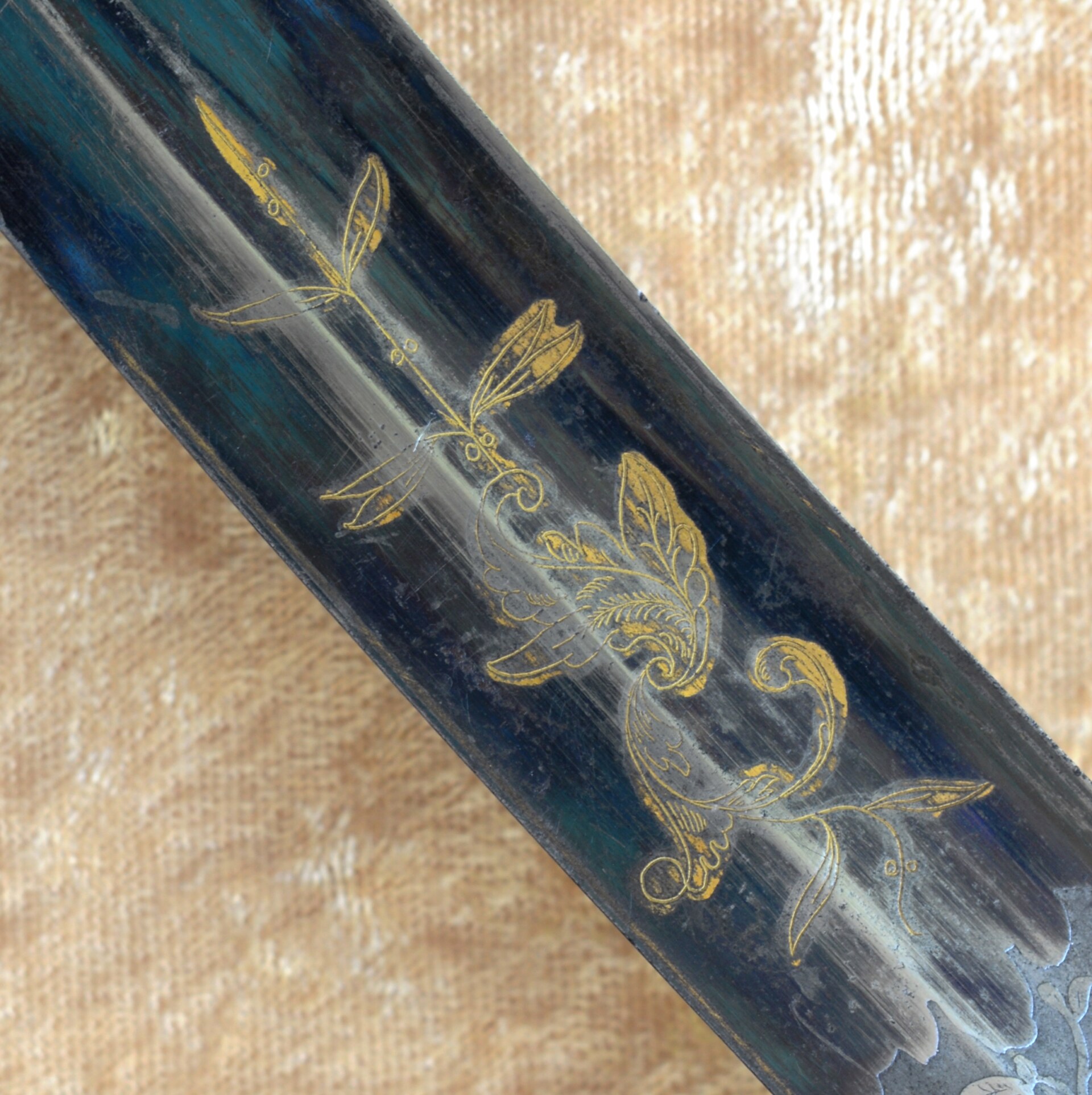
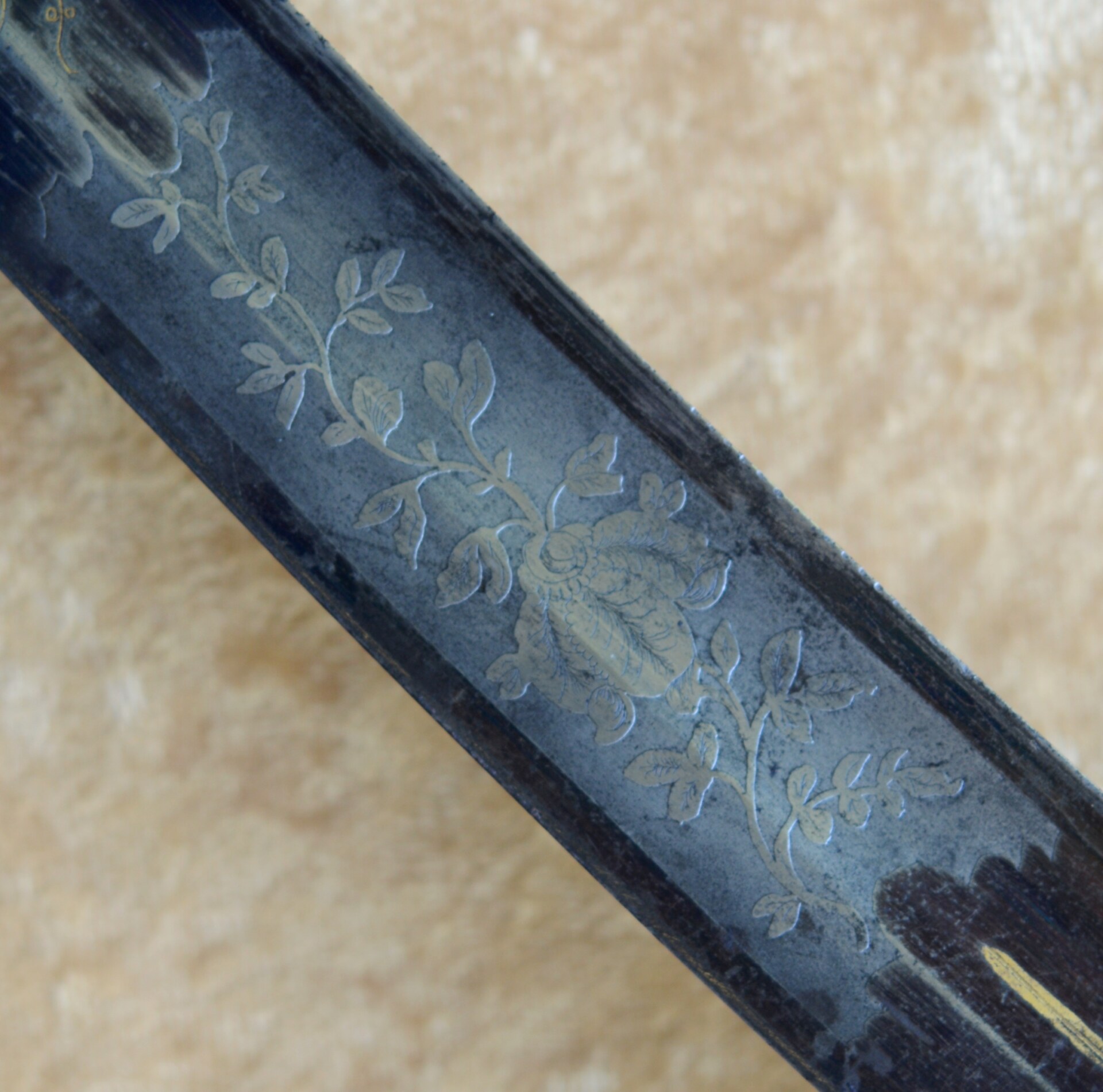
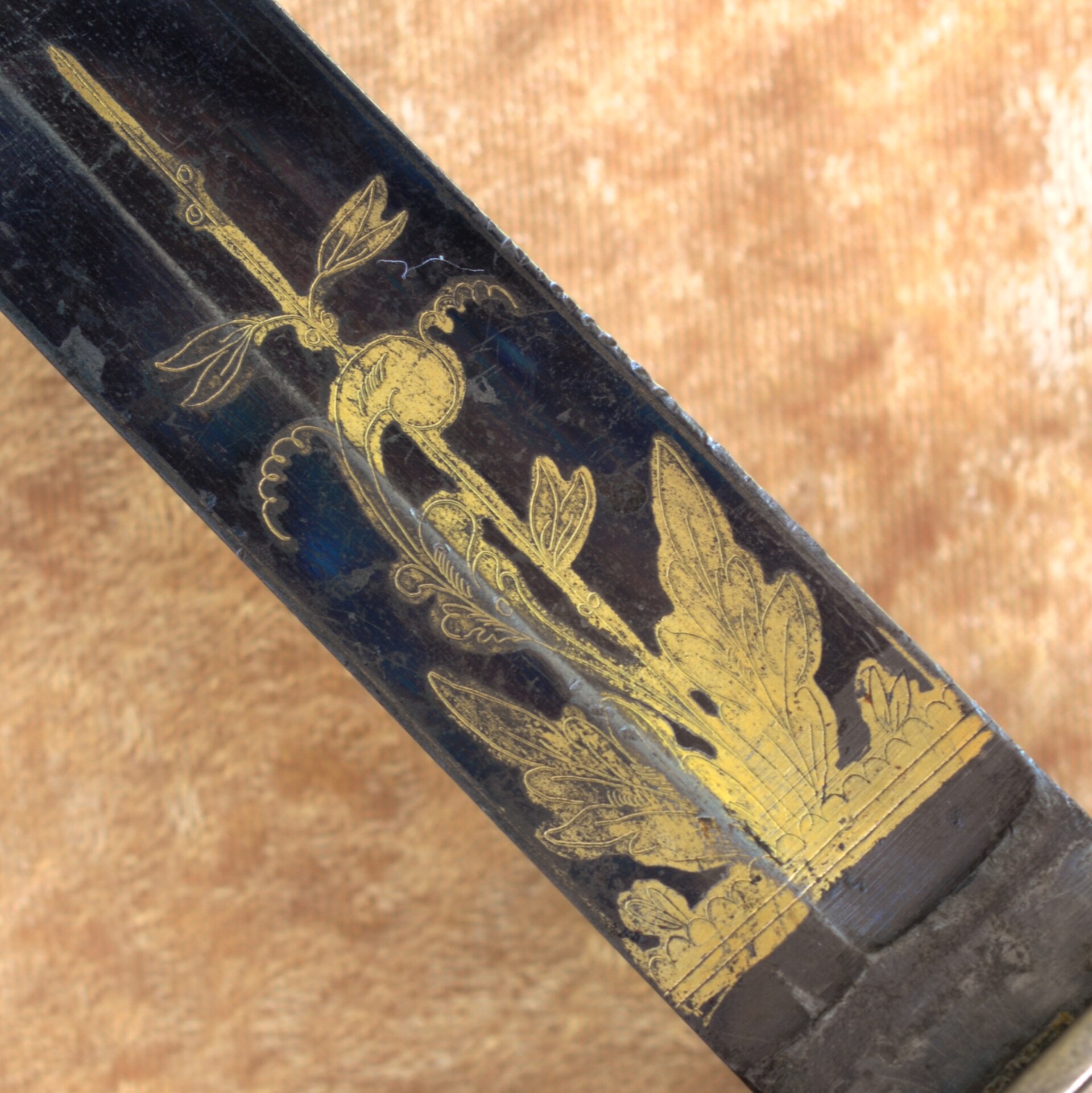
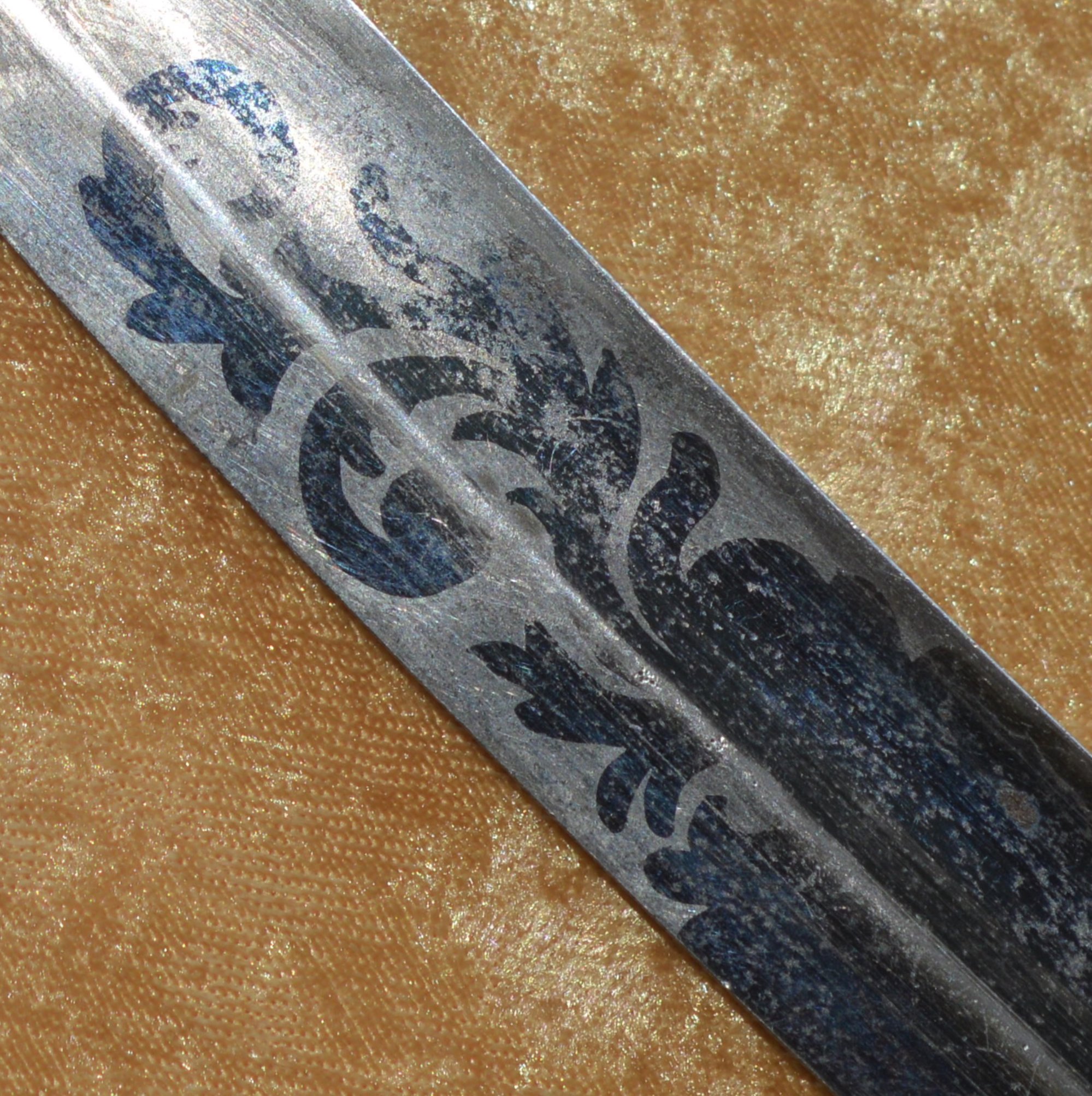
single-edged blade with single fuller; the upper half etched, blued, and gold and silver gilt
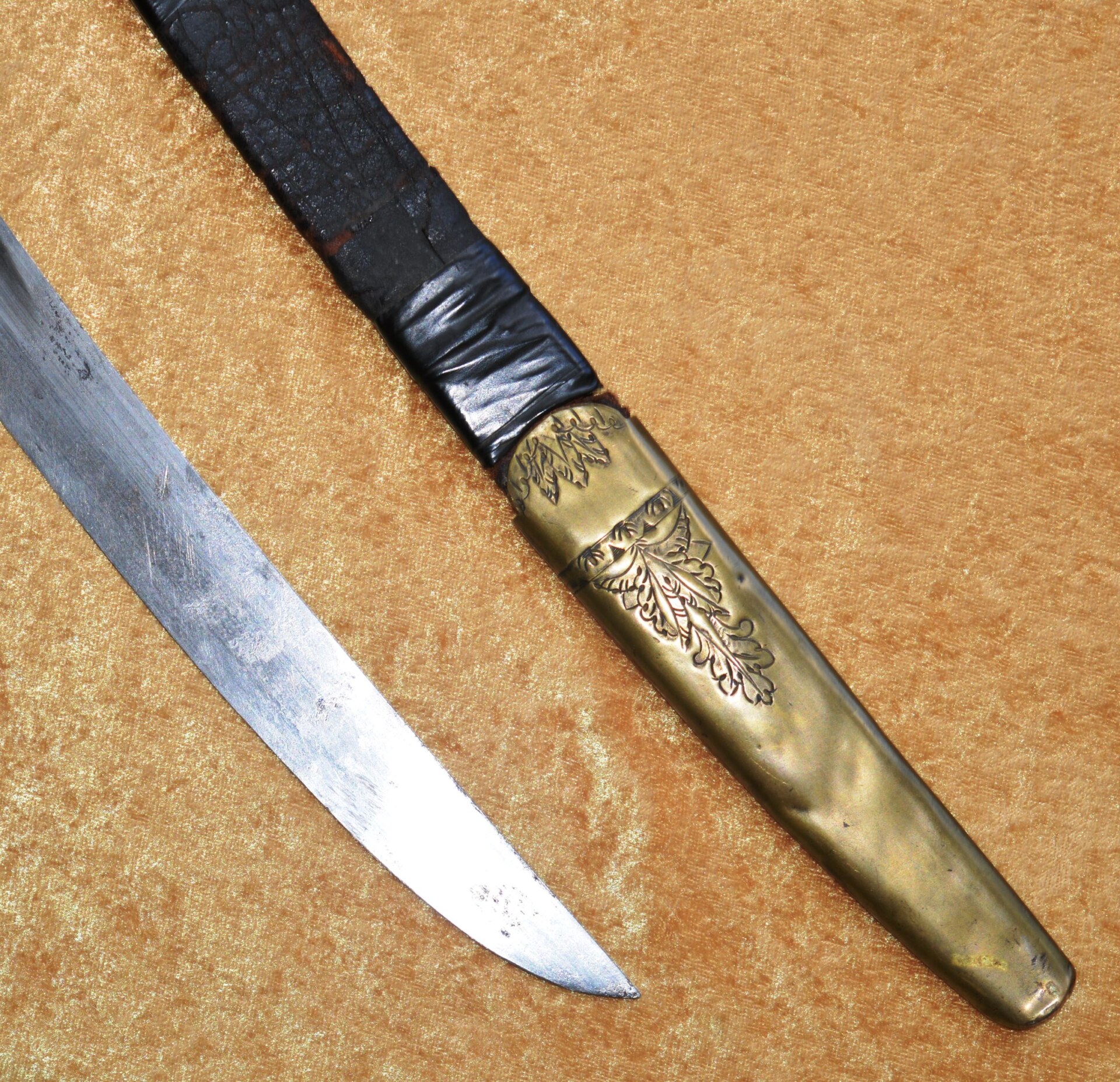
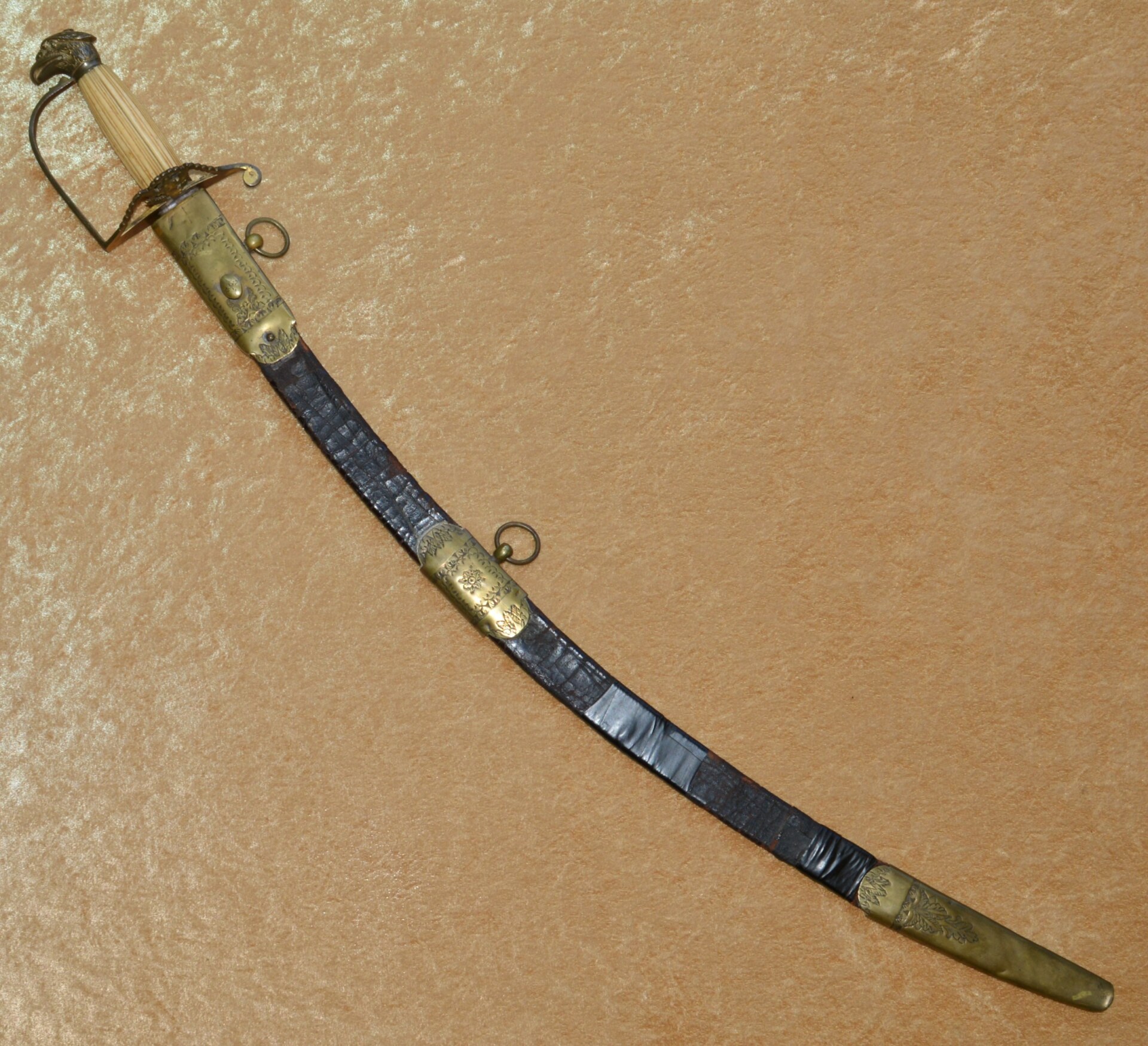
with scrolling foliage, stands of arms, and Federal Shield. Original black leather scabbard
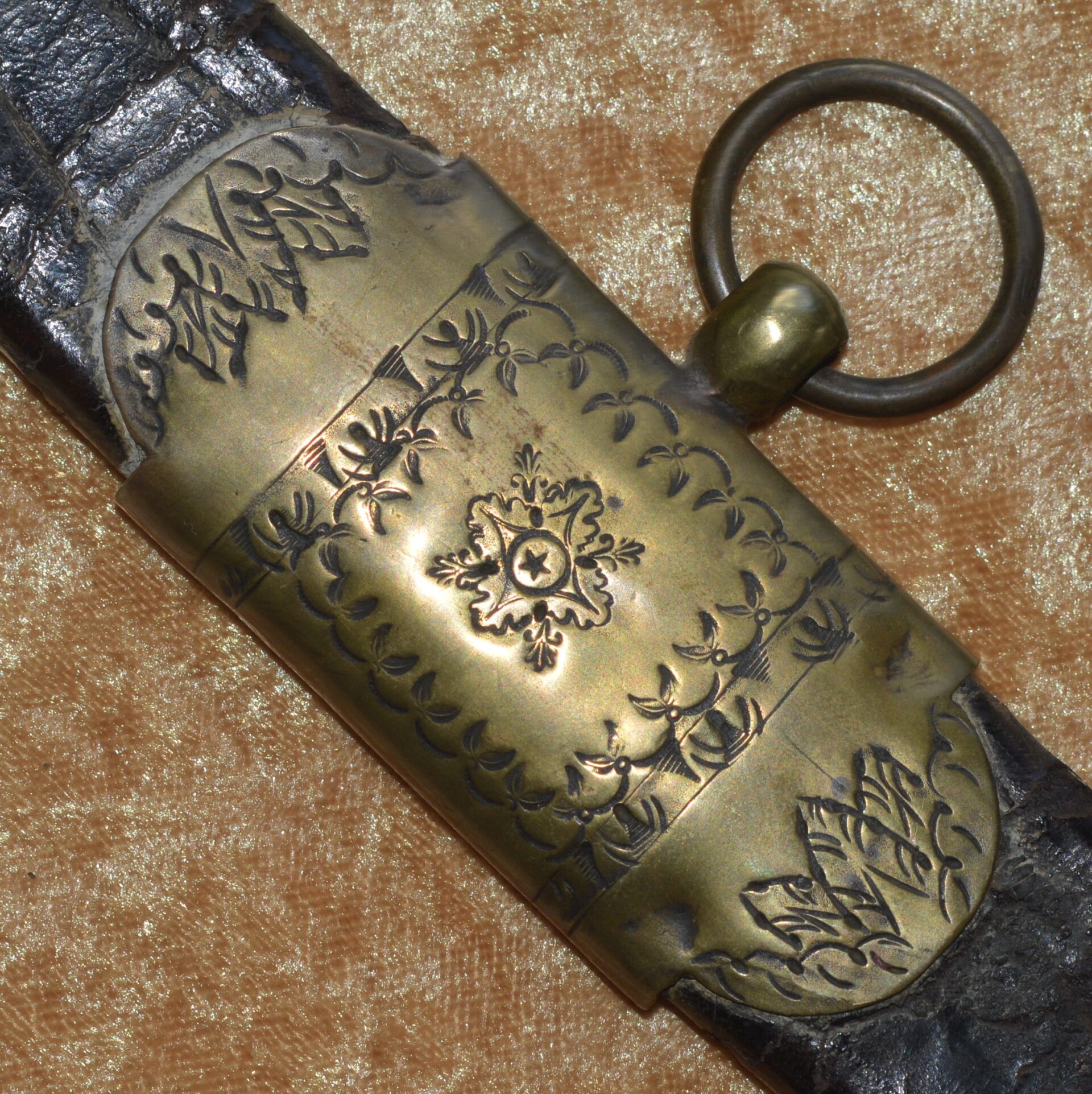
with decorated brass mounts, including long drag, middle band with carry ring, and throat
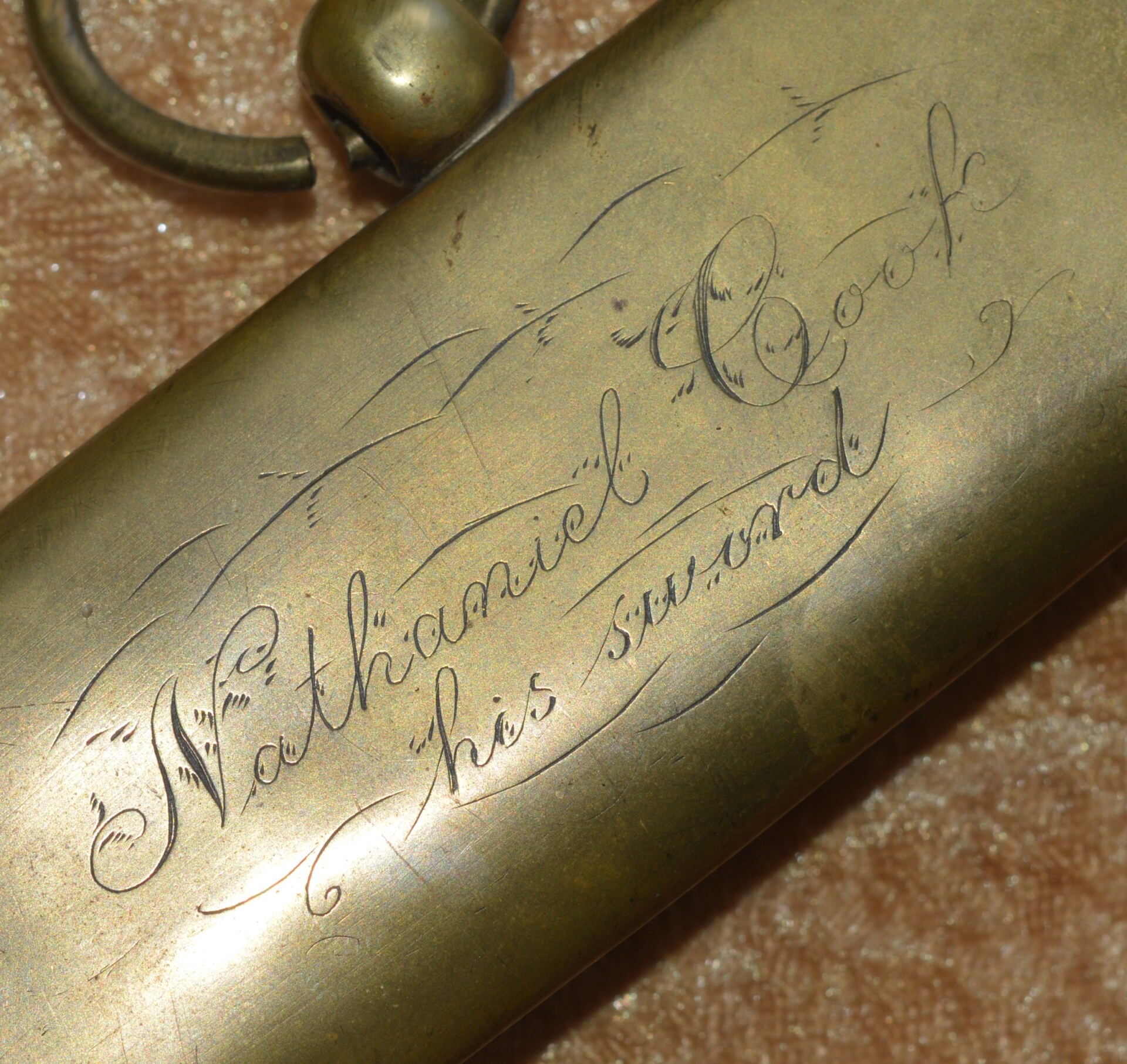
with carry ring and frog stud; the reverse of the throat period engraved “Nathaniel Cook/his
sword” in script. The sword in very good plus condition for its age, retaining approximately
90% of its original bright bluing and gilding (bluing with some spotting); the guard slightly
loose and retaining approximately 30% of its original gilding, primarily in protected areas;
grip smooth and defect free. Scabbard leather is dry and flaking, with electrical tape repairs
and the drag separated; mounts very good. Overall length 35 1/2″, not including scabbard.
Though unmarked, this sword is almost certainly the work of Birmingham maker Solomon
Jackson (active 1803-1815). This sword clearly shows the close economic ties between
Great Britain and the fledgling United States on the eve of the War of 1812. Sword with
identical counterguard illustrated in “The American Eagle Pommel Sword, The Early
Years 1794-1830″ by E. Andrew Mowbray, p. 109, fig. 13.B
Nathaniel Cook was born in Orange County, Virginia around 1776. His family later moved
to Kentucky, and in 1802 he married Honour Madden in Ste Genevieve District, New
France, which became part of the Missouri Territory after the Louisiana Purchase. He
served in the War of 1812 as a Major in the Missouri Rangers under Henry Moses Dodge.
Cook was appointed as Colonel around 1816 and commanded the 6th Regiment. In 1820
he was a member of the Missouri Constitutional Convention. He made out his will on 26
August, 1852 in Washington County, Missouri and is thought to have died shortly thereafter.
Positively identified early American swords are quite scarce, especially with rare Missouri
Territory history. Well worth having the leather restored on the scabbard.
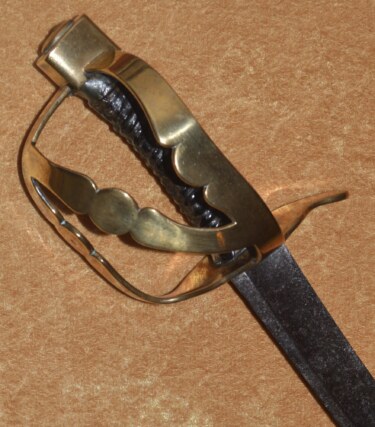 Rare French M1790 Chasseurs a’ Cheval Trooper’s Saber
 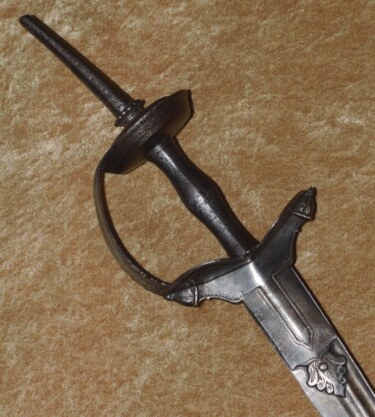 Maratha (Indian) Firangi Sword, 17th/18th C
 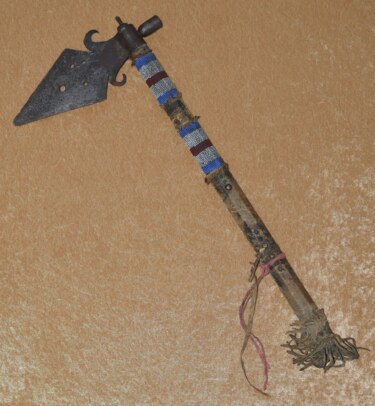 Native American Spontoon Pipe Tomahawk, Early 19th C
 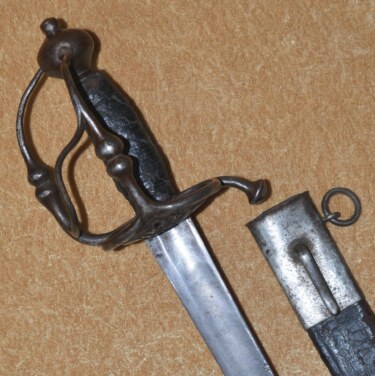 North European “Walloon” Cavalry Sword, Mid-17th C