
Description
German immigrant Louis Froelich settled in Wilmington, North Carolina on the eve of the Civil War. In September, 1861, he established the Wilmington Sword Factory in partnership with Hungarian-born Bela Estvan. Shortly afterwards they changed the name to the Confederate States Arms Factory to show their devotion to the fledgling nation and to indicate that they made more than just swords. In March, 1862, Froelich ended his partnership with Estvan. In February of 1863, fire destroyed the Wilmington facility and in March of that year he announced that the armory was being relocated to Kenansville, North Carolina. The new Kenansville factory was raided in July, 1863 by 650 horsemen of the 3rd New York Cavalry, which reportedly destroyed “some 2500 sabers and large quantities of saber bayonets, bowie knives, and other small-arms”. But Froelich was undeterred and went back to work, continuing to make arms for both the State of North Carolina and the Confederacy. It is estimated that Froelich manufactured as many as 12,000 cavalry sabers of several different styles.
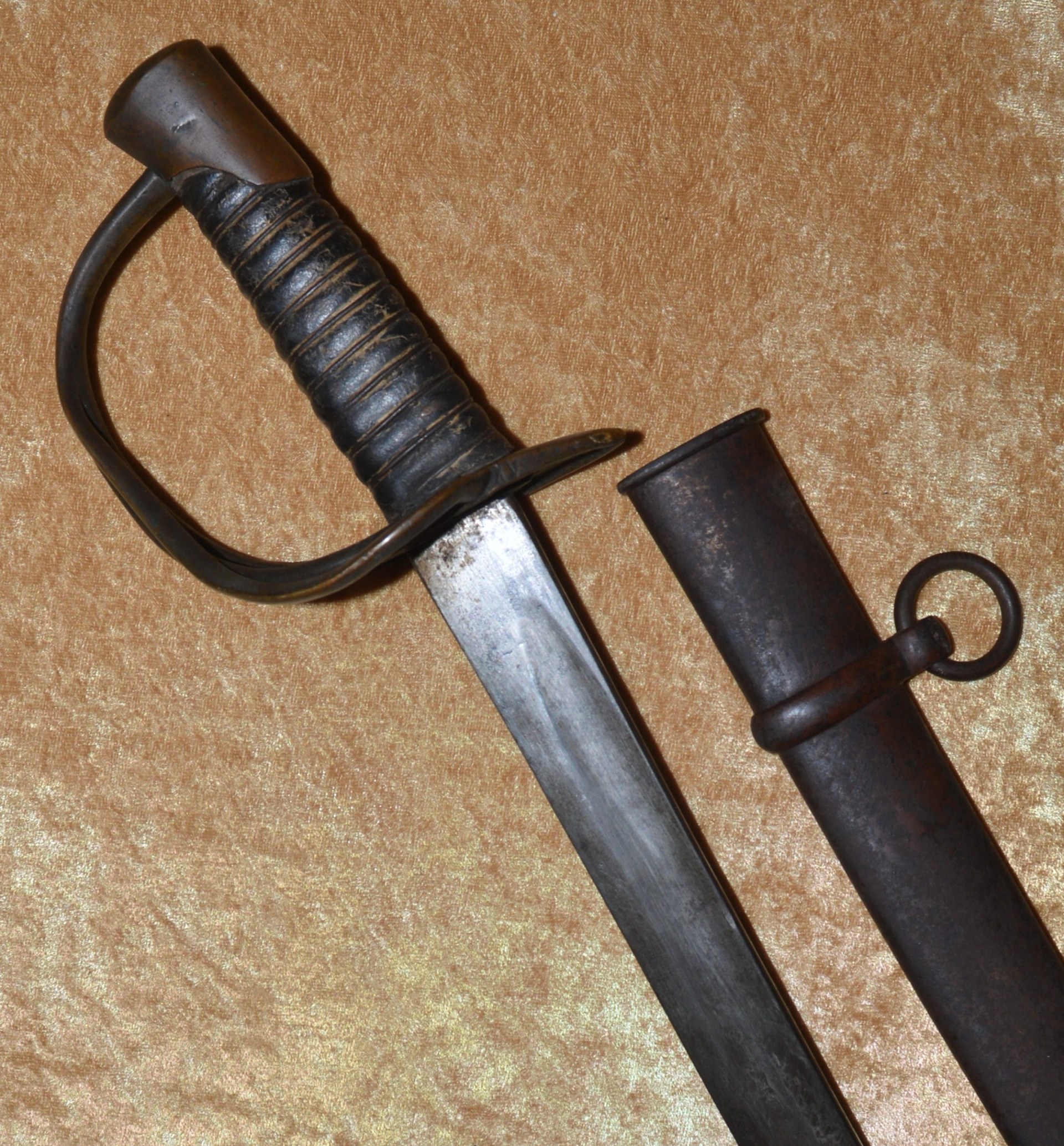
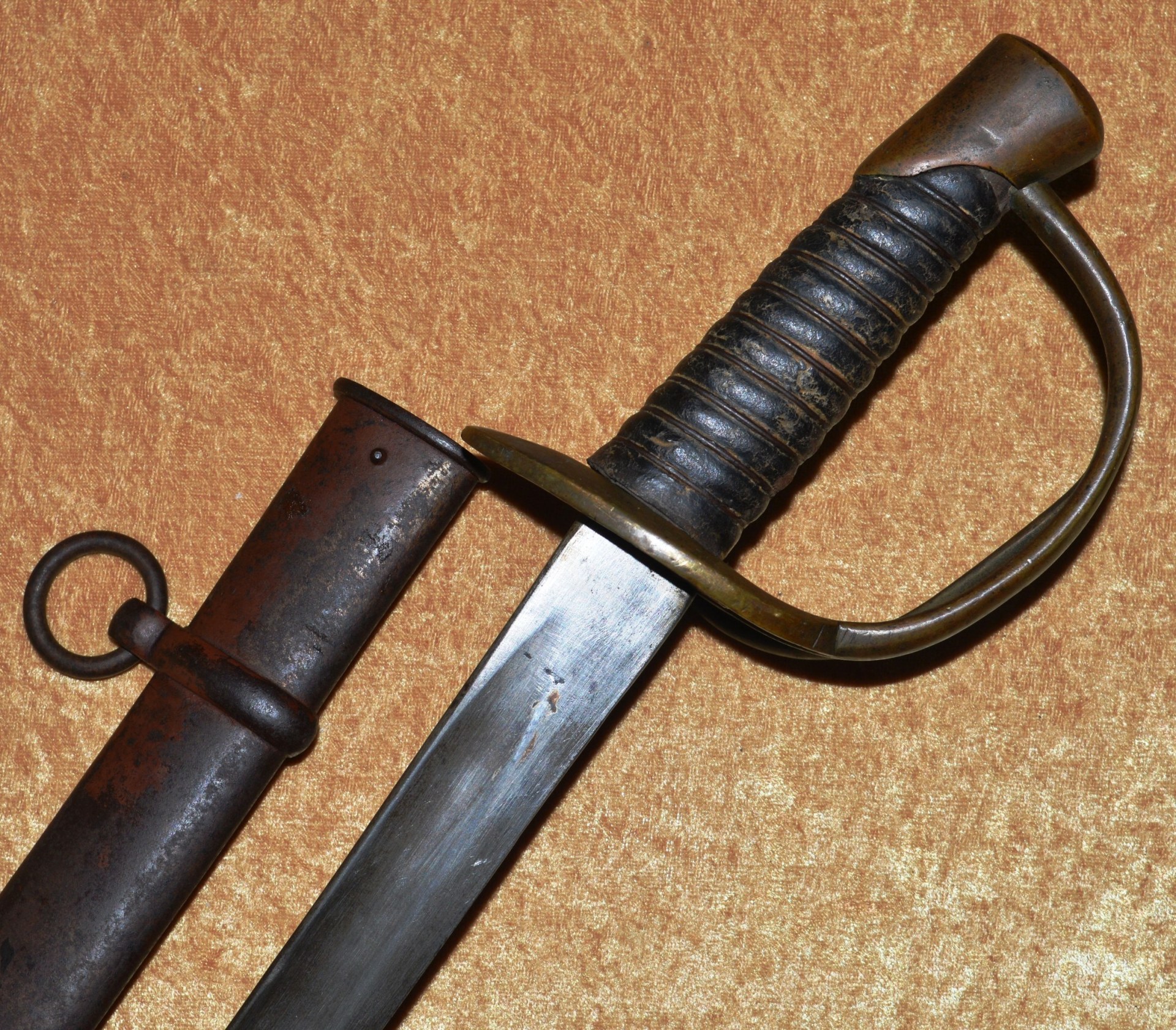
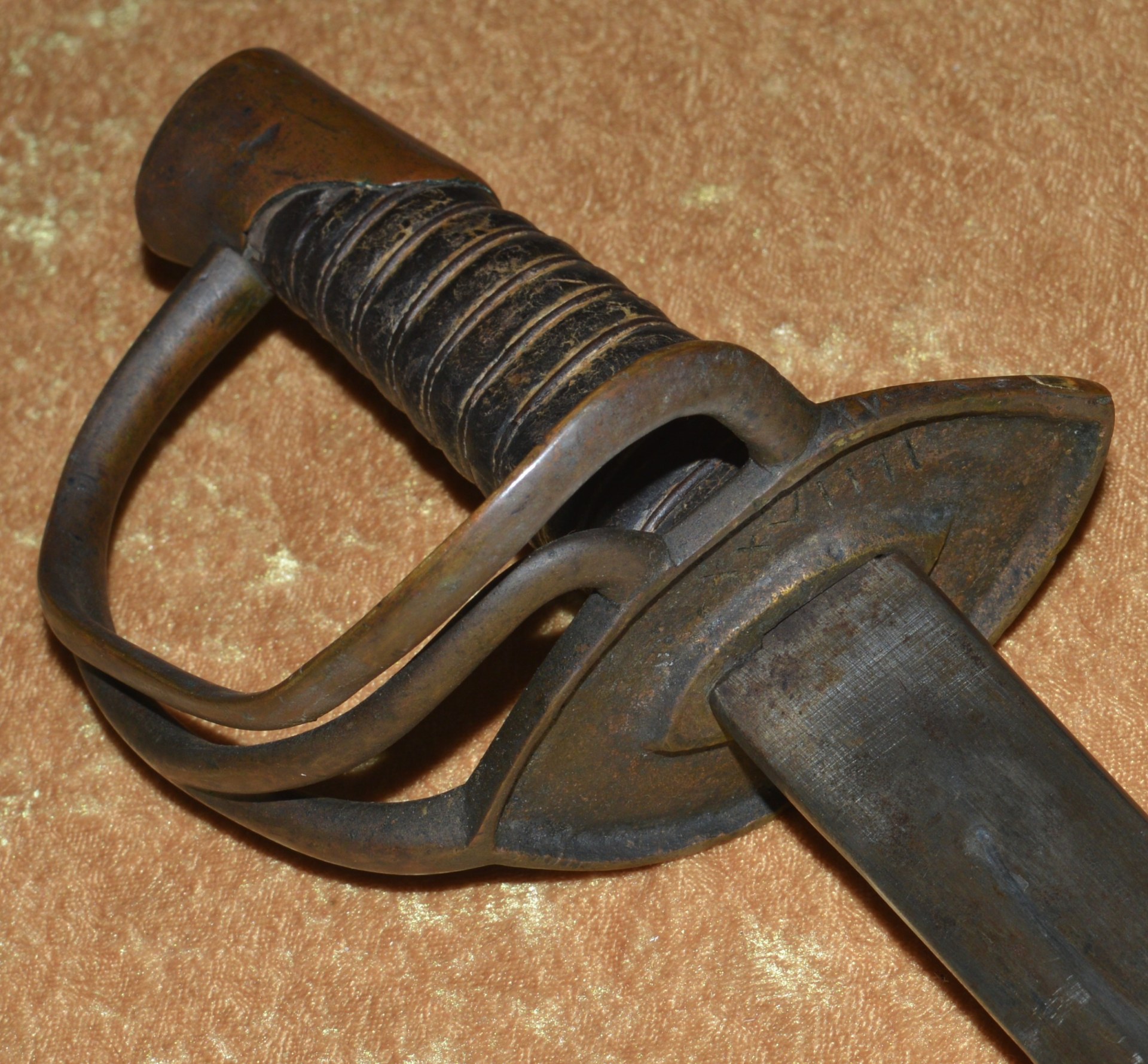
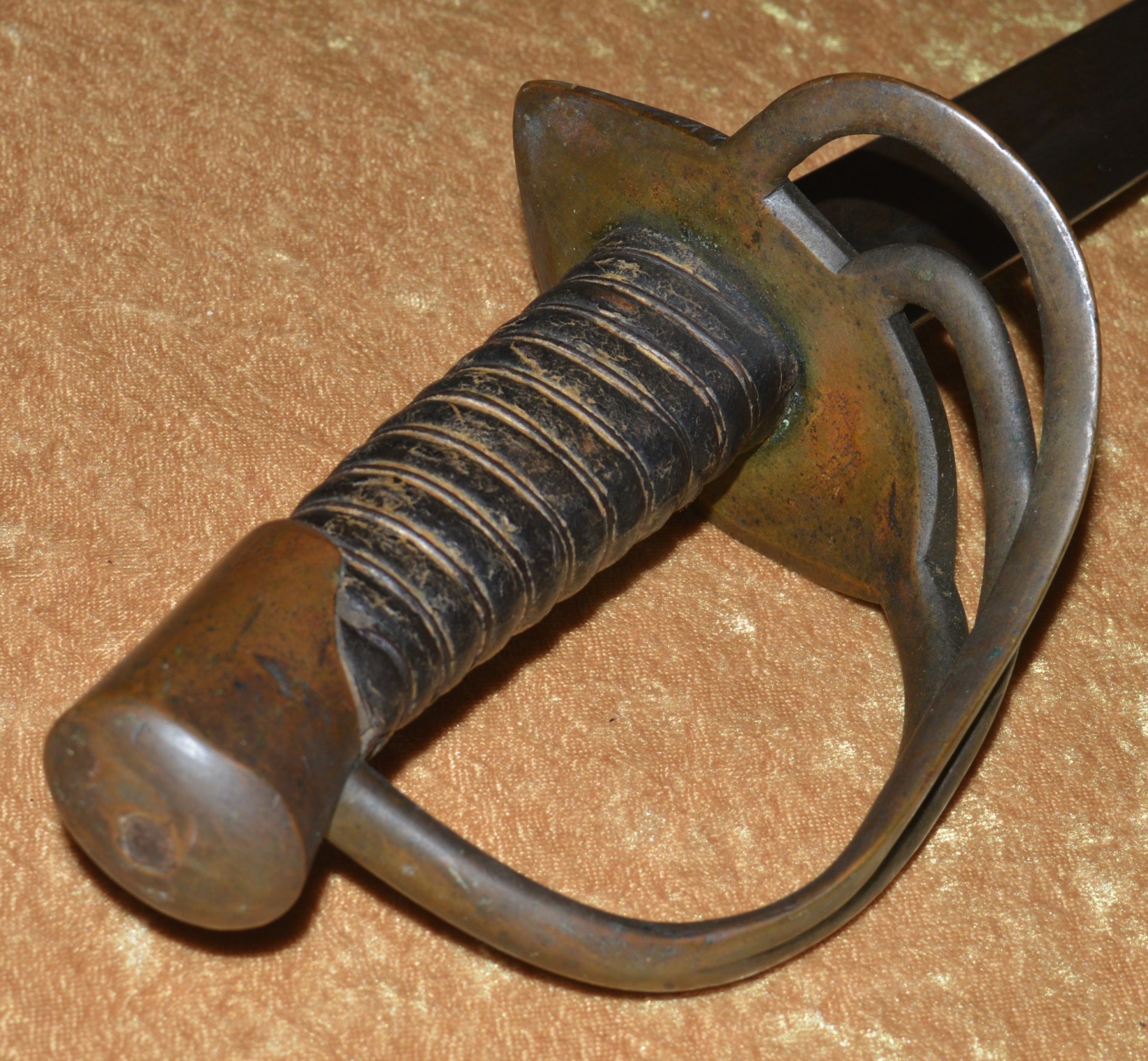
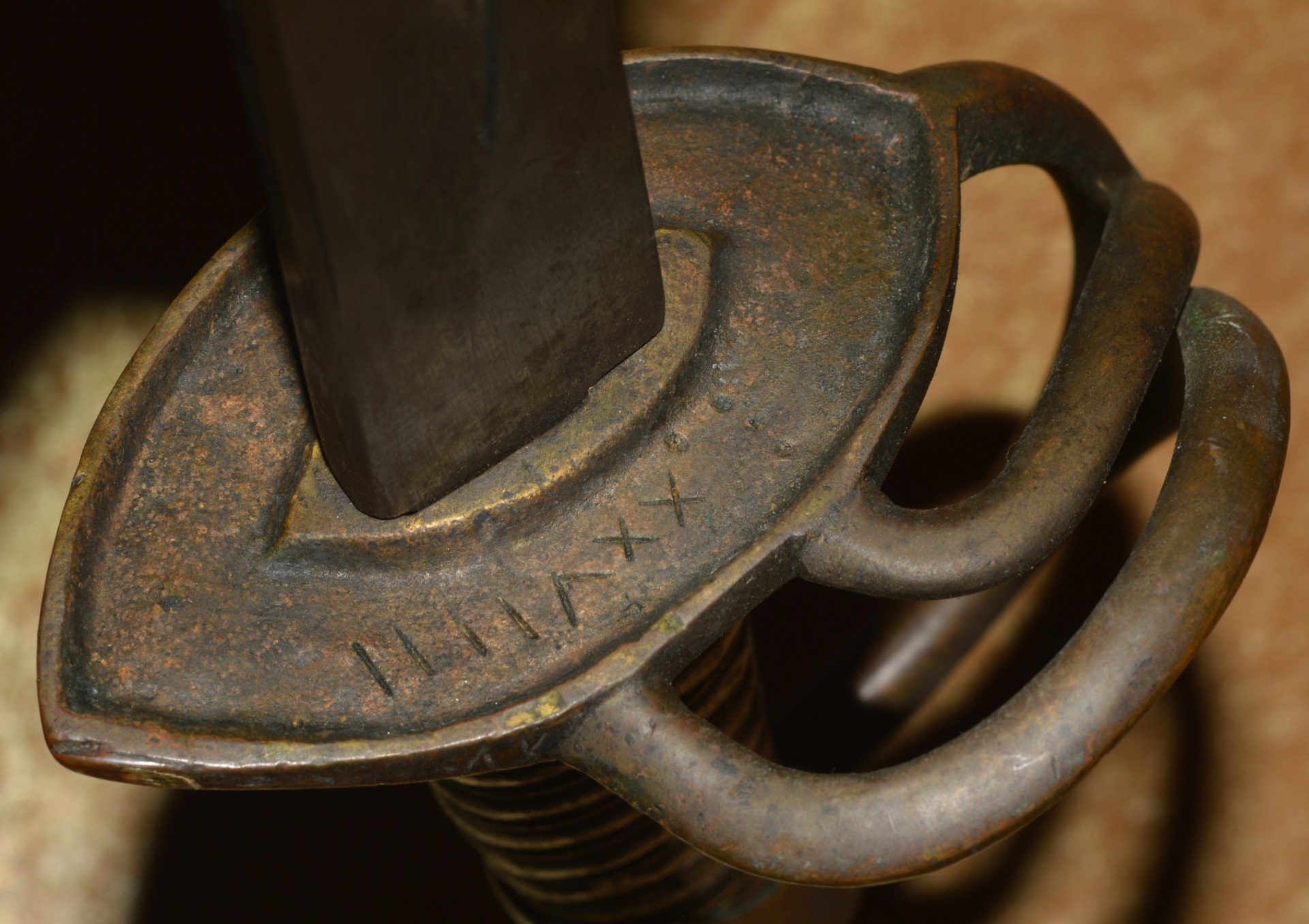
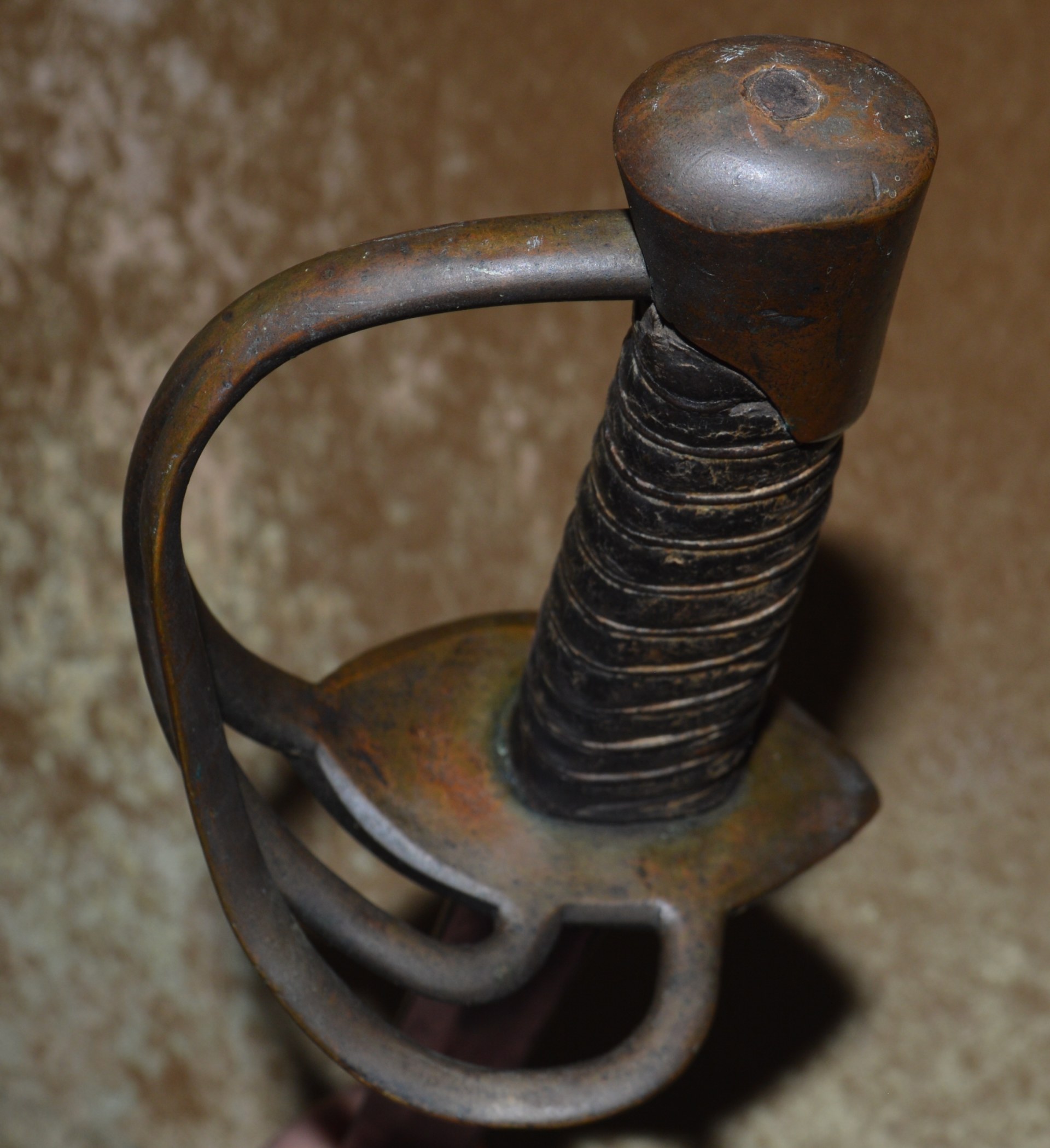
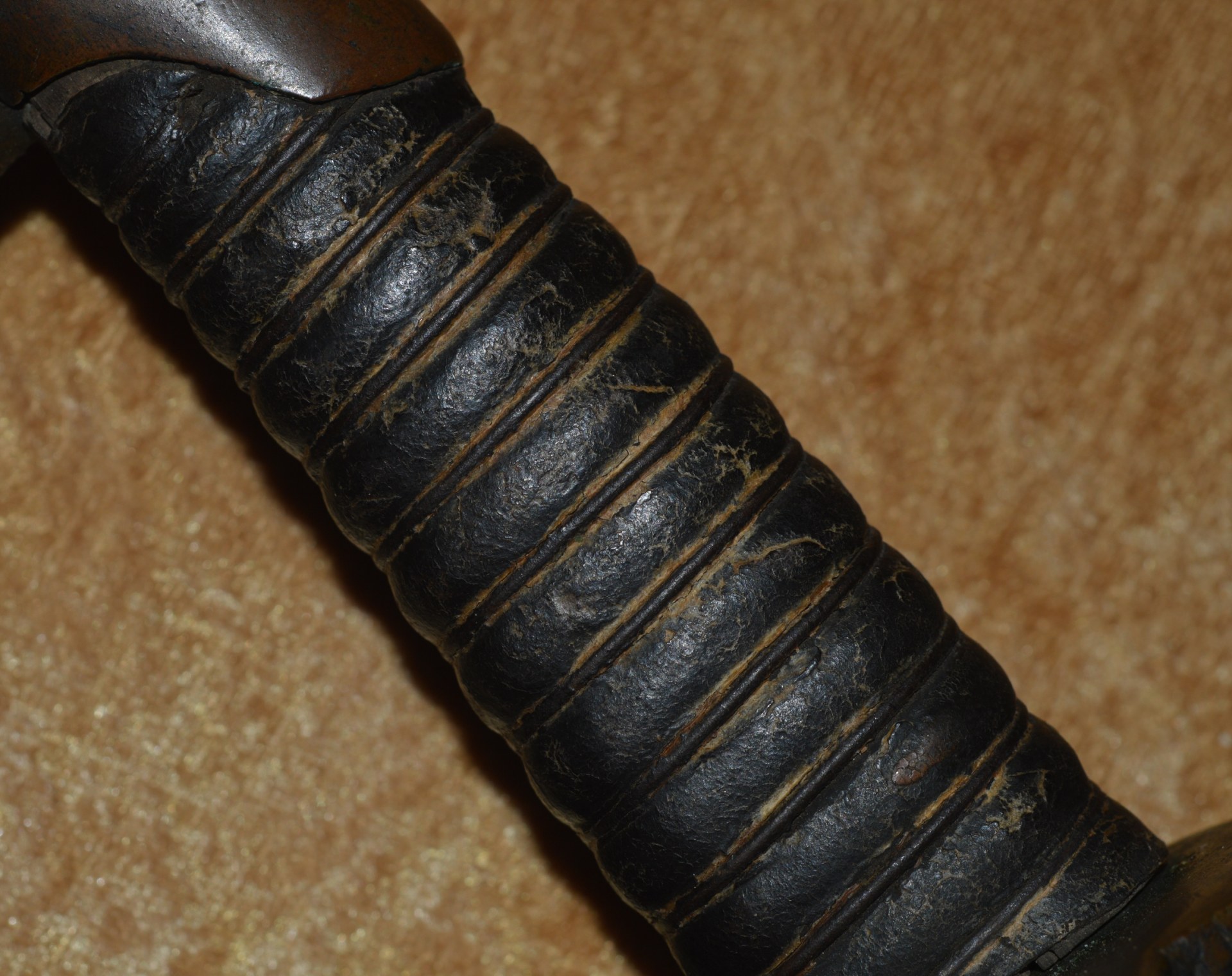
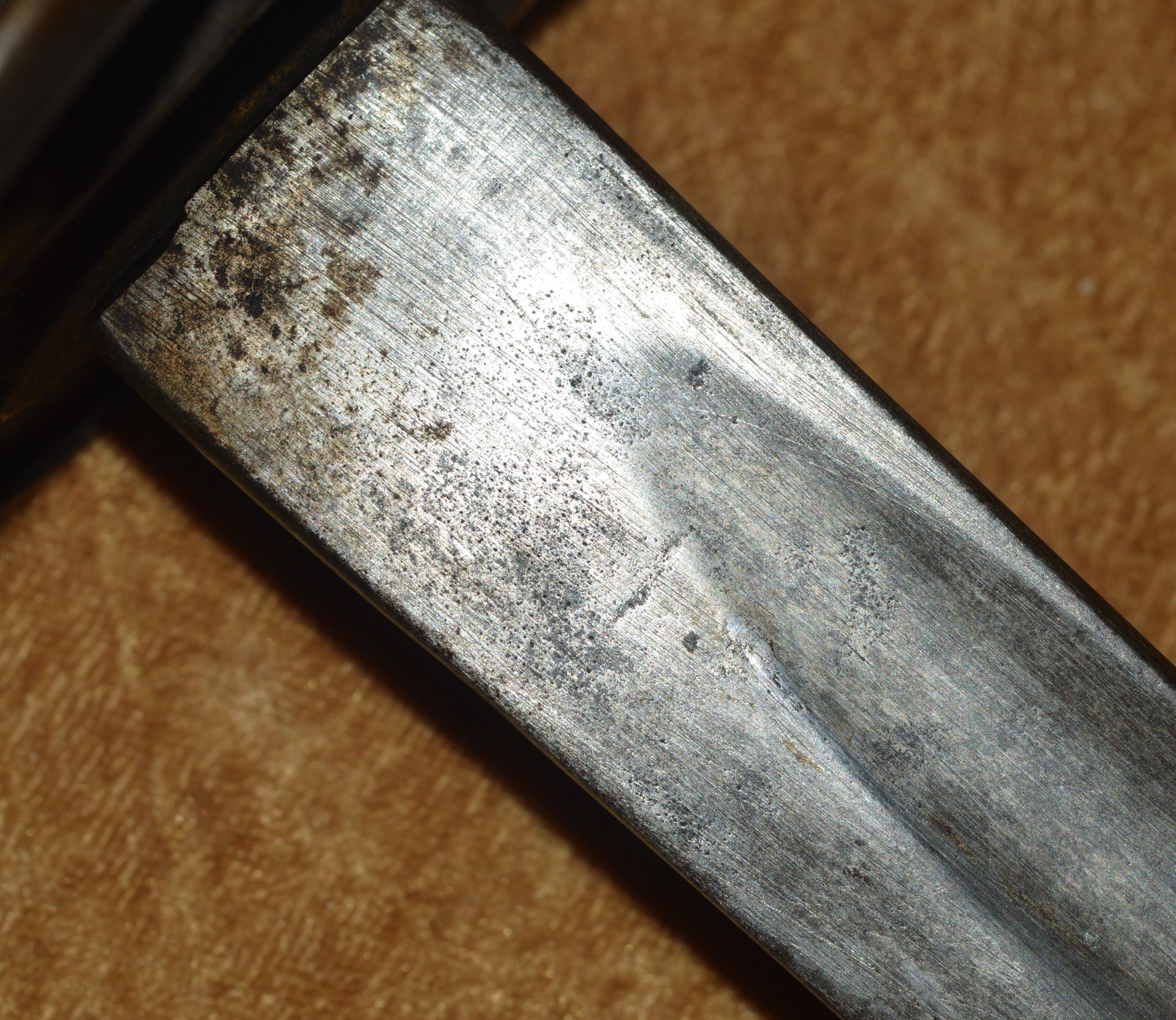
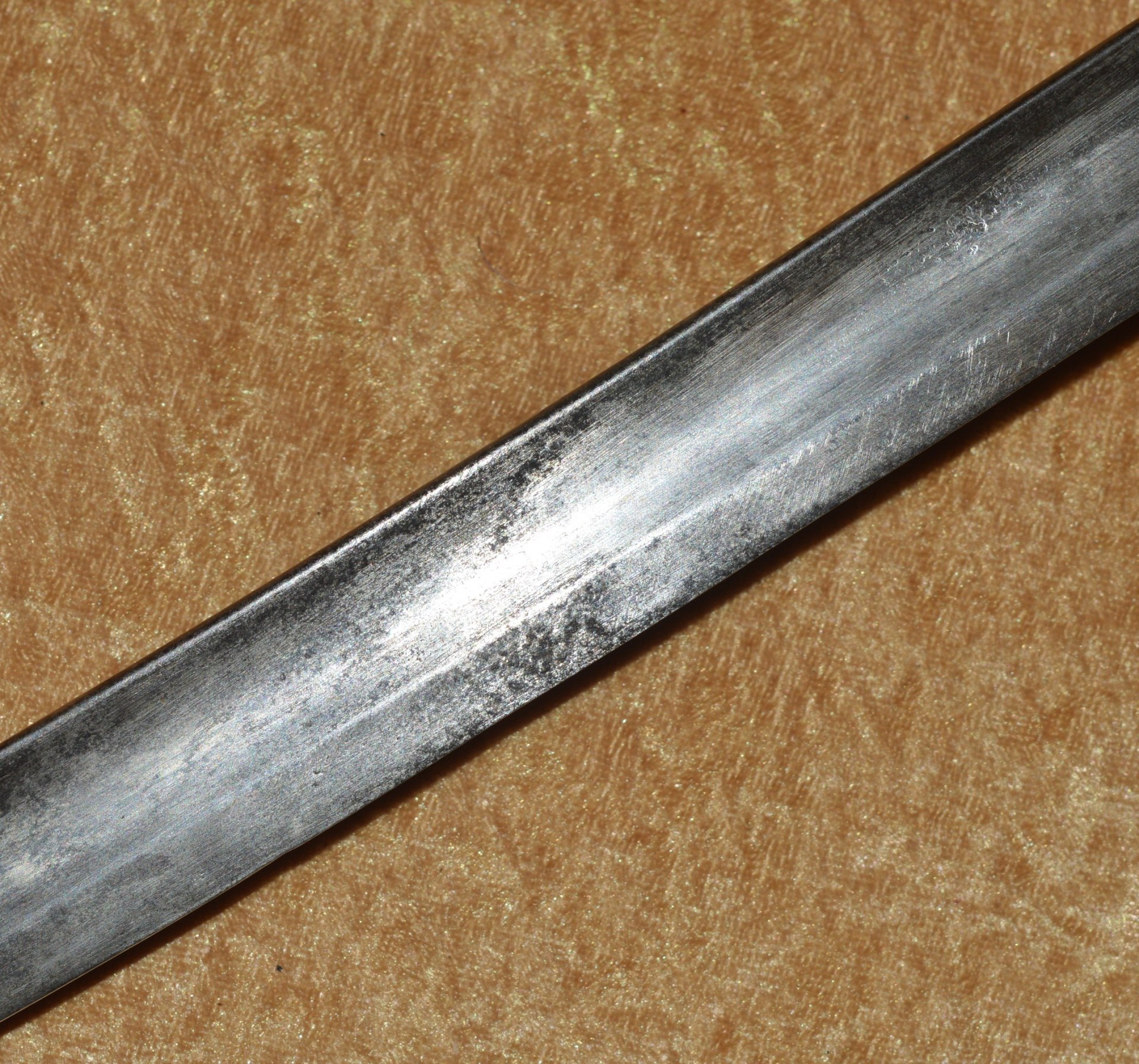
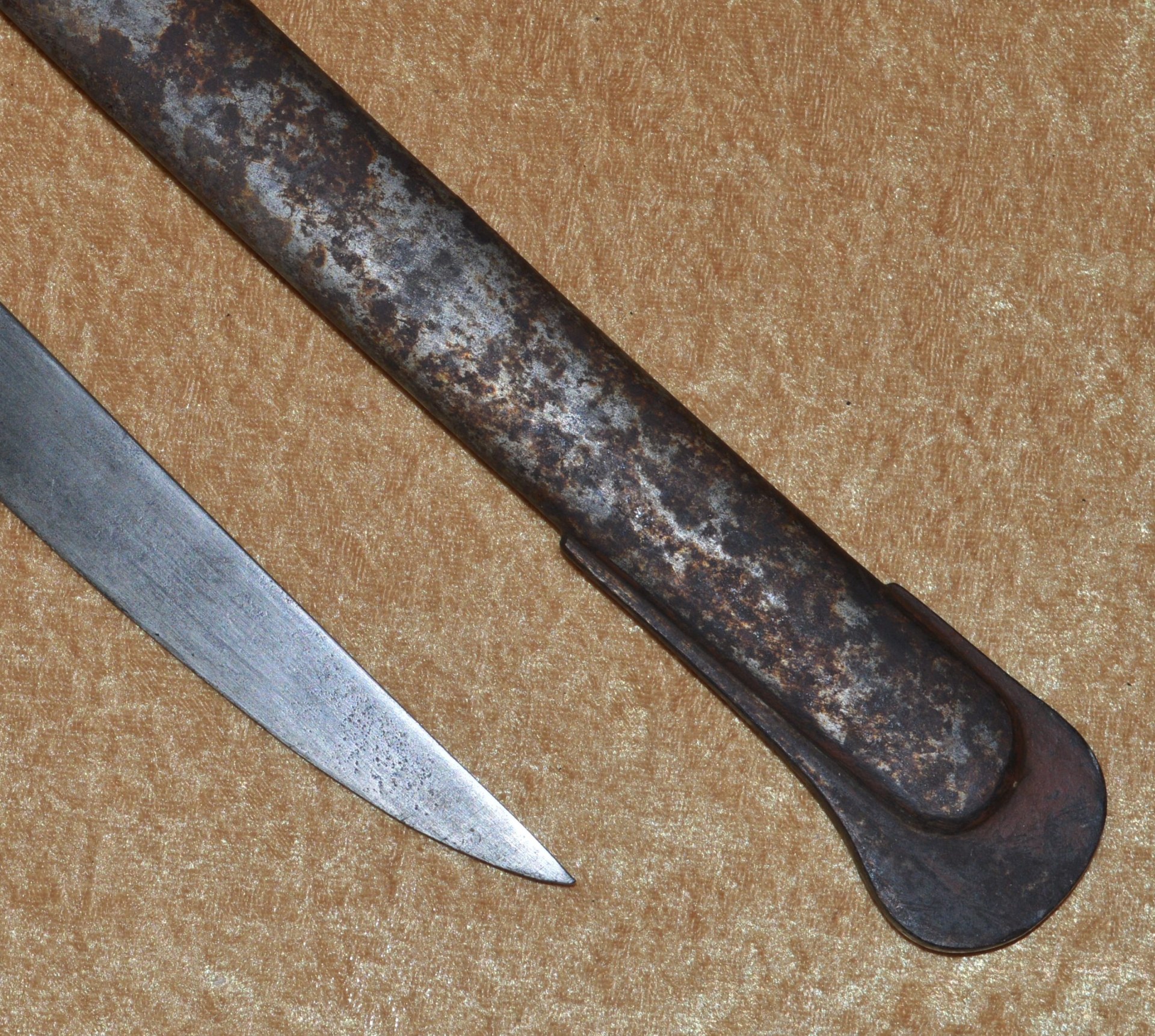
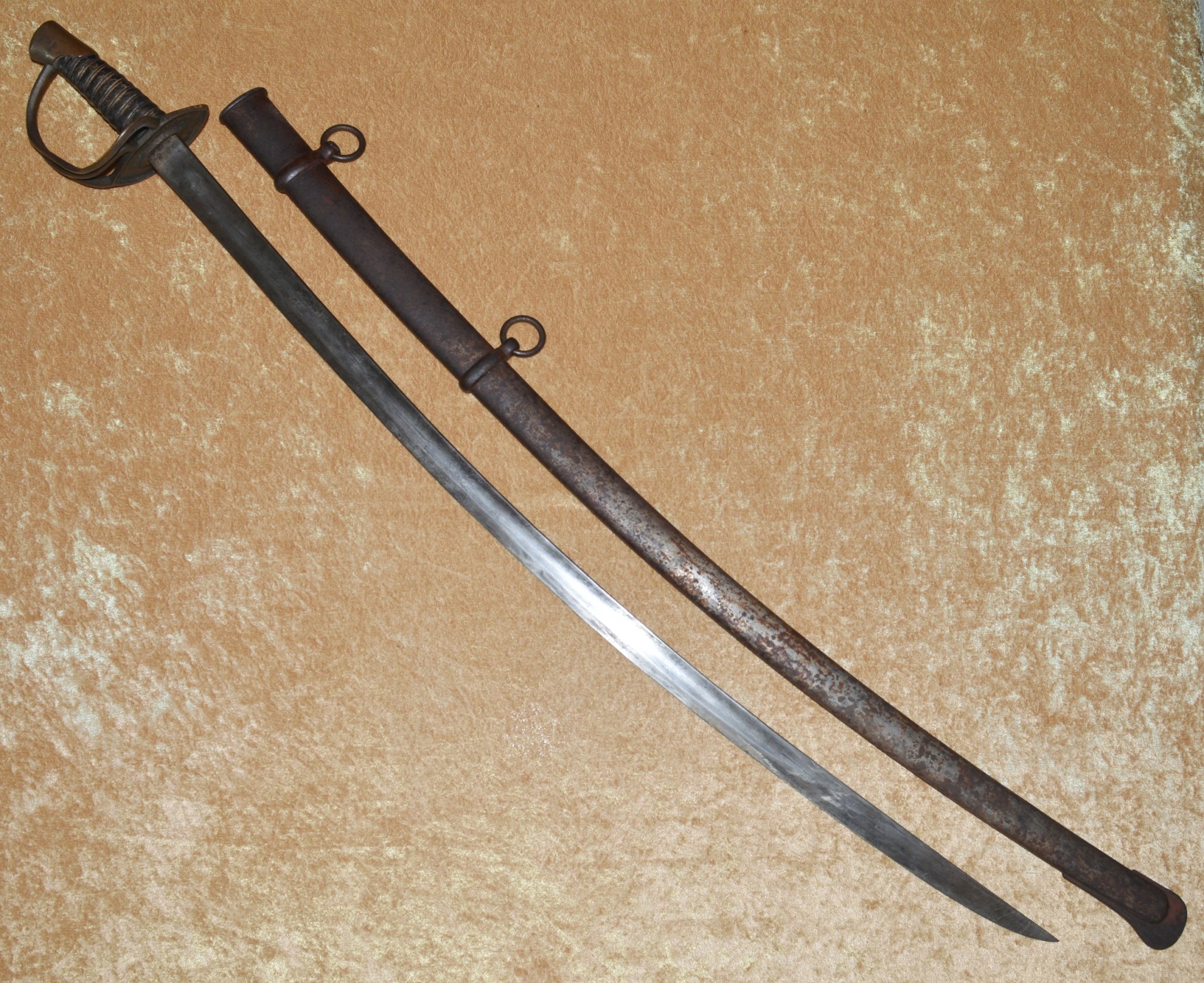
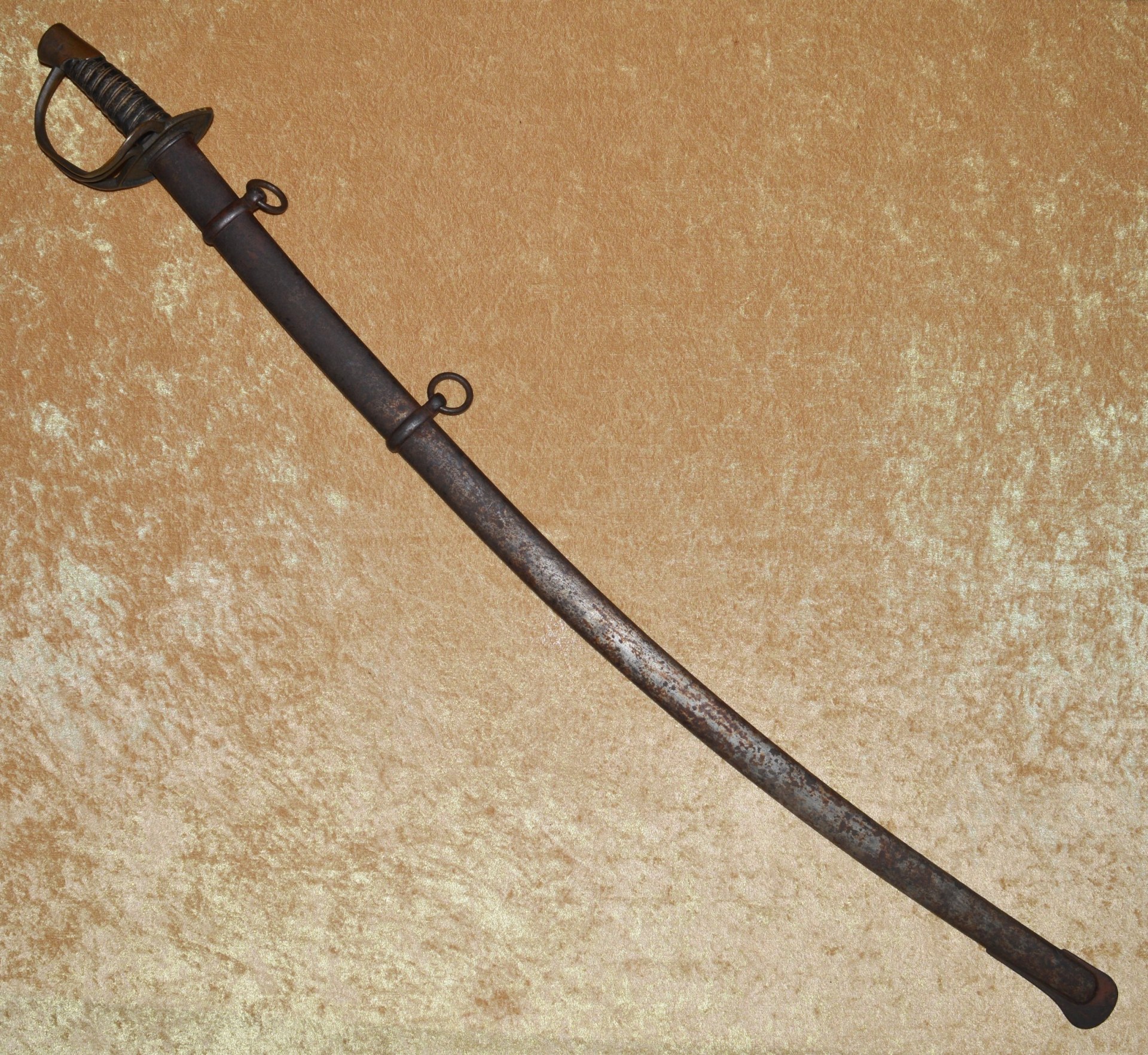
The saber offered here features a 35 1/2” single-edged blade with single, broad, unstopped fuller of better quality than found on most other Confederate-made swords. The brass guard differs from other Confederate cavalry sabers in that the two branches of the guard join the knuckle guard at different points, rather than at a single point as found on US sabers. The elliptical guard features the Roman numerals XXVIIII. The distinctive brass pommel is of plain cylindrical form with the top slightly rounded. The original black leather-wrapped grip features 11 turns of single-strand iron wire. Iron scabbard with iron mounts and twin carry rings, retaining remnants of its original red paint (now turned brown). Confederate States Armory cavalry sabers had many variations, both of style and materials. This example being of the most widely known style, featuring the Roman numeral assembly marks on the guard. The iron grip wire and scabbard mounts differed from others of the same style which often used brass, but is totally in line with other known examples. Guard with one bar slightly bent and dark brownish patina; grip wrap showing wear, but complete; blade smooth, with scattered age staining; scabbard with scuffs and some corrosion, its seam being smoother than most other Confederate examples. This type of saber is often called a “Kenansville” cavalry saber, but it could also have been made when the factory was in Wilmington. Overall length 41”, not including scabbard.
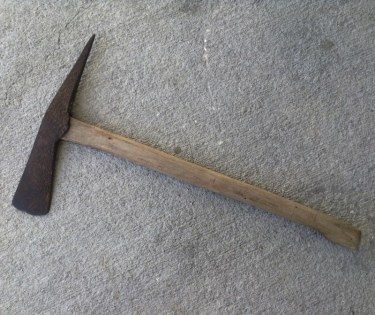 French and Indian Wars Era Spiked Tomahawk
 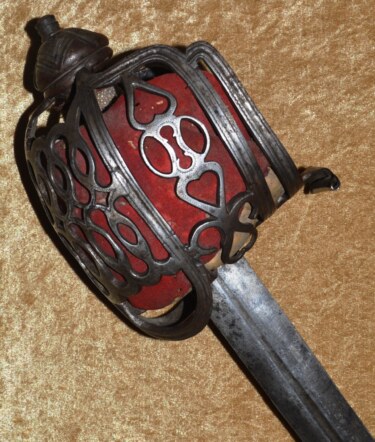 Important Scottish Basket-hilted Broadsword, the Hilt Signed by Walter Allan
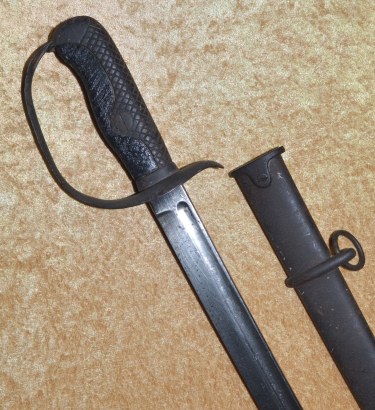 Japanese Type 32 (M1899) Cavalry Saber
 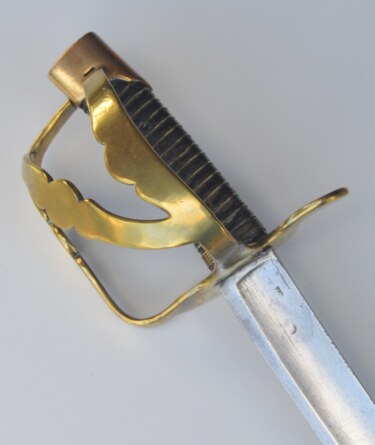 Rare French Chasseurs a’ Cheval de la Garde Trooper’s Saber, Late 18th C