
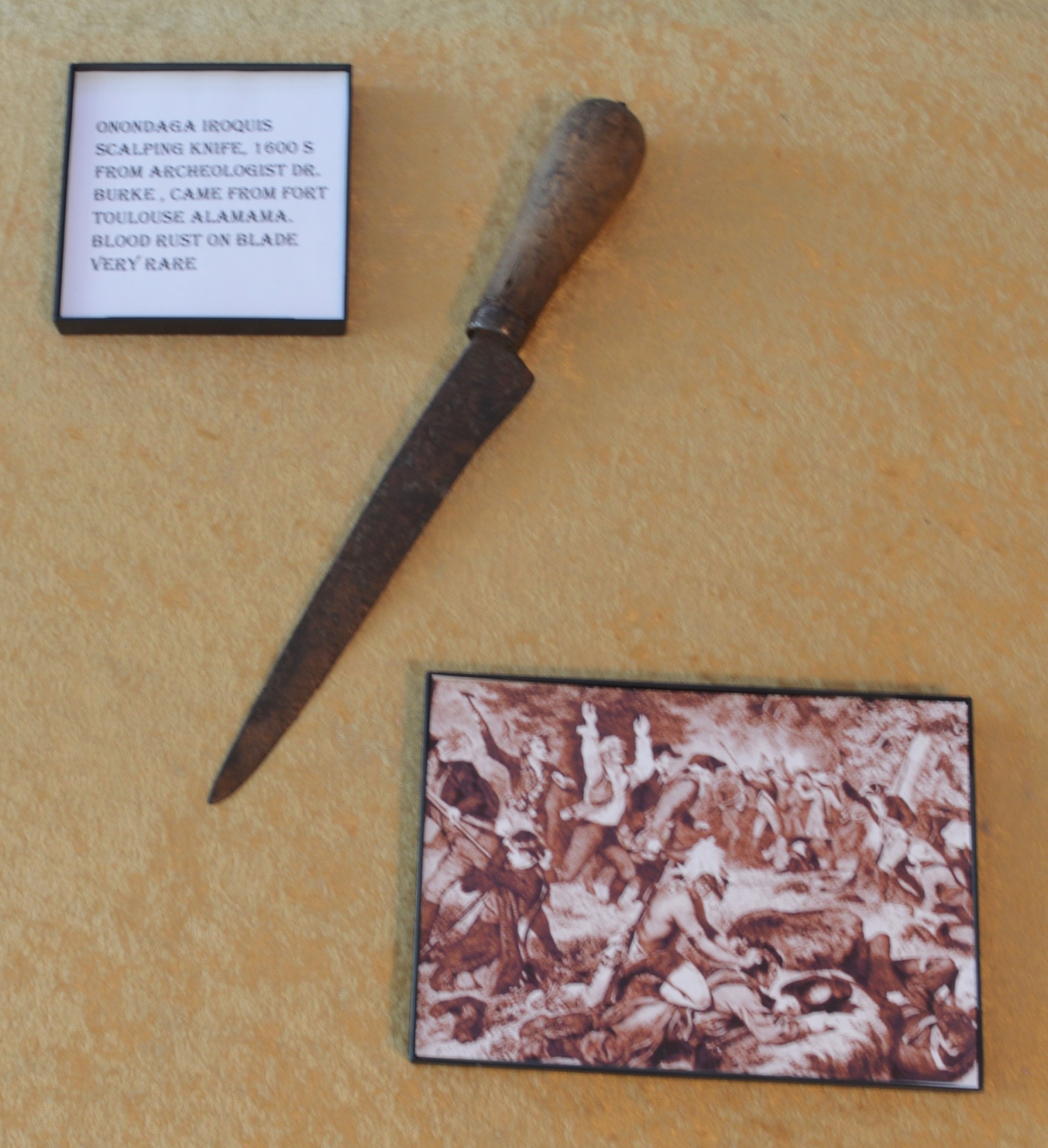
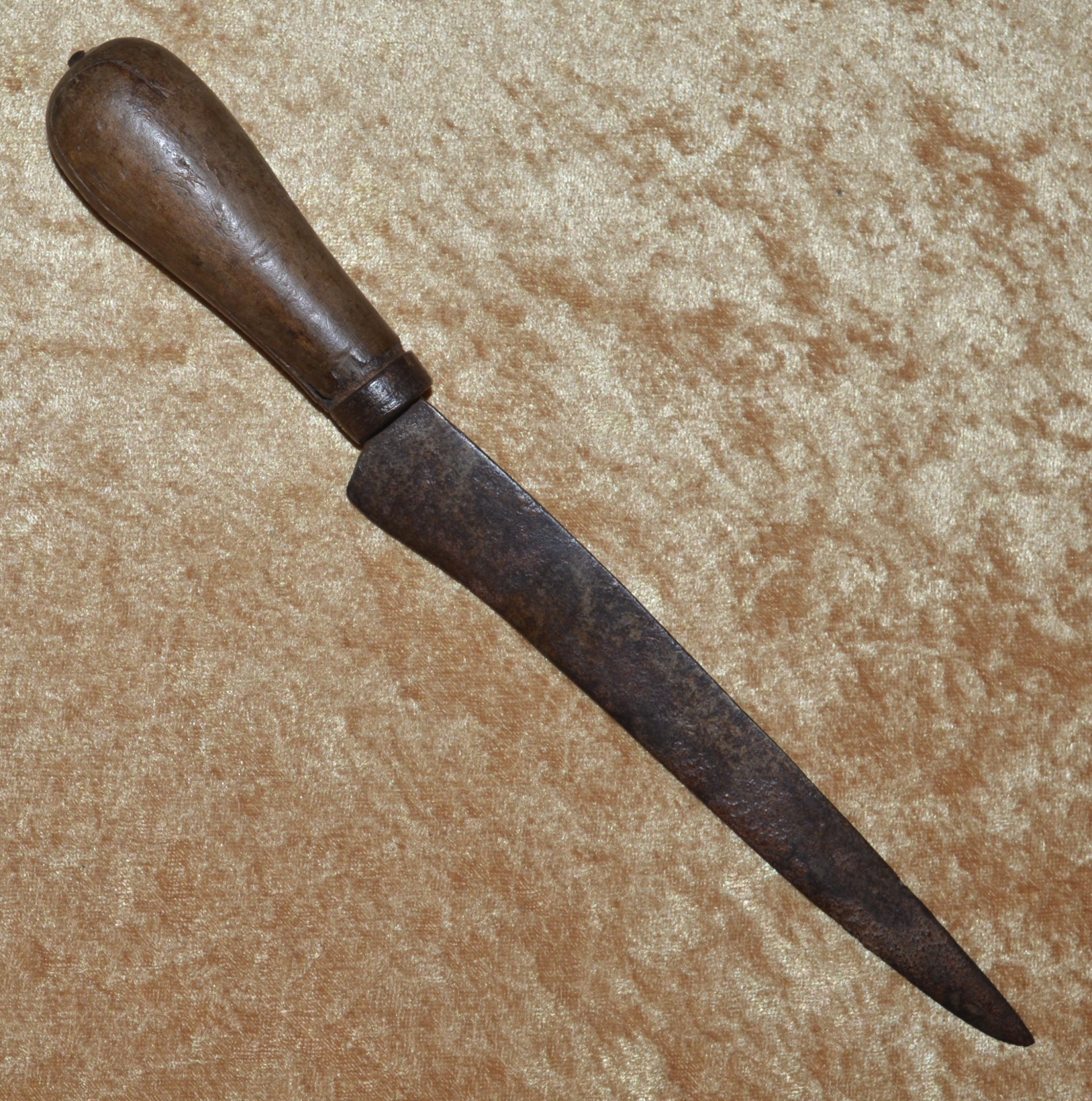
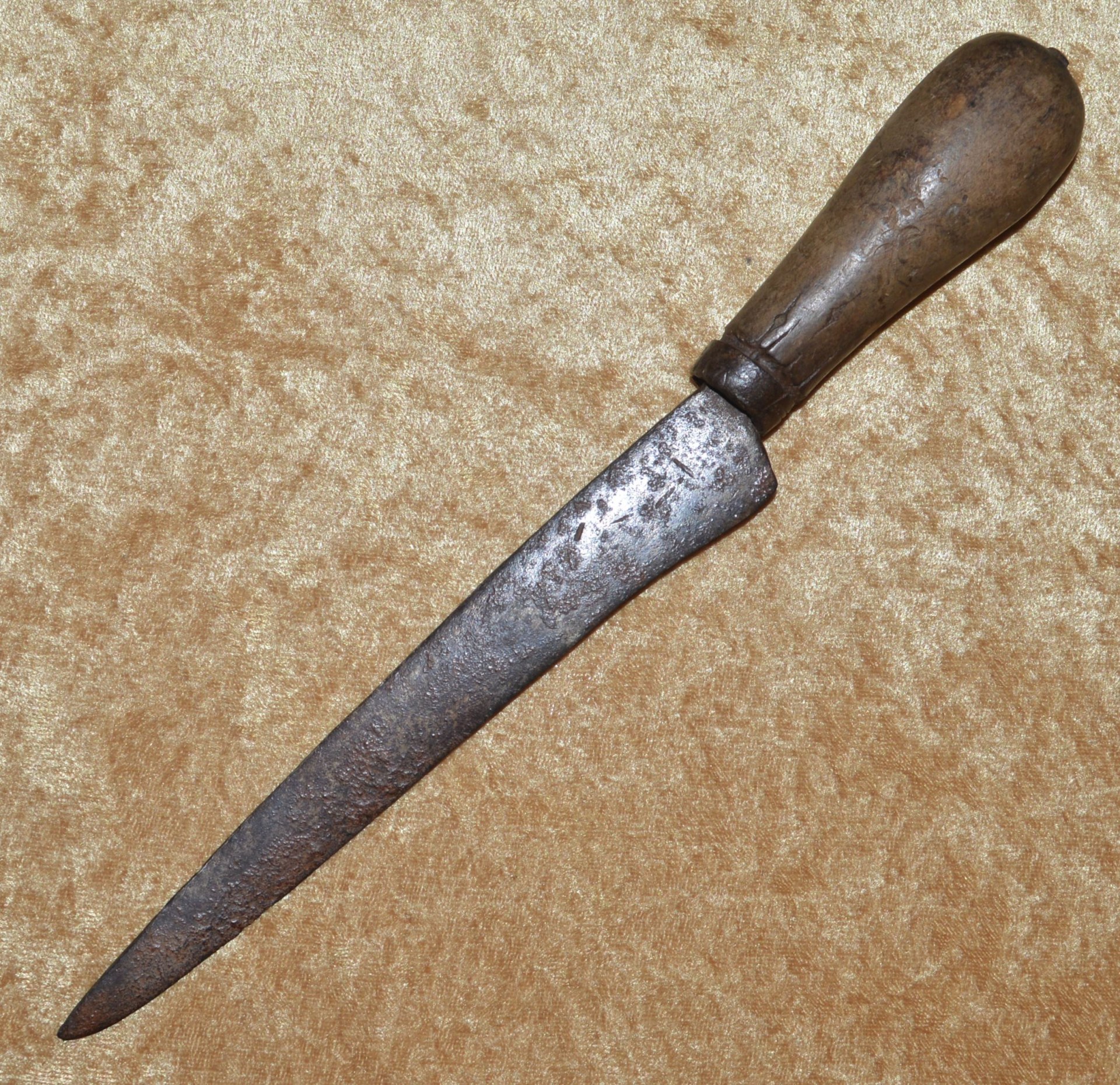
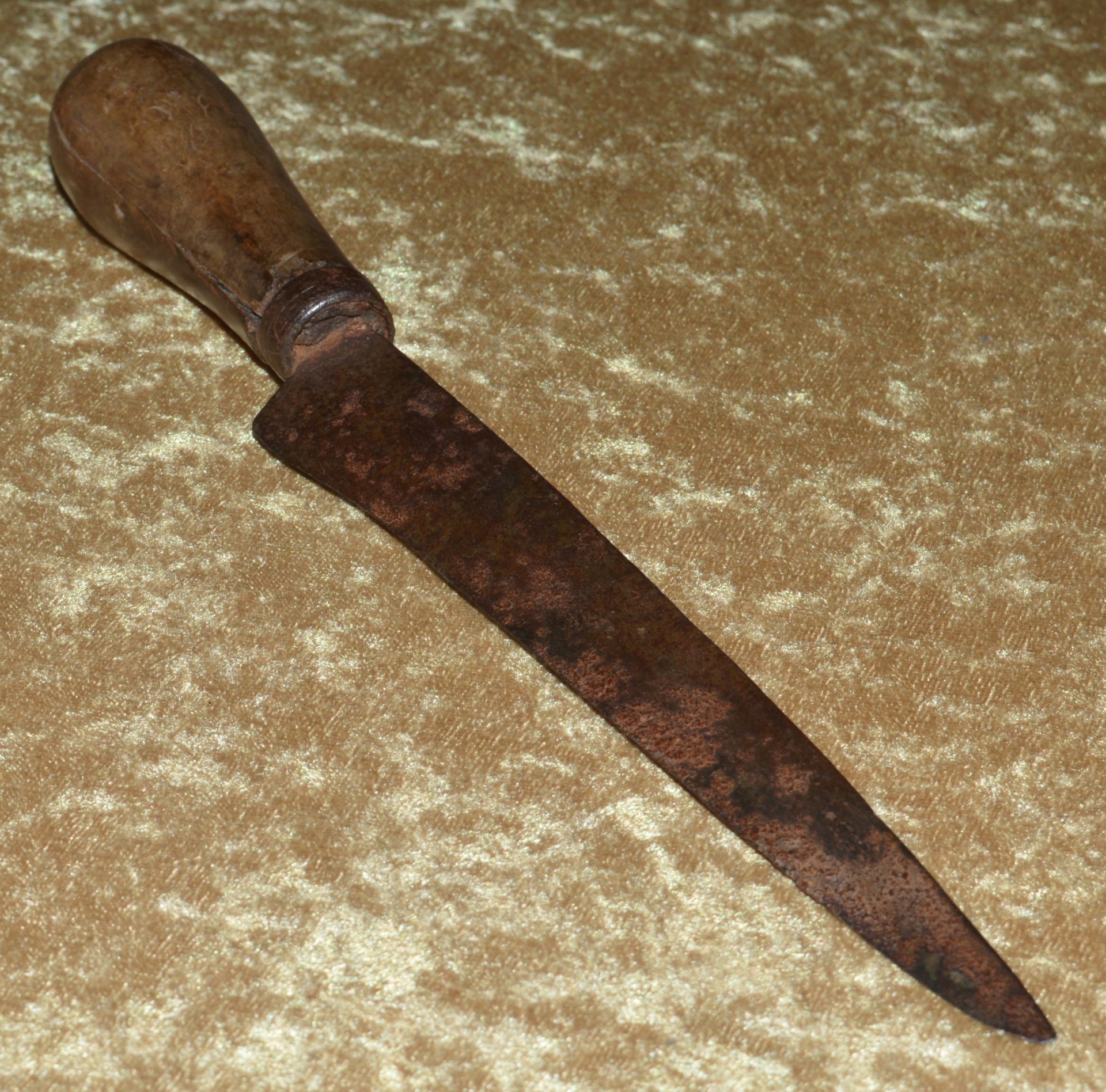
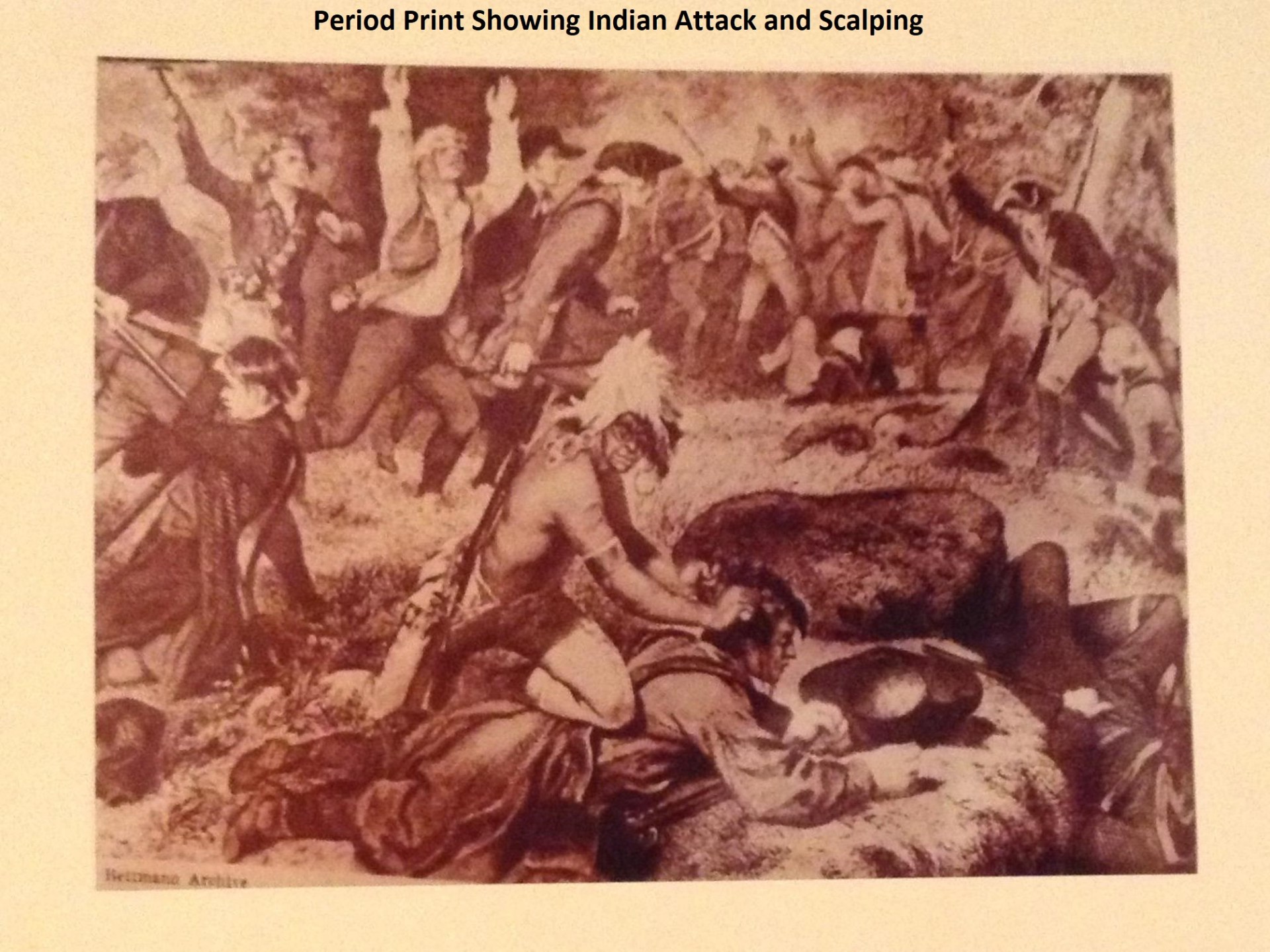
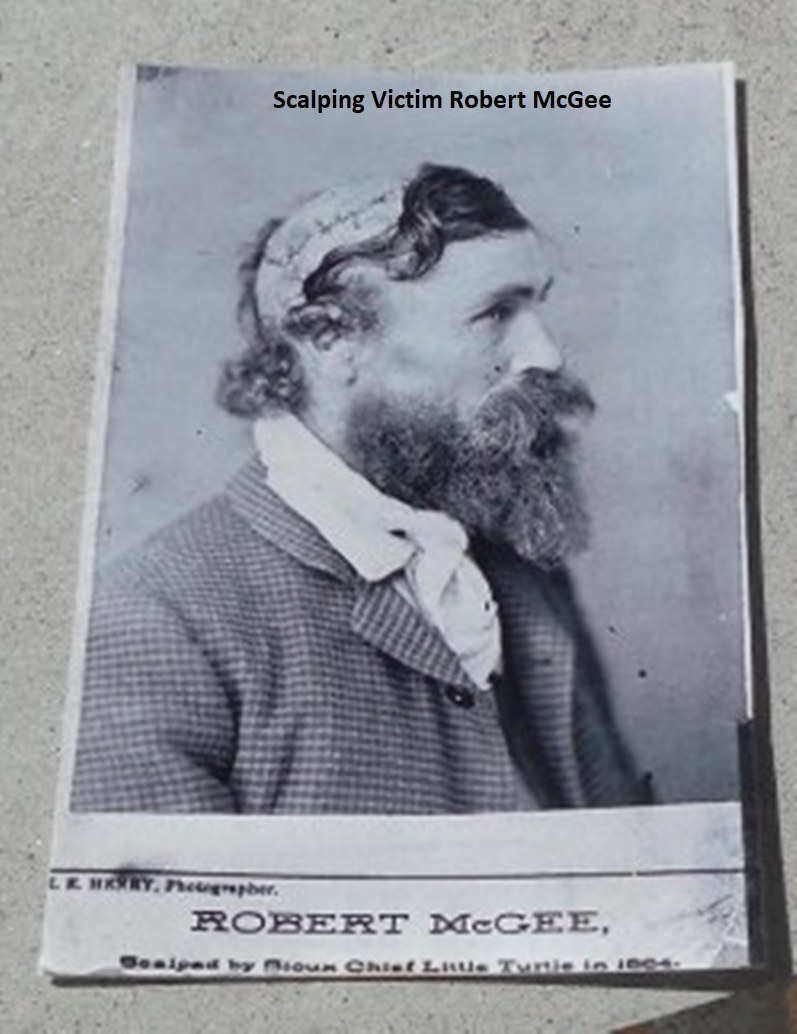
Description
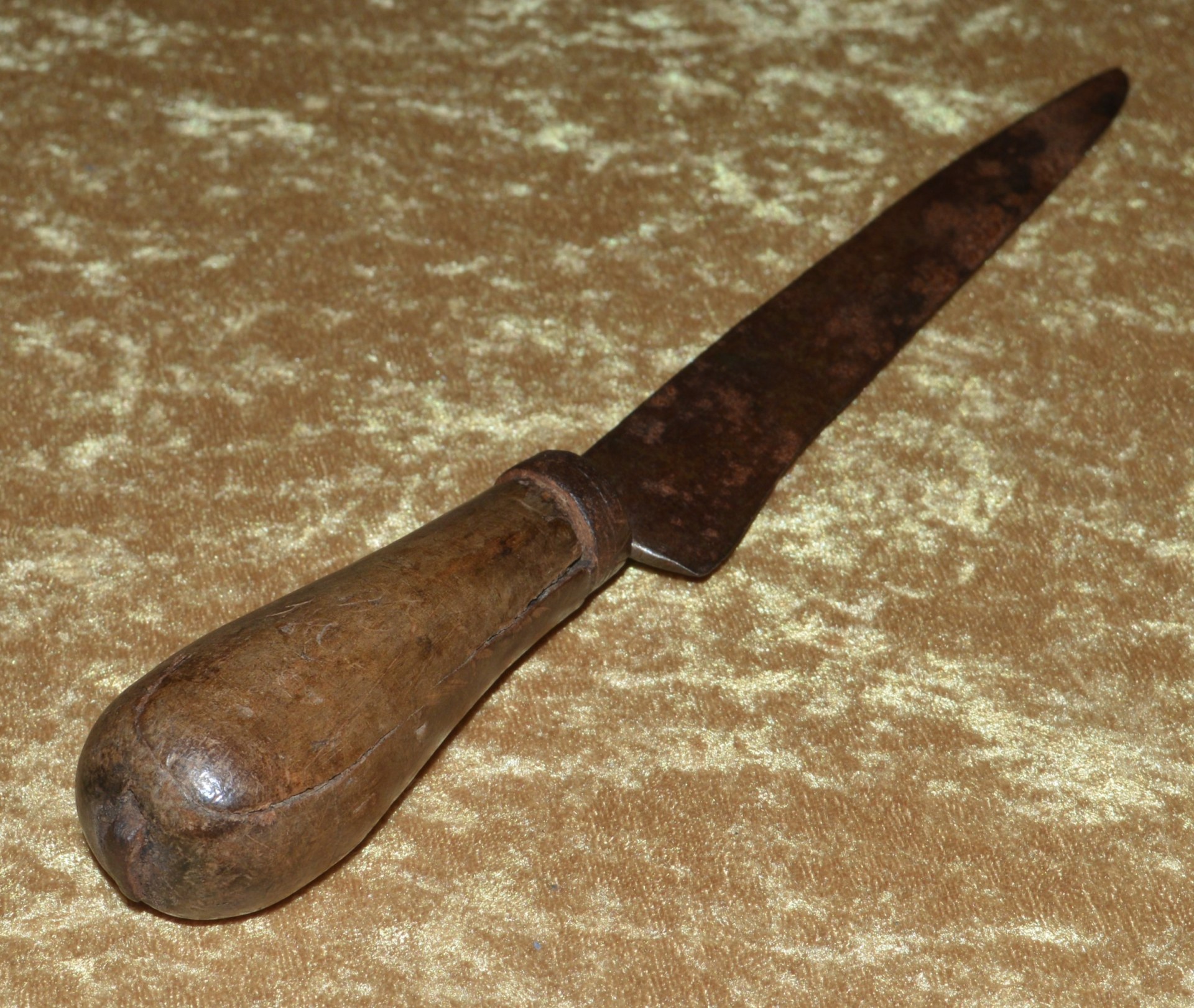
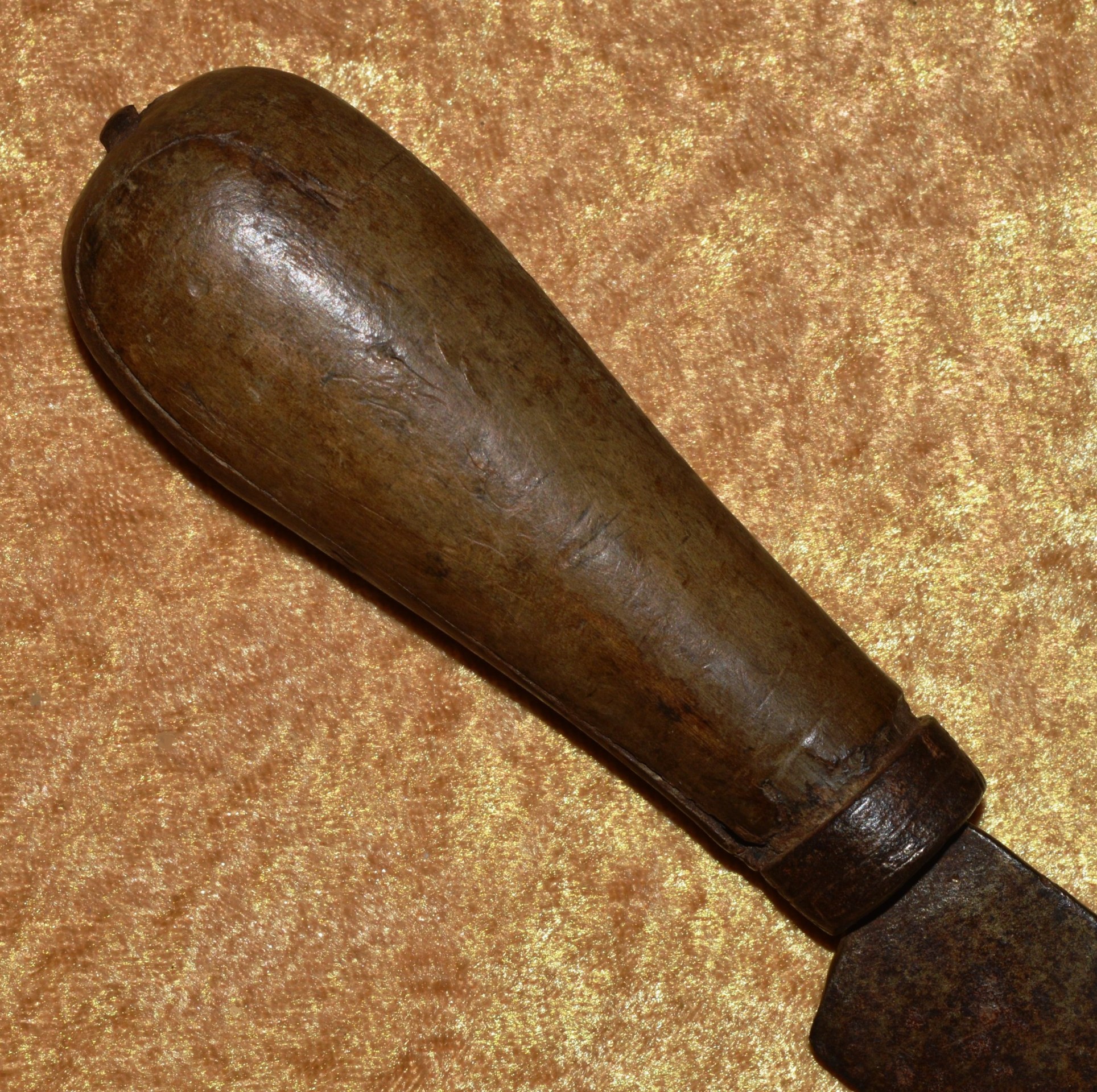
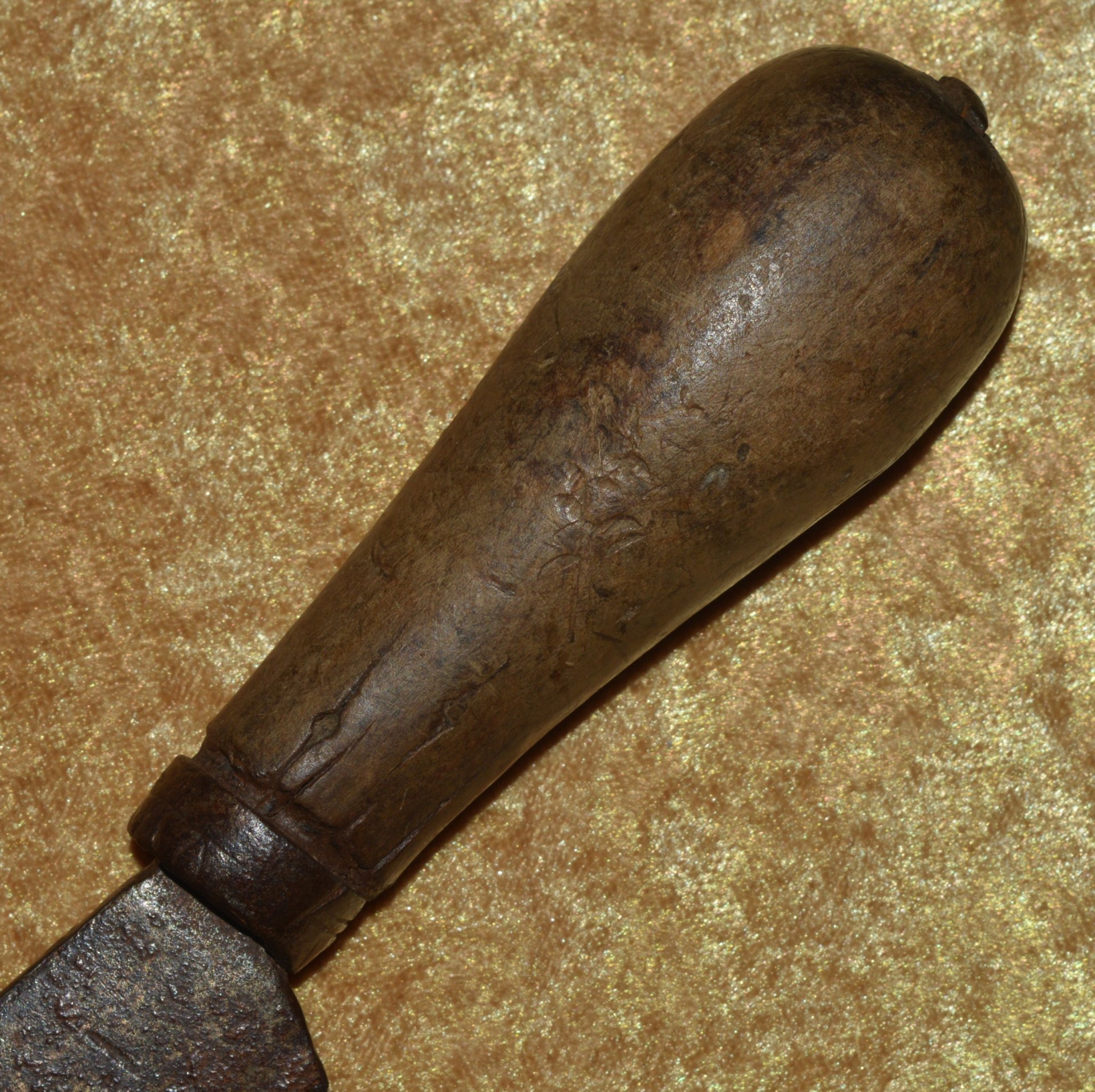
Dating to the late 17th or early 18th Century, this early knife features a one-piece tapering
round-section grip with iron base ferrule. Well-used 7 1/2″ single-edged, flattened wedge-
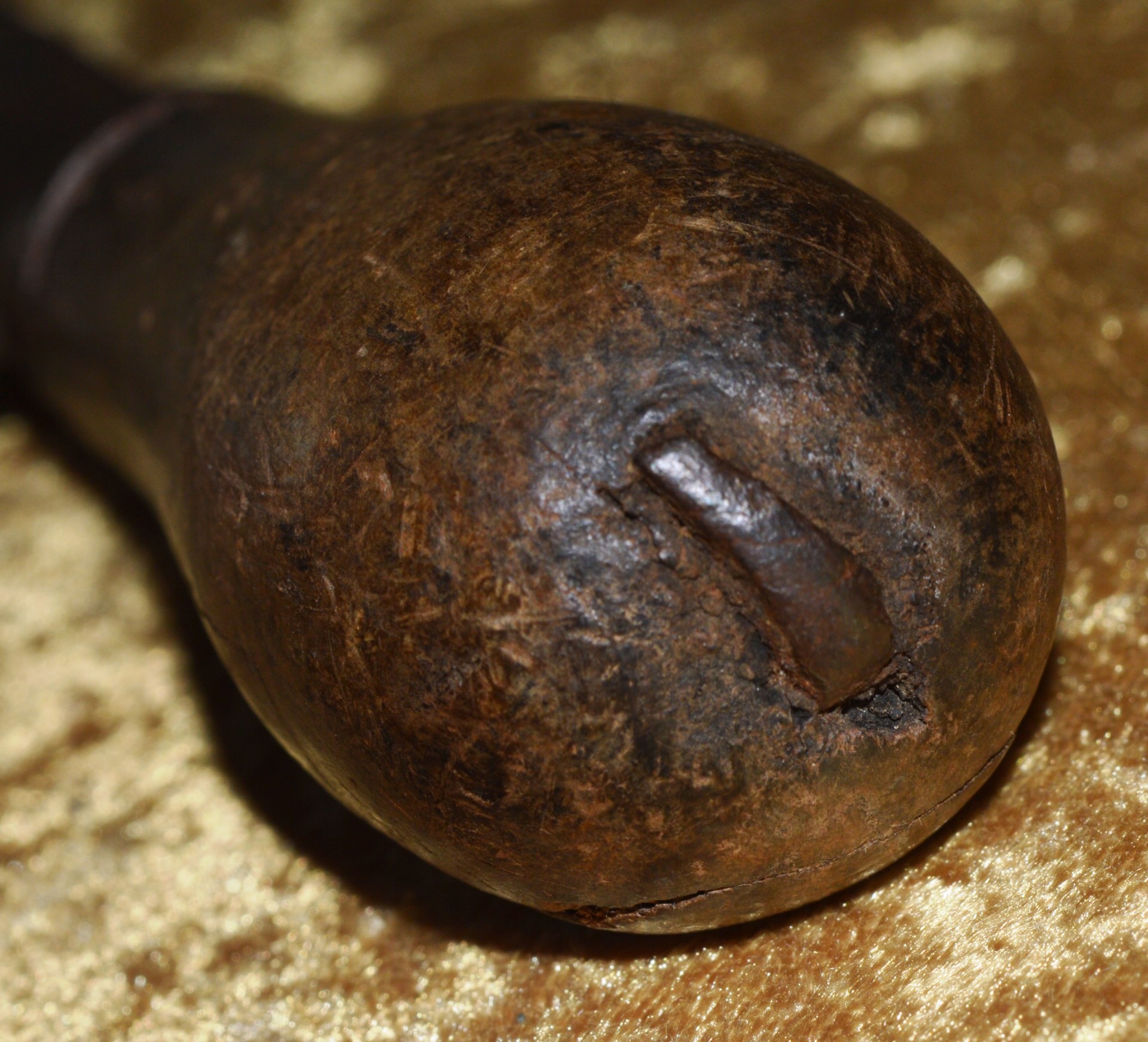
section blade with narrow tang bent over the handle to secure it. Appears to have been
untouched for centuries, showing signs of repeated sharpening and great age, with
considerable old corrosion. Handle with one stable full-length crack and another 3/4″ crack
on the opposite side. While known to have been used for scalping, these trade knives had
many uses and this example shows considerable use. Provenance: Fort Toulouse,
Alabama, former collection of archaeologist Dr. Burke. Overall length 11 1/2″. Includes the
two framed items in the main listing photo.
The French founded Fort Toulouse in 1717, naming it for Louis-Alexandre de Bourbon,
comte de Toulouse, to counter the growing influence of the British colonies of Georgia and
Carolina. The British took over the fort with the Treaty of Paris, which ended the French
and Indian War, but chose not to occupy it, leading to the fort’s decay. The original fort no
longer exists, however, a replica of the fort was built in the 1980’s on the original site. The
site was declared a National Historic Landmark in 1960 and is now maintained by the
Alabama Historical Commission.
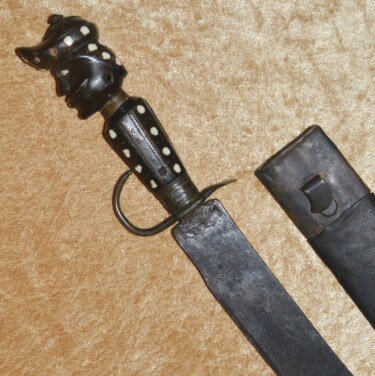 Unique Italian (Genoa) Cutlass, Early 18th C
 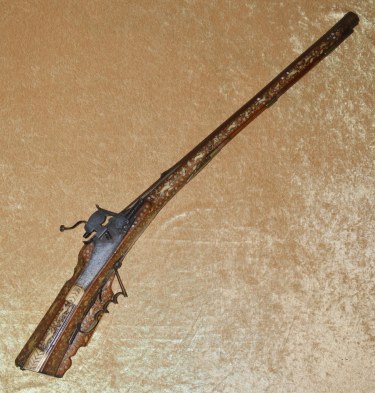 Fine Quality Wheellock Rifle, ca. 1700
  French First Empire Infantry Officer’s Sword
 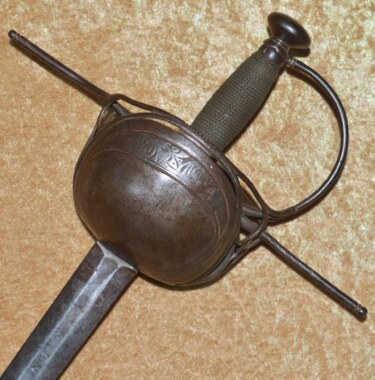 Spanish or Italian Shell Guard Rapier, 2nd Half 17th C