
Description
During the Middle Ages and up until modern times, the chopping off of hands or fingers was
a common punishment for crimes of theft. It is still practiced in some cultures even today.
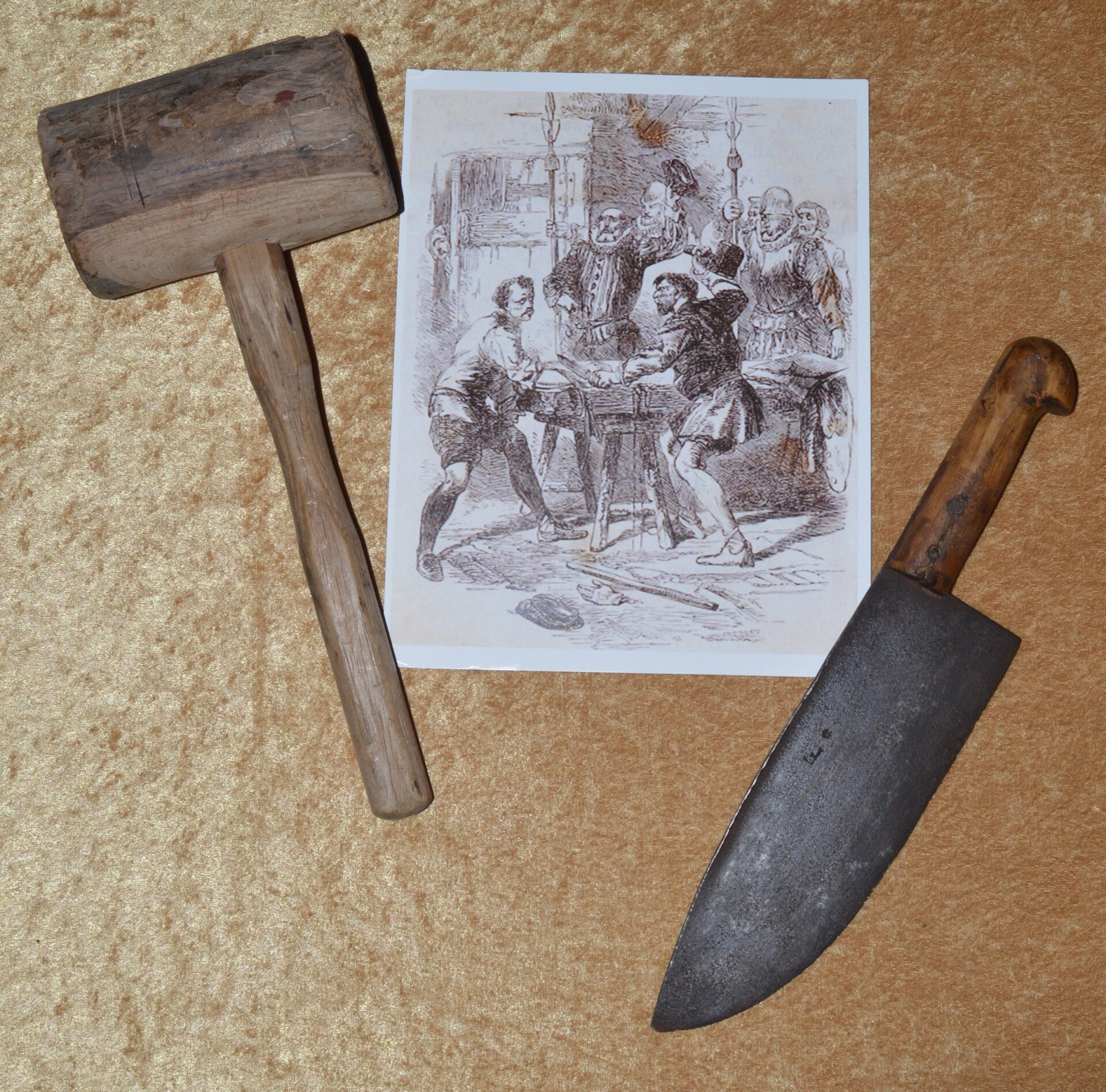
While there were many ways of removing a hand or other limb, using a cleaver and mallet
was a fairly simple procedure and was more accurate than using an axe. Court sentences
would often be very precise as to exactly how much was to be cut off, and the cleaver and
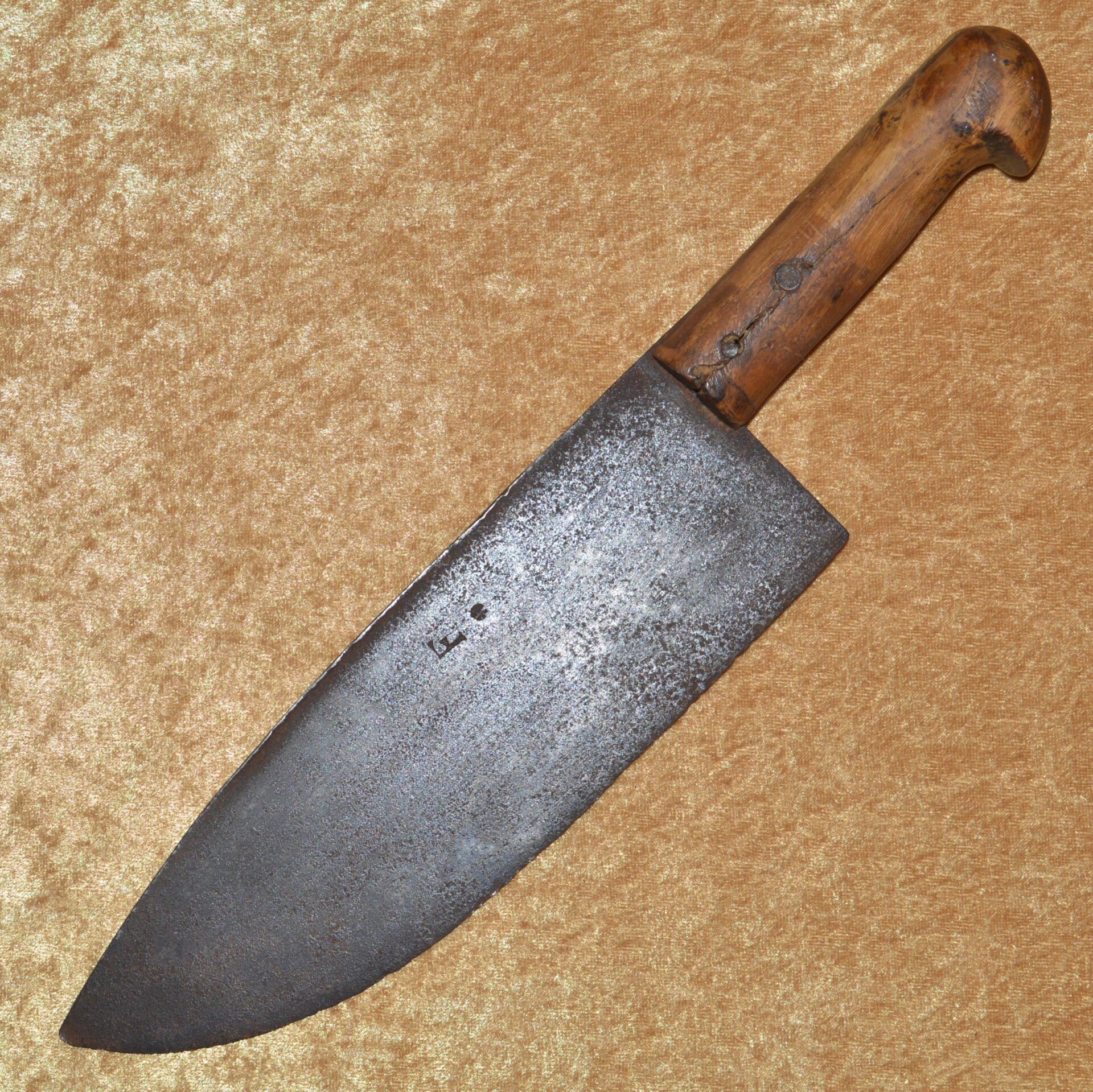
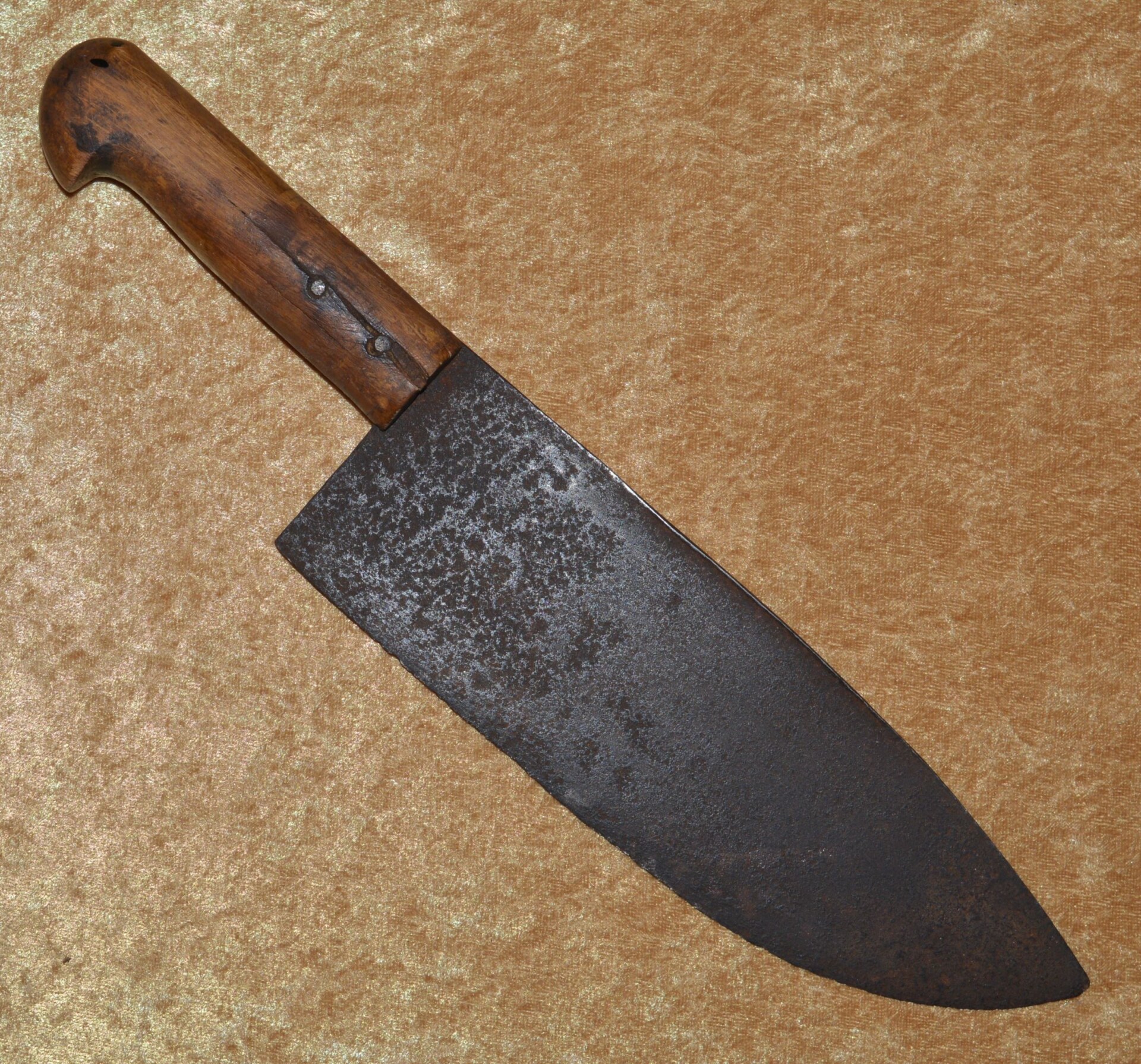
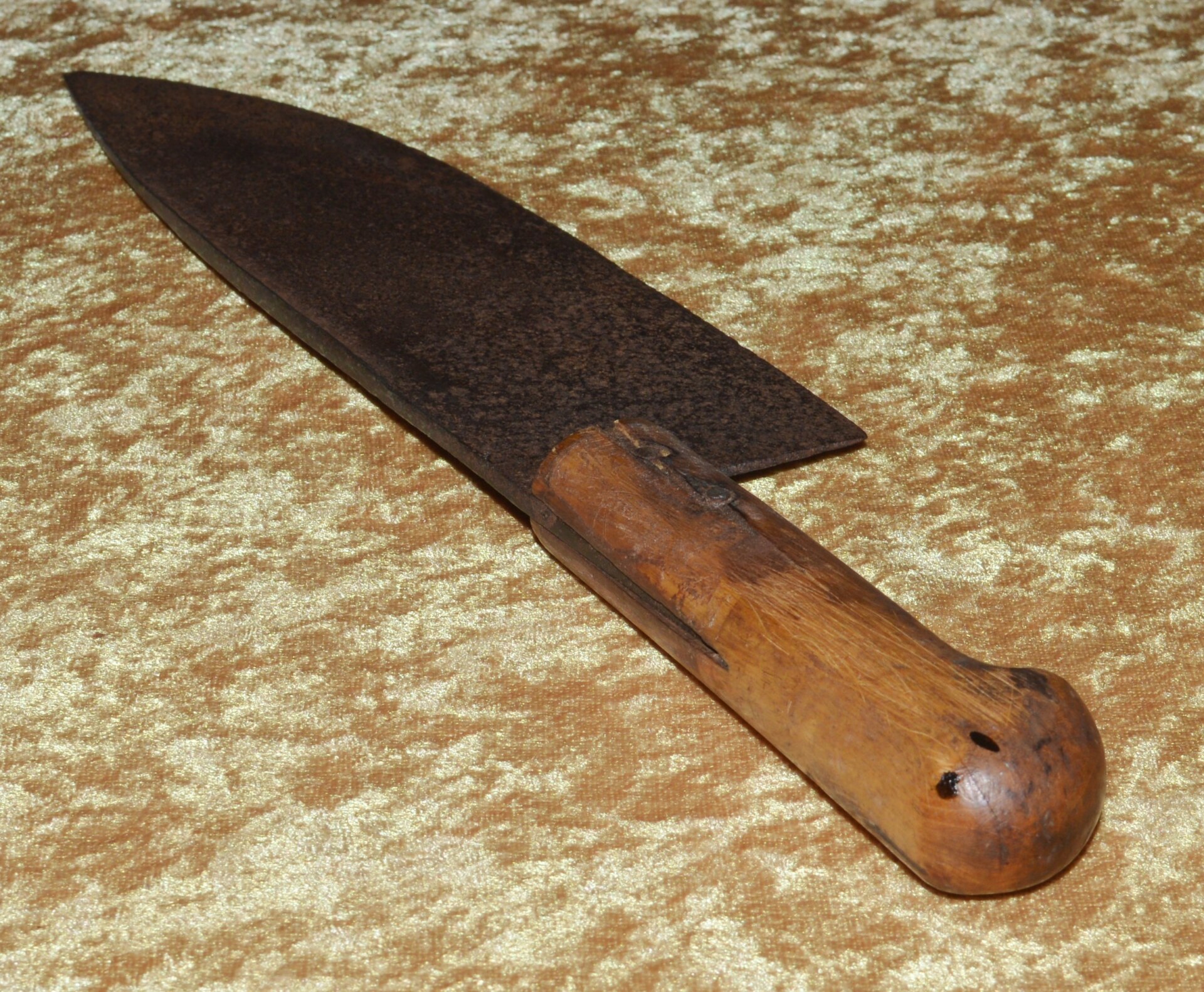
mallet could more accurately meet this requirement. This example consists of a cleaver
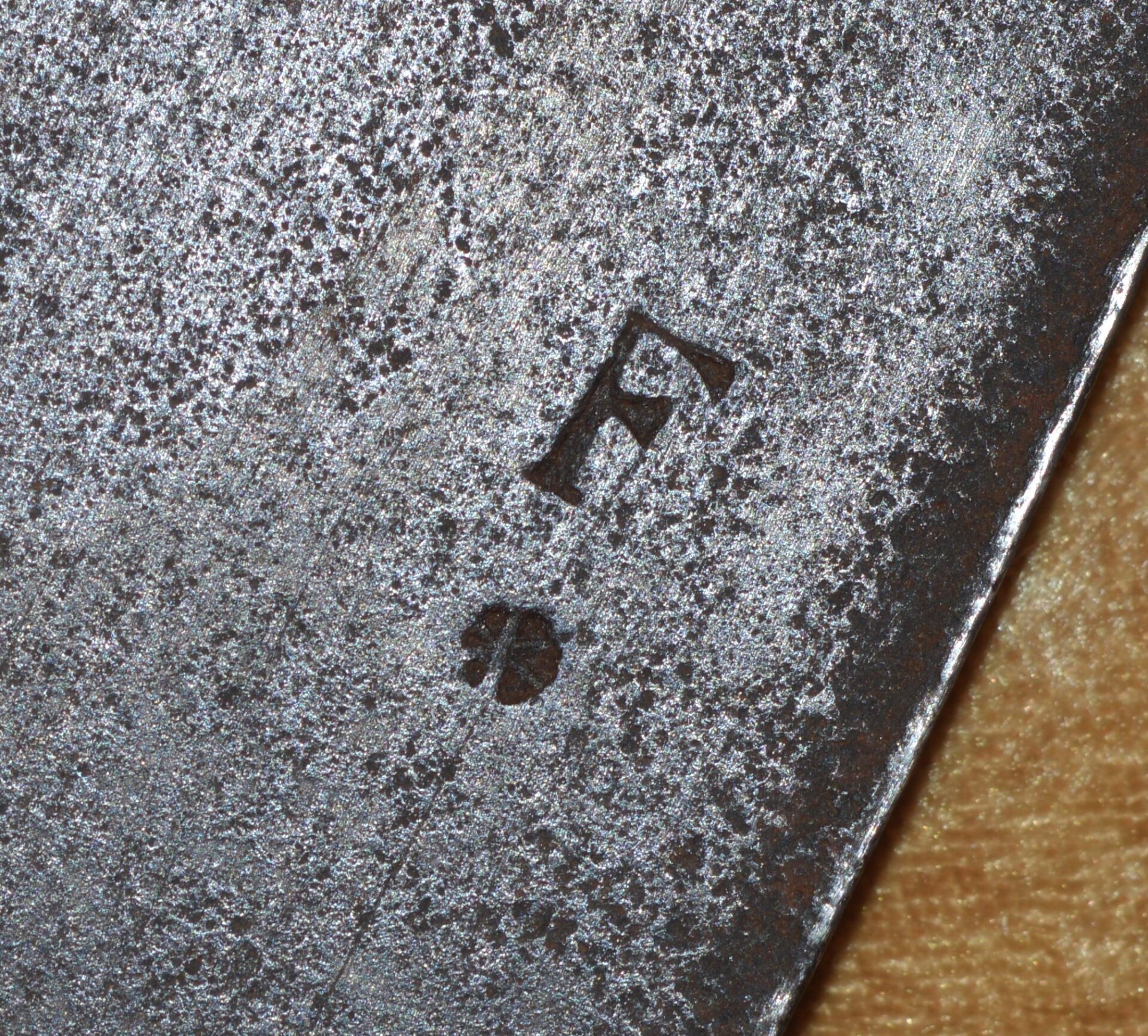
with broad 8 7/8″ long blade, curving toward the tip and stamped with an “F” and star
maker’s mark on one side. The back edge is somewhat blunted by repeated blows from
the mallet. The round wood handle fits over the 2 1/4″ long blade tang and is secured with
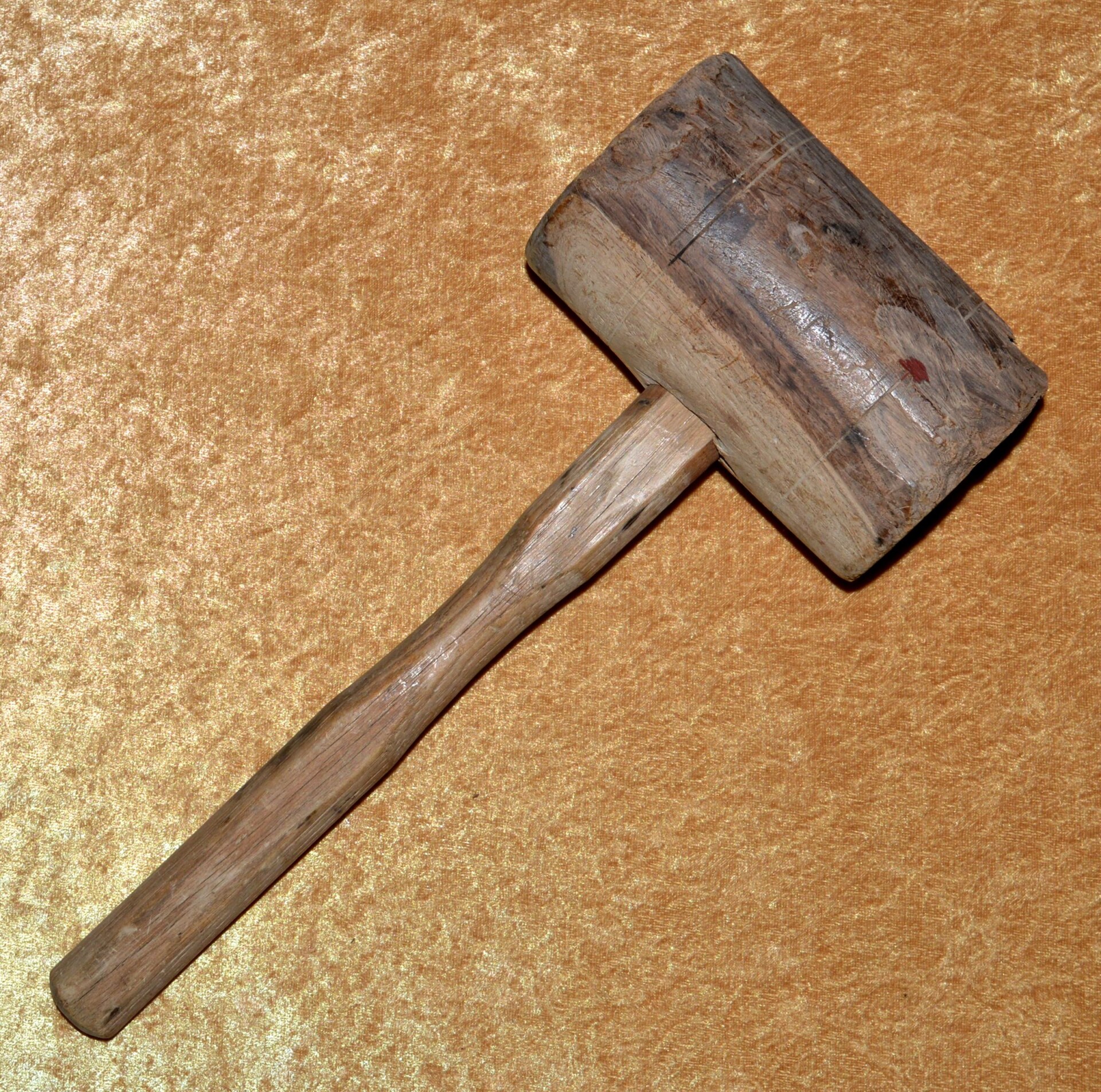
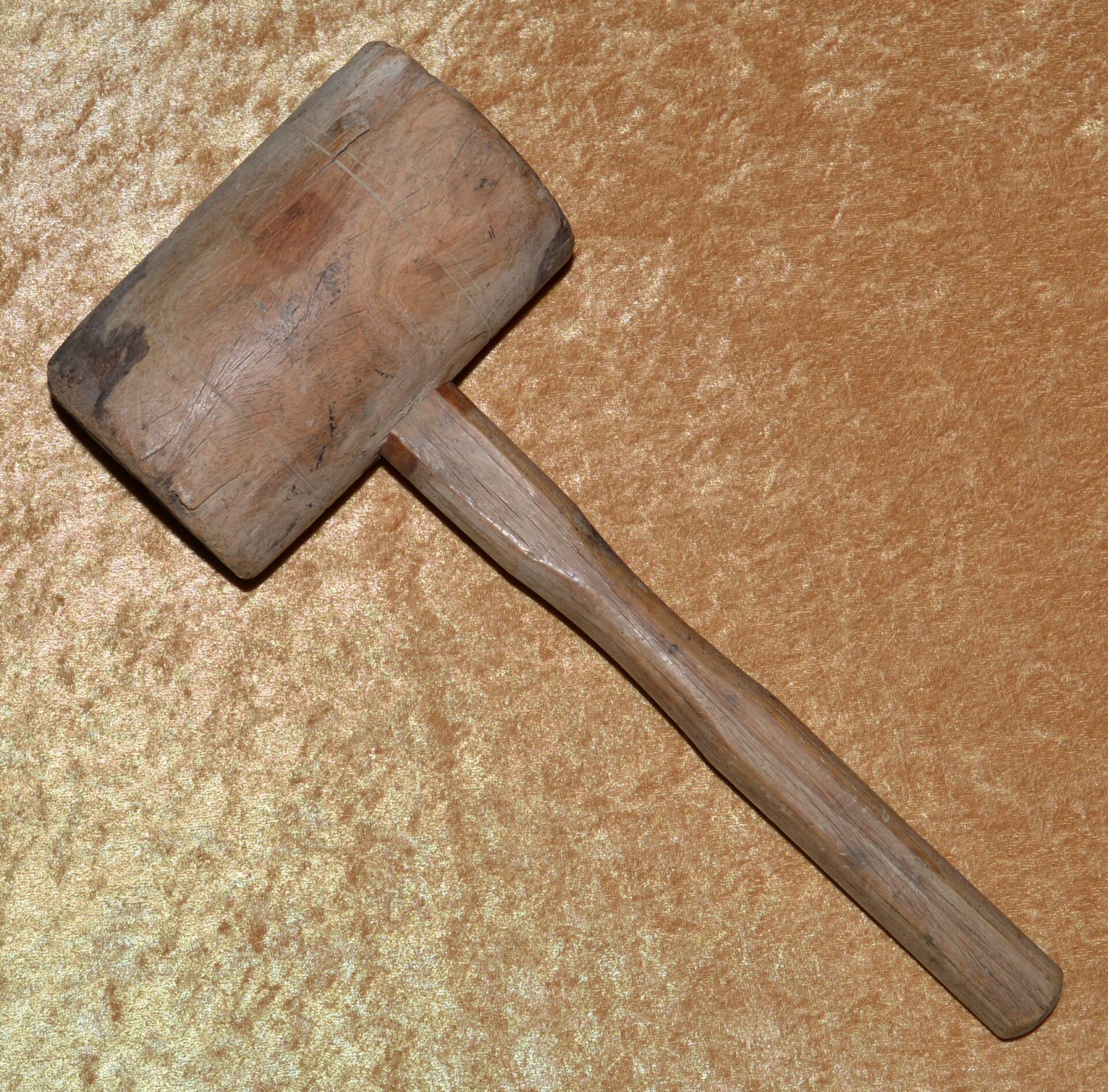
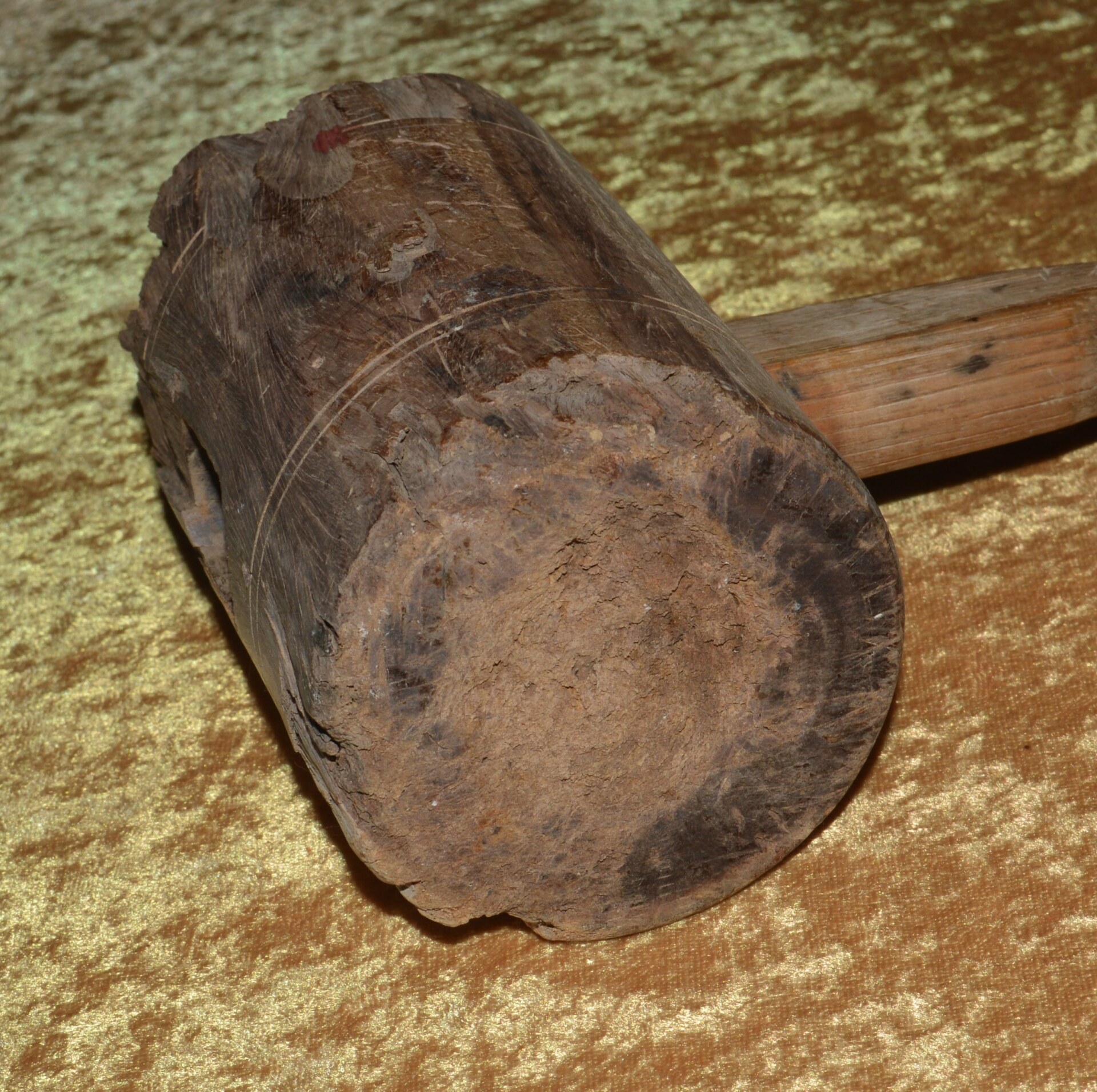
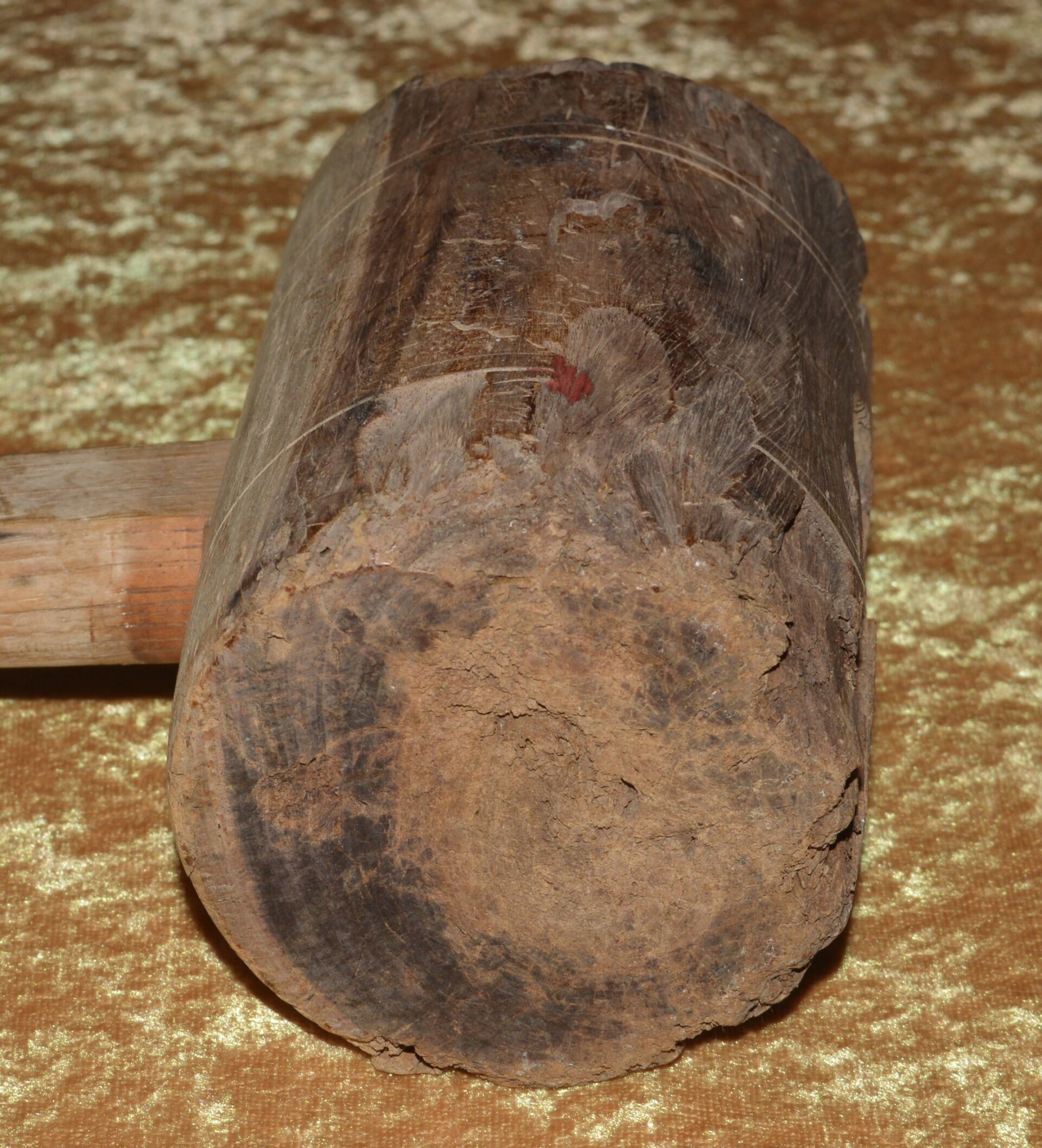
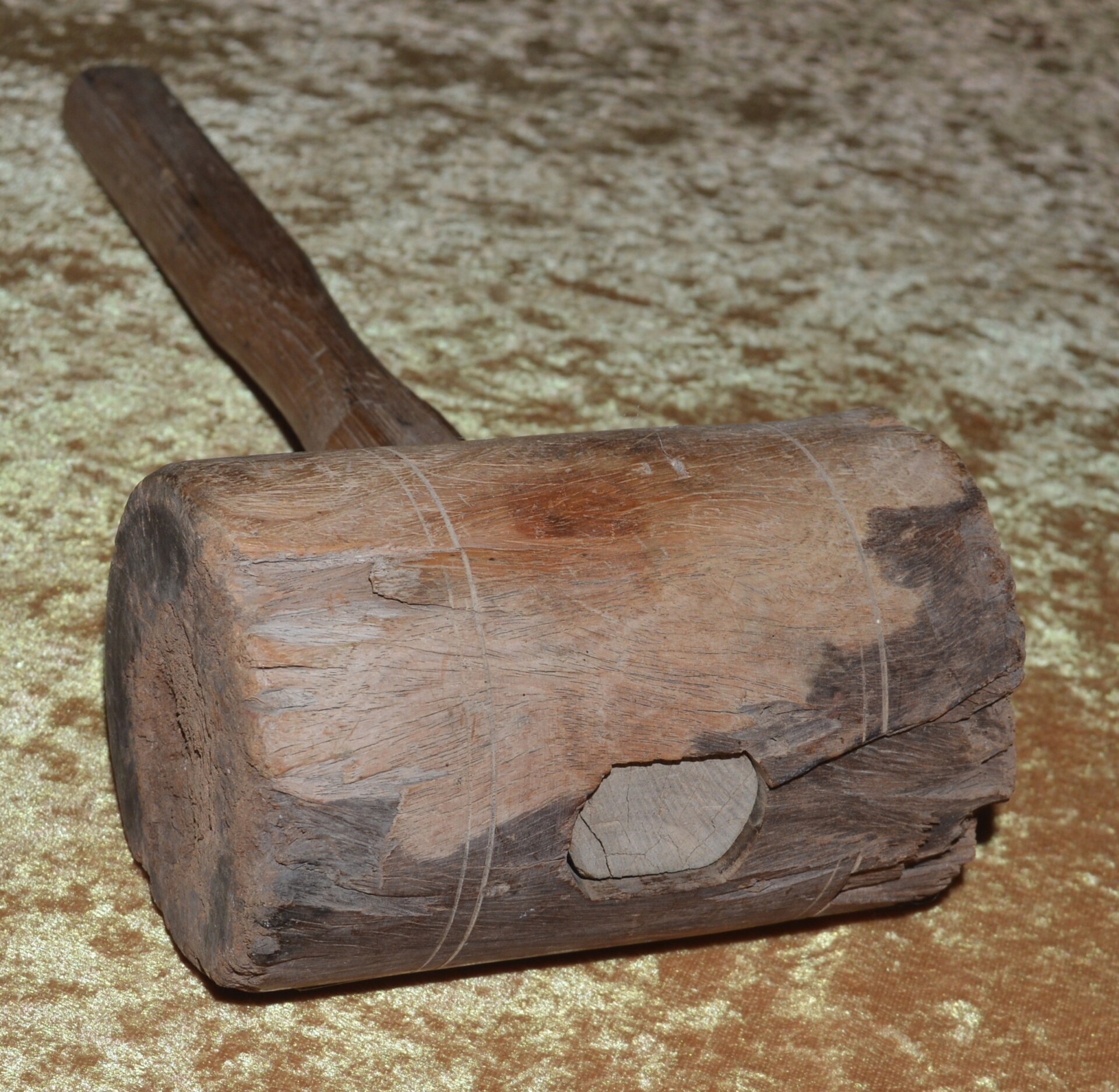
2 iron rivets. The wooden mallet features a 5 1/2′ long by 3 1/2″ diameter cylindrical-shaped
head made of Lignum Vitae, a very dense and heavy wood. The original(?) 13″ ash handle
is tapered to keep the head from flying off when in use. Both pieces show great age; the
knife blade with dark brown stabilized rust patina and the handle slightly split where the
rivets go through it. There was probably a small ferrule at one time to prevent this, but it is
no longer present. The handle of the mallet retreats a bit further into the head than it
originally did, likely due to wood shrinkage. Mallet head with chips and dents from repeated
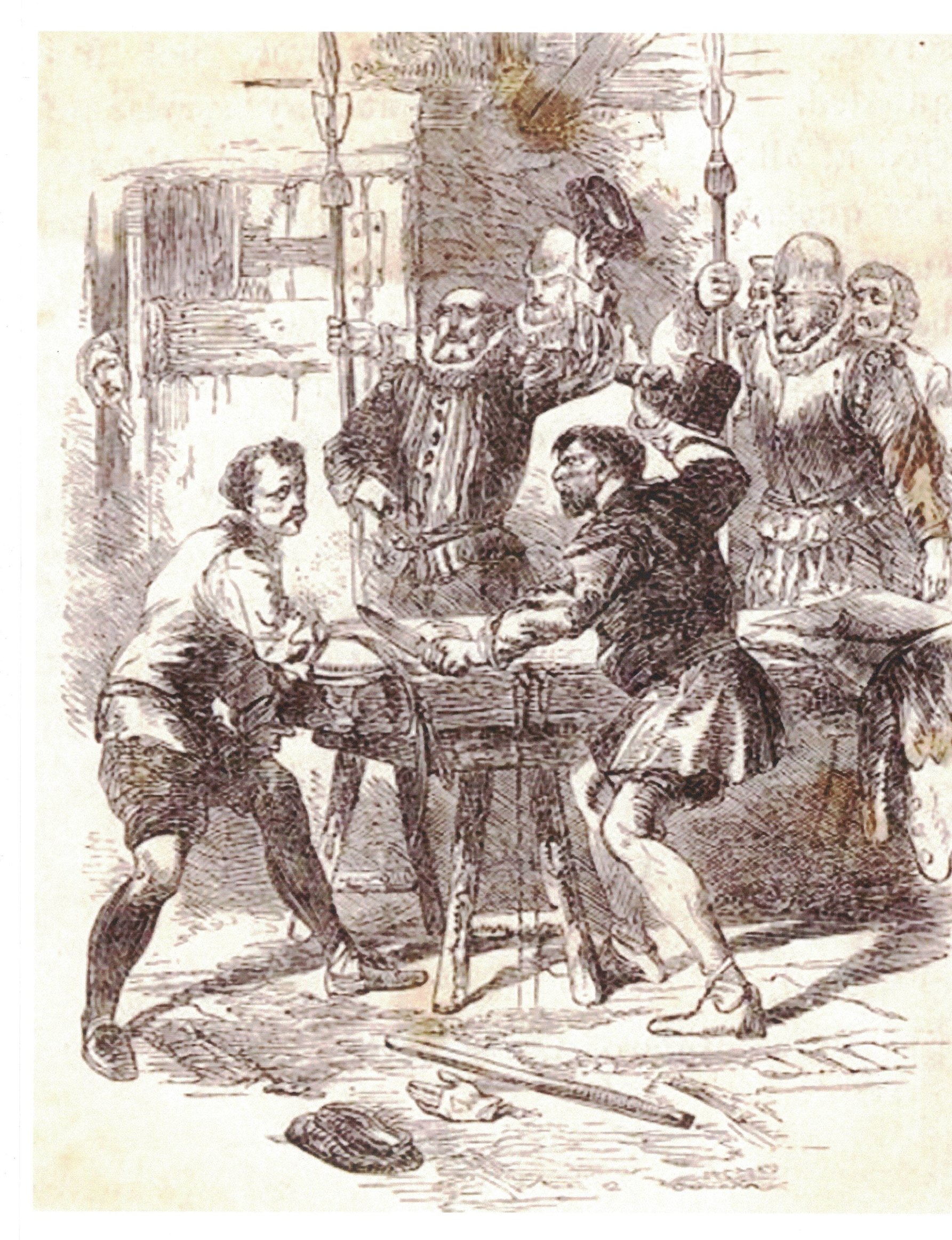
use, but still solid. Overall length of cleaver 13 3/4″. Comes with a photo copy of an old
hand-drawn image of a similar cleaver and mallet being used to cut off a criminal’s hand.
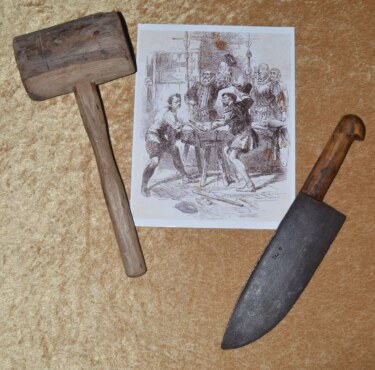 European Punishment Cleaver and Mallet, 16th/17th C
 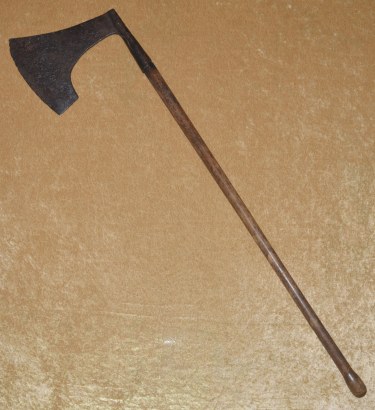 English Executioner’s Axe, 16th/17th C
 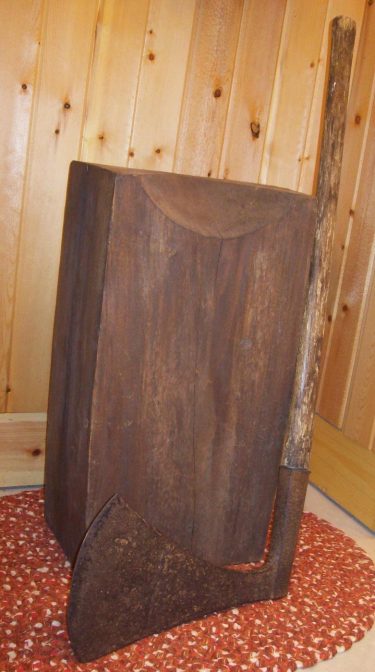 English Executioner’s Axe, 16th/17th C
 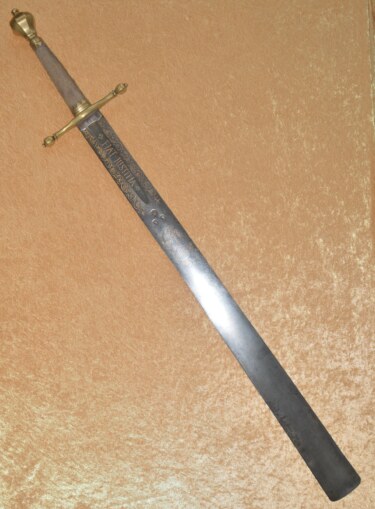 Fine and Historic Executioner Sword Made for the Dutch City of Haarlem, First Half 17th C