
Description
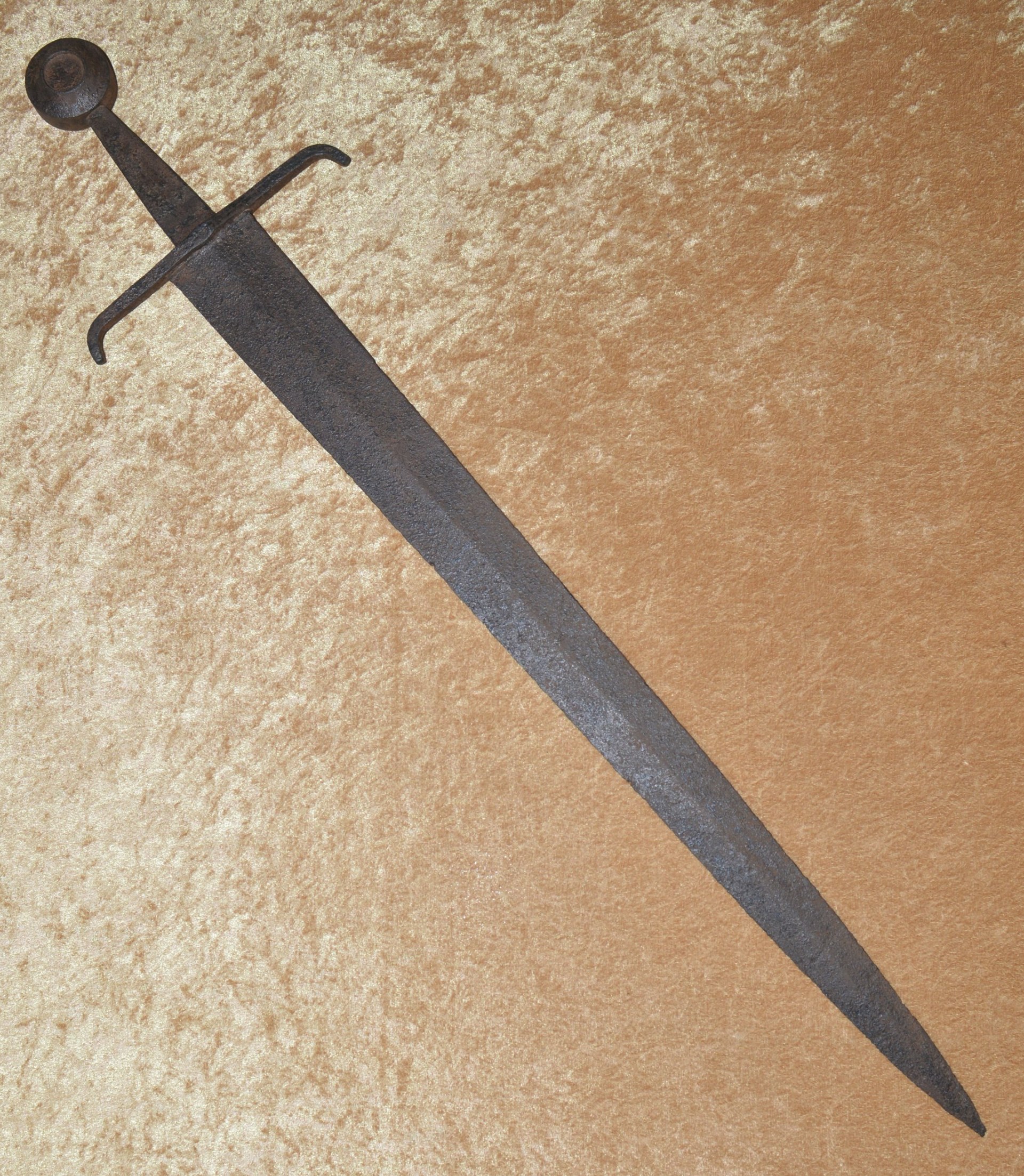
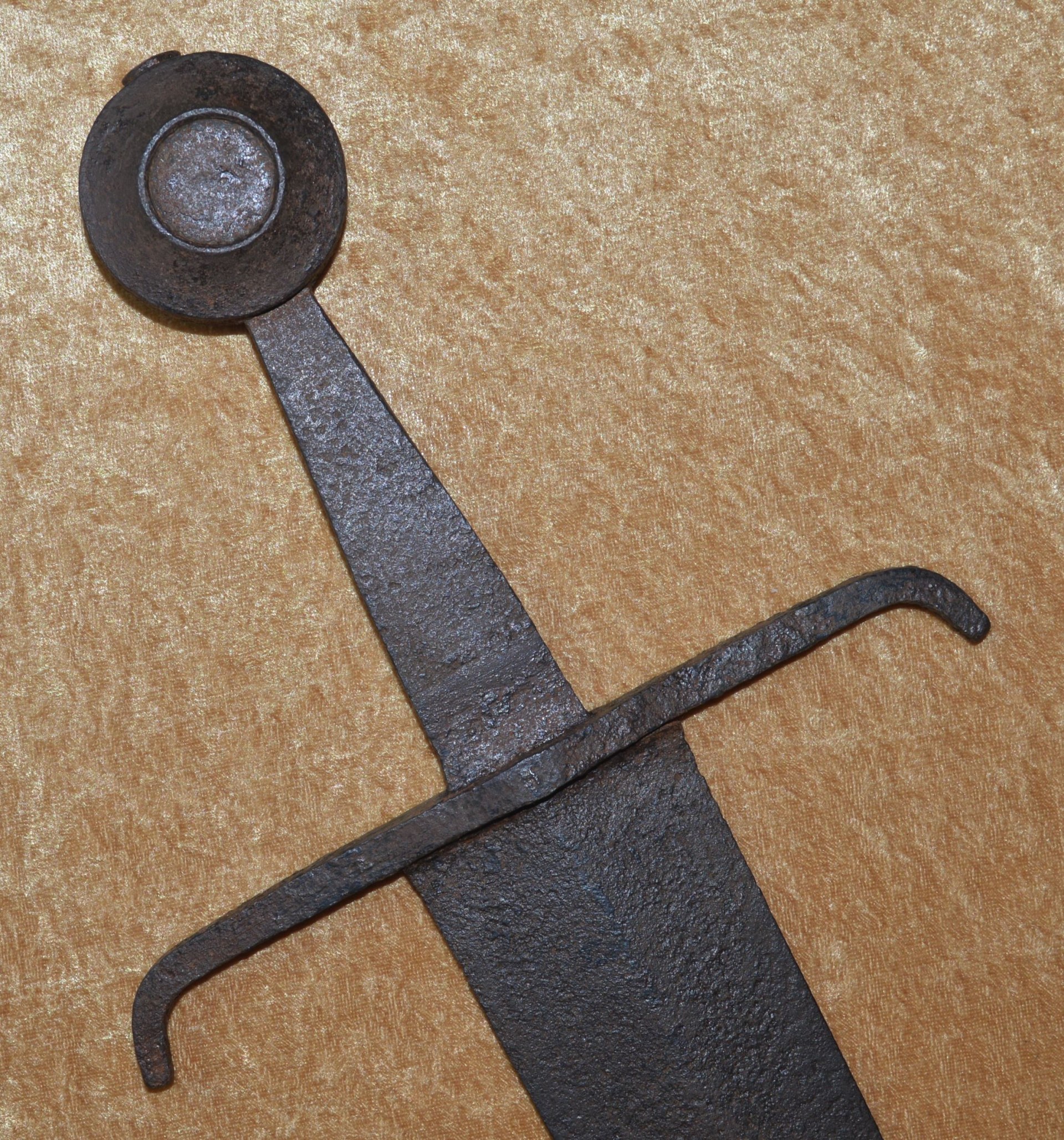
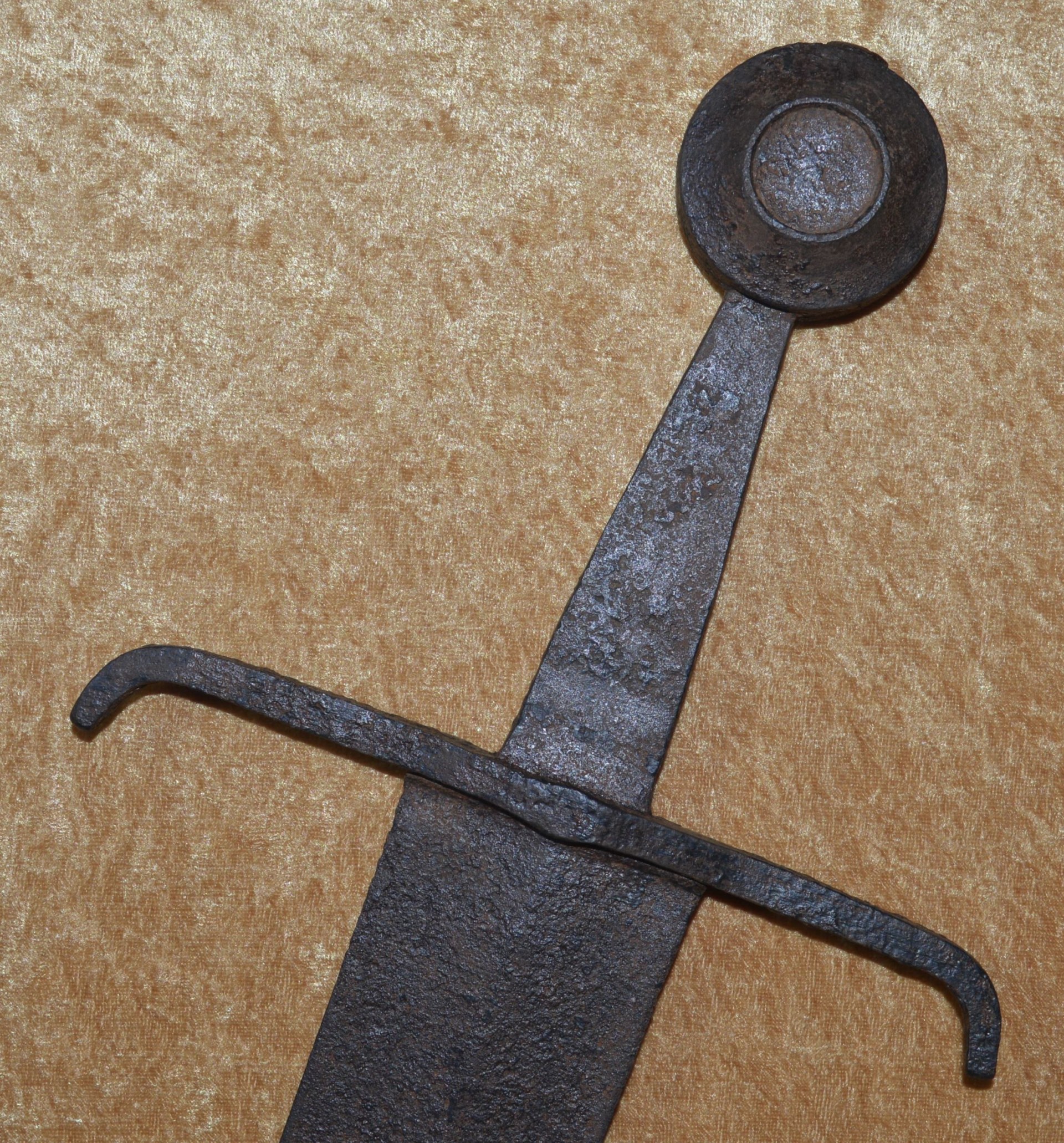
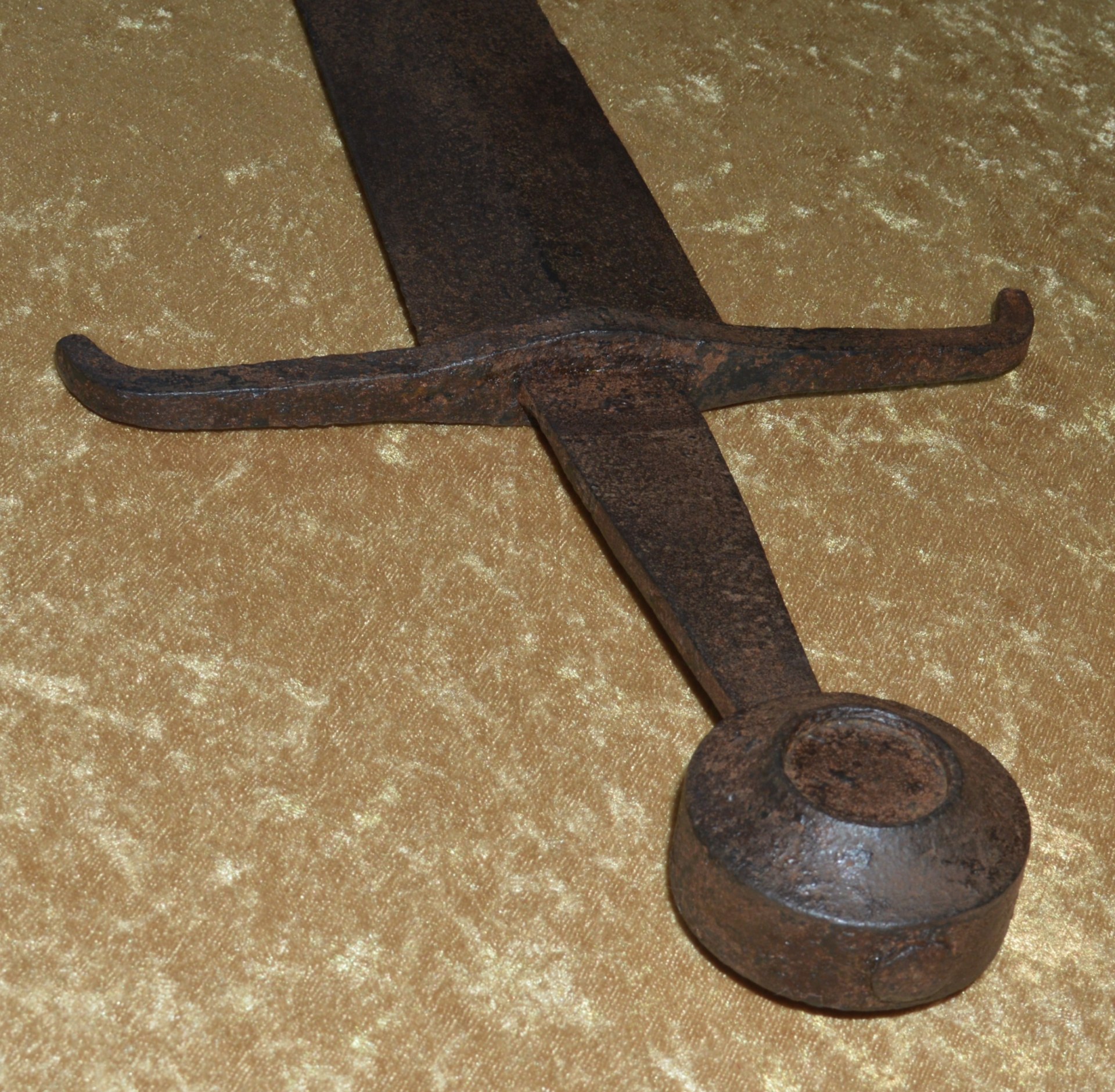
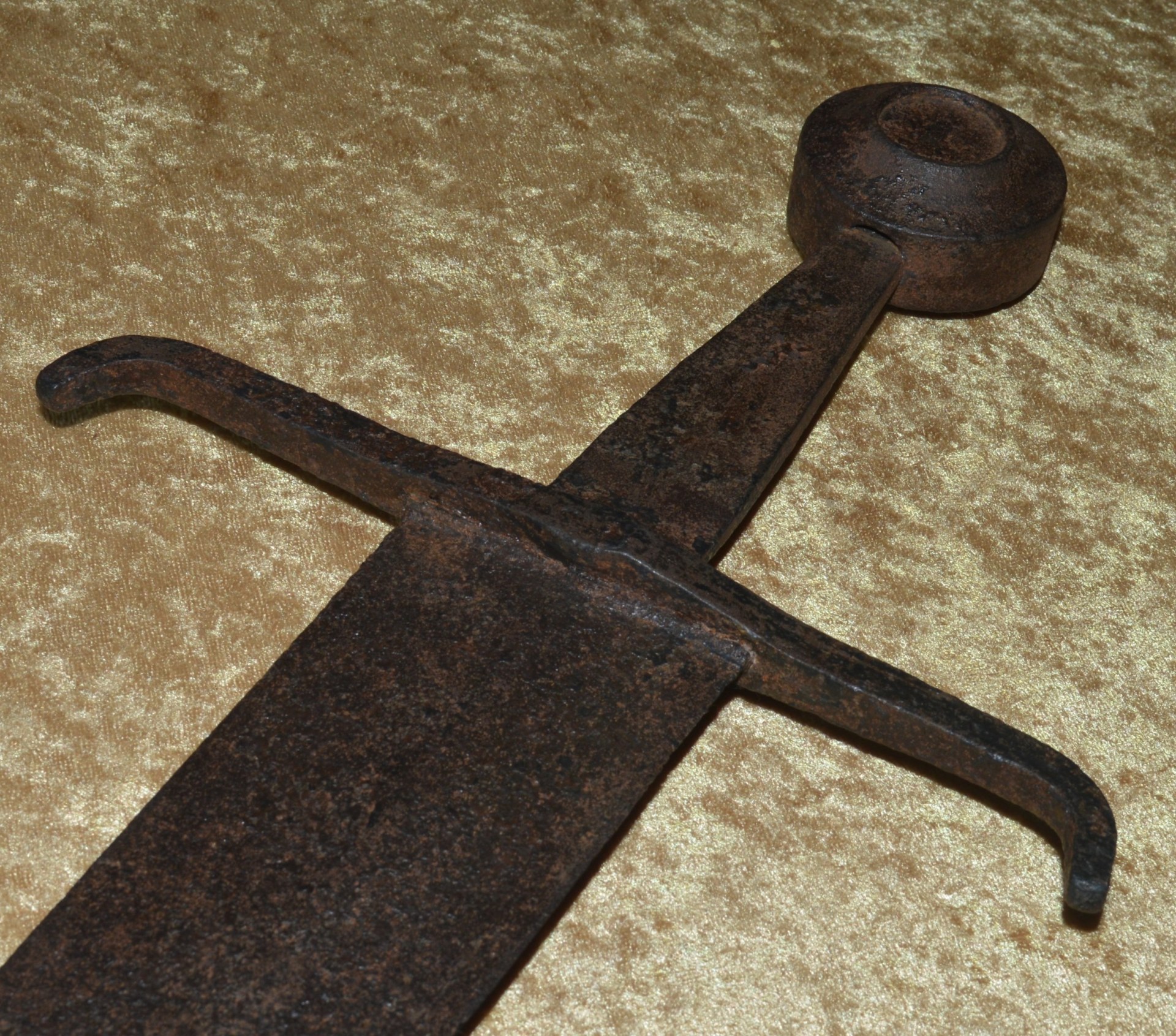
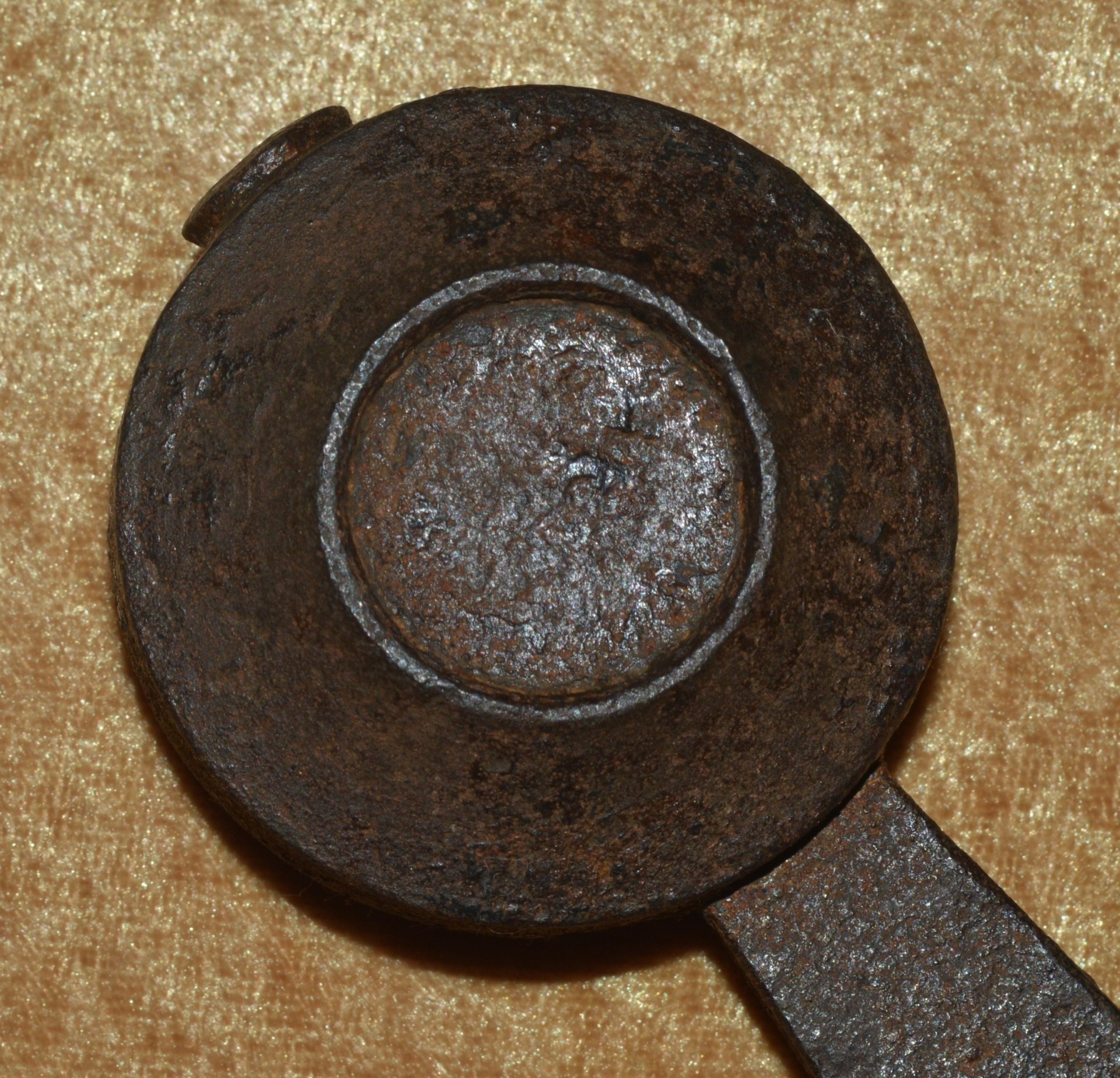
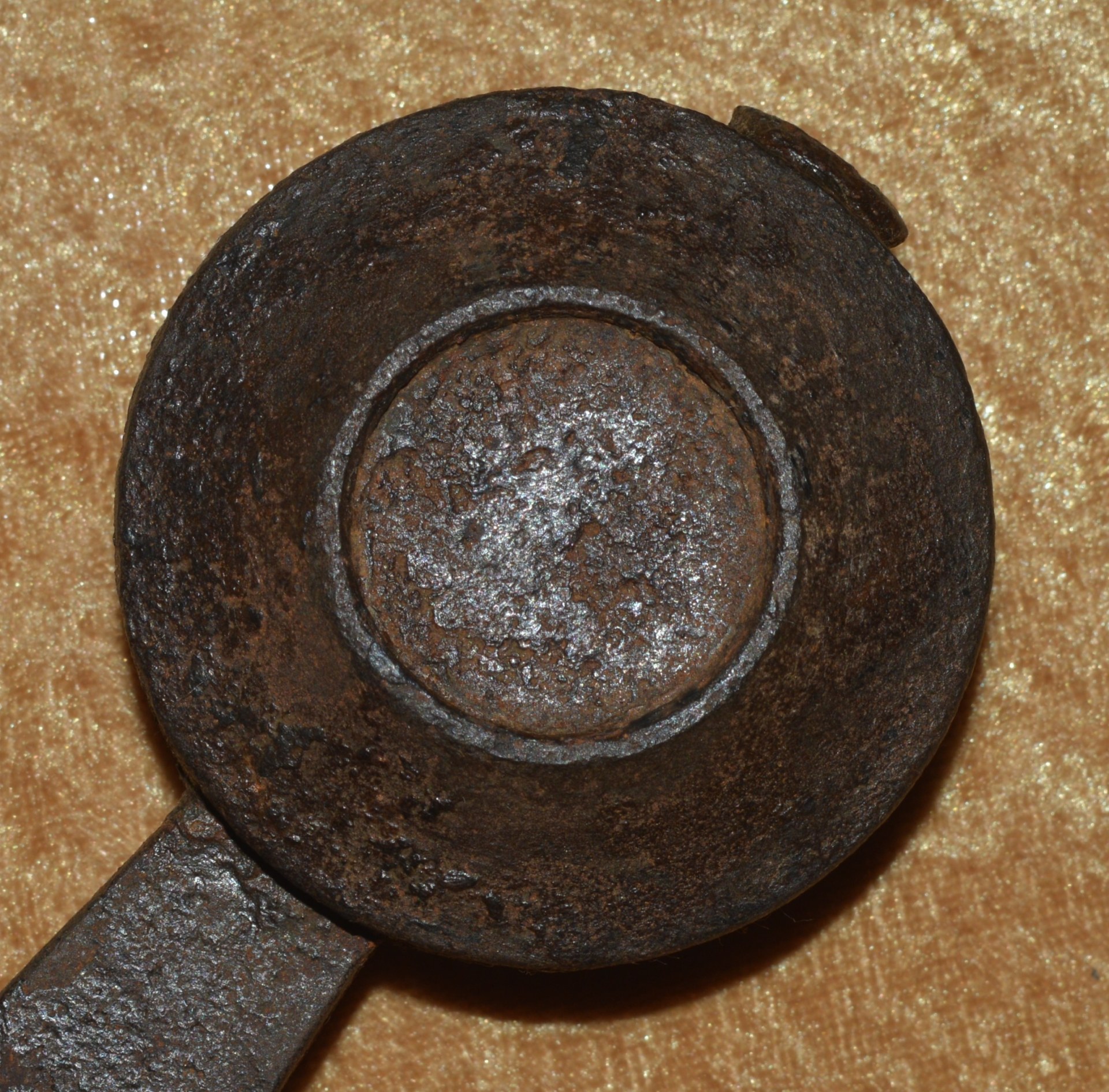
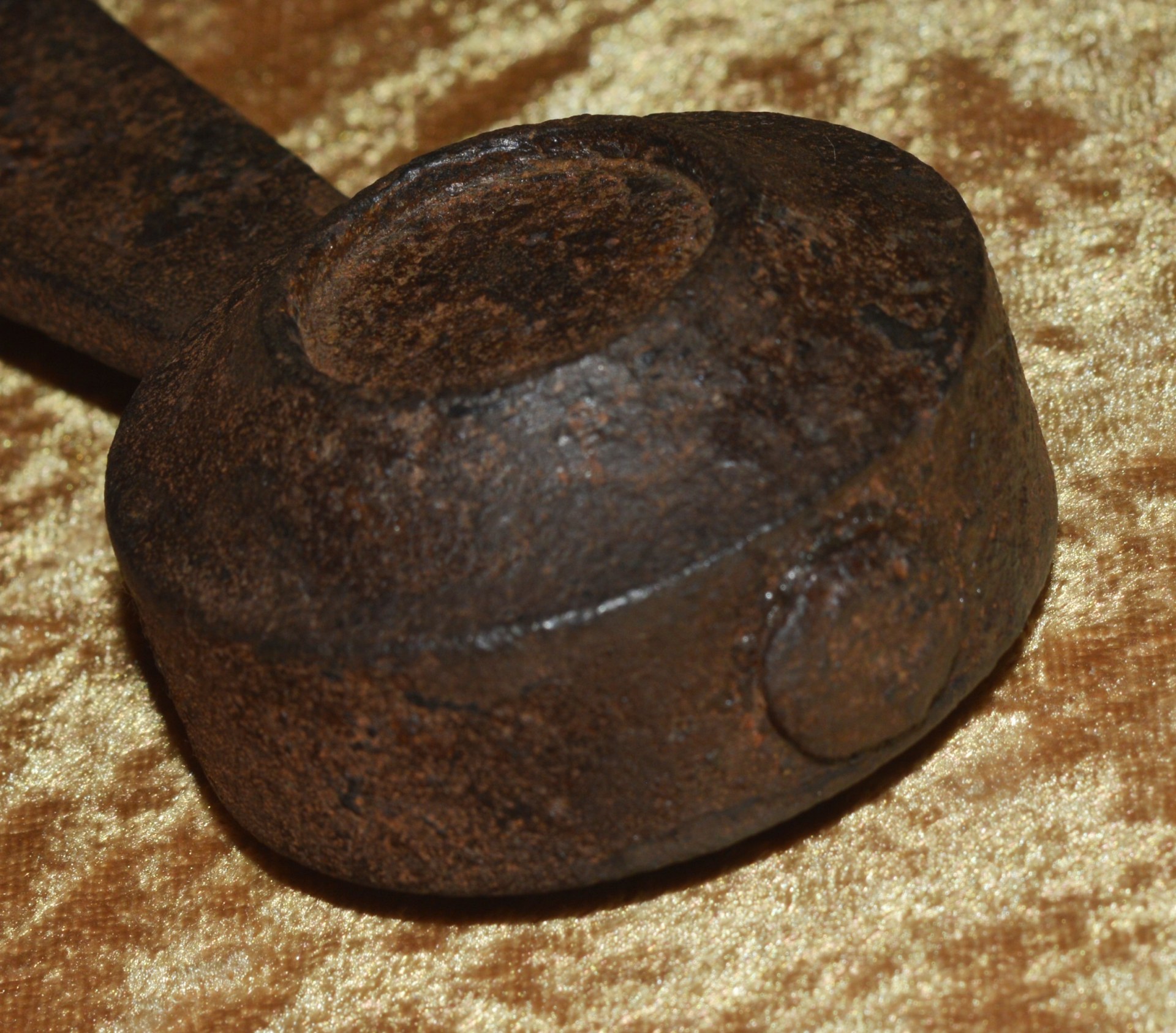
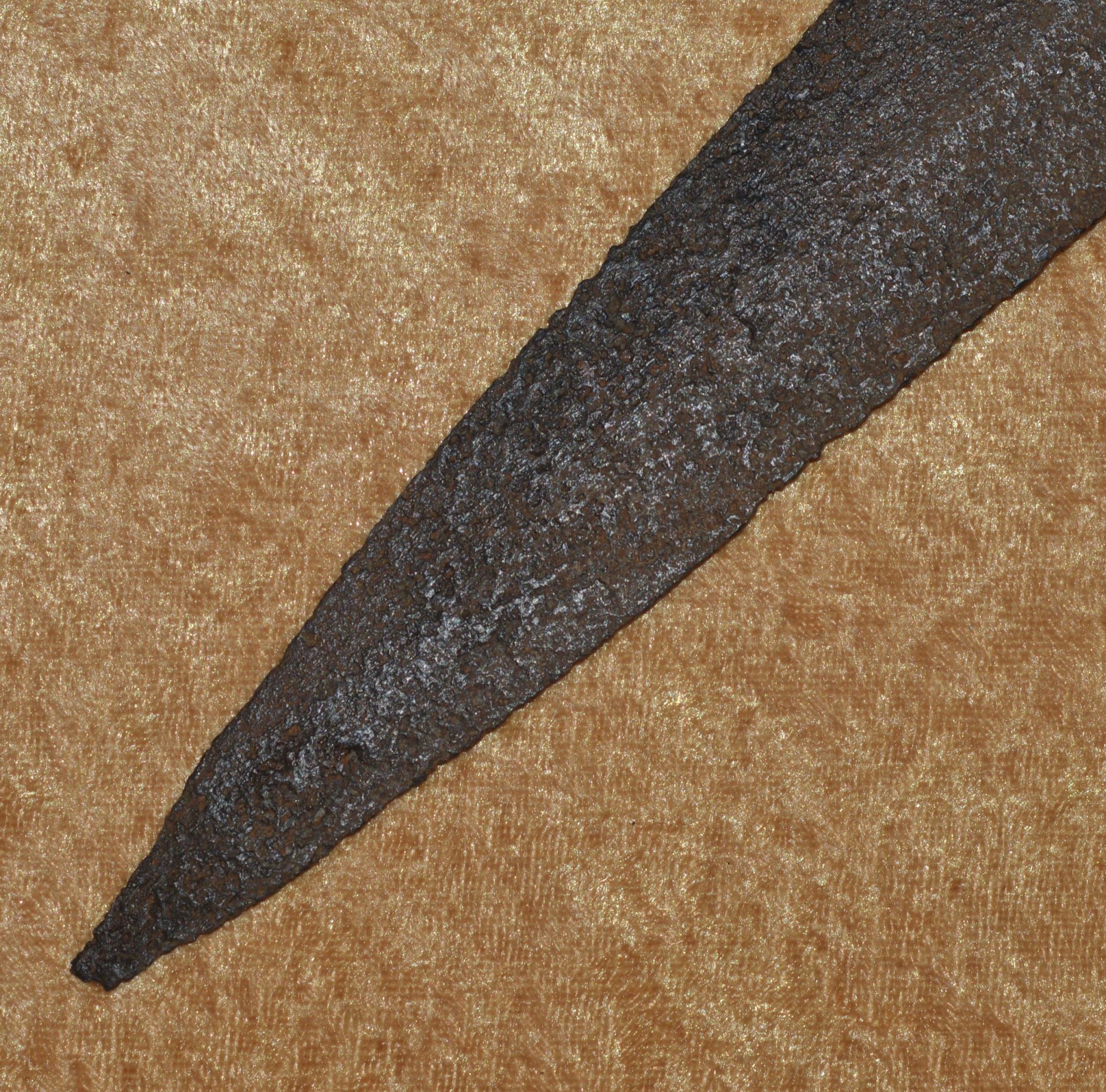
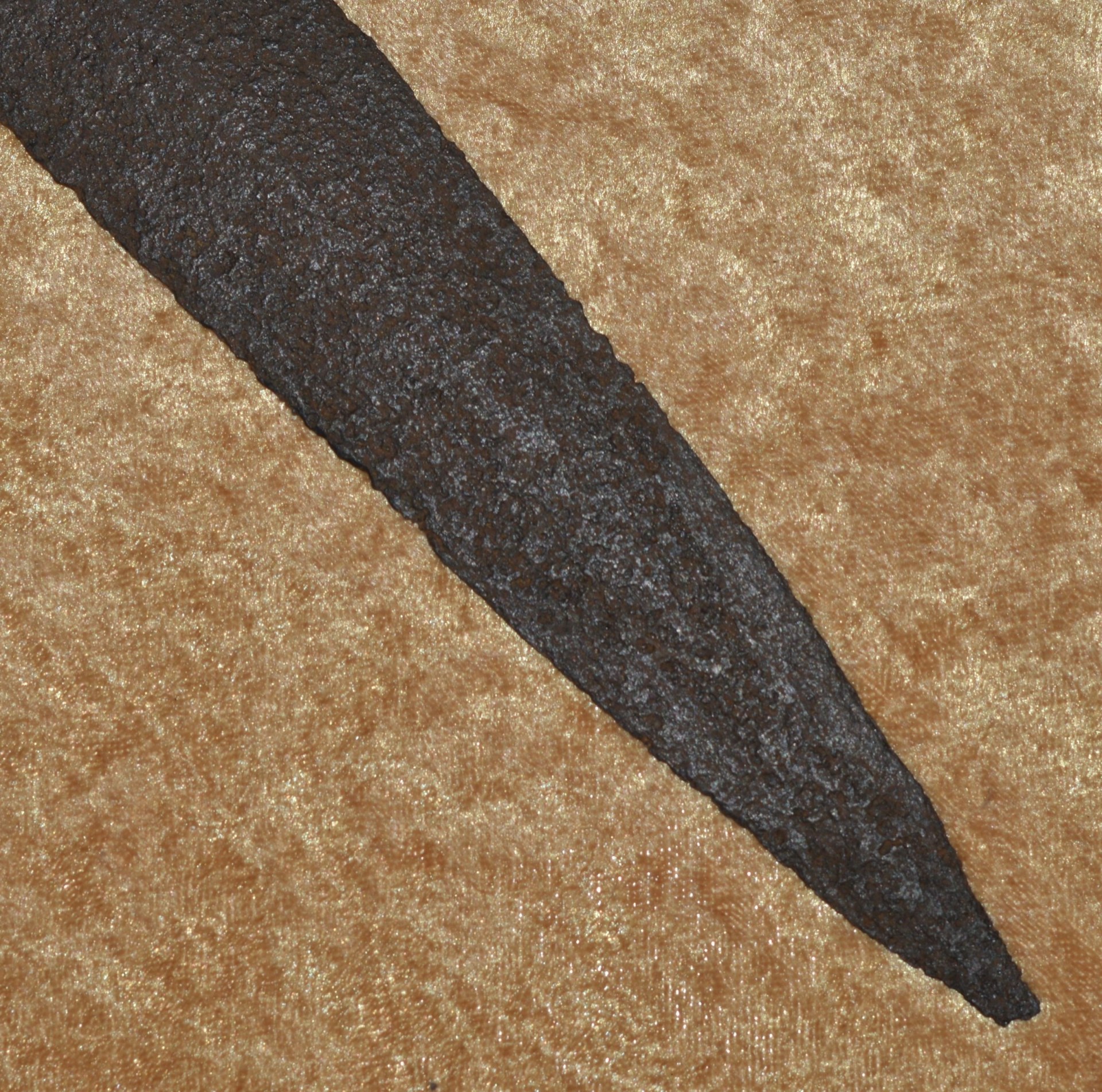
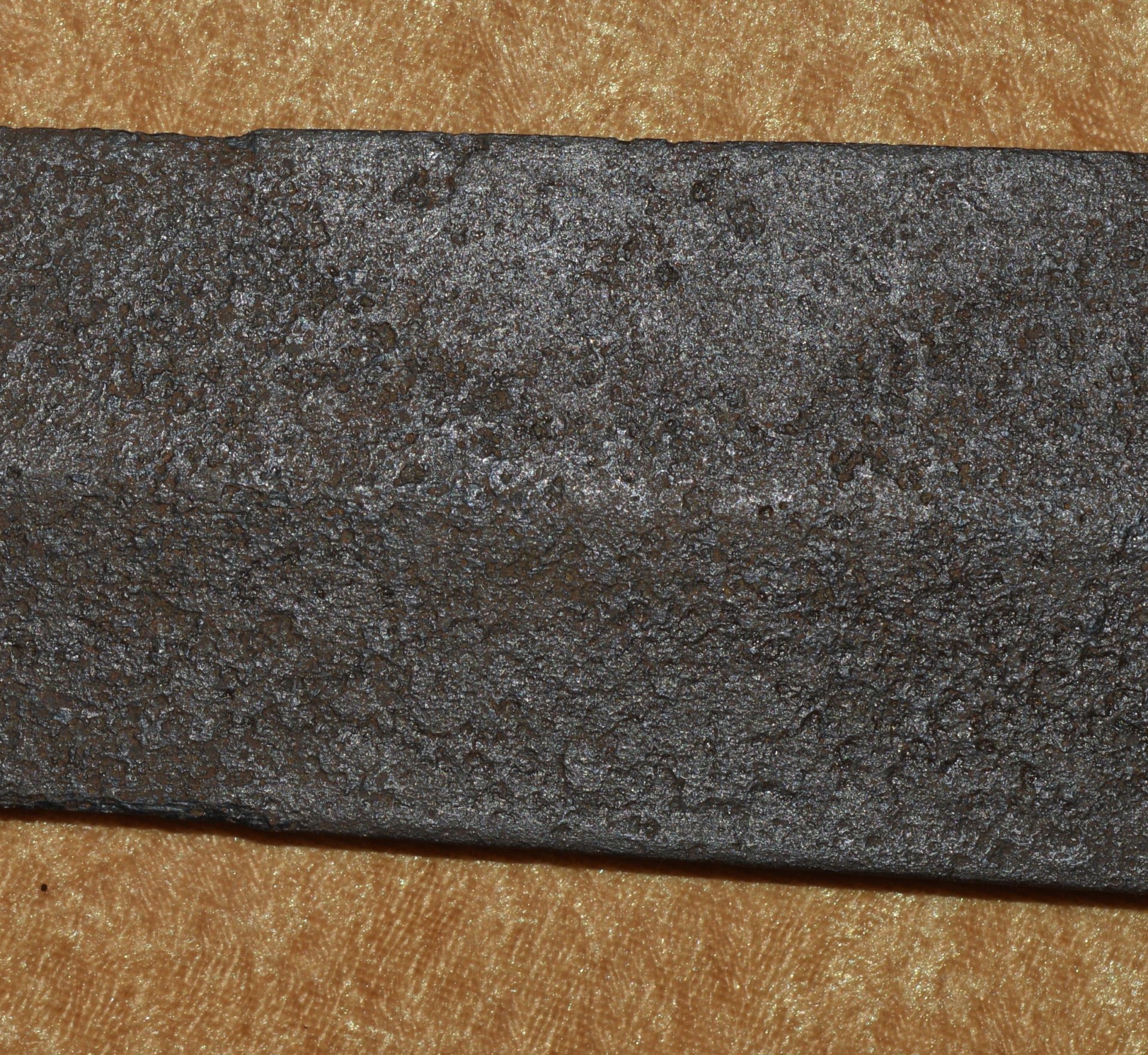
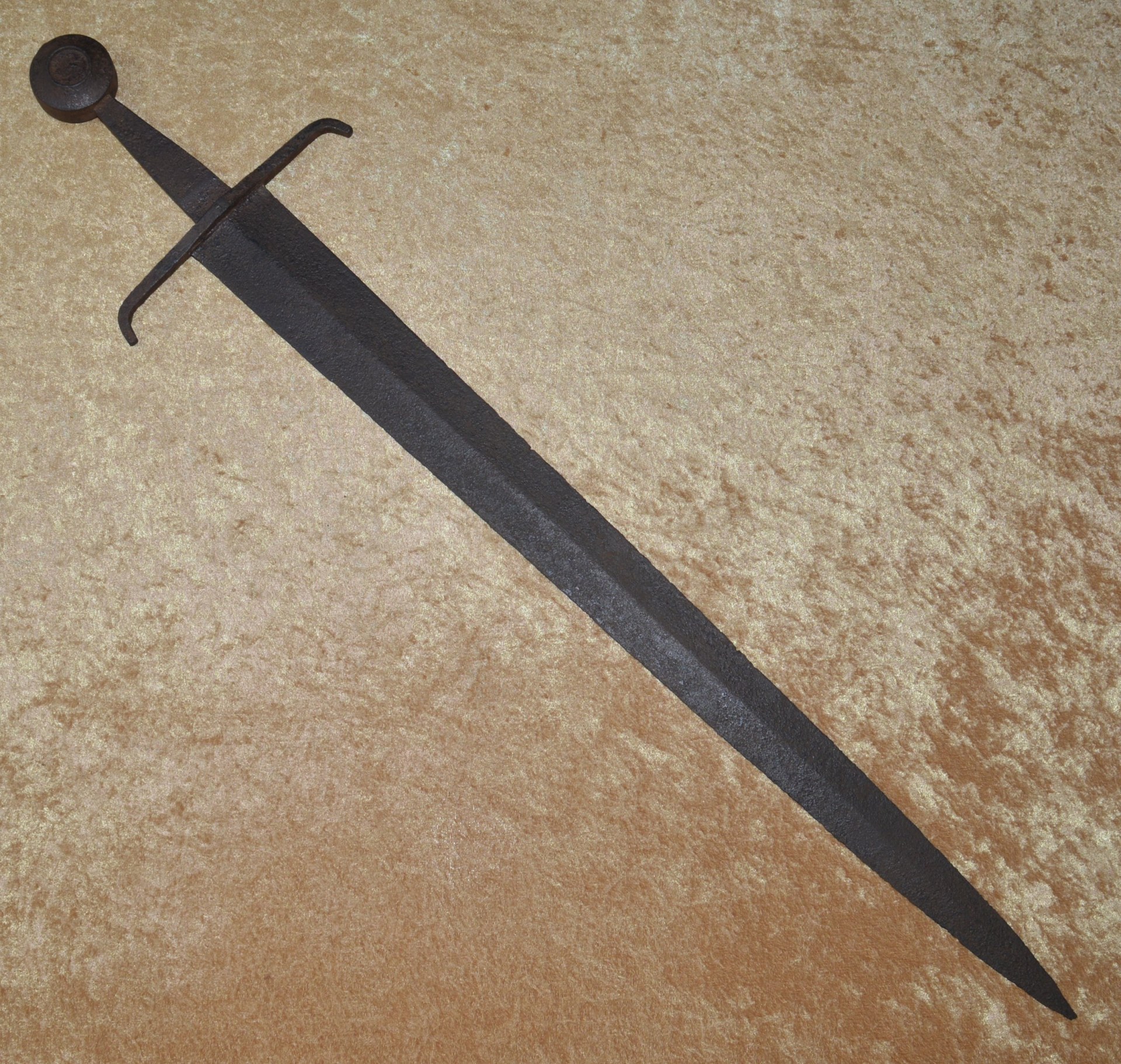
Of classic 15th Century Oakeshott Type XVIII form with broad (nearly 2 3/4″ at the hilt), slightly hollow-ground 30 5/8″ (77.8 cm) blade of flattened diamond-section, tapering and gracefully curving to a sharp point; small shoulder where it meets the guard and slight bulge in the tang. Rectangular-section Oakeshott Type 4 iron guard with down-turned finials. Heavy Type J disc-shaped pommel tapering to a round central depression. Overall length 38″ (96.5 cm). In excellent excavated (water find) condition, with small piece of the blade tip broken off; with a mix of stabilized black and newer red rust; several shallow edge nicks. Similar sword illustrated in “The Sword in the Age of Chivalry”, by R. Ewart Oakeshott, Fig. 34.
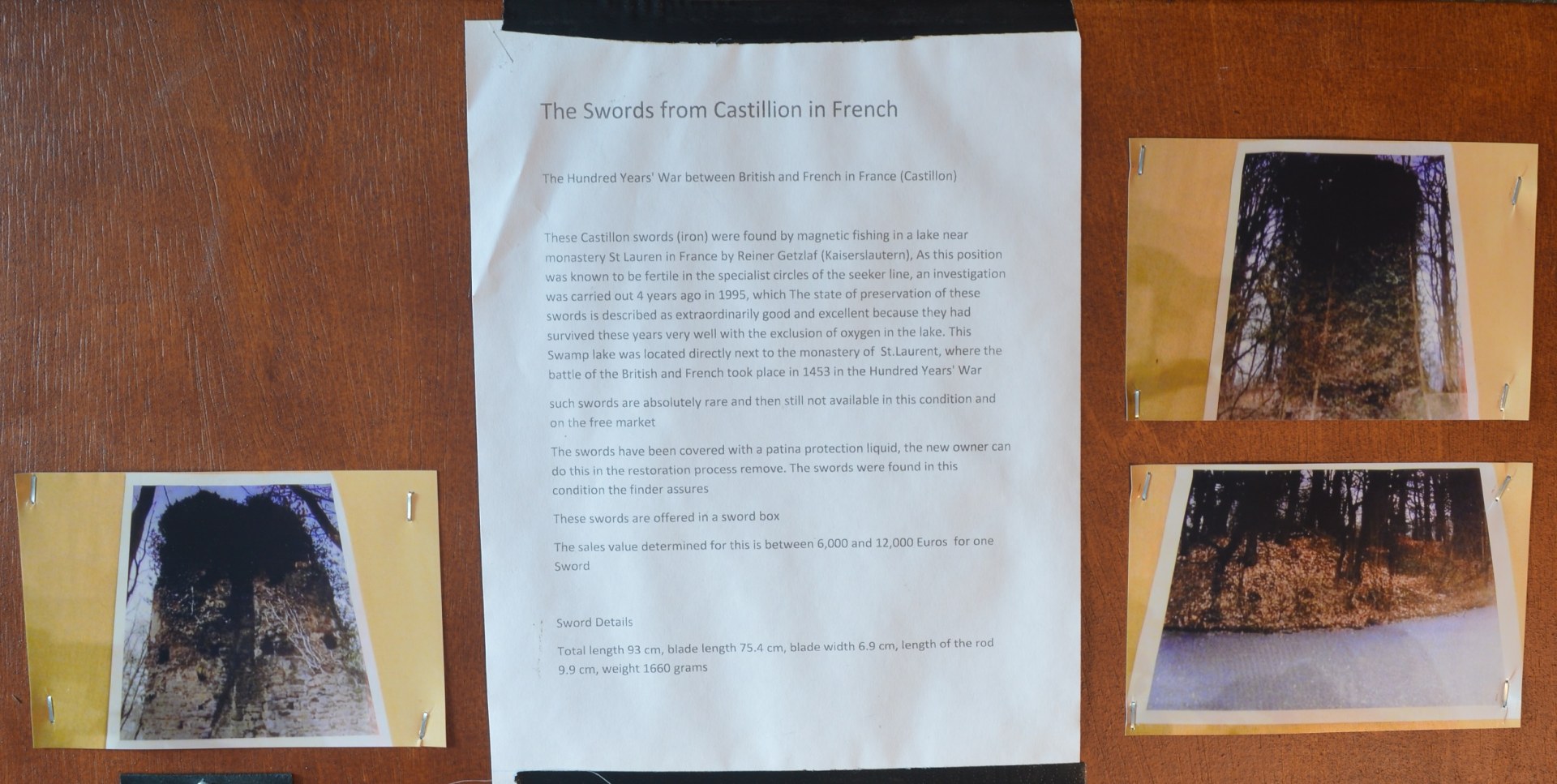
This sword was discovered in 1995 by magnetic fishing in a small lake near the Priory of St. Laurent, near where the final battle of the Hundred Years War was fought, known as the Battle of Castillon. Having resided in the oxygen-free mud bottom of a fresh-water lake for nearly 5 centuries, it has been preserved in remarkable condition, missing only the grip. The sword comes in a wood box with hinged lid, attached to which is a type-written description of how, when, and where it was found, and by whom, with copies of color photographs of the location, one of which shows this sword lying in mud at the lake’s edge. A sword of nearly identical form, also from the Battle of Castillon and in similar condition, recently sold at auction in London for 55,000 British Pounds, plus buyer’s premium.
Battle of Castillon
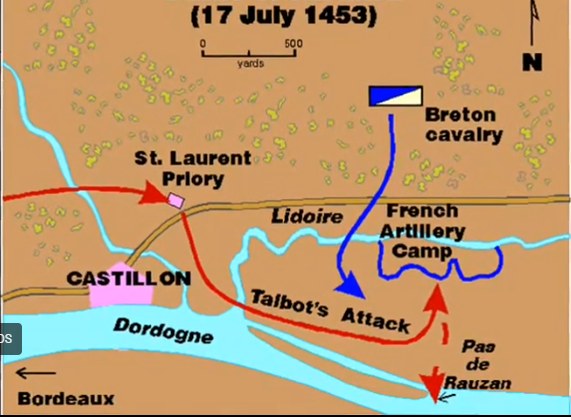
On the morning of July 17, 1453, the vanguard of the English Army consisting of a force of 500 man-at-arms and 800 mounted archers, routed a force of 800 French archers at the Priory of St. Laurent, north of the town of Castillon and took possession of the priory. The bulk of the French Army of approximately 8000 was encamped in a fortified position further east along the banks of the Dordogne River. Believing the French to be in retreat, John Talbot, 1st Earl of Shrewsbury, commanding the English troops, ordered his men to advance along the river to attack. After several failed attempts to break the French fortifications, the French sent cavalry to attack the flanks of the English Army. Despite their heroic efforts, the English lost heart after Talbot was killed and the battle turned into a rout, with the English losing nearly half of their 9000 man army, with the survivors fleeing west to Bordeaux. The location where this sword was found was along both the line of advance and retreat of the English Army and was likely discarded in an attempt to escape.
PRICE ON REQUEST
 Signed and Dated WWII Japanese Shingunto Katana
 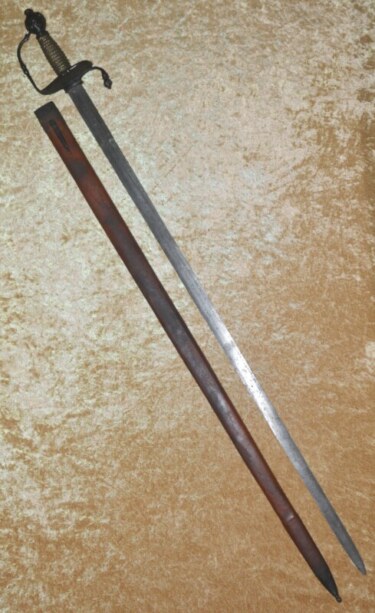 German Officer’s Broadsword with Scabbard, ca. 1680
  Published Spanish Colonial Bilbo Broadsword, Early 18th C
 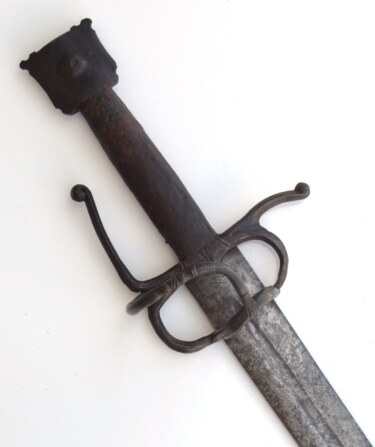 Rare Venetian Hand-and-a-half Sword, ca. 1490