
Description
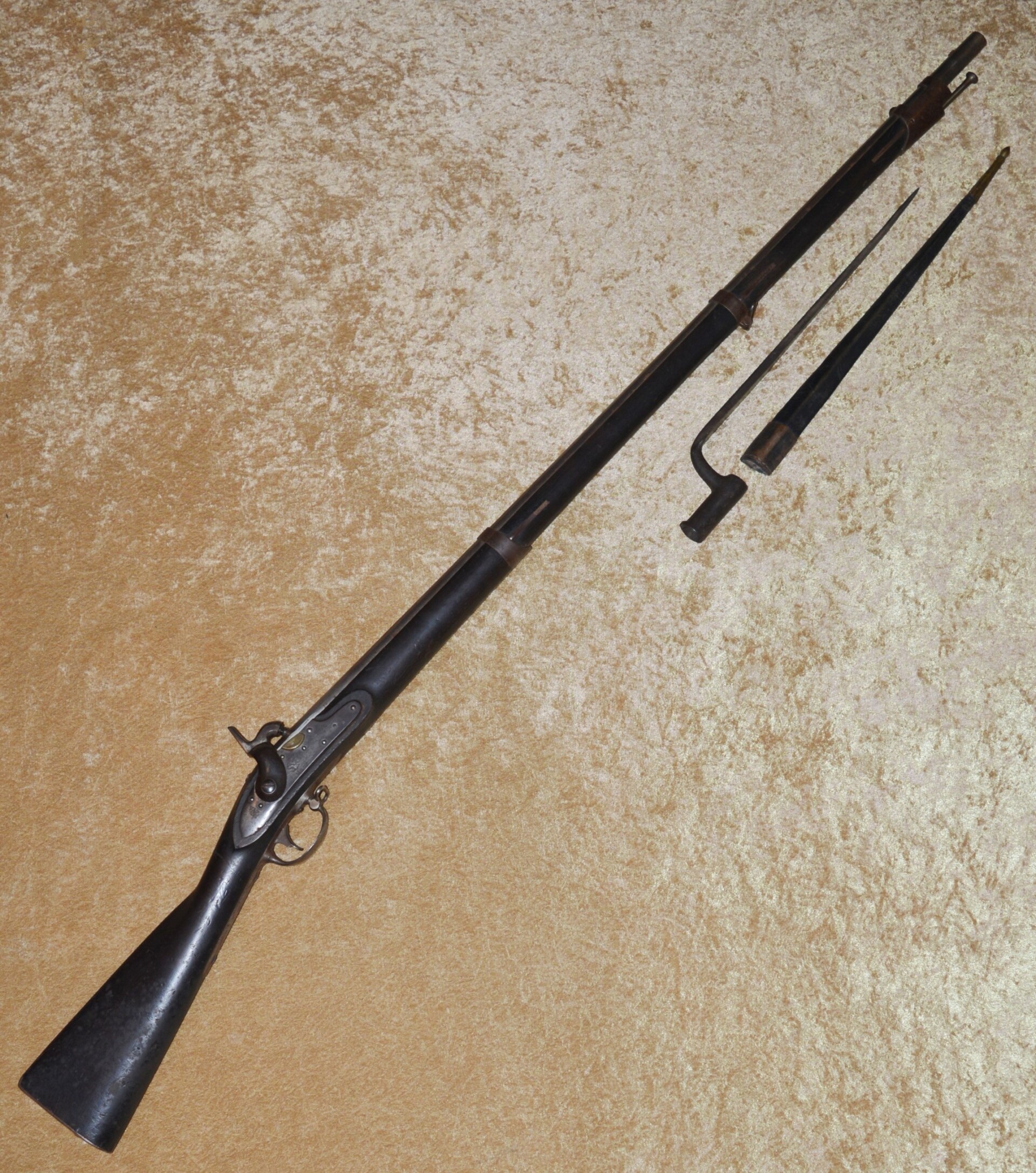
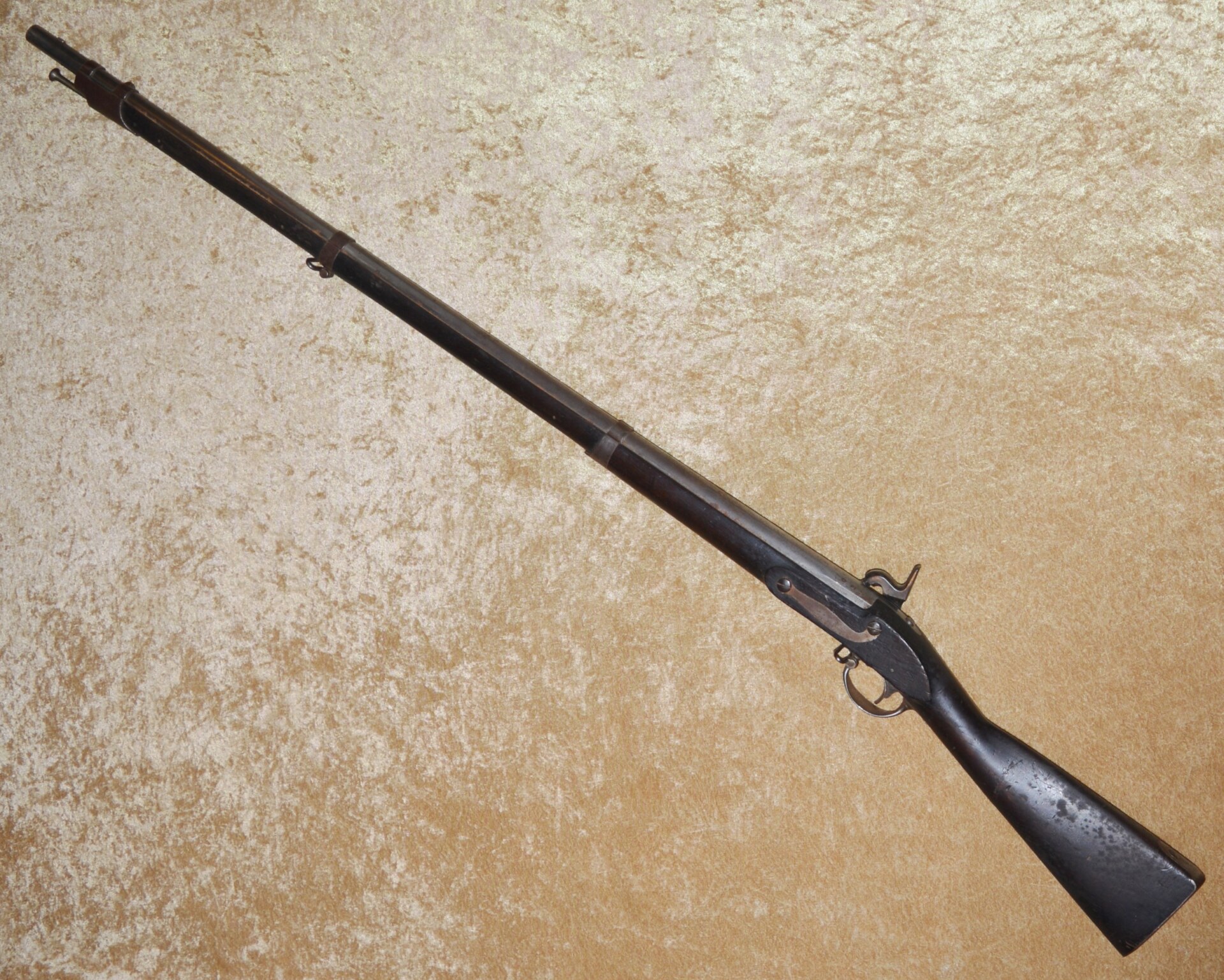
Springfield Armory made over 325,000 M1816 flintlock muskets, this example being the
“Type III”, produced between 1831 and 1844. By the time their production had ended, it
was replaced by the new percussion ignition system employed in the US M1842 Percussion
Musket. After a six year evaluation, it was decided that the flintlock arms made after 1812
and in serviceable condition would be converted to percussion. The vast majority of the
“Type III” M1816 flintlocks (made 1831-1844) were converted to percussion by one of
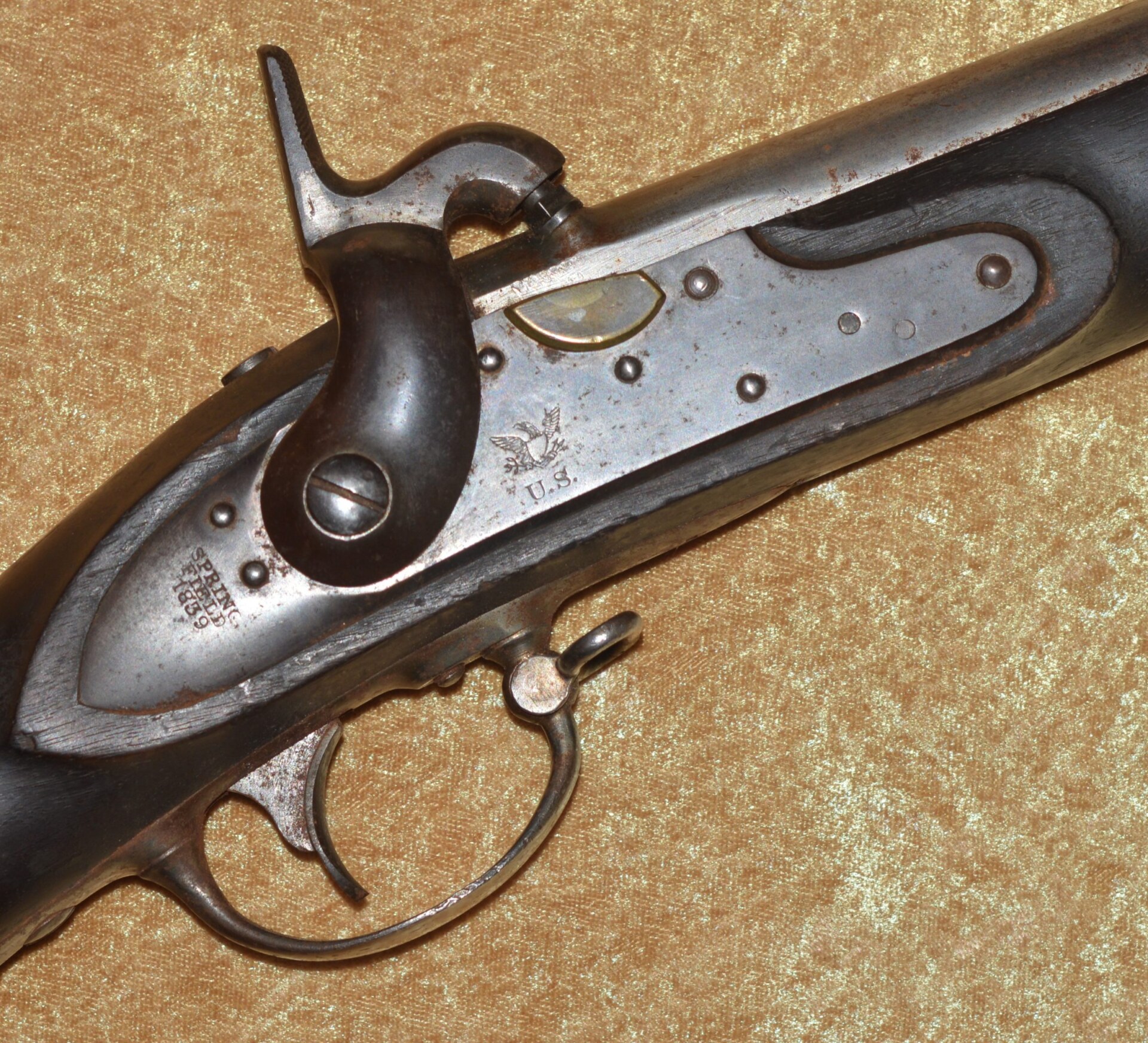
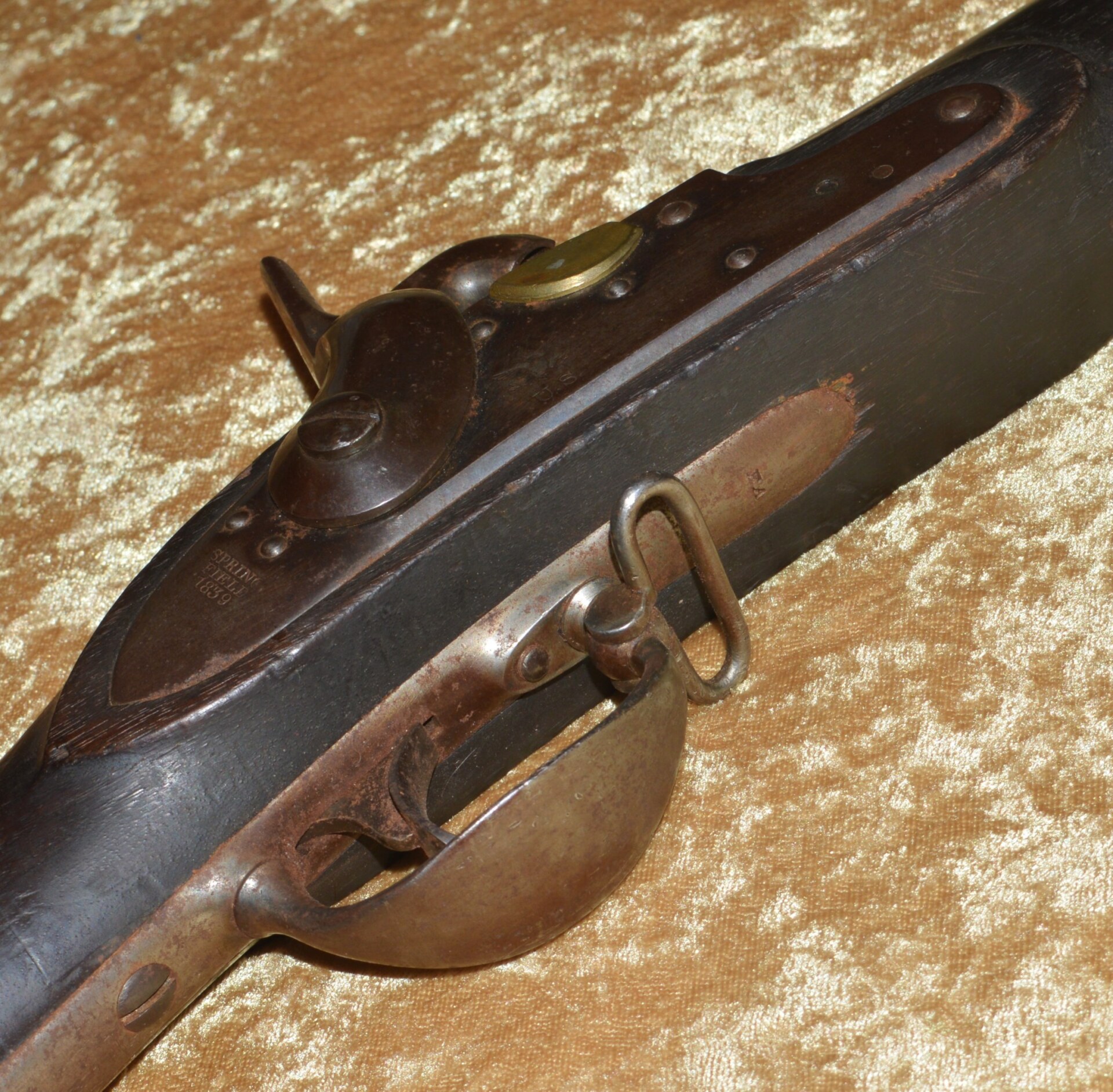
several different methods. This example used the Belgian Alteration, aka “cone type”,
which had all the external lock parts removed and the holes plugged. The brass pan was
ground flush, leaving a small cavity, which was filled with brass. The barrel vent hole was
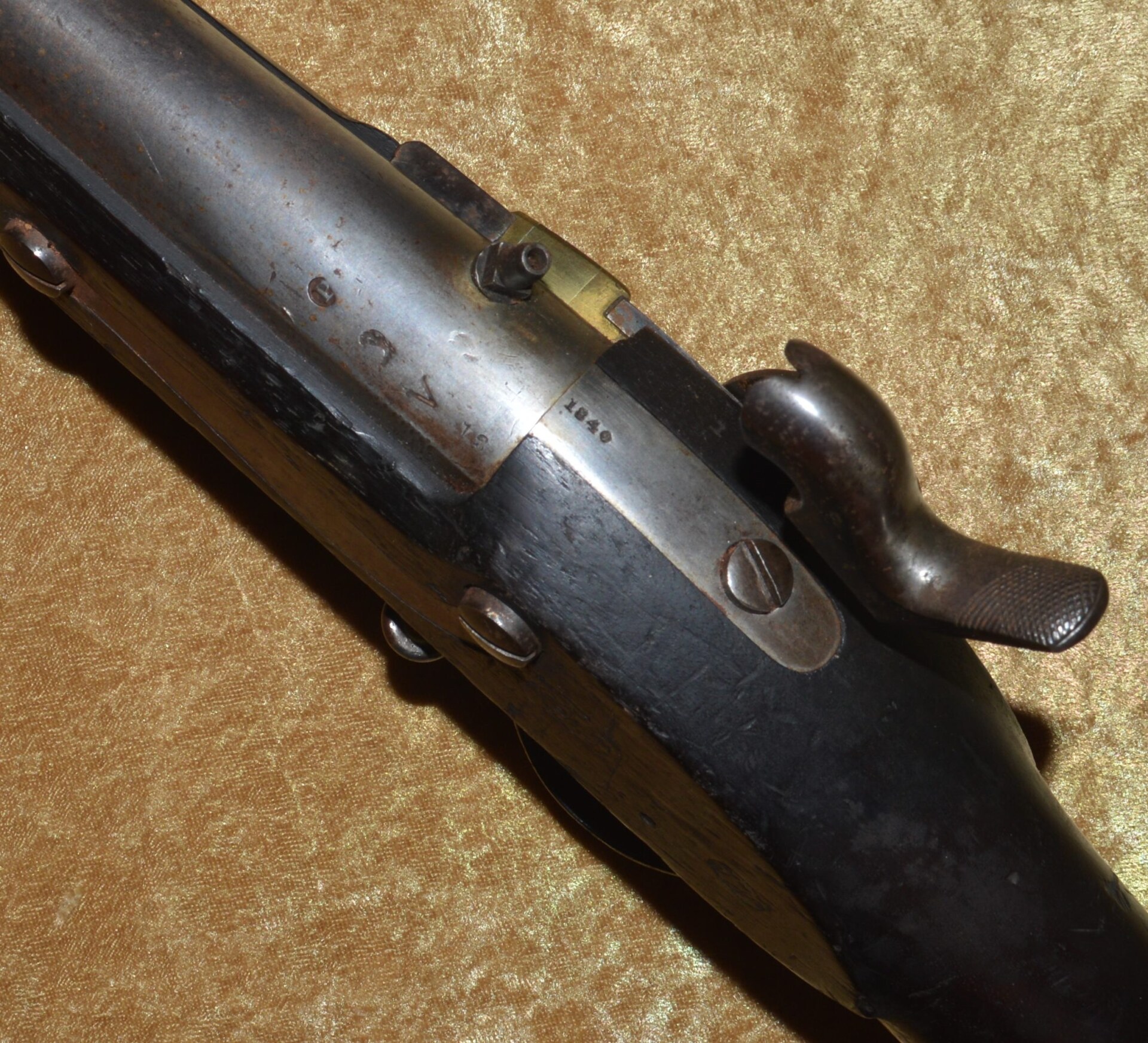
plugged and a nipple was screwed into a threaded receptacle on top of the barrel, offset to
the side of the hammer. It was then fitted with a distinctive arsenal military hammer.
Existing records indicate this was the only method performed at national armories. This
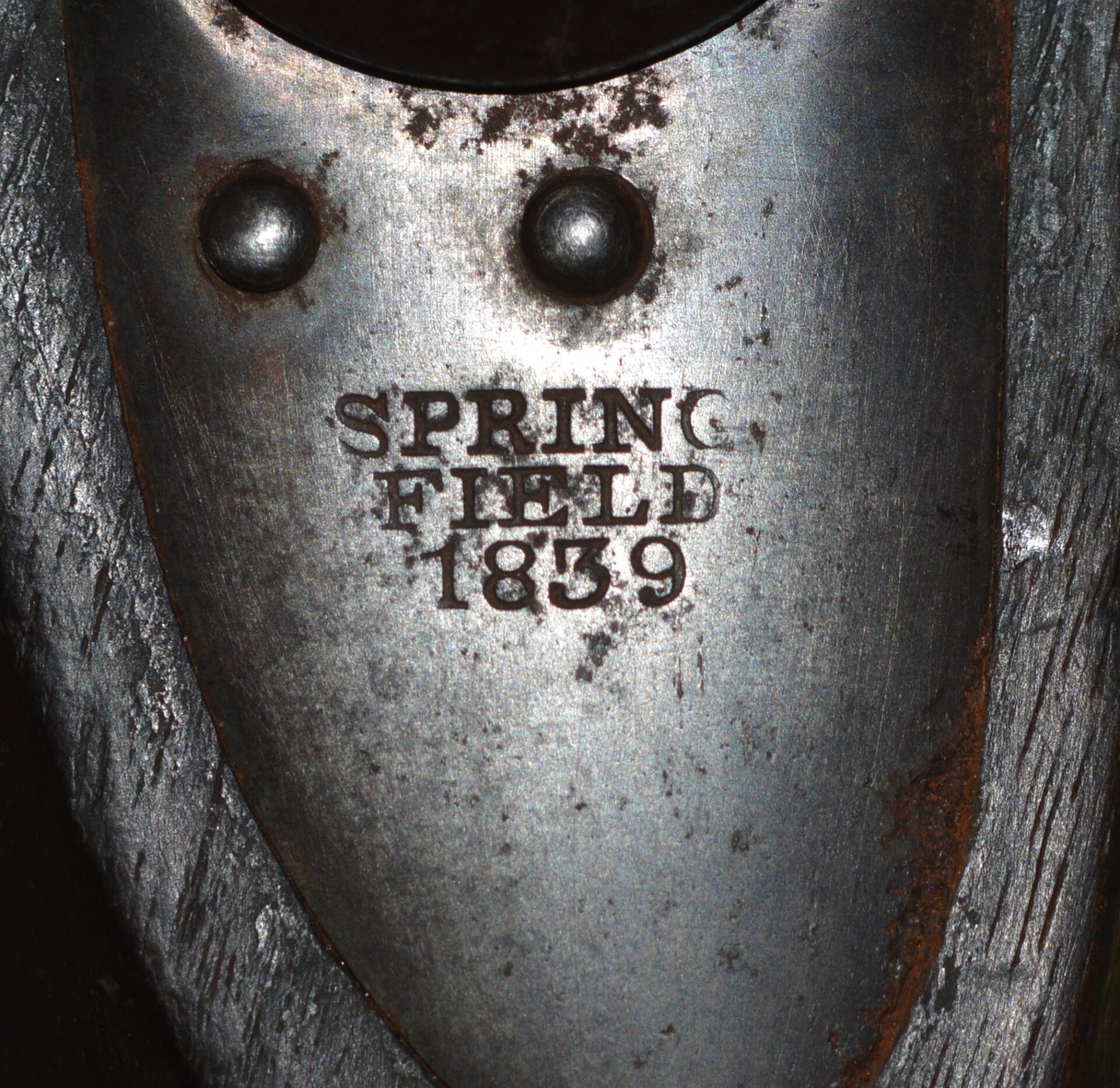
example with lockplate stamped “SPRING/FIELD/1839″ vertically behind the hammer and
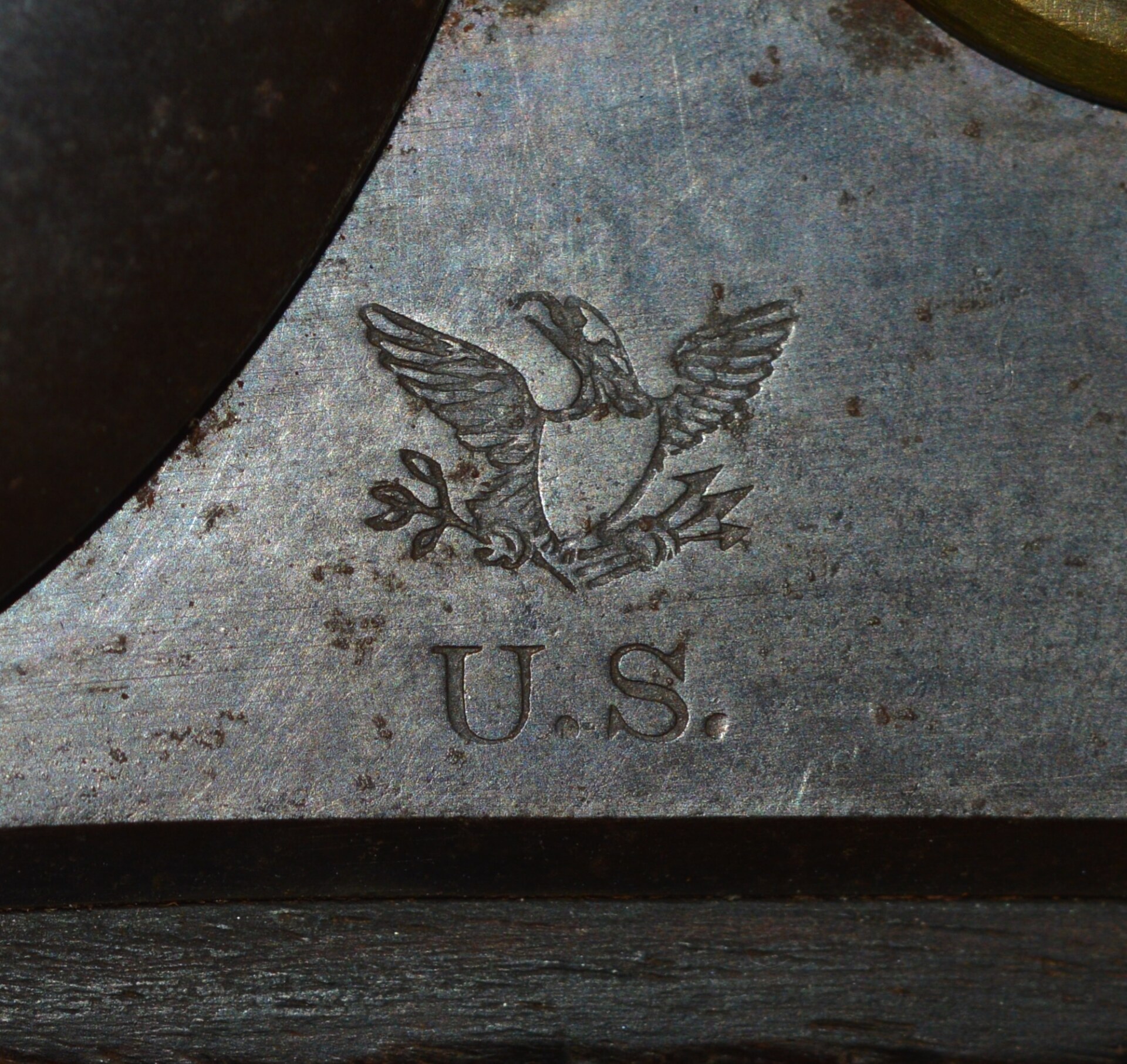
stamped with an eagle over “U.S.” forward of the hammer. Tapering round 42″ smoothbore
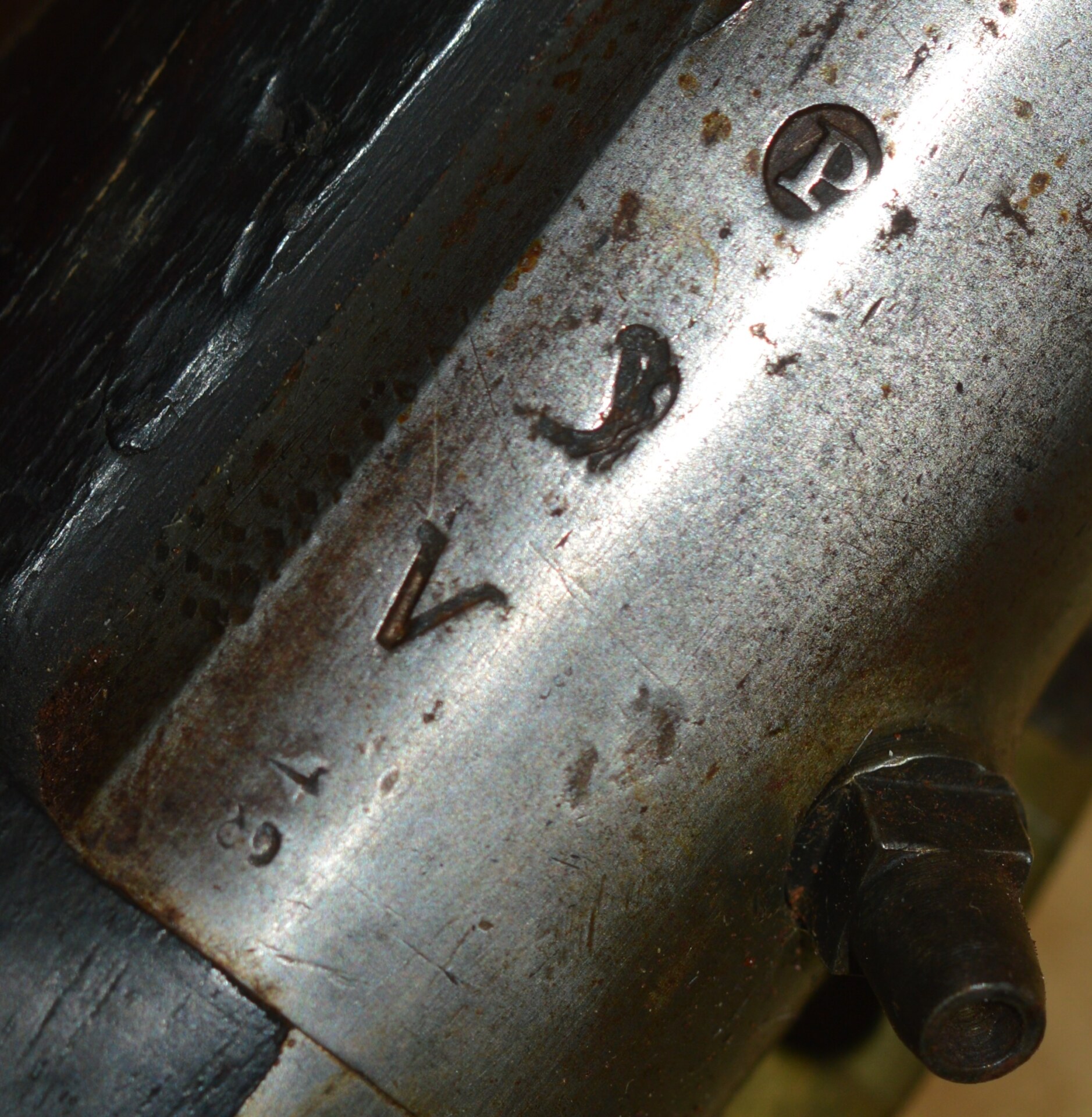
barrel of .69 caliber with view and proof marks stamped on the breech. Barrel tang is
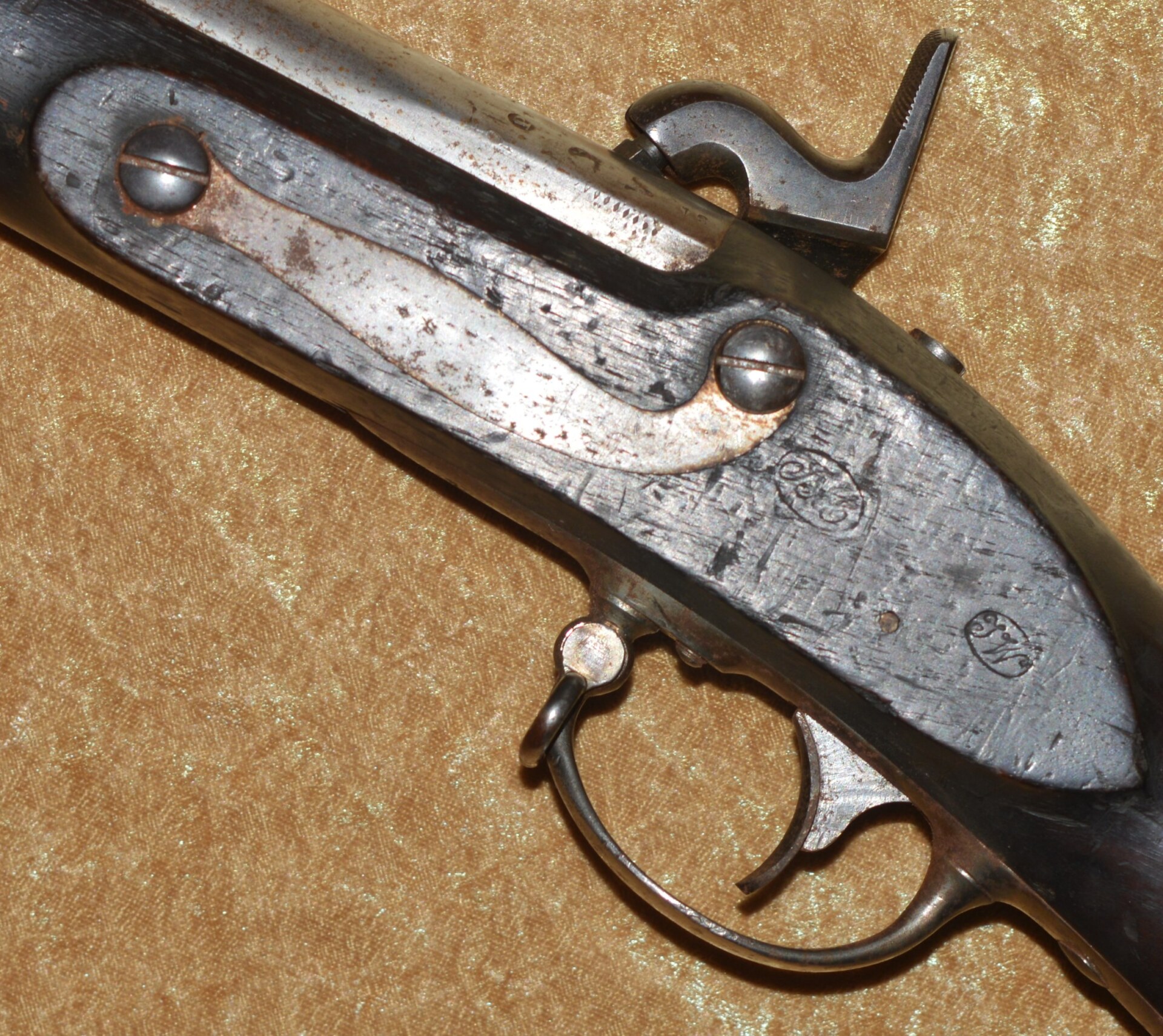
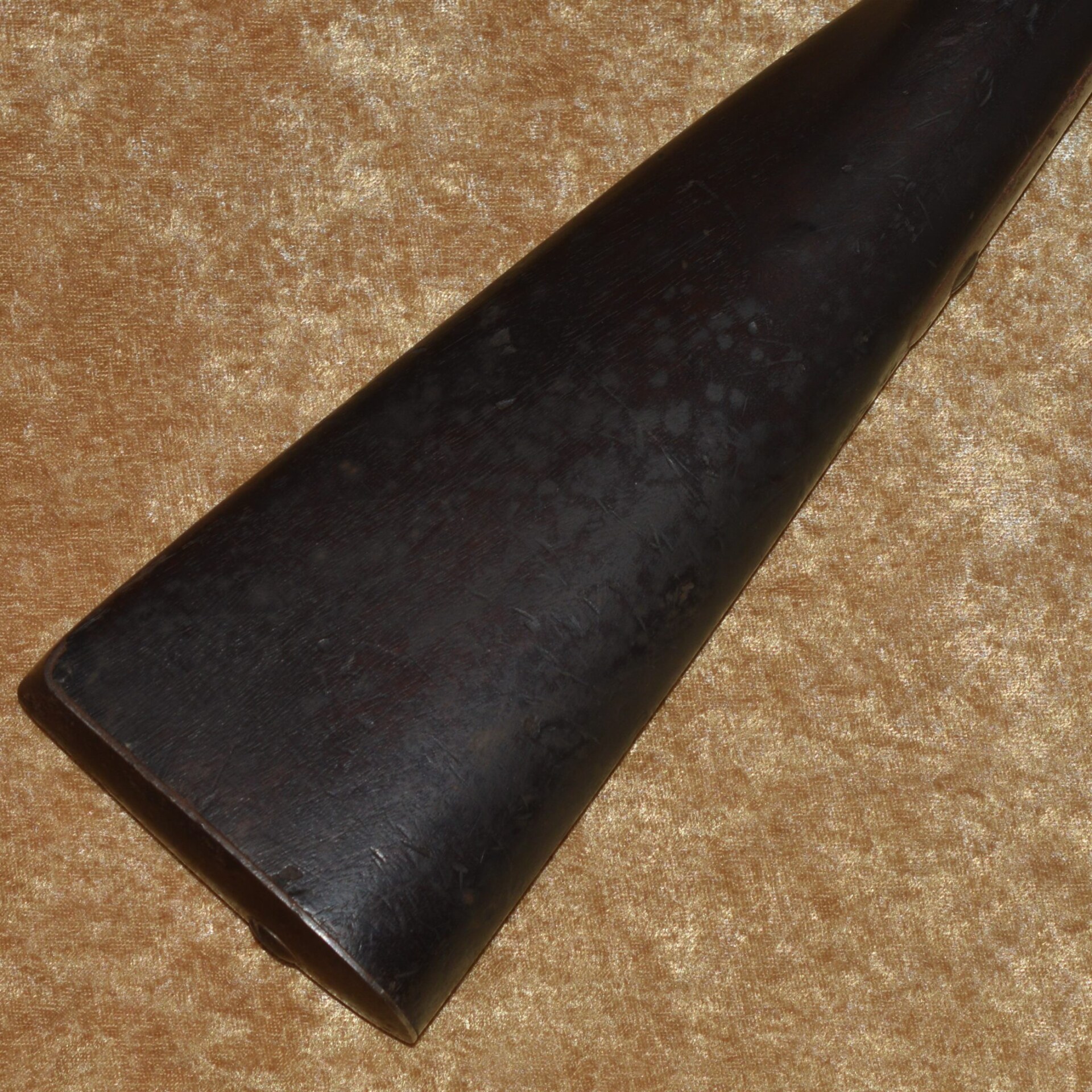
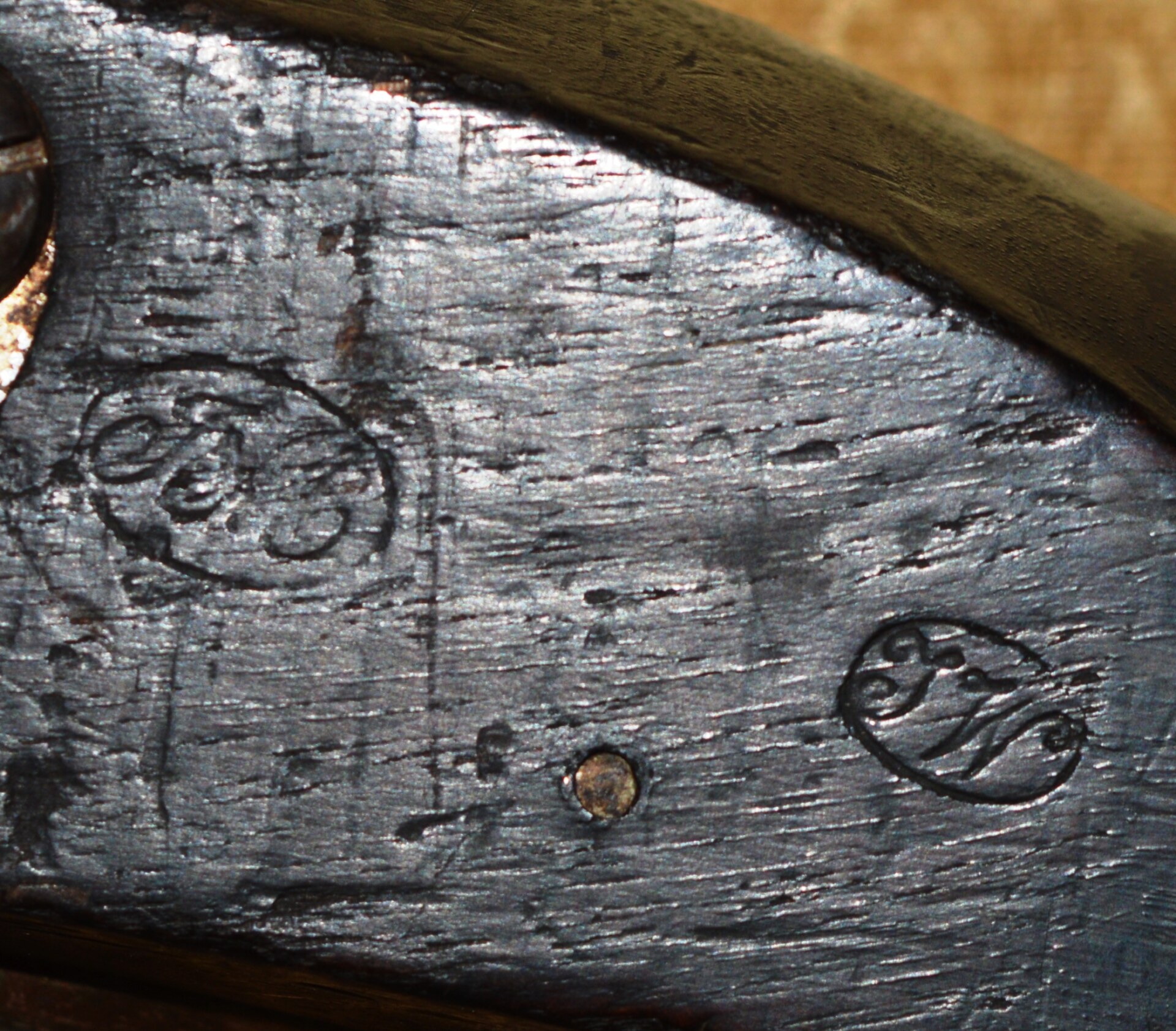
stamped “1840″. Walnut full stock with shallow comb and two inspector cartouches
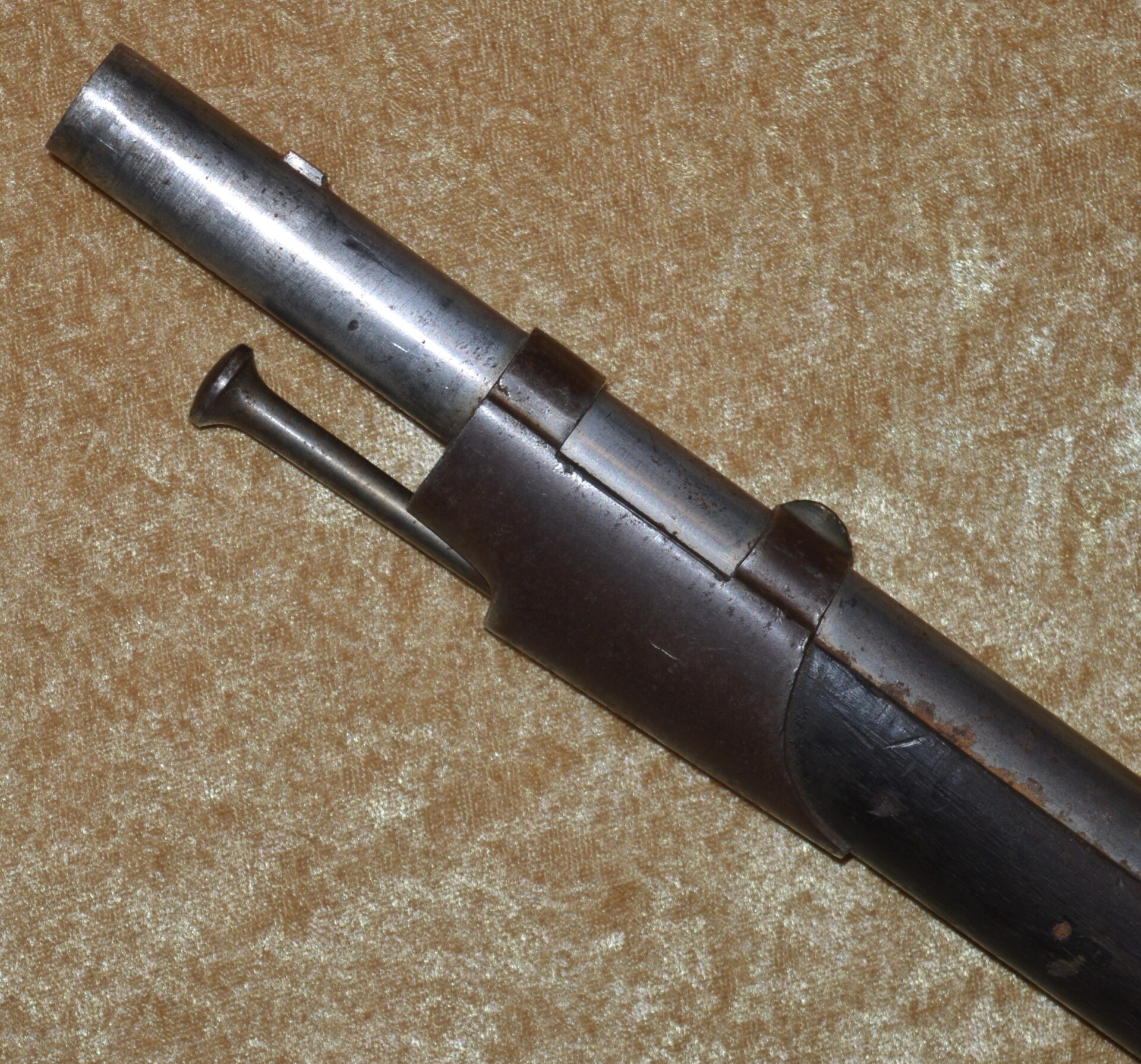
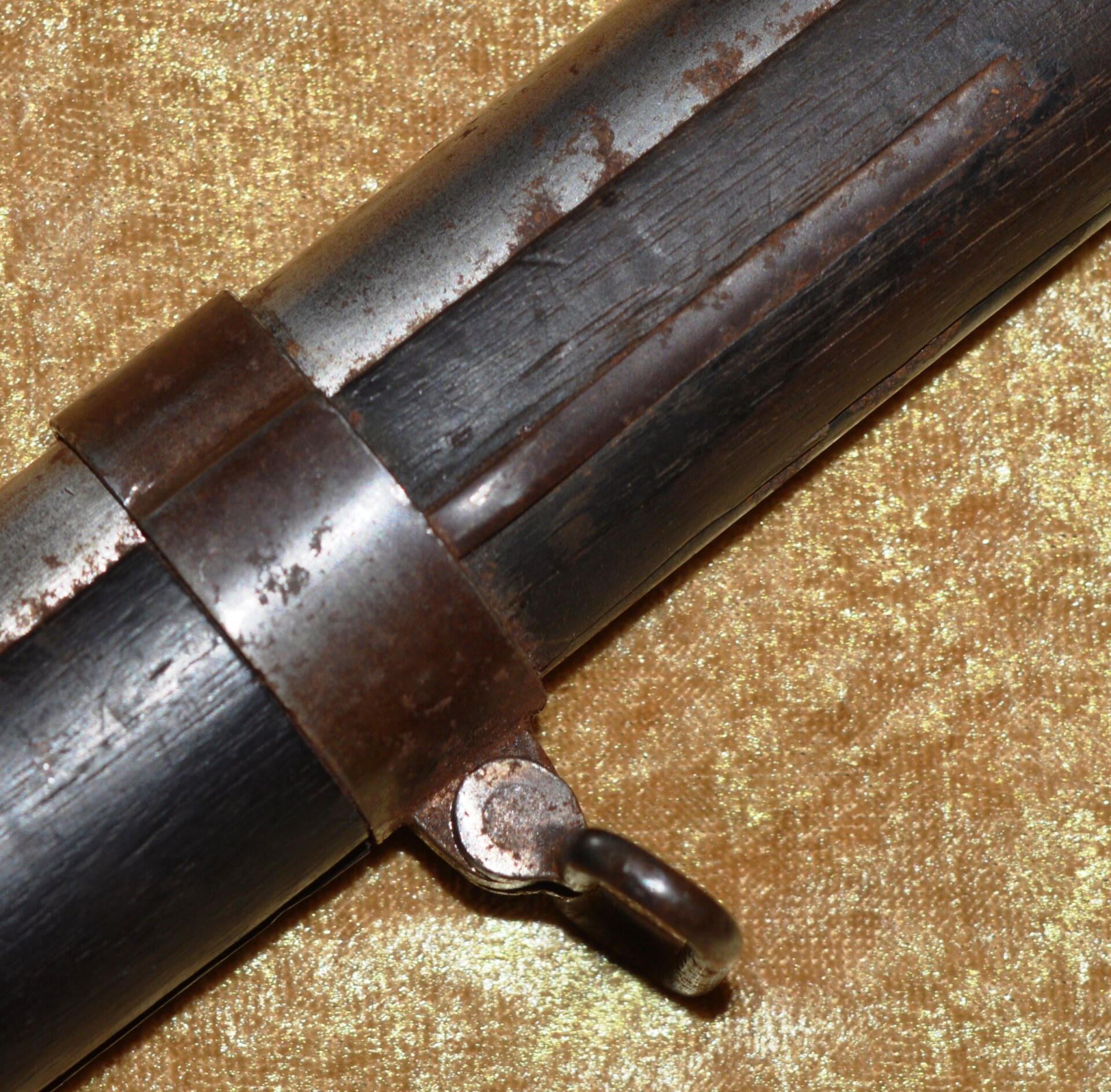
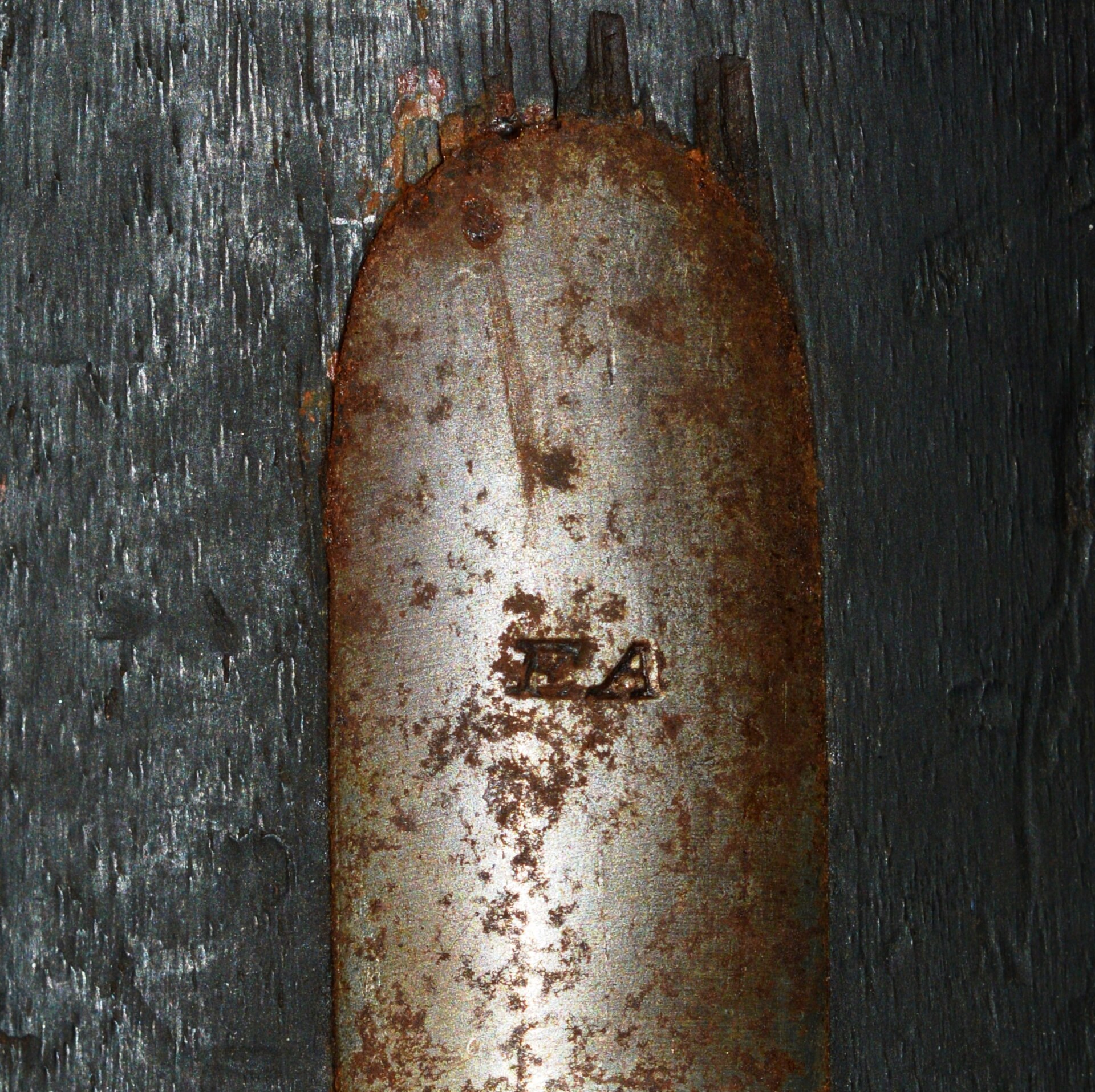
opposite lock. Iron mounts, including serpentine side plate, trigger guard with long tang
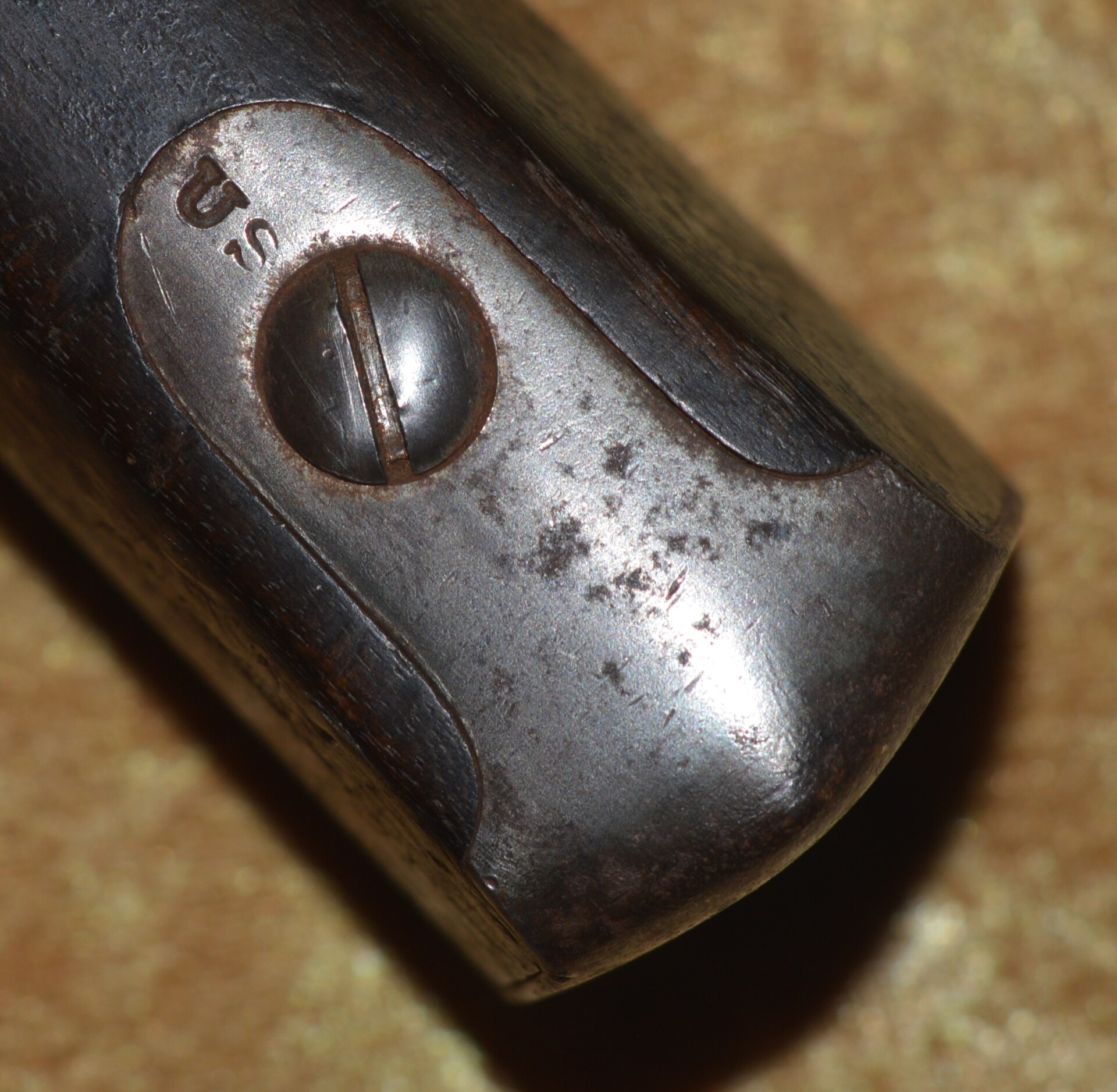
stamped “EA”, butt plate stamped “US”, and three barrel bands secured by springs, the
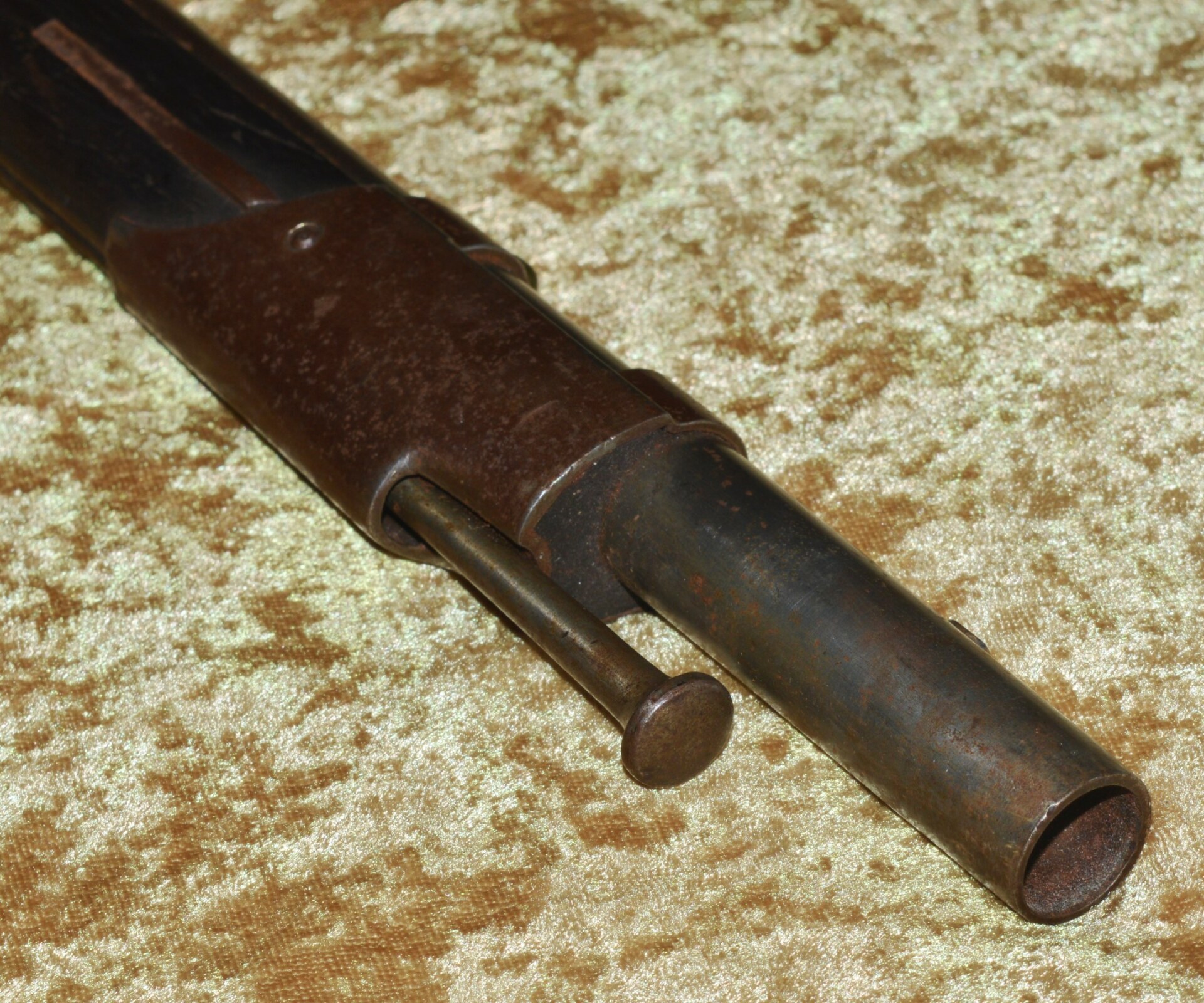
front band with integral blade sight; sling swivels on front of trigger guard and middle band.
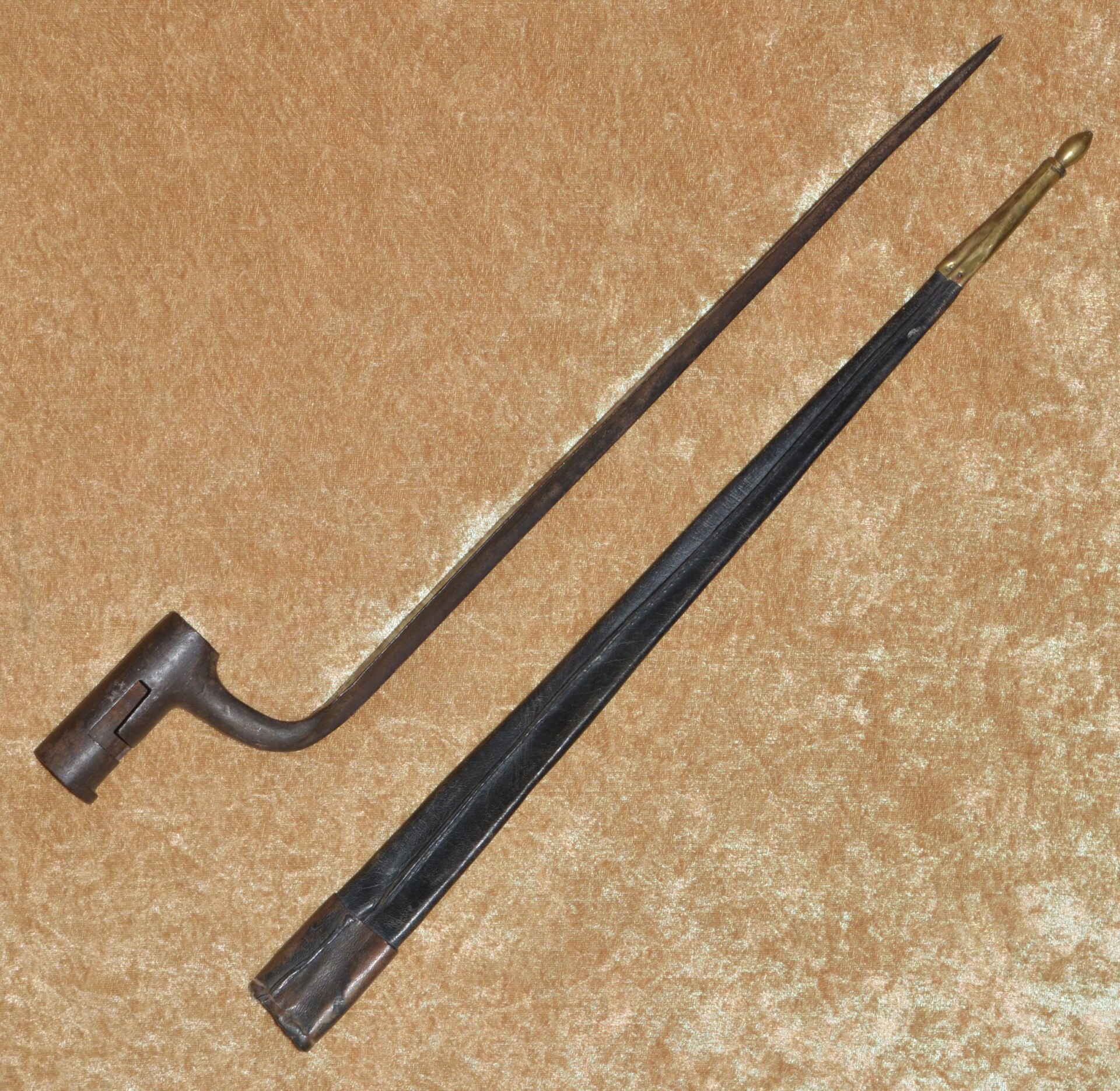
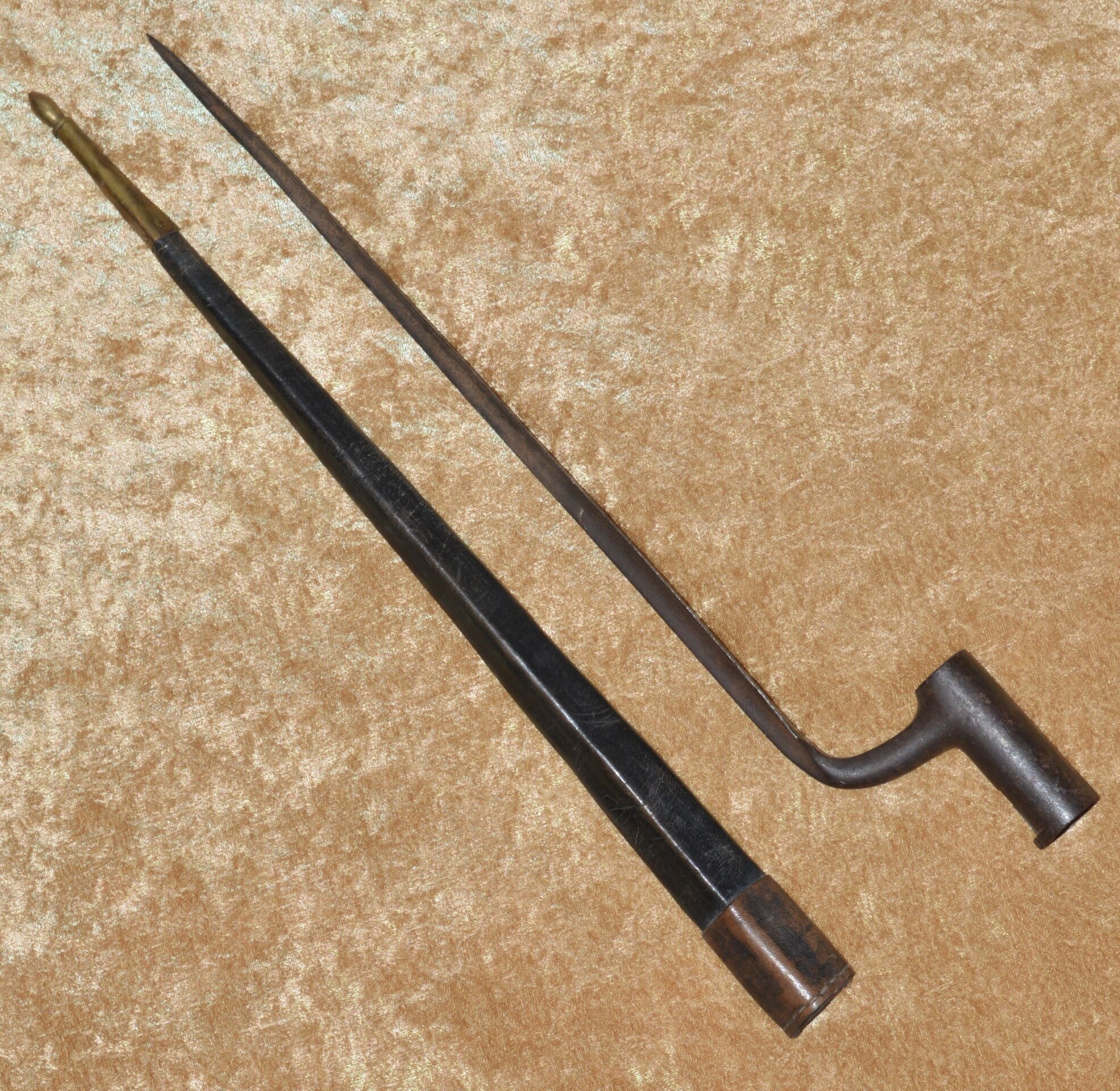
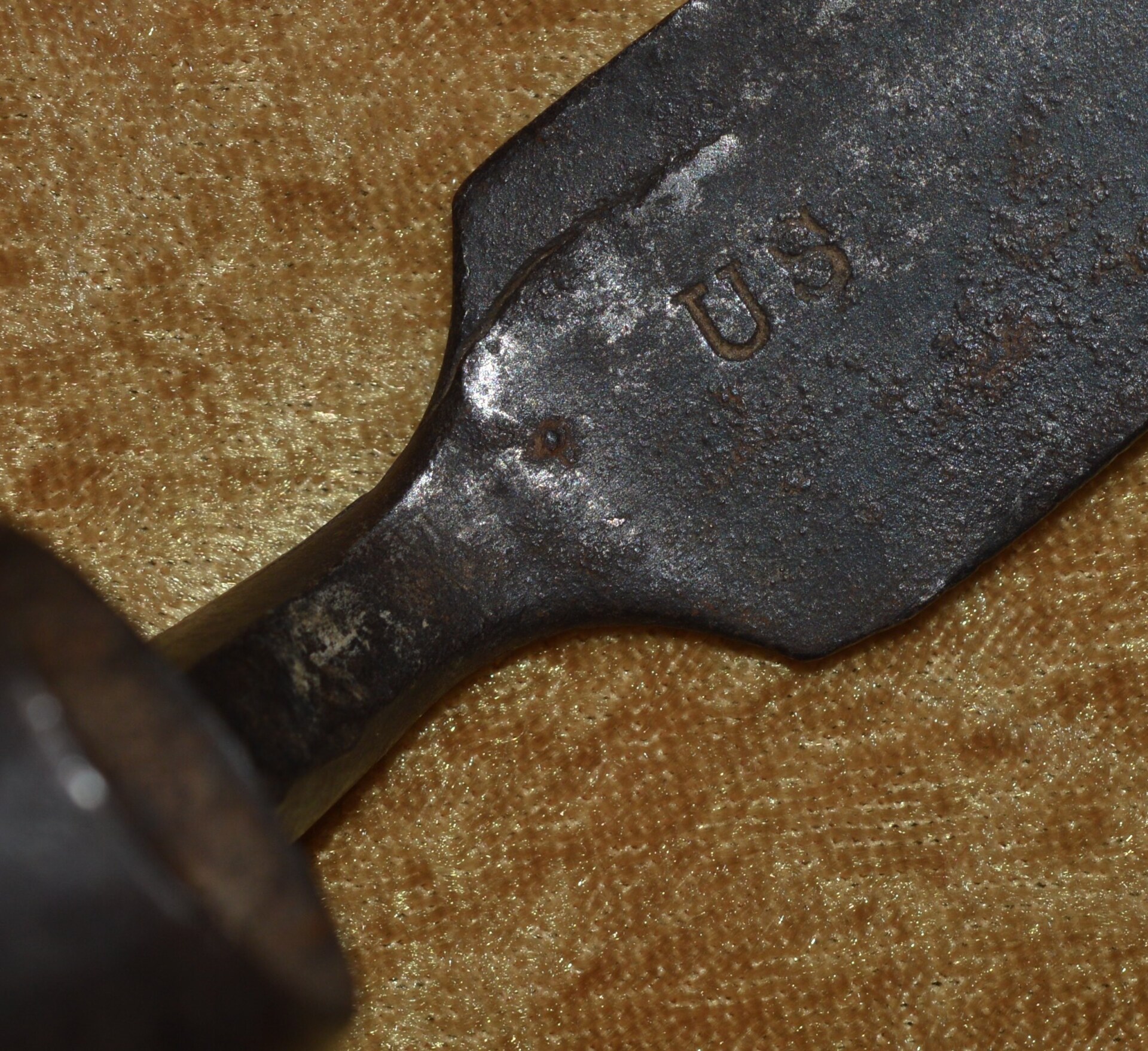
Steel ramrod with button shaped head. M1816 socket bayonet with 14 ½” hollow-ground
triangular section blade stamped “US”. Black leather scabbard with brass chape and
leather throat. Metal is mostly bright, with light pitting and some rust marking. Stock sound,
with no cracks; scattered scratches and dents typical of field use. Mechanically excellent,
with strong mainspring. Markings sharp and clear. Overall length 57 ½”. Thousands of
these muskets would have been on hand in Northern and Southern armories at the
outbreak of the Civil War and were used in its early stages by both sides.
 Confederate States Armory Cavalry Saber
 High Quality ID’d US Eagle Pommel Infantry Officer’s Saber, ca. 1810
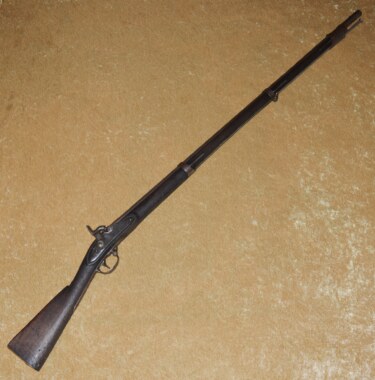 US M1816 Harpers Ferry Civil War Percussion Conversion Musket
 Exquisite North Italian (Brescia) Flintlock Pistol, ca. 1650