
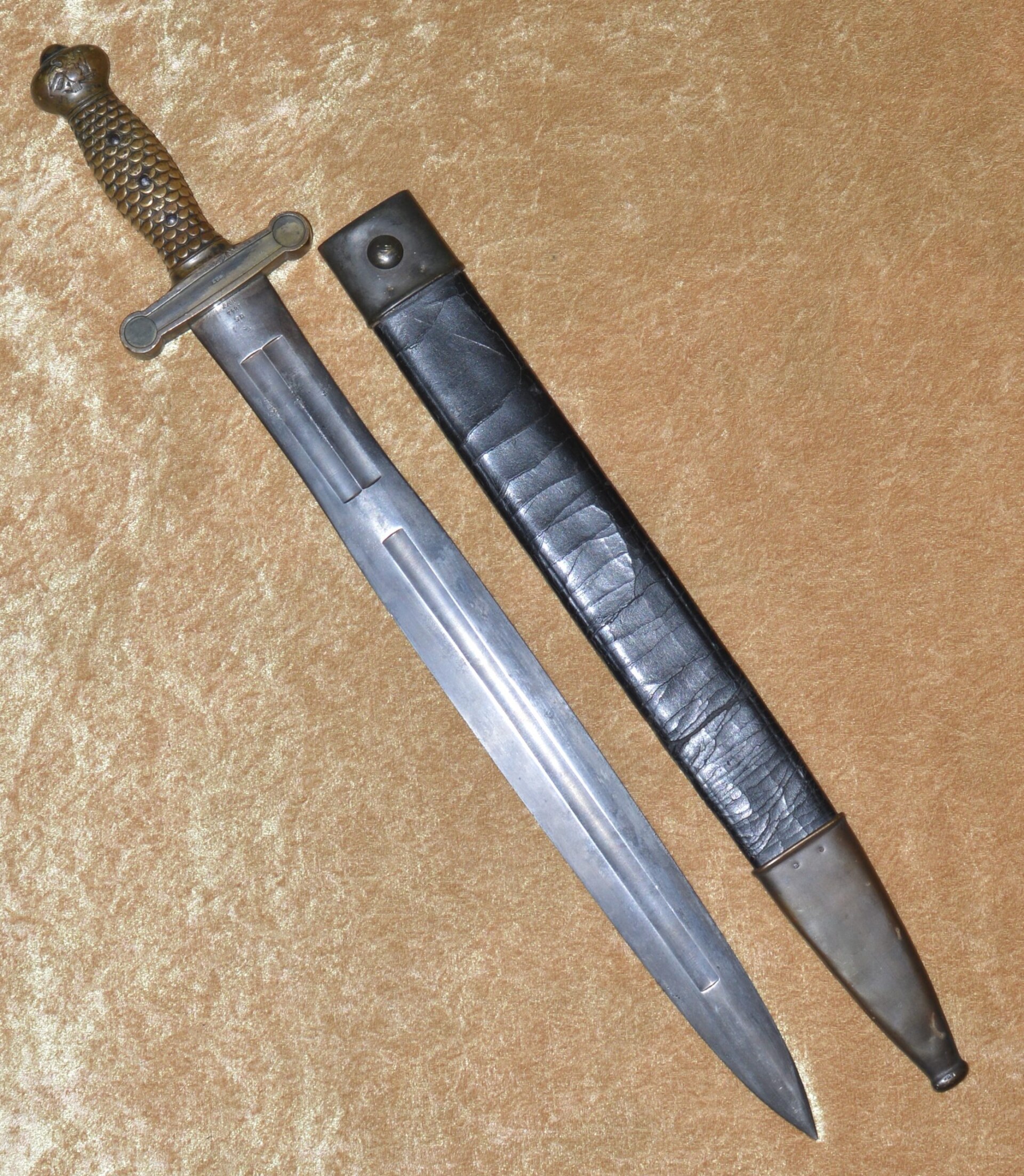
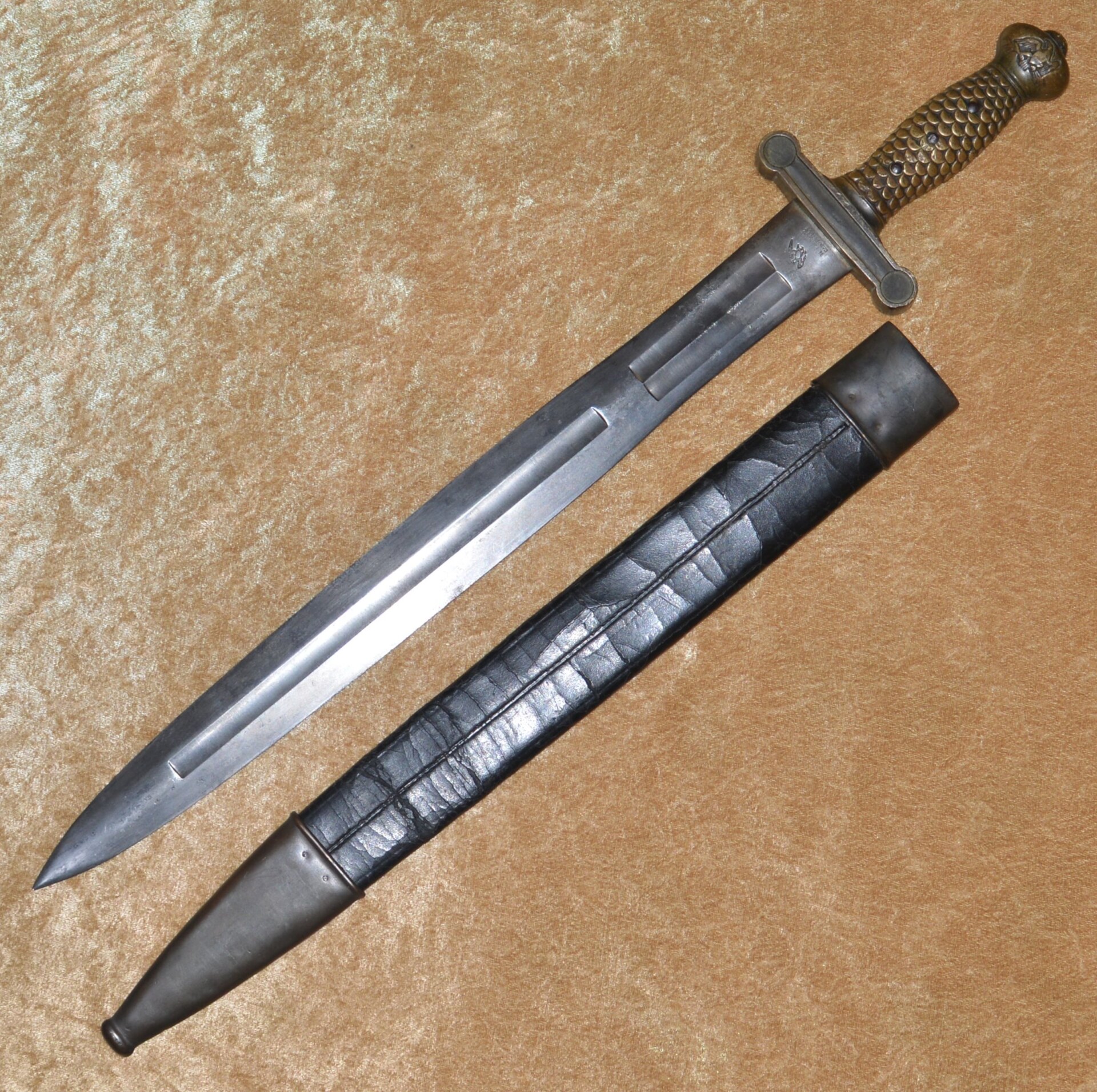
Description
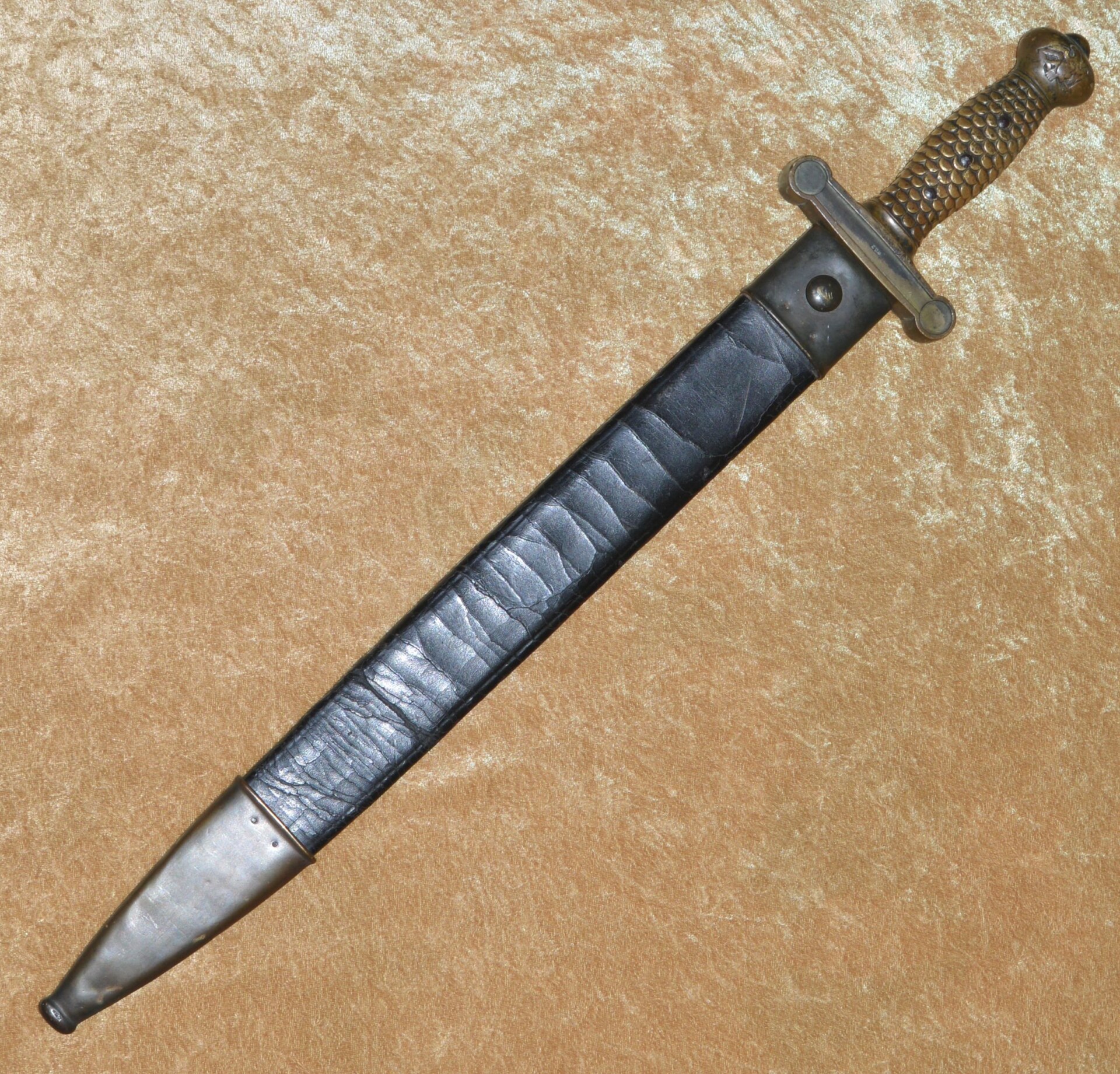
In 1833 the Ames Manufacturing Company began production of a new sword for regular
artillery regiments. US Ordnance Regulations of 1834 and 1839 also called for this sword’s
use by the infantry. Ames was the sole maker of this model until the last 300 examples
were delivered on May 24, 1862. From 1832 to 1862, Ames produced 20,100 of these.
Like most sword patterns of the time, it was patterned after a French model in current use.
The French sword was actually an adaptation of the ancient Roman gladius. As a weapon,
it was impractical and rarely used in that capacity, but it was often used to clear brush or
other obstacles to prepare for the setup of artillery pieces. As such, many examples are
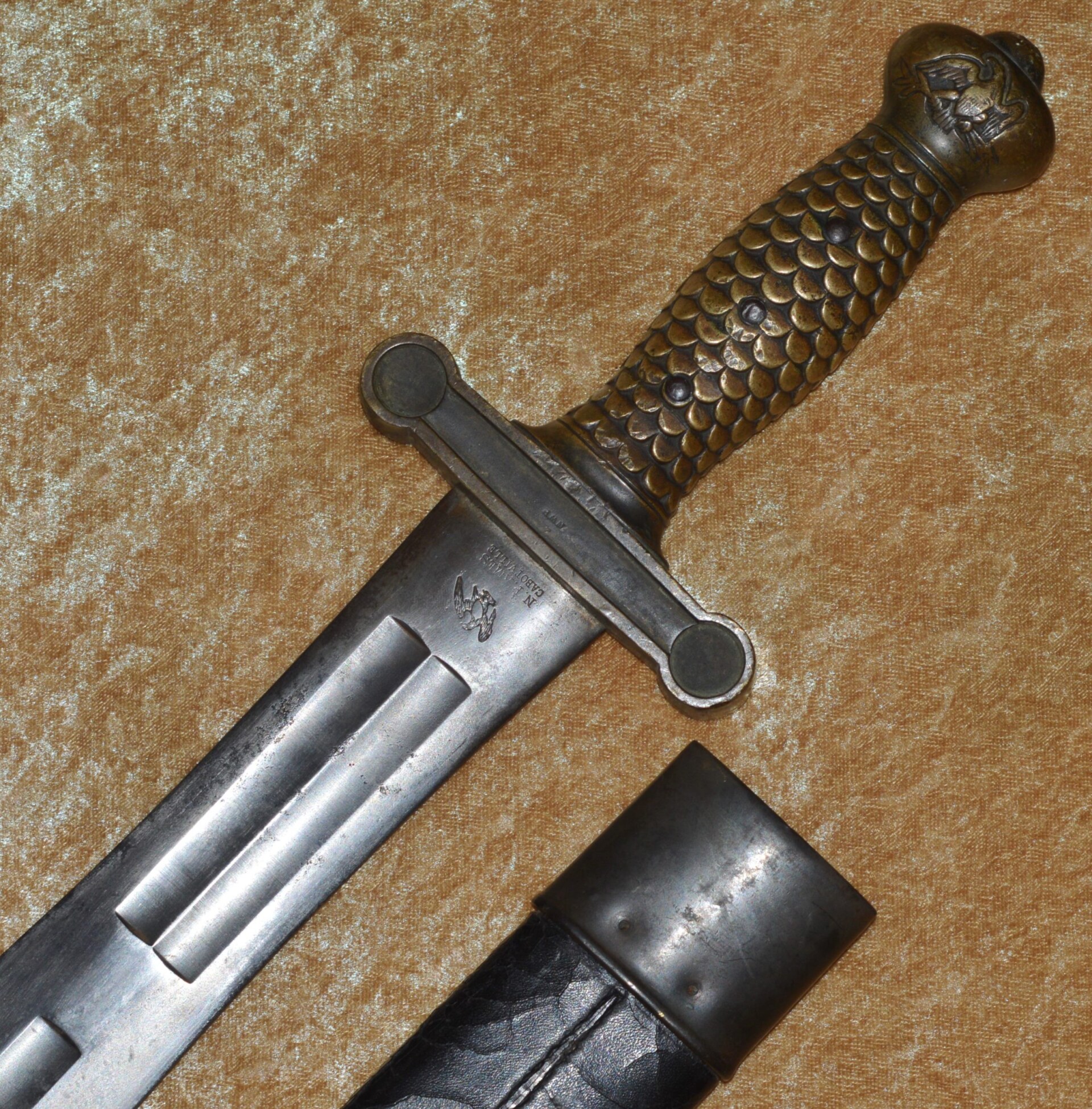
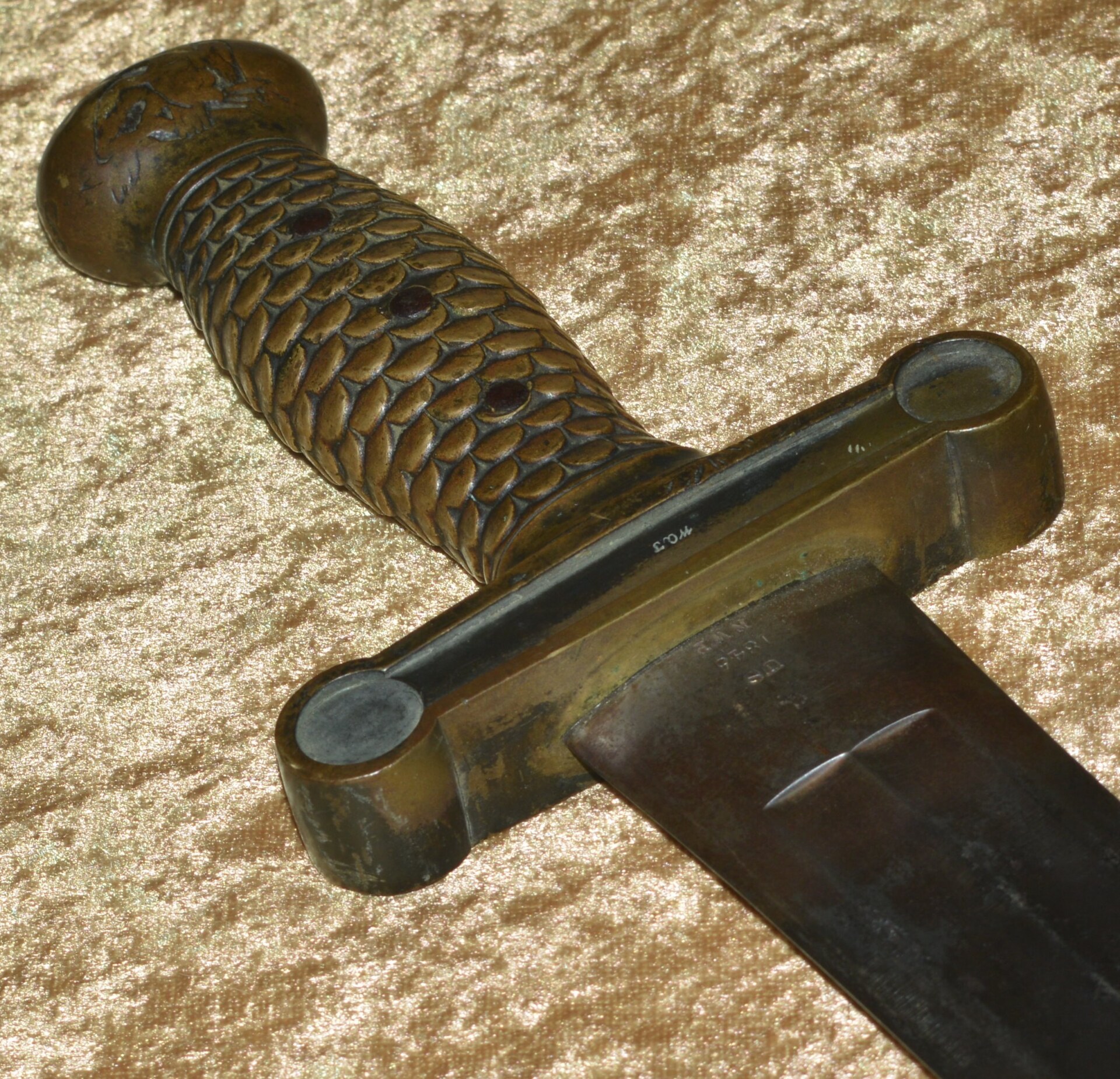
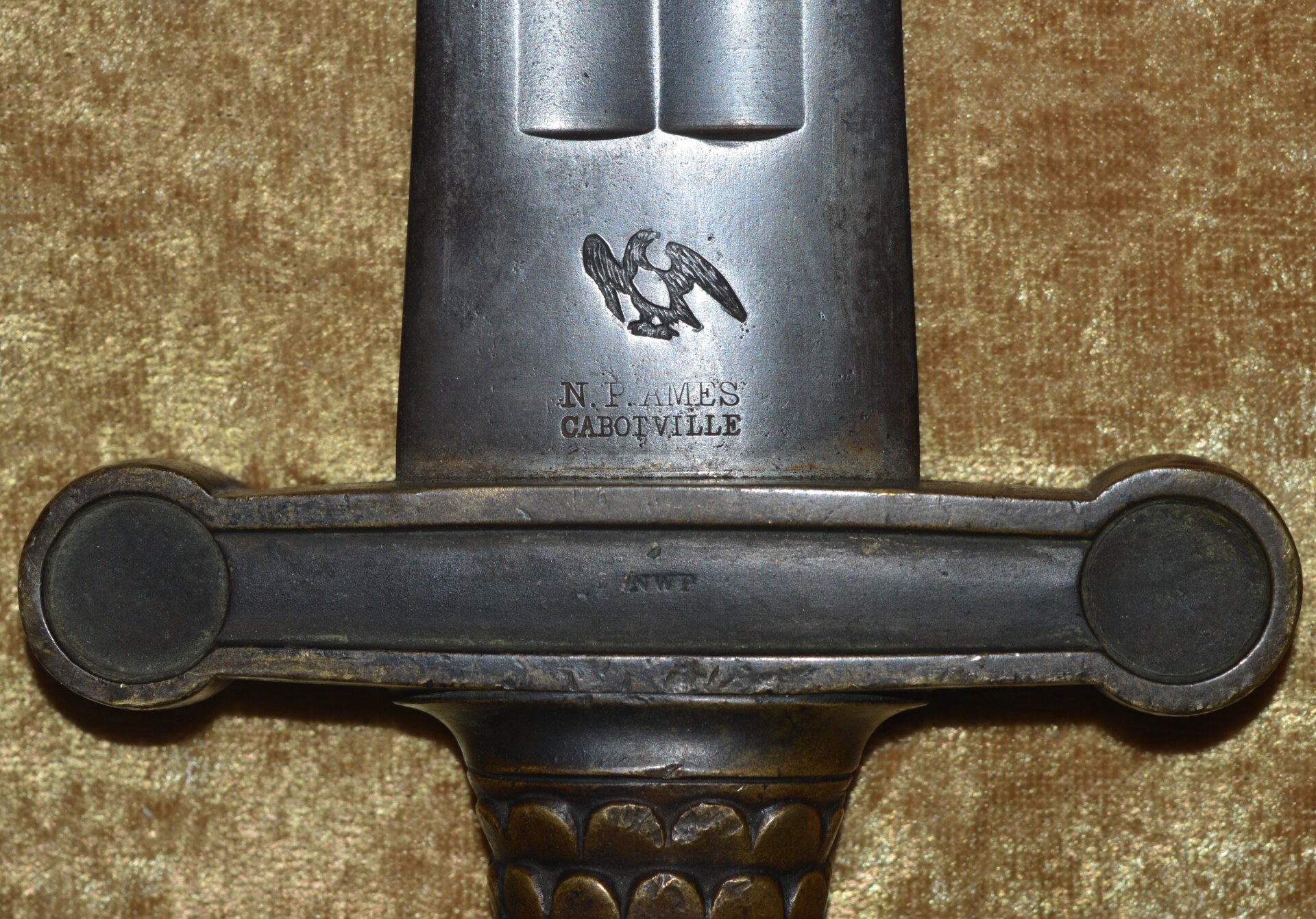
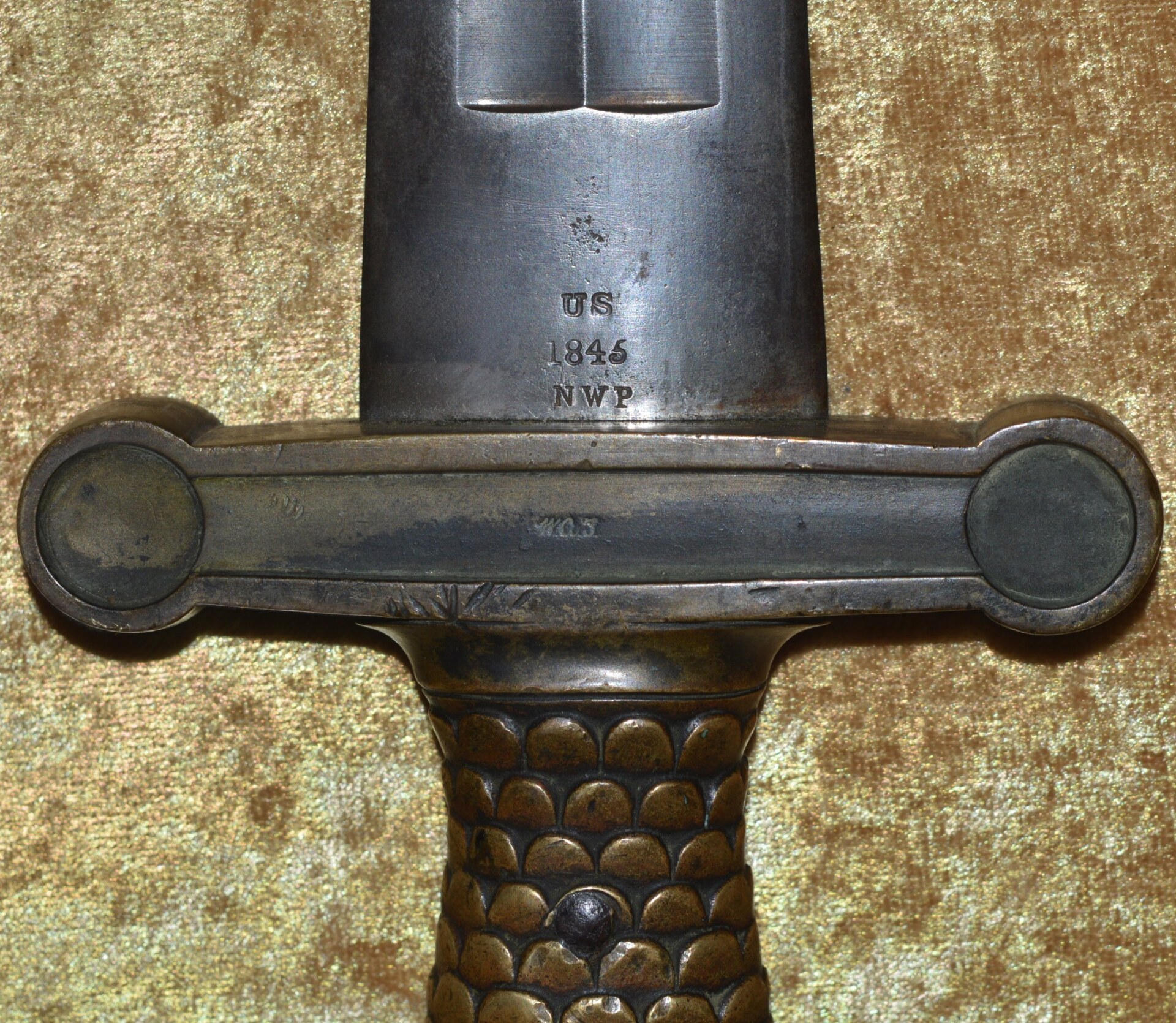
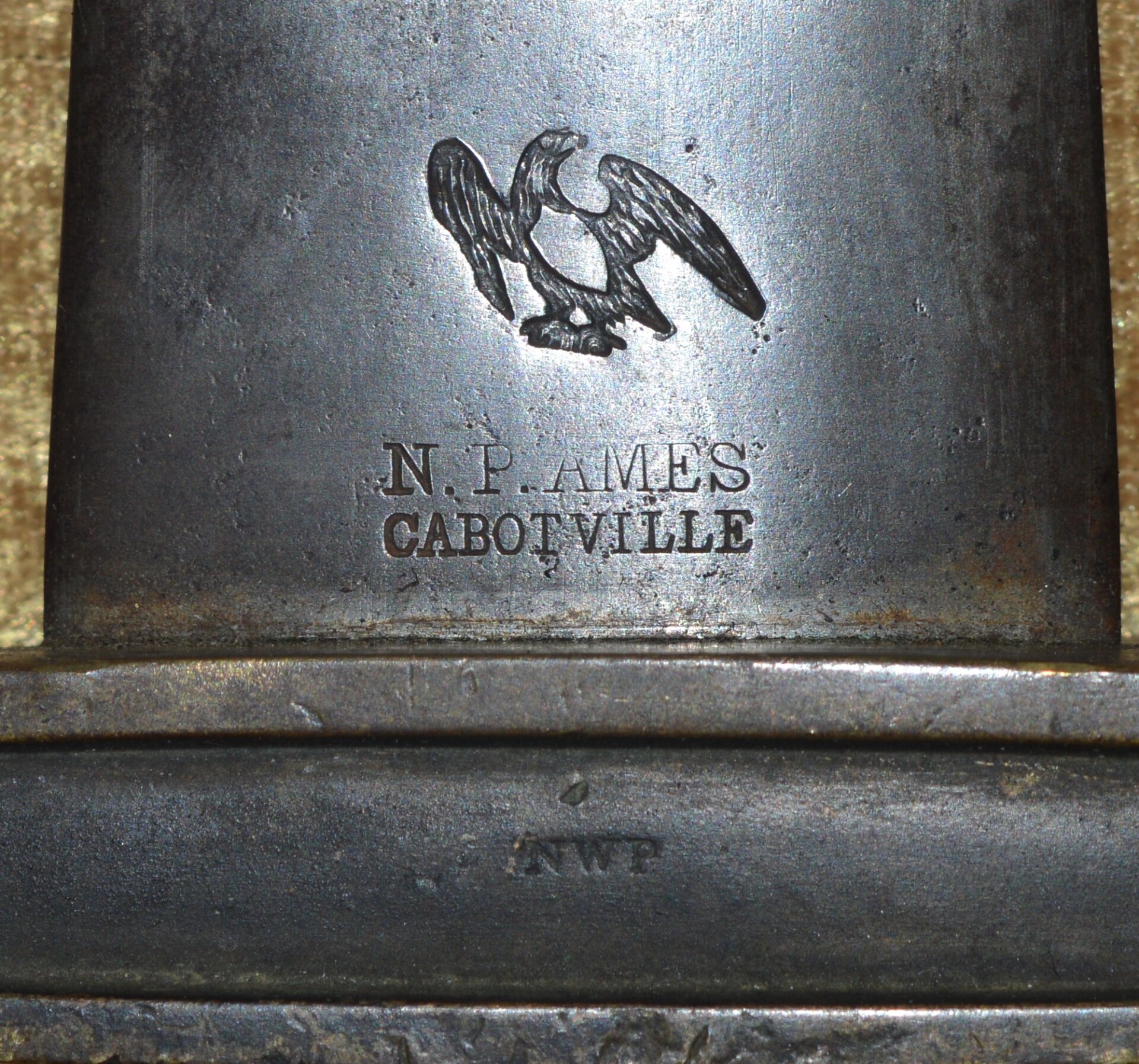
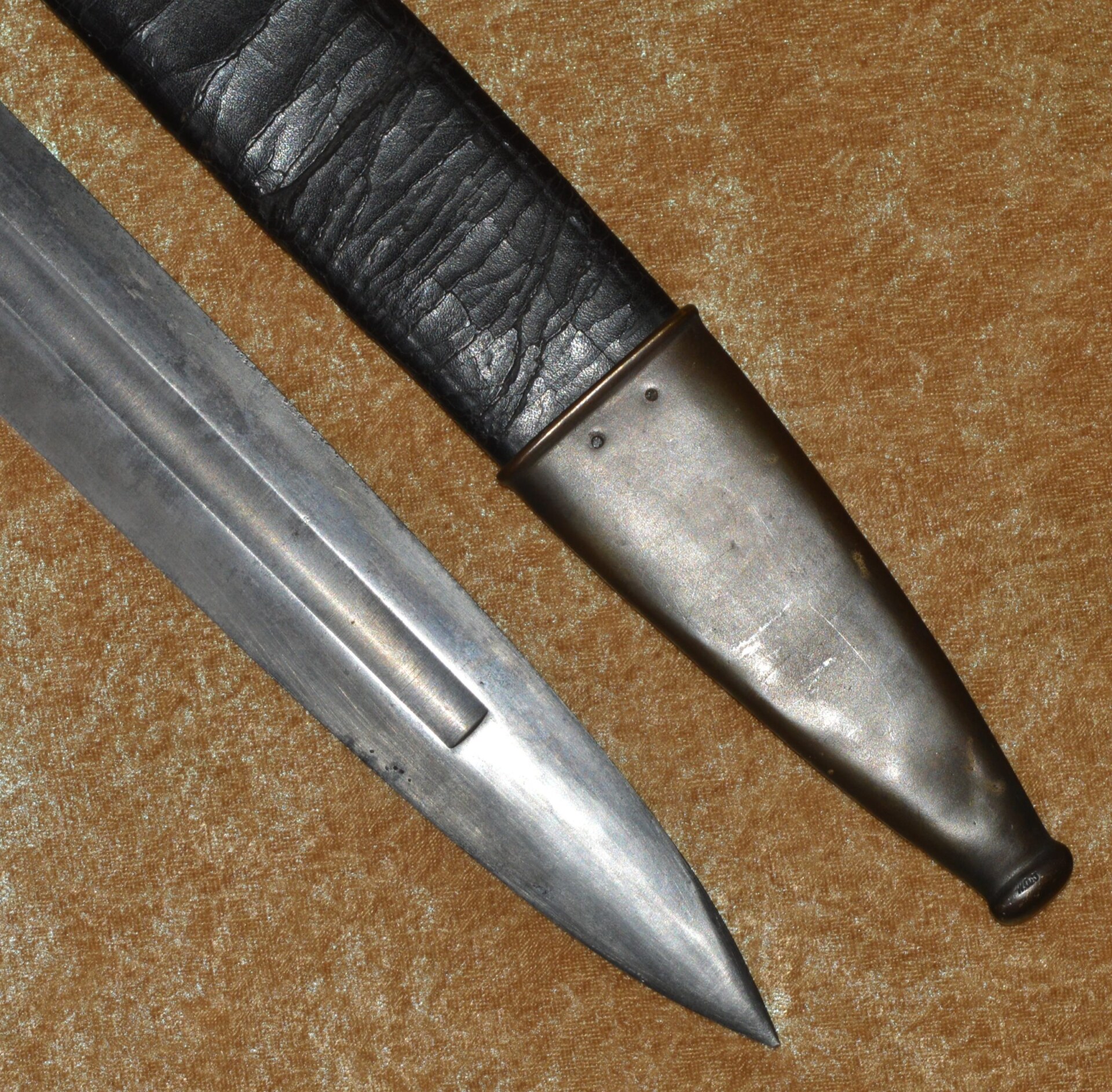
badly worn. This example with waisted 19 1/4″ blade with two short stopped fullers and a
longer stopped central fuller; stamped with an eagle over “N.P. AMES/CABOTVILLE” on
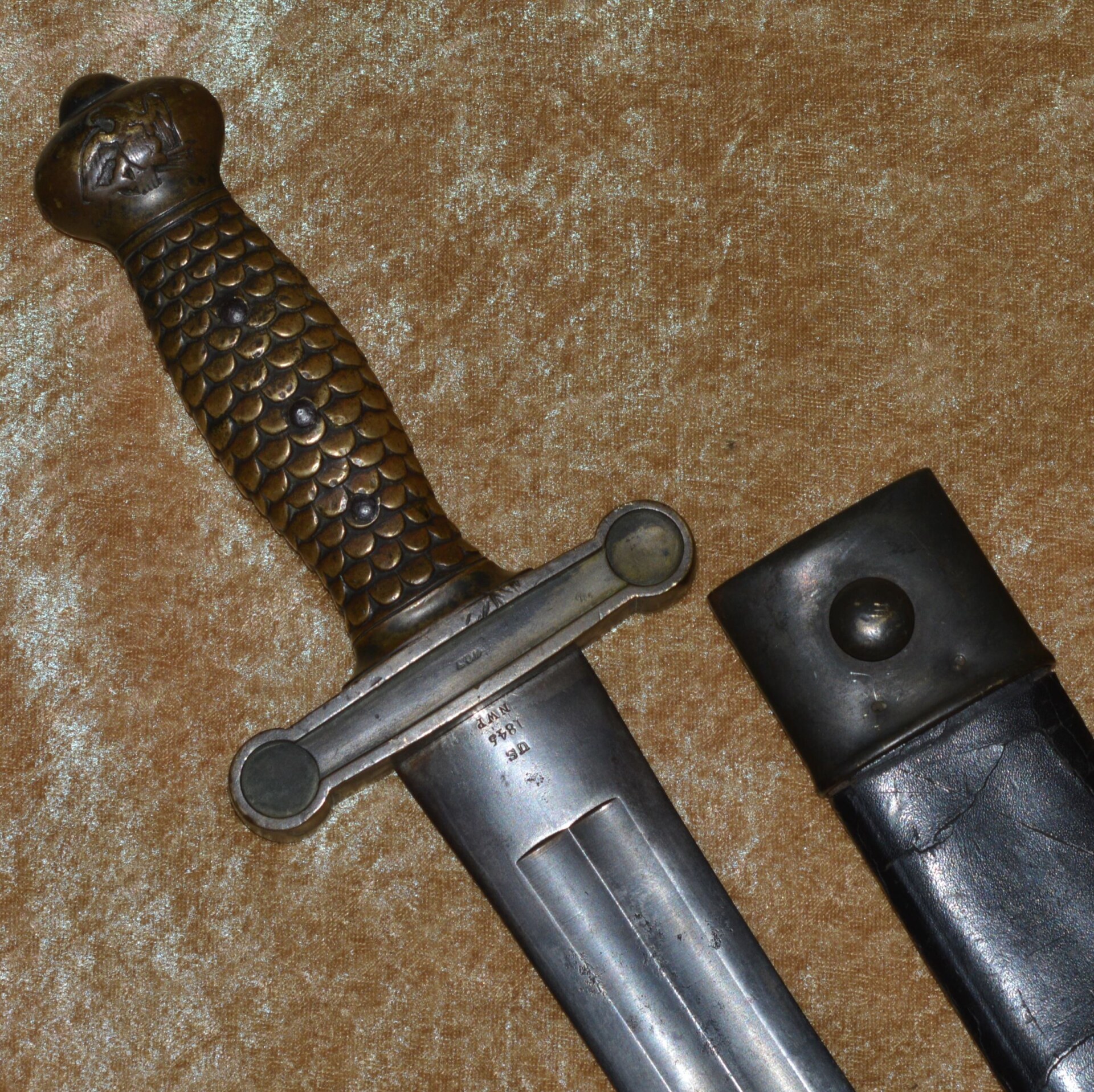
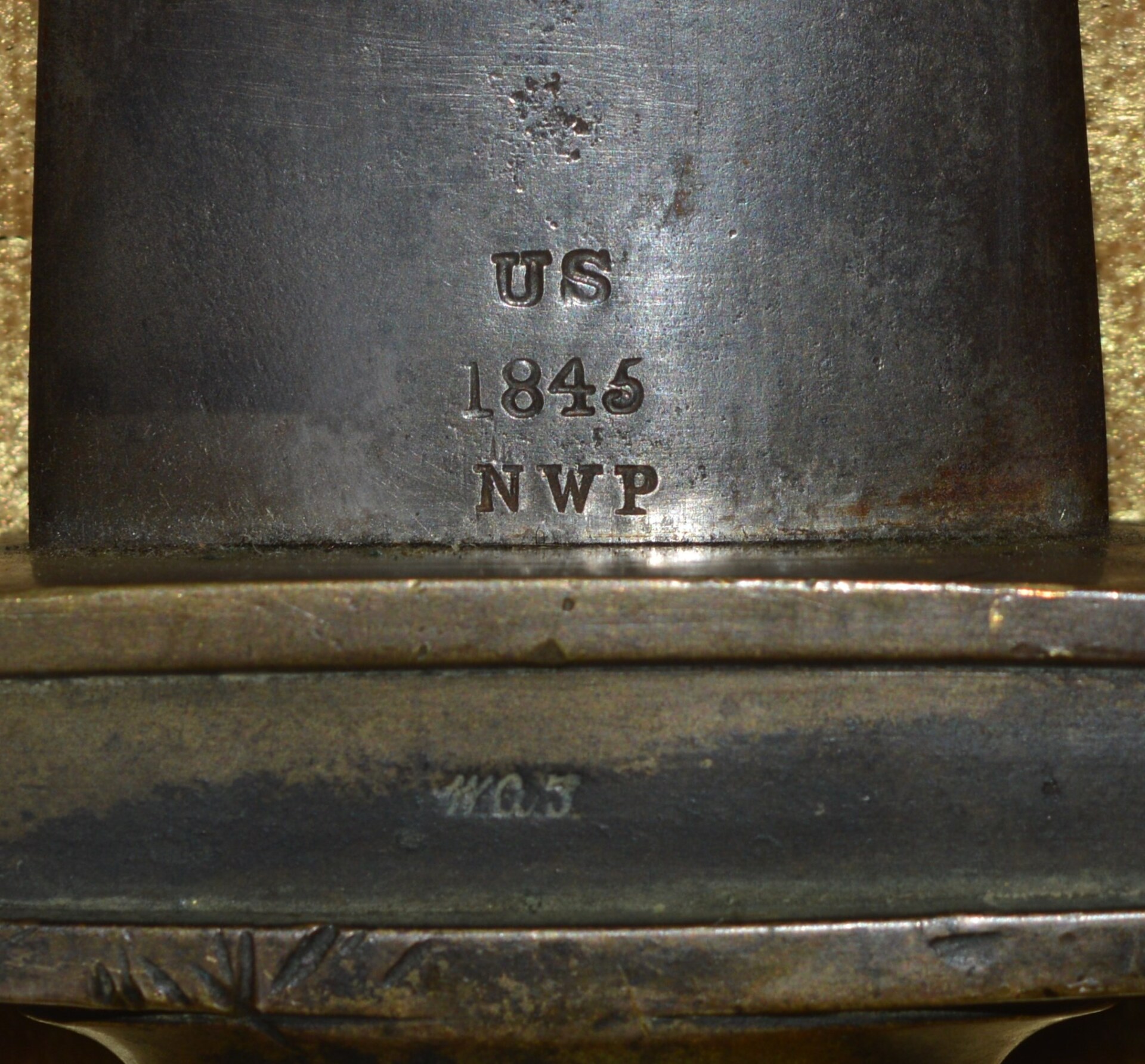
one side and “US/1845/NWP” (Nahaun W. Patch, civilian inspector) on the other. Blades
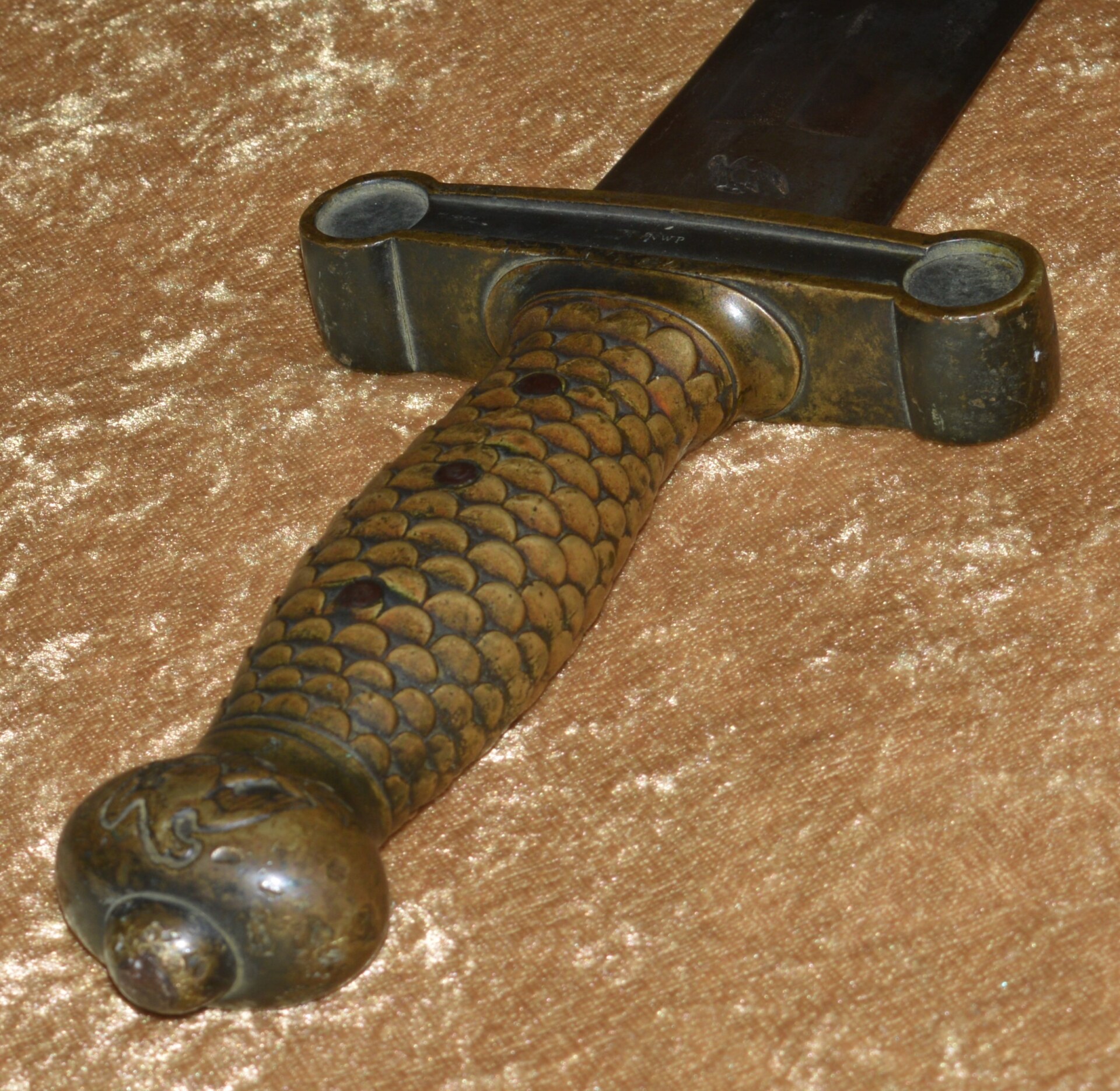
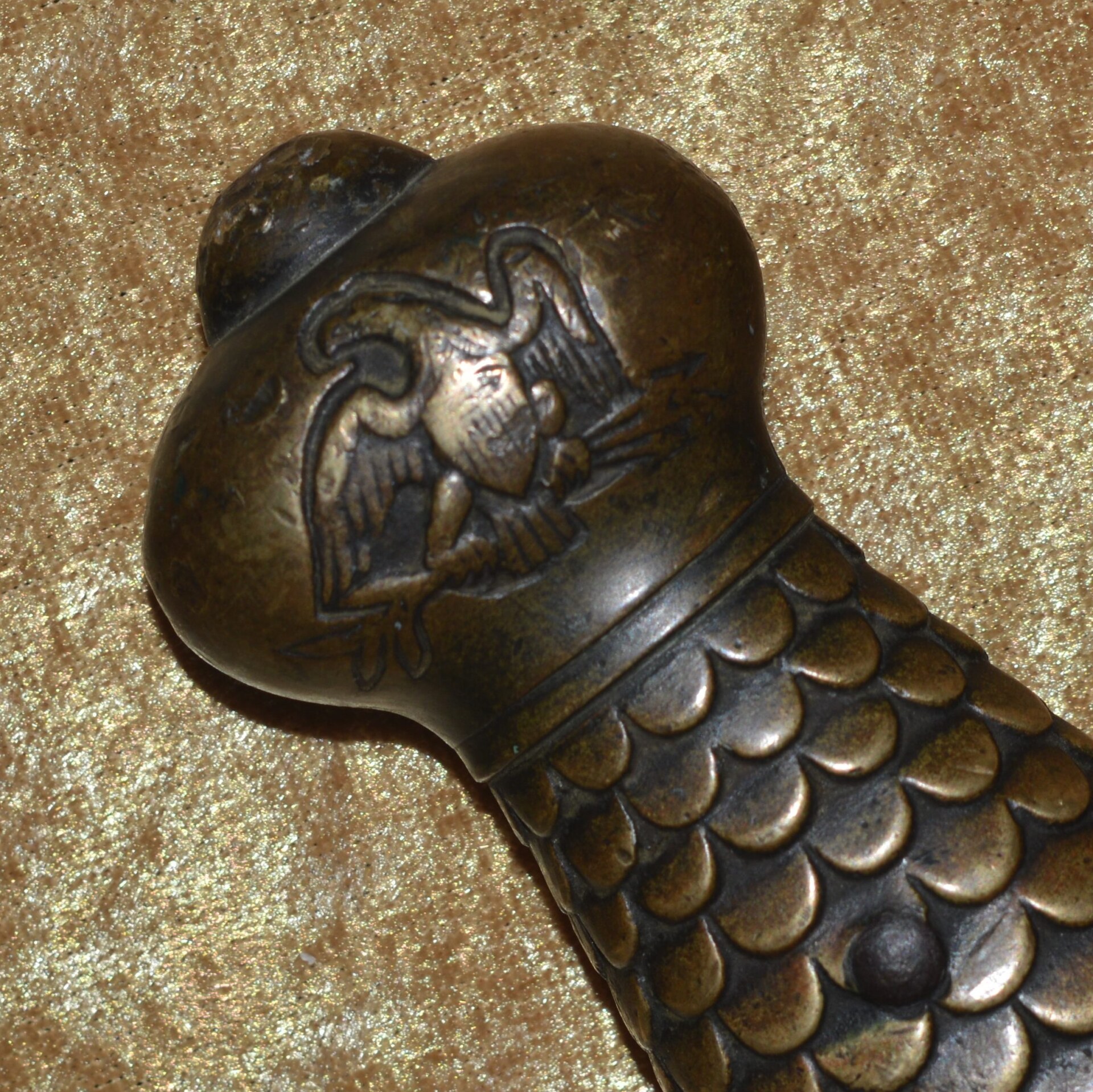
made after 1848 did not have the eagle stamp. One-piece cast brass hilt with scaled grip
riveted through the blade tang with two rivets, bun-shaped pommel with an eagle and shield
on both sides, and short straight quillons with rounded terminals; stamped on one side
“WAT” in script (William A. Thornton, Captain. US Army), and “NWP” on the other. Original
black leather scabbard with brass drag and throat with frog button, each with the correct two
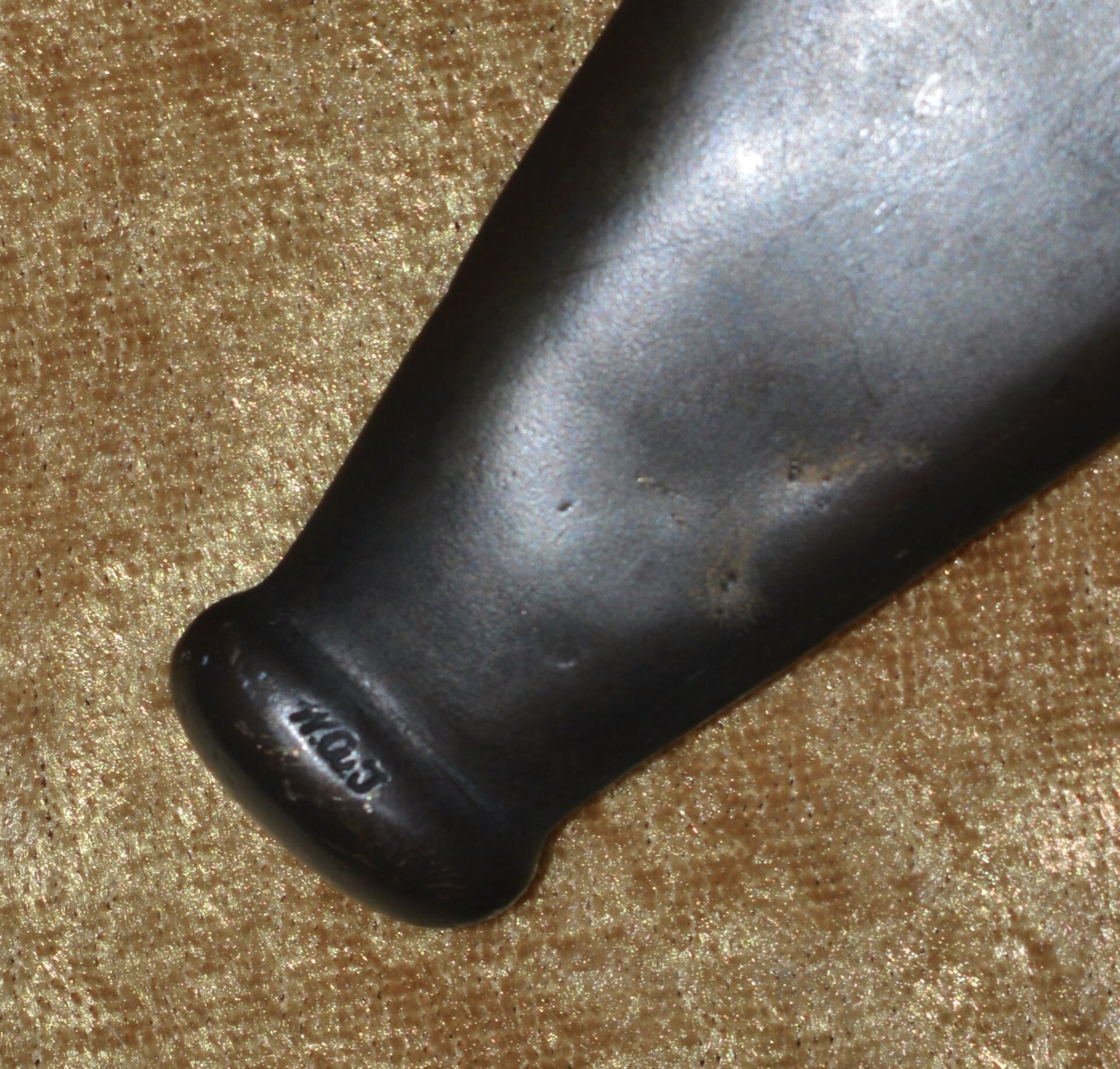
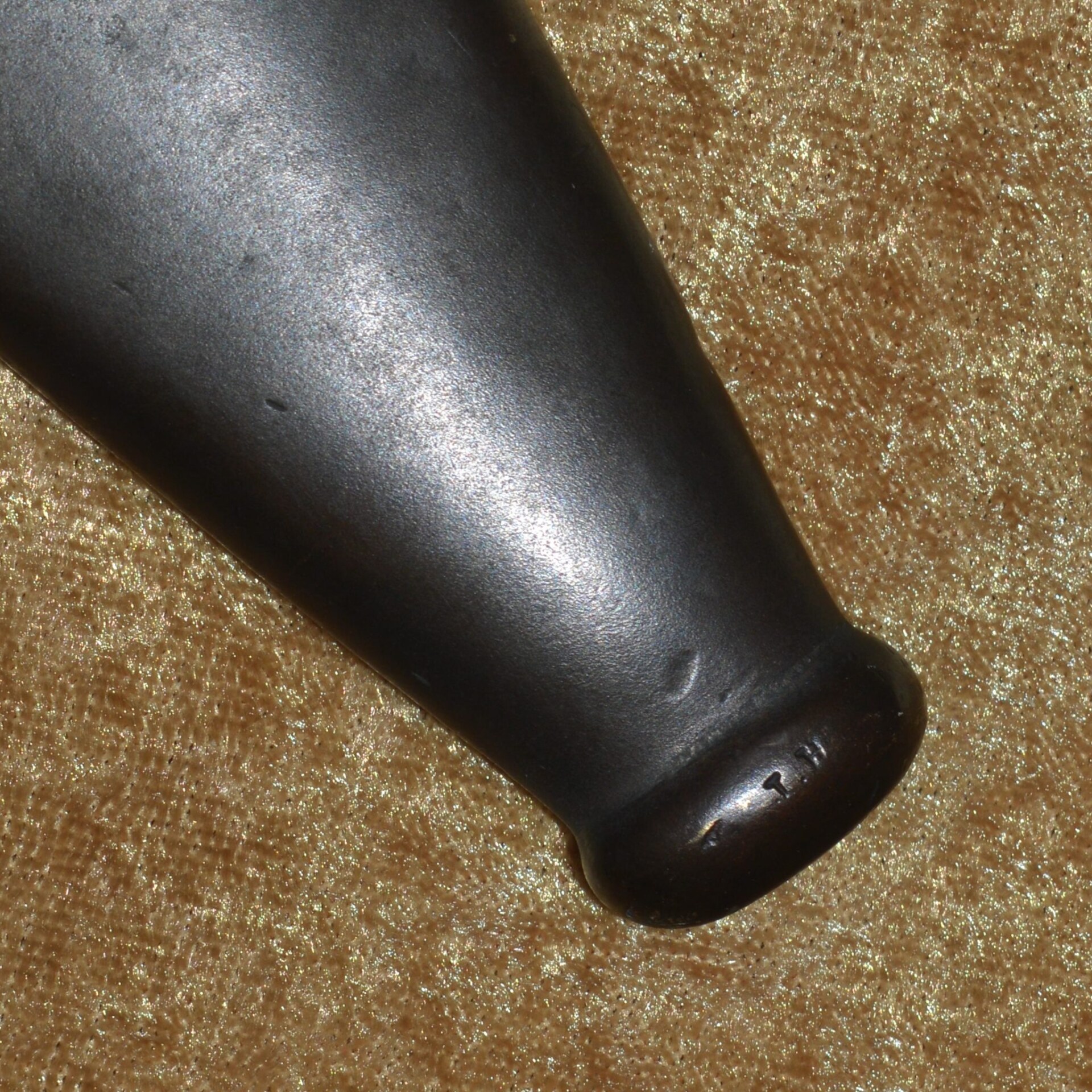
small rivets. The scabbard drag nipple is stamped with a small “WAT” on one side and “JH”
(John or Joseph Hannis, arsenal inspectors, 1844-1864) on the other. Sub-inspectors with
JH initials were also James Harris and John Hawkins, both active with the Ordnance
Department between 1837 and 1851. Very fine original condition, the blade smooth with
gunmetal gray patina and generally clear markings. Hilt with pleasing golden brown patina;
darker in recesses and the end of the pommel. Scabbard sound and stitching intact,
showing crackling; the brass mounts with dark patina and a few shallow dents in the drag.
An excellent, well-marked example which is possibly a veteran of both the Mexican War and
the Civil War.
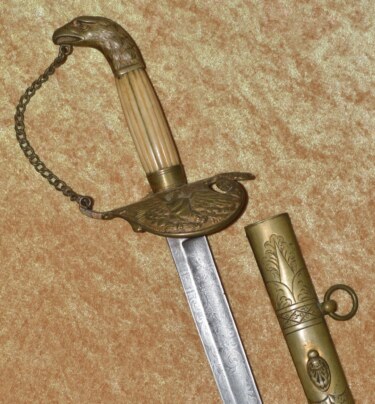 US Eagle Pommel Infantry Officer’s Sword, ca. 1850
 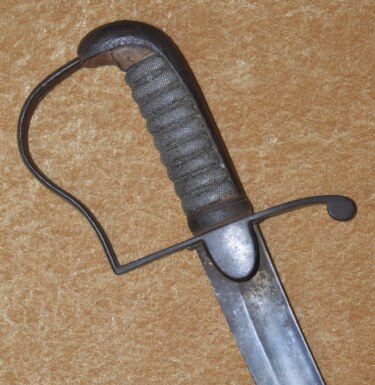 British P1796 Light Cavalry Officer’s Saber
  Signed and Dated WWII Japanese Shingunto Katana
 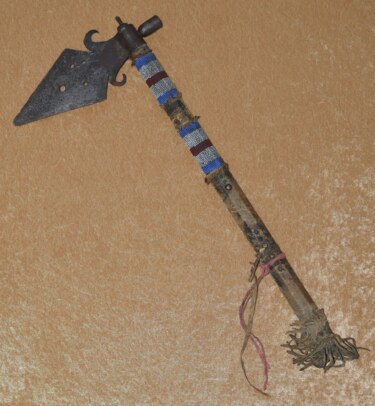 Native American Spontoon Pipe Tomahawk, Early 19th C