
Description
The form of the kaskara dates back to the Crusades, when European knights brought their
broad straight-bladed swords to fight against the Muslim occupants of the Holyland. Many
of these swords were left behind and used by the people of Northeastern Africa. While
local craftsmen eventually learned to make swords of their own, on rare occasions a
European medieval blade is found with a 19th C hilt. Tens of thousands of kaskaras were
used by the troops of the Mad Madhi, Muhammad Ahmad, in his uprising against the Anglo-
Egyptians. Despite facing modern firearms and artillery, they achieved much success,
culminating in the capture of Khartoum in 1885 and the death of the British Commander,
General Gordon. Though the Madhi himself died only 6 months later, his followers
continued under the leadership of his chief deputy, Abdallahi ibn Muhammad, eventually
establishing an Islamic caliphate under modified Sharia law. Known as the Khalifa, it was
dedicated to expanding Islam throughout the region. It was eventually defeated by the
British under General Kitchener at the Battle of Omdurman in 1898, with tens of thousands
of the Madhi’s followers falling to the British machineguns. It was estimated that some
30,000 kaskaras were gathered up on the battlefield and sent back to Britain as war
trophies. Imagine the one-sided contest of soldiers armed only with wood and hide shields
and a medieval style sword attacking an entrenched position of trained soldiers armed with
artillery, repeating rifles, and machineguns.
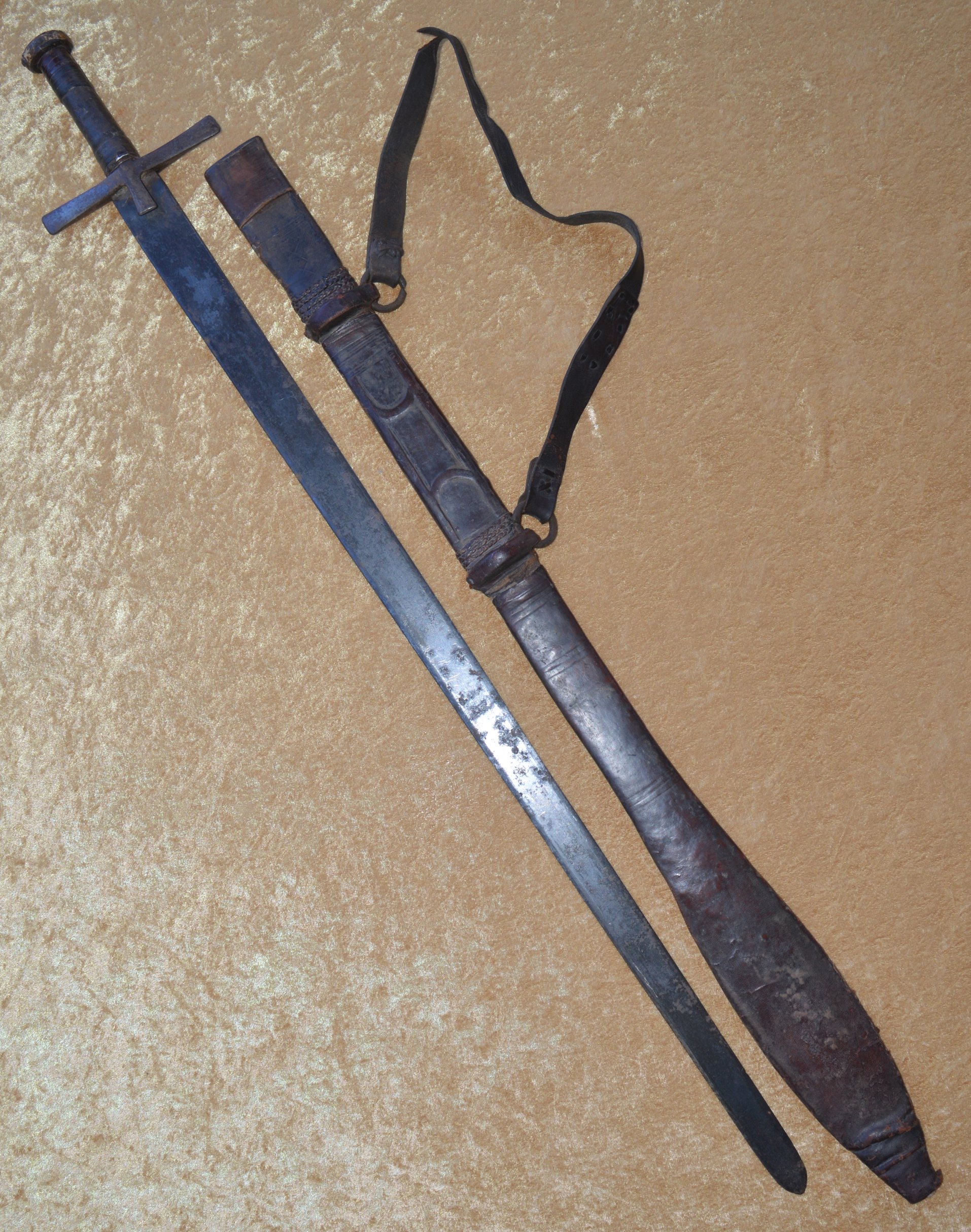
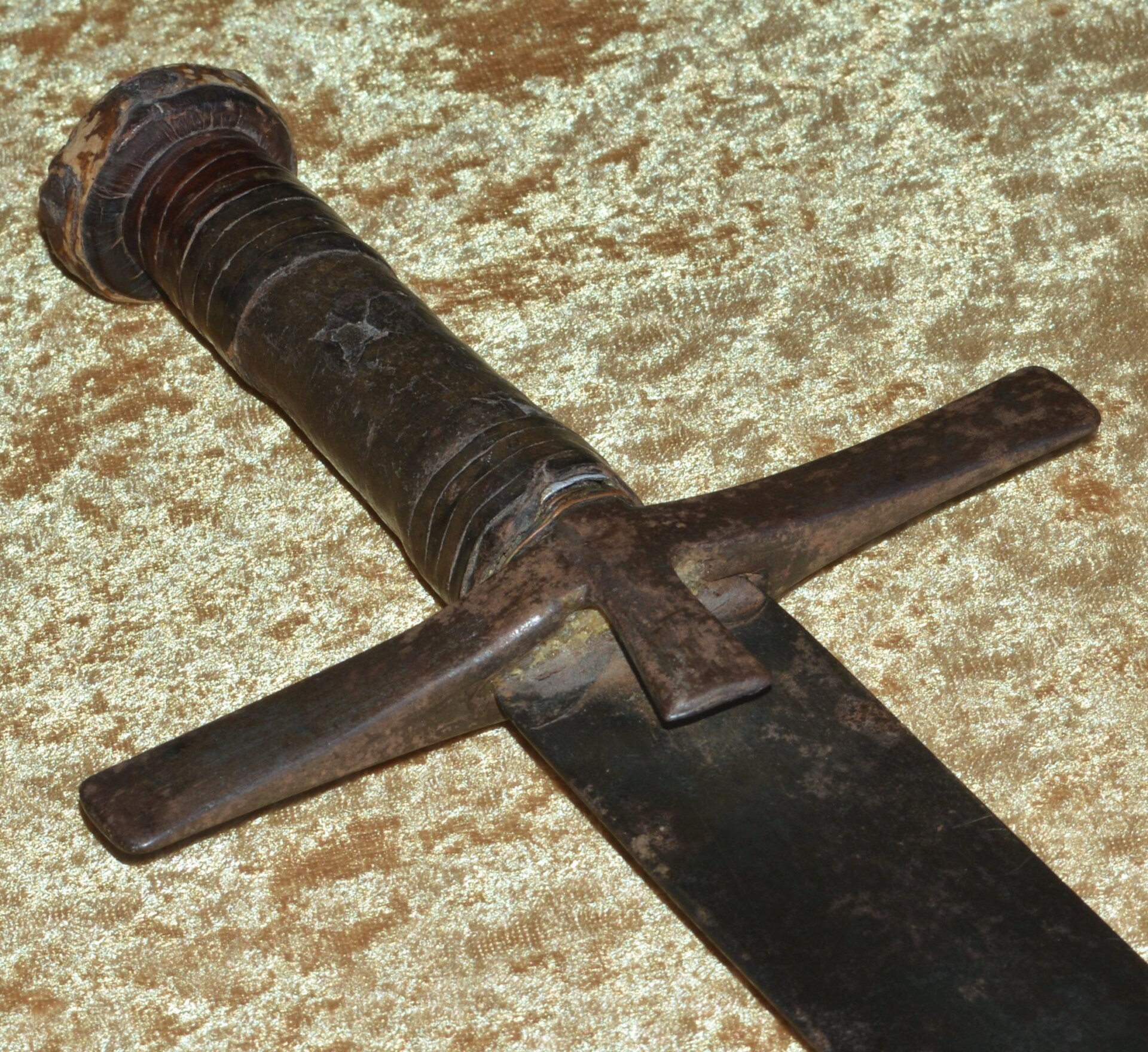
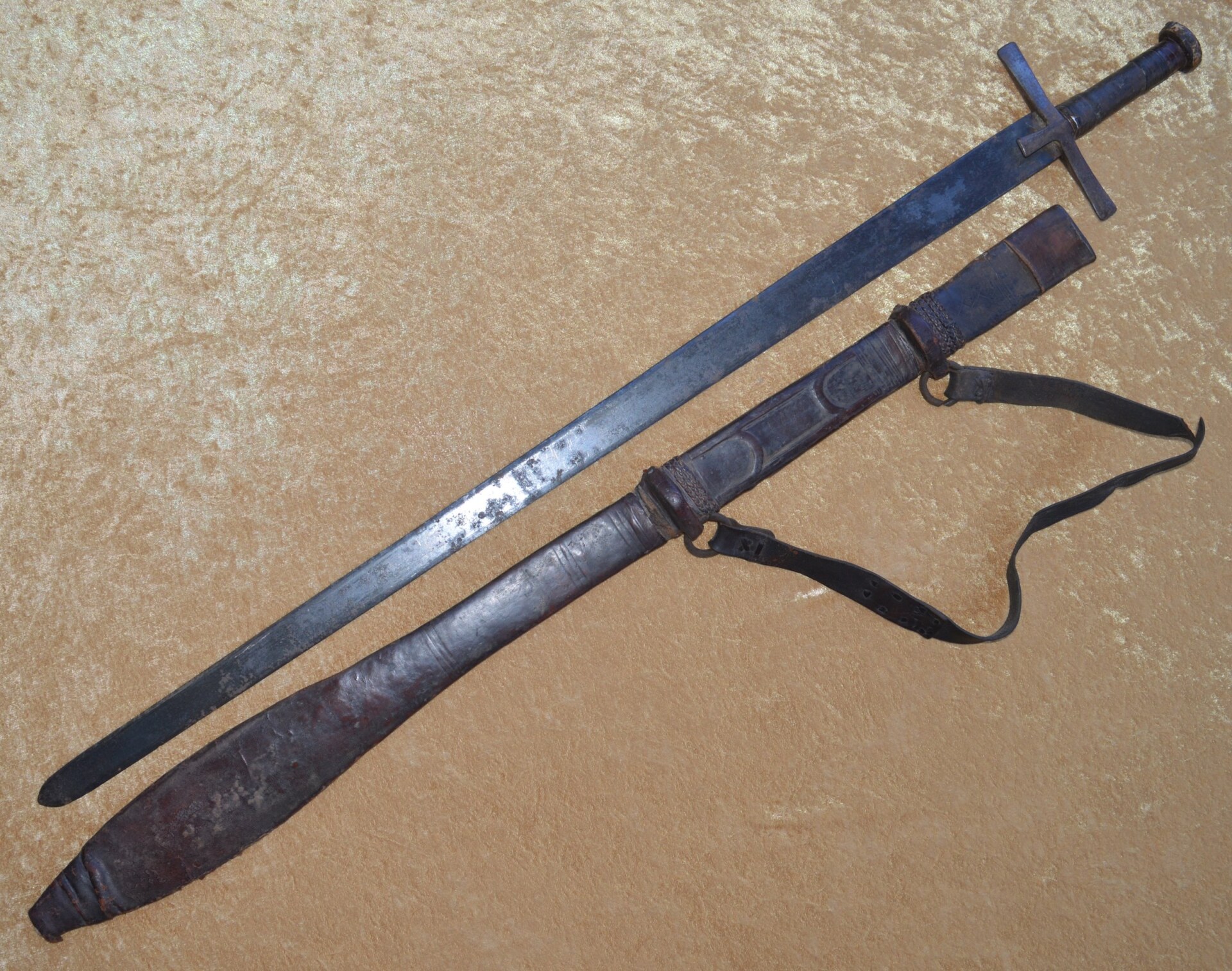
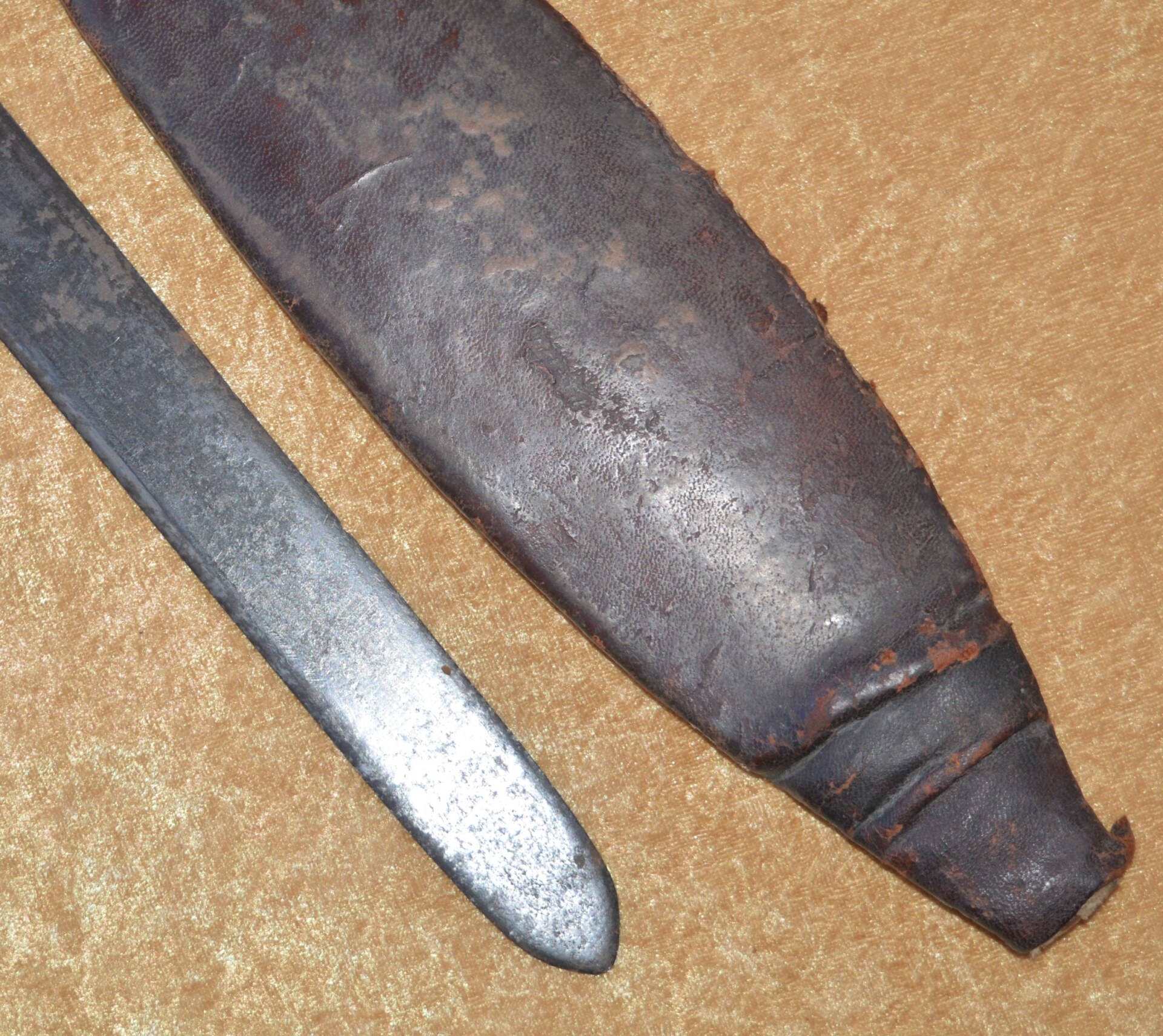
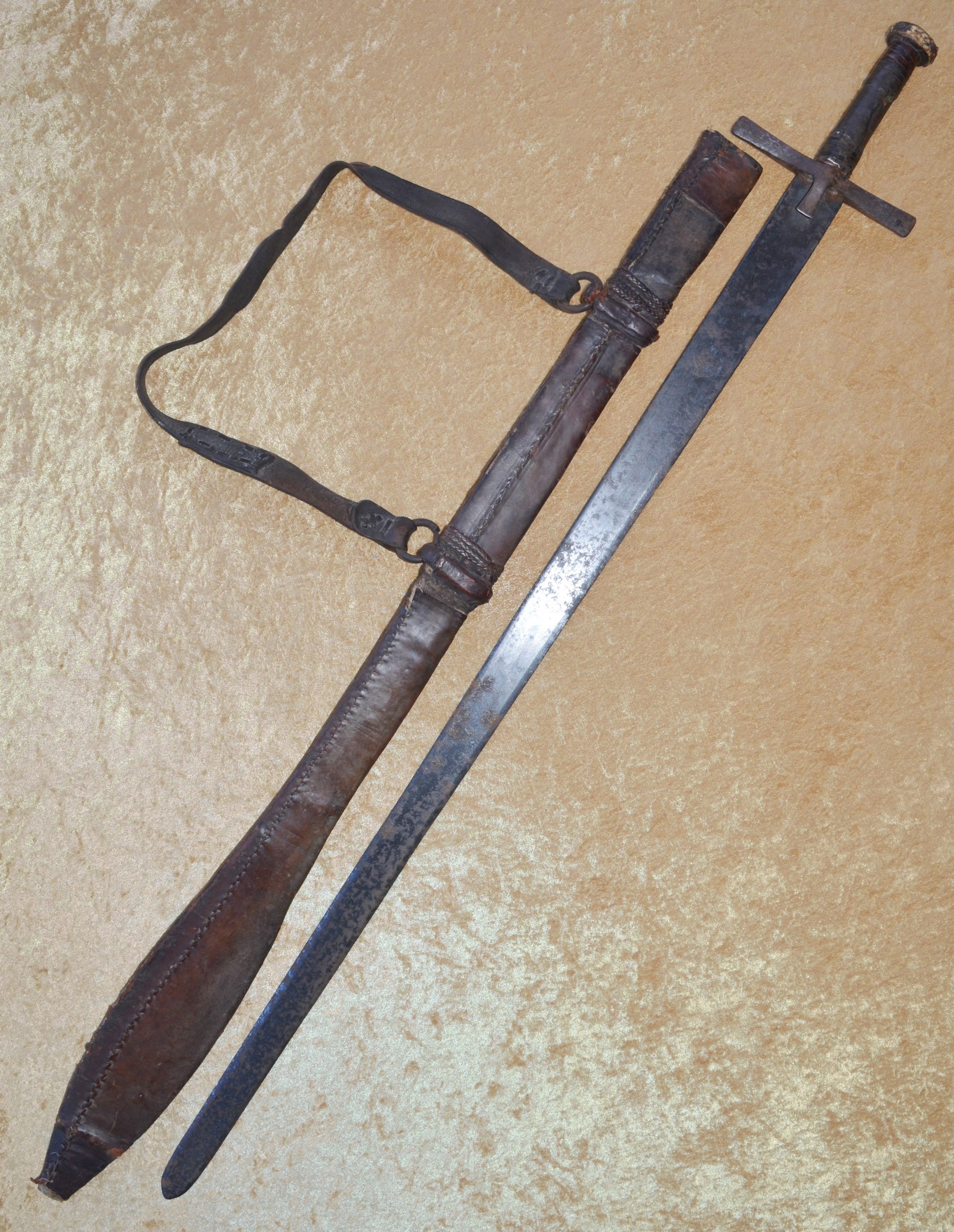
This example with unmarked straight, double-edged 36 3/8″ (92.4 cm) unfullered blade. Hilt
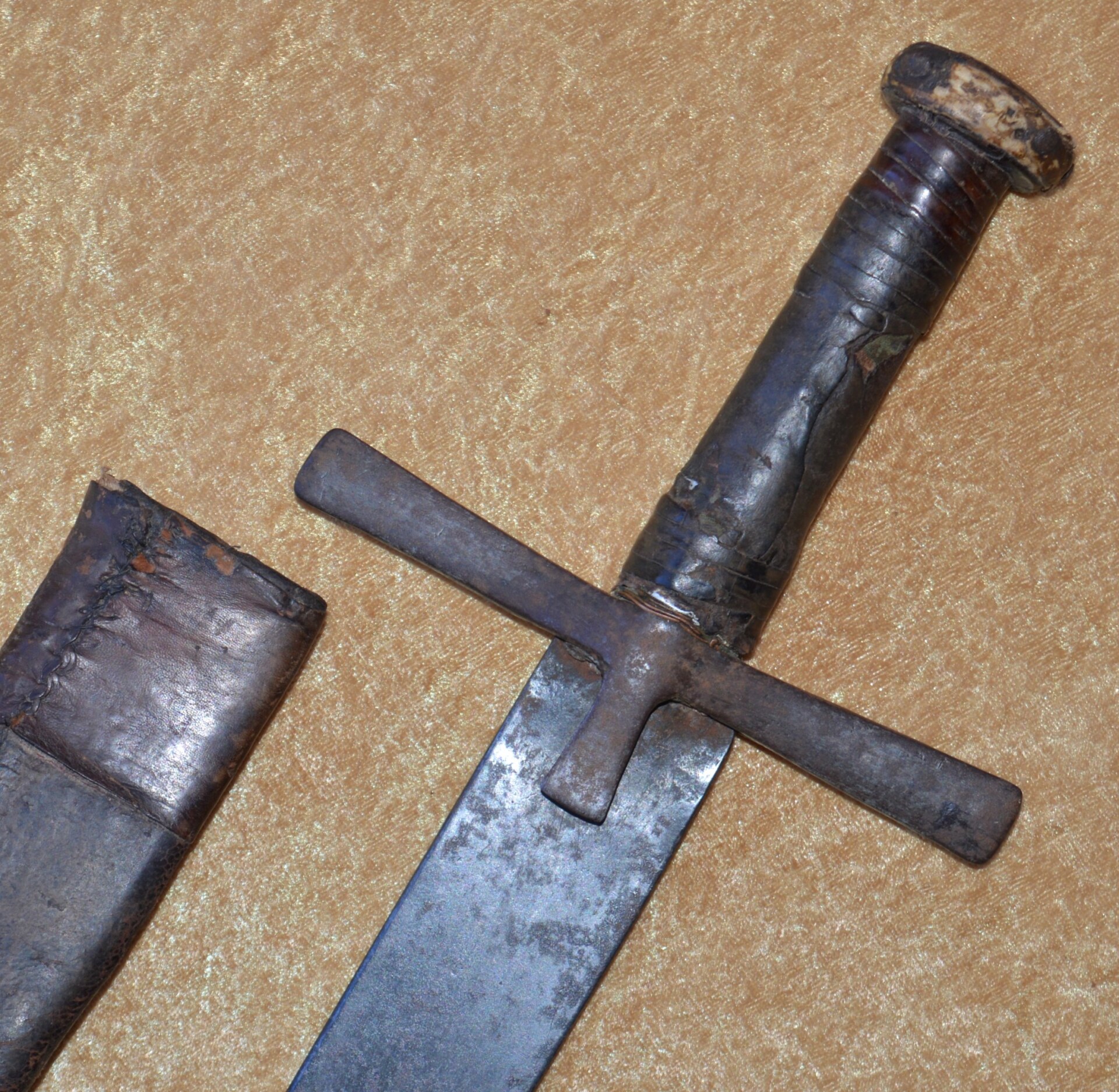
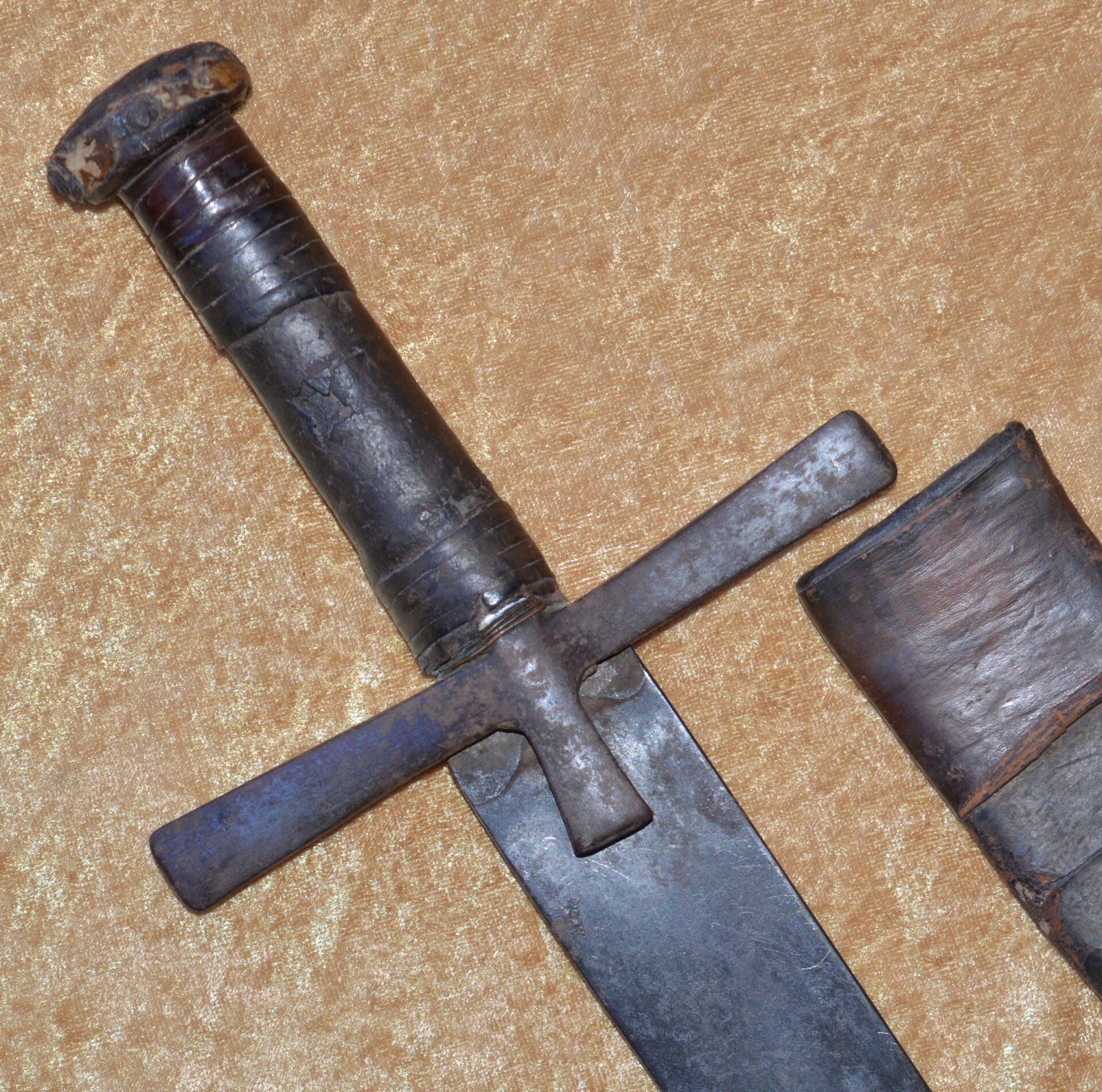
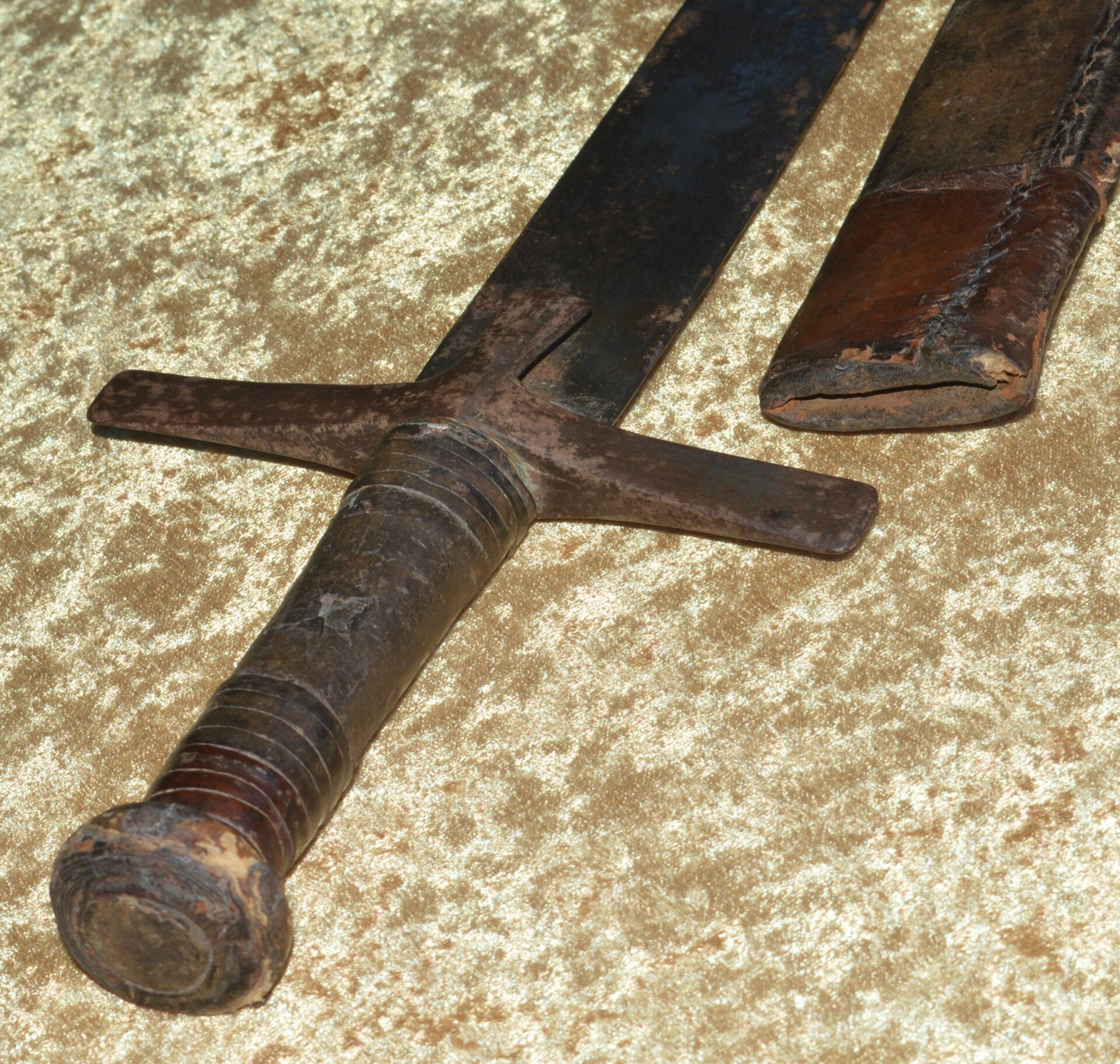
with iron cruciform guard widening toward the ends, with integral double langets. Wood grip
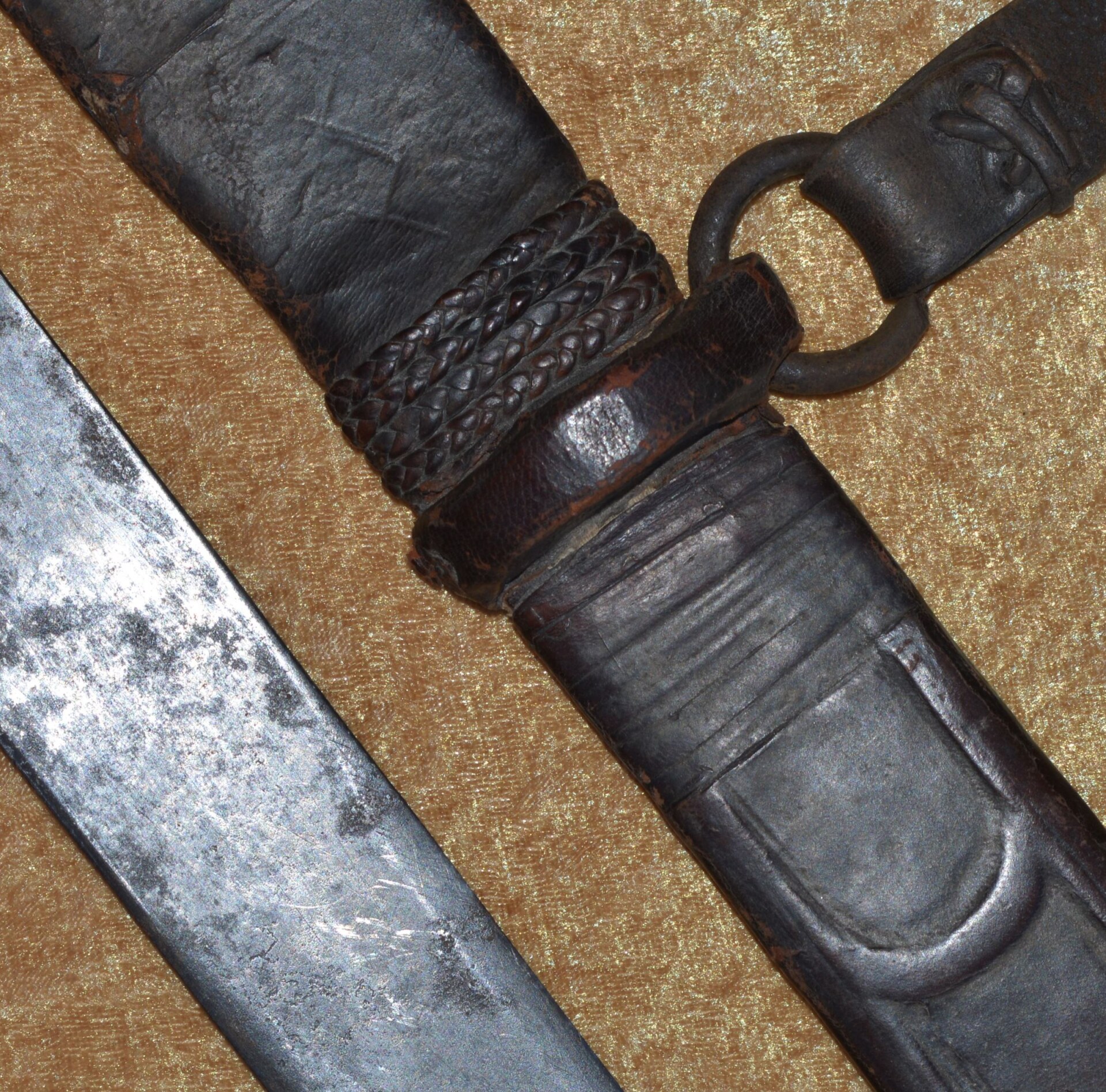
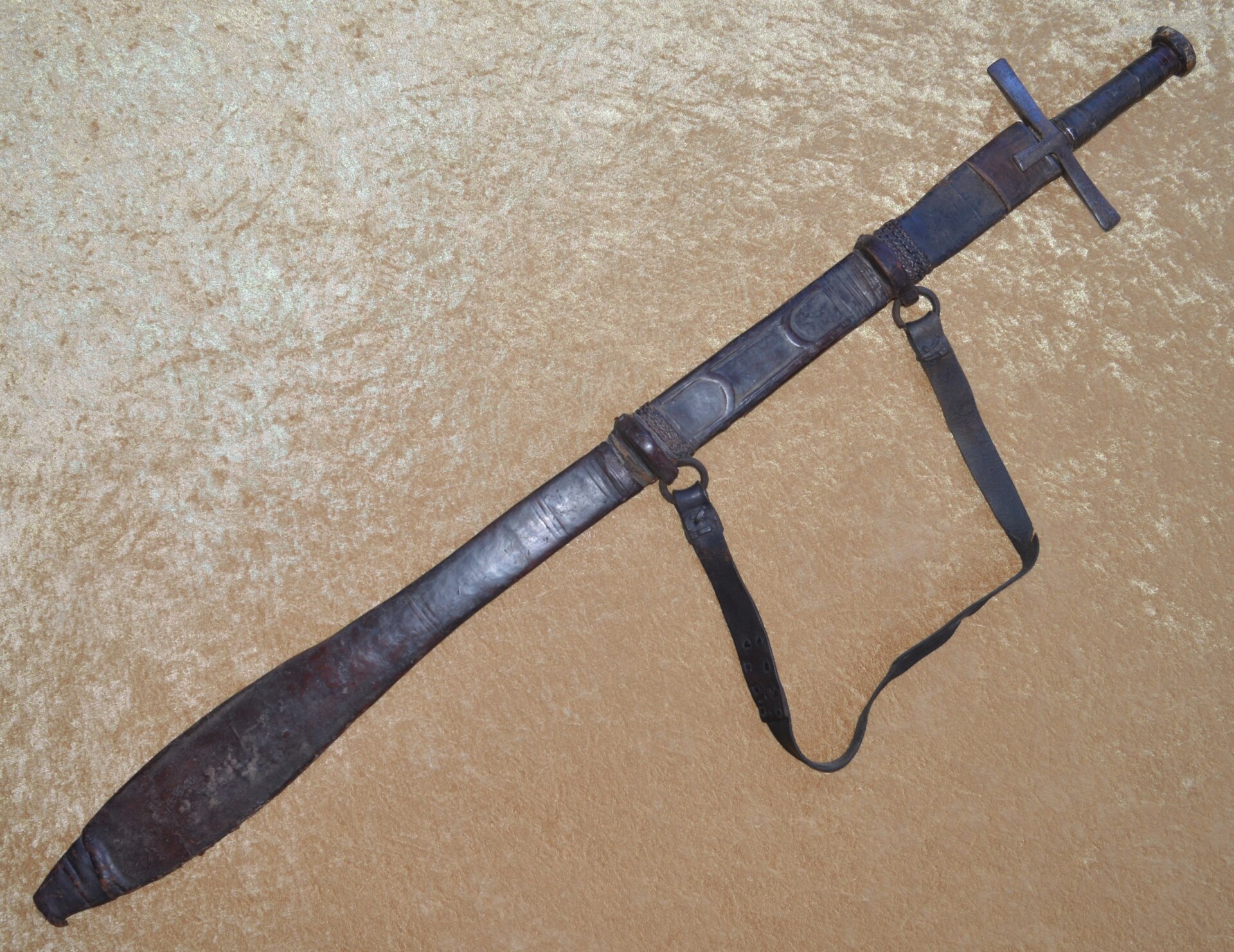
wrapped with hide strips and fitted with a thick hide disc pommel. Original embossed brown
animal hide scabbard with two carry bands and rings, expanding toward the drag in typical
fashion and featuring a leather carry strap. Blade and guard with scattered patches of
pitting and rust. Leather worn and showing age, but generally sound. Overall length 41
3/4″ (106 cm), not including scabbard. This is almost certainly one of the many kaskaras
collected from the battlefield of Omdurman. Impressive and historically significant weapon.
 English Basket-hilted Backsword, 2nd Quarter 18th C
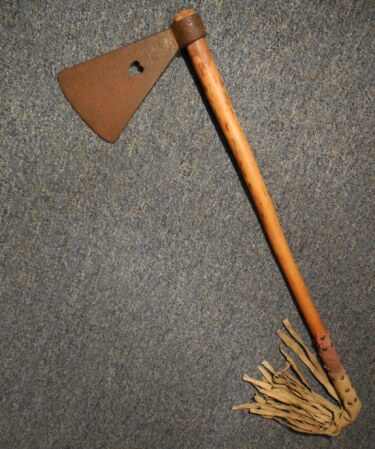 Rare Missouri War Axe by Dunlop & Florer, ca. 1850-1860
 Magnificent Silver, Gilt, and Jewel-encrusted Indonesian Kris Dagger
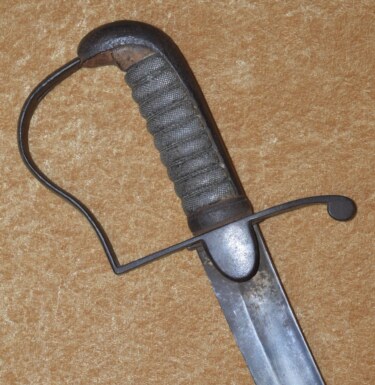 British P1796 Light Cavalry Officer’s Saber