


Description
This example, of much better quality than usually found, featuring multi-piece brass hilt
formed of round-section bars and plates, comprising knuckle bow with double central knob,
with bars extending to each side and joining the asymmetrical side rings; additional side bar
with double central know extending from the obverse side and screwed to the lion-head
pommel. Side rings each with integrally cast brass plates depicting rampant lions holding a
crown on the larger, and a prancing lion amid scrolling foliage on the smaller (small casting
flaw); thumb ring on the reverse. Grip wrapped with thick twisted brass wire (some
tarnished). The highly detailed lion-head pommel with open mouth and hollowed out throat,
showing bared teeth and revealing the blade tang inside its mouth. Detailed downcurved
lion-head reverse quillon. Gently curved 29″ (73.7 cm) single-edged blade, the last 4″
double-edged, with inscribed arm holding a scimitar on one side (worn). This symbol was
commonly found on Hungarian swords and other countries which faced Ottoman incursions.
The blade cleaned, with sharp edge and showing patches of light pitting. Overall length 35
3/8″ (90 cm).
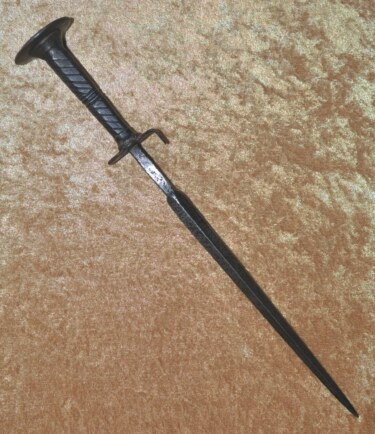 European Rondel Dagger, Misericorde, Late 14th C
 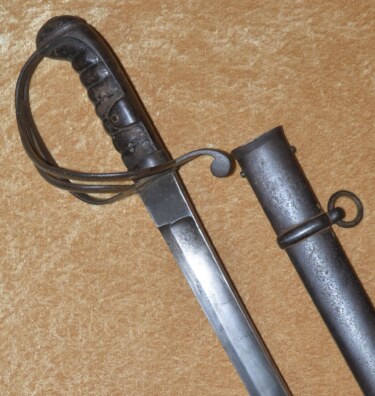 British Pattern 1821 Light Cavalry Trooper’s Saber
  Scottish Basket Hilted Backsword, Early 18th C
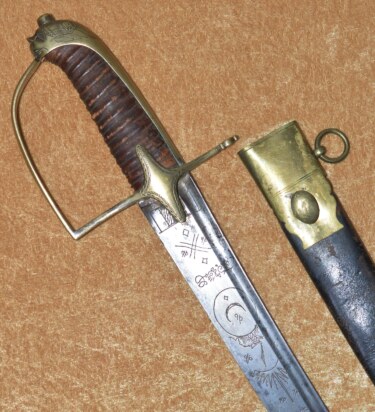 Hungarian Cavalry Officer’s Saber, 2nd Half 18th C